Executive Overview
The intersection of politics and media has long been a subject of intense debate, touching upon the fundamentals of democratic accountability, editorial independence, and public trust. A landmark new report published by the influential think tank Demos reveals a striking international divergence: the United Kingdom stands apart from almost every other European nation in permitting serving politicians to present television and radio current affairs programmes.
Authored by Dr James Painter of the Reuters Institute for the Study of Journalism, the research surveyed 37 media regulators across Europe via the European Platform of Regulatory Authorities (EPRA). The findings are definitive. In 35 of the 37 jurisdictions examined, there are no examples of a serving politician anchoring or presenting a news or current affairs programme on a national television channel. Only Iceland and Malta emerged as exceptions, and even within those nations, the practice was found to be exceptionally limited, highly circumscribed, and short-lived. Furthermore, 34 European countries either explicitly ban the practice through rigorous statutory regulation or substantially restrict it via enforceable broadcasting codes.
The UK, by stark comparison, operates within a regulatory framework that permits prominent elected officials—particularly members of Parliament—to host current affairs broadcasts, command prime-time slots, and shape national political discourse directly from the broadcast studio. This unique position raises profound questions for UK newsrooms, regulators, broadcasters, and the wider electorate. As the boundaries separating the legislature from the Fourth Estate continue to blur, this report forces a critical reappraisal of how impartiality is maintained, how public trust is sustained, and whether the UK’s regulatory status quo remains fit for purpose in an increasingly polarized media landscape.
Detailed Chronology
To understand how the United Kingdom arrived at a regulatory framework so vastly different from its European neighbors, it is necessary to examine the historical trajectory of British broadcasting, the evolution of regulatory bodies, and the recent normalization of politician-broadcasters.
Post-War Foundations and the Birth of Impartiality (1950s–1980s)
The bedrock of British broadcasting has historically been the statutory requirement for due impartiality. Established with the creation of the BBC’s Royal Charter and subsequently extended to commercial television with the launch of Independent Television (ITV) under the Television Act 1954, impartiality was designed to prevent the airwaves from becoming instruments of partisan propaganda.
During this foundational era, the boundary between practicing politicians and broadcasters was rigorously policed. While politicians were frequent and vital contributors to debate programmes—appearing as interviewees, panellists, and debaters—they were strictly barred from occupying the anchor’s chair. The role of the presenter was understood to be that of an independent arbiter, holding power to account rather than exercising it from behind the studio desk.
The Deregulatory Wave and the Rise of Cable and Satellite (1990s–2010s)
The passing of the Broadcasting Act 1990 and the subsequent Communications Act 2003 ushered in a commercialized era for UK media. OFCOM (the Office of Communications) was established as the single regulator for the communications sector, replacing legacy bodies like the Independent Television Commission (ITC) and the Radio Authority.
While OFCOM maintained strict rules regarding due impartiality and due accuracy, the proliferation of digital channels, satellite broadcasting, and eventually 24-hour news outlets created an insatiable demand for content. Broadcasters began experimenting with new formats designed to drive ratings, engage disaffected audiences, and inject personality-driven commentary into news and current affairs. Despite these commercial pressures, the convention that serving politicians should not present news programmes largely held, bolstered by internal BBC editorial guidelines and cautious commercial broadcasting policies.
The Normalization of the Politician-Presenter (2019–Present)
The contemporary era—marked by intense political polarization, the rise of challenger news channels such as GB News and TalkTV, and a more competitive landscape for traditional broadcasters like Channel 4 and Sky News—witnessed a decisive shift.
- The Launch of New Channels: The establishment of dedicated opinion-led news channels fundamentally altered the commercial calculus of British broadcasting. Seeking to build loyal audiences through high-profile, distinctive talent, these channels turned directly to Westminster.
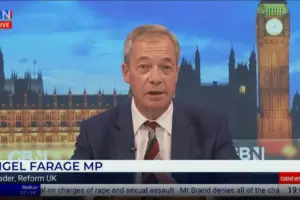
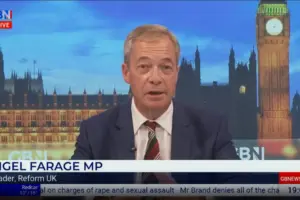
- Serving MPs on Air: Several serving Members of Parliament, predominantly from the Conservative Party, accepted regular presenting and hosting contracts. Viewers grew accustomed to seeing sitting legislators interviewing cabinet ministers, discussing government policy, and framing the nightly news agenda.
- Regulatory Strain: While OFCOM’s Broadcasting Code permits politicians to present programmes—provided strict conditions regarding due impartiality are met and exceptions are made for editorial context—the sheer volume and frequency of politician-led broadcasting placed unprecedented strain on the regulatory framework. Critics argued that the rules were no longer sufficient to prevent conflicts of interest, while defenders maintained that transparency and audience sophistication rendered the practice acceptable.
The publication of the Demos report by Dr James Painter now crystallizes this historical moment, providing the first comprehensive comparative data proving just how exceptional the UK’s permissive approach is on the European stage.
Supporting Context & Metrics
The empirical data gathered by Dr James Painter through the European Platform of Regulatory Authorities (EPRA) offers an unprecedented quantitative view of European media regulation. The findings demonstrate that the UK is not merely an outlier; it is situated in an almost entirely solitary regulatory category.
Key Metrics from the EPRA Survey
- Total Regulators Surveyed: 37 national media regulatory bodies across Europe.
- Countries with No Examples of Serving Politicians Presenting Current Affairs: 35 out of 37 jurisdictions (94.6%).
- Countries Explicitly Banning or Substantially Restricting the Practice: 34 jurisdictions.
- Exceptions to the Rule: Exactly 2 countries—Iceland and Malta—recorded isolated, highly limited, and short-lived instances of politicians appearing in presenting roles, which were subsequently curtailed or phased out due to ethical and regulatory concerns.
European Models of Regulation
The contrast between the UK and its continental peers lies in the philosophical approach to democratic hygiene and institutional separation. Across major European democracies—including Germany, France, Italy, Spain, and the Nordic nations—media laws and regulatory codes are framed around the principle that holding public office and broadcasting current affairs are fundamentally incompatible roles.
- Germany: Governed by strict interstate treaties (Rundfunkstaatsvertrag), German public service broadcasters (ARD, ZDF) and commercial channels operate under strict guidelines that prohibit active politicians from holding editorial or presenting roles, ensuring that public broadcasting remains insulated from immediate partisan influence.
- France: The Arcom (formerly the CSA) enforces rigorous rules regarding political pluralism, airtime allocation during election cycles, and the absolute separation of political mandates from journalistic and presenting duties.
- Scandinavia: Public service broadcasters in countries like Sweden and Norway adhere to internal governance codes that treat political independence as an existential requirement for public trust. A serving politician acting as a news anchor is viewed across these jurisdictions as an unacceptable conflict of interest.
Why the UK Differs
According to the Demos report, the UK’s divergence stems from a reliance on principles-based regulation rather than hard prohibitions. OFCOM’s code focuses on the output (whether a specific programme achieves due impartiality overall) rather than the input (who is speaking or presenting). This structural reliance on editorial compliance mechanisms, coupled with a cultural tradition of robust debate and the rapid evolution of the UK’s commercial broadcasting market, has created the unique conditions that allow serving politicians to remain behind the studio microphone.
Official Statements
The release of the Demos report has ignited a vigorous debate among media scholars, regulatory experts, political figures, and journalism trade bodies.
Dr James Painter, author of the report from the Reuters Institute for the Study of Journalism, noted:
"Our survey of 37 European regulators reveals a stark and undeniable reality: the United Kingdom is an extreme outlier. While the rest of Europe overwhelmingly views the separation of political power and broadcasting presentation as a vital safeguard for democratic integrity, the UK has uniquely permitted this practice to take root. This is not merely a matter of regulatory technicality; it strikes at the core of how the public perceives the independence of news and current affairs."
A spokesperson for Demos emphasized the broader democratic implications:
"Trust in public institutions, including the media and parliament, is at a historic inflection point. When a serving member of the legislature—someone bound by party whips, holding executive or legislative power, and seeking electoral mandate—is permitted to anchor a current affairs programme, the line between journalism and political spin is dangerously blurred. Policymakers and regulators must urgently review whether our current framework is robust enough for the modern media ecosystem."
Media commentators and legal scholars have also weighed in:
Critics of the practice argue that no amount of editorial compliance can overcome the inherent conflict of interest. “A politician cannot simultaneously be the subject of scrutiny, the maker of law, and the inquisitor holding their colleagues to account on air,” remarked one prominent media ethics professor.
Conversely, defenders of the UK model—including representatives from certain commercial broadcast networks—have argued that British audiences are discerning enough to evaluate a presenter’s political background. They maintain that transparency regarding a presenter’s affiliations, combined with stringent enforcement of OFCOM’s impartiality rules, allows for vibrant, engaging, and diverse broadcasting that reflects the realities of modern political life.
Future Outlook
As the debate catalyzed by the Demos report reverberates through Westminster and newsrooms across the country, the future of political broadcasting in the UK stands at a critical crossroads. Several key trajectories are likely to shape the landscape in the months and years ahead.
1. Increased Regulatory Scrutiny by OFCOM
In response to mounting public concern and empirical data from Europe, OFCOM is expected to face renewed pressure to tighten its guidance on politician-presenters. While a total statutory ban akin to those found in continental Europe would likely require primary legislation, the regulator may issue stricter interpretations of "due impartiality" during non-election periods, potentially limiting the scope and frequency of political broadcasts.
2. Broadcaster Self-Regulation and Editorial Policies
Mainstream public service broadcasters and commercial networks will need to continuously evaluate their internal codes of conduct. As audiences increasingly demand institutional trust and verifiable independence, newsrooms may independently decide that employing serving politicians as presenters carries reputational risks that outweigh short-term commercial or ratings benefits.
3. The Impact of Upcoming Electoral Cycles
Future general elections and local contests will serve as definitive stress tests for the UK’s regulatory model. The strict rules governing political broadcasting during official campaigns will inevitably force serving politician-presenters off-air during sensitive pre-election periods. However, the pre-campaign window—where political narratives are intensely contested—will remain a battleground for the influence of politician-led media platforms.
4. A Wider Cultural Reckoning on Trust
Ultimately, the Demos report forces a fundamental question upon British democracy: Can a nation maintain public trust in its news media when the boundaries separating those who govern from those who report are permitted to dissolve? As Europe overwhelmingly demonstrates, the consensus among advanced democracies is that a clear, unyielding wall between political office and journalistic presentation is essential for a healthy public sphere. Whether the UK will heed this international precedent or continue on its singular path remains one of the most pressing media policy questions of our time.