Executive Overview
The intersection of political power and media broadcasting has long been a subject of intense academic and regulatory scrutiny. However, a landmark comparative study published by the influential think tank Demos reveals a striking governance anomaly: the United Kingdom stands almost entirely alone in Europe when it comes to permitting serving politicians to step off the parliamentary benches and into the anchor chair of national television and radio current affairs programmes.
Authored by Dr James Painter of the Reuters Institute for the Study of Journalism, the Demos report surveyed 37 media regulators across Europe through the European Platform of Regulatory Authorities (EPRA). The findings expose a profound divergence between the British media landscape and continental standards. In 35 of the 37 European nations surveyed, serving politicians are strictly barred from hosting news or current affairs broadcasts, or the practice simply does not exist. Only Iceland and Malta emerged as exceptions, and even in those jurisdictions, such broadcasting experiments were historically isolated, limited in scope, and short-lived.
By contrast, the UK has witnessed a steady normalisation of high-profile elected representatives—particularly serving Members of Parliament—acting as regular presenters, interviewers, and commentators on mainstream commercial networks. This development has transformed the traditional boundaries of political accountability and media impartiality.
This article explores the mechanics of the Demos report, examines the regulatory framework governing British broadcasting, analyses the broader implications for public trust in newsrooms, and weighs the future outlook for a media landscape navigating an increasingly blurred line between politics and journalism.
Detailed Chronology: From Strict Impartiality to the Rise of the Politician-Presenter
To understand how the United Kingdom arrived at its current regulatory juncture, it is essential to trace the historical evolution of British broadcasting standards. For decades, the statutory framework governing UK broadcasting was anchored by an uncompromising commitment to due impartiality, particularly regarding matters of political controversy and industrial dispute.
The Post-War Foundation and the BBC Monopoly
Following the Second World War and the subsequent establishment of independent television (ITV) under the Television Act 1954, the British broadcasting sector operated under a deeply ingrained consensus: broadcast media was a public trust that required strict neutrality. The BBC Charter and successive Broadcasting Acts enshrined the principle that news and current affairs must be handled with absolute fairness, ensuring that no single political perspective dominated the airwaves.
While print journalism in the UK has historically worn its political allegiances proudly—with national newspapers explicitly endorsing political parties at general elections—broadcasting was subjected to a markedly different standard. Because radio and television used finite public airwaves, regulators demanded rigorous balance. Serving politicians were routinely interviewed, grilled, and held to account by professional, independent journalists, but they were almost never handed the microphone to host programmes themselves.
The Commercial Expansion and Regulatory Shifts
The landscape began to evolve gradually with the proliferation of multi-channel television, the advent of 24-hour news cycles, and the rise of digital media platforms. As commercial broadcasters sought innovative ways to drive ratings, capture audience share, and compete with digital-first disruptors, traditional formats underwent significant mutation.
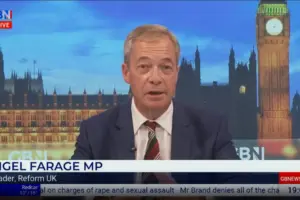
Over the past decade, and particularly following the launch of dedicated opinion-led news channels such as GB News and TalkTV, the employment of serving politicians as presenters transitioned from an unthinkable regulatory breach to a commercially driven norm. High-profile MPs from across the political spectrum—including members of the Conservative Party and the Labour Party—began signing lucrative contracts to host weekly current affairs shows, debate panels, and evening news slots.
The Demos Survey and the European Reality Check
This domestic shift prompted the Demos investigation led by Dr James Painter. Utilising the network of the European Platform of Regulatory Authorities (EPRA), the study reached out to media regulators across 37 European nations to map out continental standards.
The results, compiled and published in the new Demos report, proved definitive. Across 35 of the 37 countries, regulatory frameworks, professional codes of conduct, or deep-seated cultural norms prevent serving politicians from crossing the floor into broadcast journalism. Whether through explicit statutory bans or industry-wide self-regulation, European democracies have overwhelmingly concluded that active politicians cannot simultaneously act as objective arbiters of public debate.
The only two exceptions identified—Iceland and Malta—demonstrated that even where loopholes existed, they were marginal, non-systemic, and ephemeral. The UK, therefore, occupies a lonely outlier status: a major Western democracy where lawmakers routinely interview guests, critique government policy from the studio desk, and shape political narratives directly through broadcast media channels.
Supporting Context & Metrics: How the UK Compares with Europe
The quantitative data underpinning the Demos report provides a stark statistical portrait of European regulatory exceptionalism.
The Numbers at a Glance
- Total European Jurisdictions Surveyed: 37 regulatory authorities via the EPRA network.
- Countries with No Serving Politician Presenters: 35 nations (representing over 94% of the surveyed sample).
- Countries Allowing the Practice (with limitations): 2 nations (Iceland and Malta).
- Countries Explicitly Banning or Substantially Restricting the Practice: 34 nations.
- The United Kingdom: A distinct outlier where multiple serving politicians regularly present national television and radio current affairs output under varying degrees of regulatory oversight.
Regulatory Mechanisms Across the Continent
The Demos report highlights that European restrictions take several distinct forms:
- Constitutional and Statutory Prohibitions: In many continental European democracies, media laws explicitly disqualify individuals holding public or elected office from running, producing, or presenting news and current affairs programming. These laws are designed to protect the integrity of the electoral process and prevent the weaponisation of public information resources.
- Independent Regulatory Enforcement: Regulators such as France’s Arcom or Germany’s media authorities enforce strict independence criteria for broadcast license holders. Editorial staff and presenters are bound by codes of neutrality that rule out active party-political affiliation during their tenure.
- Professional Self-Regulation and Industry Norms: In several Nordic and Western European states, even where legal loopholes might theoretically exist, robust journalistic guilds and internal newsroom ethics prevent media organisations from hiring serving politicians. The prevailing cultural consensus views such employment as a direct conflict of interest.
The British Regulatory Architecture
In contrast, Ofcom—the independent regulator for the UK communications industries—operates under the Ofcom Broadcasting Code, which deals with due impartiality and due accuracy. While the Code contains rigorous stipulations regarding elections, major matters of political controversy, and the requirement to represent alternative viewpoints over time, it does not contain a blanket ban on serving politicians acting as presenters.
Instead, Ofcom relies on a compliance framework that evaluates programmes on a case-by-case basis. Broadcasters are permitted to use politicians as presenters provided that "alternative viewpoints" are adequately represented across the broader output of the channel, and that the politician does not use their platform to promote their own electoral candidacy during sensitive pre-election periods. This procedural reliance on "due impartiality in the aggregate" rather than structural independence has allowed the politician-presenter phenomenon to flourish in the UK.
Official Statements and Expert Analysis
The publication of the Demos report has ignited a fierce debate among media scholars, regulatory experts, civil society organisations, and political figures regarding the health of British public discourse.
Authorial Insights: Dr James Painter
Dr James Painter, the author of the report, emphasised the distinctiveness of the British regulatory environment during the launch of the findings.
"When we surveyed regulators across 37 European nations, the picture that emerged was remarkably clear and consistent," Dr Painter noted. "Across the vast majority of our continental neighbours, the idea of a serving politician presenting a current affairs programme is viewed as fundamentally incompatible with the principles of independent journalism and democratic accountability. The UK stands virtually alone in permitting this practice to become a regular feature of its national media ecosystem."
Think Tank and Civil Society Perspectives
Representatives from Demos pointed out that the normalisation of politicians as broadcasters risks accelerating public cynicism toward democratic institutions and news media alike. In an era characterised by widespread disinformation, declining trust in public information sources, and hyper-polarised political debate, the blurring of lines between the lawmaker and the broadcaster presents unprecedented challenges.
"When citizens tune in to watch a current affairs programme, they have a reasonable expectation that the person guiding the discussion is an independent journalist bound by professional ethics, rather than an active participant in the political game they are reporting on," a Demos spokesperson stated. "The UK’s permissive approach places an extraordinary burden on Ofcom to police compliance after the fact, rather than establishing clear structural boundaries upfront."
Broadcasters’ Counter-Arguments
Proponents of the UK model—including executives from commercial networks and the politician-presenters themselves—offer a robust defence of the practice. They argue that:
- Enhanced Transparency: Allowing politicians to host shows brings their political perspectives out into the open, rather than masking them behind supposedly neutral journalism. Viewers know precisely where a politician-presenter stands ideologically.
- Audience Demand: Modern audiences increasingly reject dry, institutional journalism in favour of authentic, personality-driven, and passionate commentary. Politician-presenters command large audiences and stimulate robust public debate.
- Democratic Accountability: Supporters contend that elected representatives engaging directly with voters and guests on air face immediate scrutiny, providing an alternative form of political engagement that traditional studio formats often fail to deliver.
Future Outlook: What This Means for UK Newsrooms
As the media landscape continues to evolve at a breakneck pace, the Demos report serves as a critical prompt for policymakers, regulators, media executives, and the public to re-evaluate the rules of engagement between politics and broadcasting.
The Impending Regulatory Pressure on Ofcom
With digital media consumption fragmenting traditional audiences and new broadcast entrants challenging legacy norms, pressure is mounting on Ofcom to review its guidance on due impartiality. Critics argue that the current framework—designed for an era of three or four main television channels—is ill-equipped to handle an environment saturated with opinion-led broadcasting.
In the coming years, UK regulators may face increasing calls to align more closely with European norms by introducing stricter limitations or outright prohibitions on serving politicians holding broadcast hosting contracts. Such a move would undoubtedly spark fierce resistance from commercial operators who rely on high-profile political names to drive ratings and advertising revenue.
Impact on Journalistic Integrity and Public Trust
For mainstream UK newsrooms, the presence of politician-presenters creates ongoing internal and external tensions. Professional journalists often express concern that the blurring of boundaries between partisan politics and objective news reporting damages the credibility of the entire sector. When politicians act as interviewers, the traditional dynamic of accountability is inverted: the person holding legislative power becomes the inquisitor, raising profound questions about whether tough, uncompromised scrutiny can truly be maintained.
Furthermore, public trust metrics in the UK have shown persistent vulnerability regarding news media impartiality. As audiences become increasingly partisan in their media consumption habits, the reliance on politician-presenters risks hardening echo chambers rather than fostering broad-based democratic consensus.
Conclusion
The Demos report by Dr James Painter lays bare a profound institutional divergence between the United Kingdom and its European neighbours. While continental democracies maintain strict regulatory walls between political office and broadcast journalism, the UK has embraced a permissive model that treats the politician-presenter as a viable, commercial reality.
As the British media ecosystem navigates the challenges of the digital age, the fundamental question raised by this study remains urgent and unresolved: Can a democracy maintain a trusted, impartial broadcast media when its lawmakers double as its news anchors? For UK newsrooms, regulators, and citizens alike, finding the right answer will define the future of public discourse for generations to come.