In a landmark escalation of international financial enforcement, the United Kingdom has unleashed rigorous economic sanctions against Cryptomus, a notoriously chameleonic cryptocurrency payment processor. For years, Cryptomus—which has operated under aliases including Certa Payments, Xeltox Enterprises, and, most recently, Heleket—has functioned as a foundational pillar for illicit transnational commerce. According to blockchain analytics firms, cybersecurity investigators, and international regulators, the platform has acted as a primary conduit for ransomware syndicates, darknet narcotics markets, high-stakes cybercrime services, and financial networks actively working to circumvent Western economic restrictions imposed on the Russian Federation.
The U.K. Foreign, Commonwealth & Development Office’s October 8 actions freeze all domestic assets tied to Cryptomus and strictly prohibit British corporations, financial institutions, and citizens from engaging in any commercial or virtual transactions with the platform. Alongside Cryptomus, the sweeping sanctions package targeted several allied virtual payment hubs and services, including VexPay, TokenSpot, and the Tsunami Payments network.
While countries like Canada previously targeted the platform with historic financial penalties, the U.K.’s sanctions represent a structural paradigm shift. Unlike monetary fines—which bad actors can routinely ignore, appeal, or sidestep by spinning up parallel corporate entities—sanctions actively criminalize operations, dismantle banking lifelines, and sever access to global liquidity pools. Furthermore, this regulatory strike marks a historic milestone: the first known instance of a "Five Eyes" intelligence-sharing nation (comprising Australia, Canada, New Zealand, the United Kingdom, and the United States) officially sanctioning a cryptocurrency enterprise incorporated within another Five Eyes jurisdiction.
Beneath the surface of Cryptomus lies a deeply convoluted corporate fiction. Investigators have traced its lineage to shell companies, fictional regulatory watchdogs in disputed territories, and an intricate web of evasion tactics designed to obscure ultimate beneficial ownership. This comprehensive report explores the rise, evolution, and targeted dismantling of Cryptomus, analyzing its role in funding Russia’s wartime economy, the mechanics of its regulatory sleight of hand, and the broader implications for the future of global cryptocurrency regulation.
Detailed Chronology of an Illicit Empire
To understand the scale of Cryptomus, one must examine its rapid evolution since emerging in the turbulent geopolitical landscape of 2022. What began as a standard digital asset gateway quickly morphed into a sophisticated, multi-tiered financial engine tailored specifically for the underground economy.
2022–2023: Inception and the Certa Payments Era
Cryptomus burst onto the scene shortly after the escalation of the Russia-Ukraine conflict. As Western nations levied unprecedented sanctions against traditional Russian banking infrastructure, cybercriminals, state-sponsored actors, and illicit merchants scrambled for alternative financial rails. Cryptomus stepped into this vacuum. Initially operating under corporate umbrellas such as Certa Payments and Xeltox Enterprises, the platform positioned itself as a legitimate payment gateway for e-commerce, offering low fees and rapid integration for merchants.
However, blockchain intelligence quickly painted a darker picture. Instead of processing routine consumer goods, Cryptomus quietly onboarded dozens of Russian-linked cryptocurrency exchanges, darknet markets, and forums specializing in illicit cybercrime services—including stolen credentials, malware distribution kits, and ransomware negotiation platforms.
Late 2024–2025: Canadian Scrutiny and the Birth of "Heleket"
By late 2024, investigative reporting by security researchers and blockchain analysts exposed Cryptomus’s systemic role in bridging cryptocurrency to cash within Russian banking institutions. The platform’s corporate footprint—nominally anchored to a shared, largely vacant office address in Vancouver, British Columbia, alongside dozens of other suspicious foreign exchange dealers—drew intense regulatory scrutiny.
In October 2025, the government of Canada dropped the hammer, levying a record-shattering CAD $176 million administrative monetary penalty against Cryptomus for severe and systemic anti-money laundering (AML) violations.
Rather than complying with Canadian regulatory frameworks or paying the fine, Cryptomus management deployed a playbook common among predatory crypto platforms: they contested the penalty through legal appeals while executing a structural pivot. Recognizing that the "Cryptomus" brand was becoming toxic, the operators launched a parallel, zero-KYC (Know Your Customer) service named Heleket. While public-facing support bots on Telegram aggressively denied any institutional link between Cryptomus and Heleket, blockchain forensics confirmed that the infrastructure, backend routing, and client pools were virtually identical.
2026: Financial Attrition and U.K. Interventions
Throughout 2026, the walls continued to close in. In April 2026, premier blockchain analysis firm TRM Labs published a comprehensive intelligence dossier revealing that Cryptomus had processed an astronomical $7 billion in transactions since its inception in 2022. This volume included substantial flows tied to high-harm criminal operations, such as vendors of child sexual abuse material (CSAM), state-aligned terrorist financing networks, and international human trafficking cartels.
While TRM Labs noted that Cryptomus’s primary transaction volumes dipped temporarily after token implementation of half-hearted KYC protocols, the concurrent launch of Heleket ensured that illicit liquidity continued to flow unchecked.
The turning point arrived on October 8, 2026, when the United Kingdom formally designated Cryptomus, Heleket, VexPay, TokenSpot, and Tsunami Payments under its Russia sanctions regime. Within hours of the announcement, user support channels for the platforms erupted in chaos, with automated Telegram bots and human operators issuing frantic notices that their payment processing engines were abruptly failing.
Supporting Context & Metrics: The Scale of Underground Liquidity
The illicit cryptocurrency ecosystem relies heavily on specialized intermediaries to launder funds, obscure transaction paths, and integrate digital assets into traditional fiat economies. Cryptomus and its derivatives operated at the apex of this underworld economy.
The Chainalysis and TRM Labs Data
Data compiled by leading blockchain intelligence firms underscores the staggering scale of Cryptomus’s operations:
Surging Illicit Counterparties: According to a post-action analysis by Chainalysis, Cryptomus and Heleket rapidly evolved into top-tier payment hubs for malicious actors. At their peak in late 2025, the number of distinct illicit counterparties interacting with these platforms surged past 900 in a single month—eclipsing the volume handled by many traditional cryptocurrency mixing services tracked in their datasets.
Multi-Billion Dollar Flow: Forensic tracking by TRM Labs verified that the cumulative transaction volume passing through Cryptomus cleared the $7 billion threshold by early 2026. This capital was not merely incidental; a significant percentage was directly mapped to sanctioned entities, ransomware extortion payouts, and Russian state-proxies seeking to bypass international trade embargoes.
The "Sanctions vs. Fines" Paradigm: Blockchain investigator Richard Sanders, who spent months mapping Cryptomus’s payment pipelines, highlighted the critical structural difference between monetary penalties and asset freezes. As Sanders articulated in professional briefings, imposing a massive administrative fine on an unregulated, foreign-incorporated crypto entity is frequently an exercise in futility. Canada’s CAD $176 million fine, while historic on paper, proved entirely uncollectible and failed to halt operations. "A fine doesn’t stop a cryptocurrency payment processor from processing payments," Sanders noted. "Sanctions kill the operation. The distinction matters."
Official Statements and Industry Impact
The international regulatory and security community has universally lauded the U.K.’s decisive action, viewing it as a blueprint for targeting decentralized and chameleonic cybercrime infrastructure.
Cryptocurrency compliance and intelligence outfits issued immediate breakdowns of the sanctions’ systemic impacts. Chainalysis emphasized that targeting front platforms like Cryptomus strikes directly at the financial arteries sustaining the Kremlin’s wartime economy:
"Cryptomus and Heleket have emerged as major payment hubs for illicit activity," Chainalysis stated in an official release. "The U.K. sanctions represent a vital escalation in dismantling the broader infrastructure that enables sanctioned Russian entities to access global digital liquidity."
The enforcement action also underscores mounting pressure on communication channels utilized by these platforms. Platforms like Telegram—long criticized for harboring unregulated financial service bots and cybercrime storefronts—became ground zero for customer panic following the U.K. announcement. Automated support bots that previously promised guaranteed uptime and anonymous payouts suddenly pivoted to error messages and broadcasted denials of service.
Furthermore, legal scholars have pointed out the unprecedented nature of a Five Eyes member state sanctioning an entity operating out of the domestic jurisdiction of another Five Eyes partner (Canada). This cross-border enforcement signals a growing impatience among Western governments regarding permissive corporate registries that allow bad actors to weaponize Western legal frameworks while serving geopolitical adversaries.
The Illusion of Legitimacy: Phony Regulators and Ghost States
One of the most astonishing revelations uncovered during independent investigations into Cryptomus is the sheer audacity of its corporate and regulatory architecture. How did an entity processing billions of dollars in illicit funds derive its nominal authority to offer international financial services?
The answer reads like a geopolitical thriller, involving fake financial institutions overseen by a phony regulatory body positioned within a disputed territory in northwest Africa.
The Western Sahara Nexus
An exhaustive 2024 investigative deep-dive into Cryptomus revealed that the sole shareholder of its parent company, Certa Payments, was a 25-year-old Ukrainian national. Alongside Cryptomus, this individual headed multiple other corporate entities, including the WS Management and Advisory Corporation.
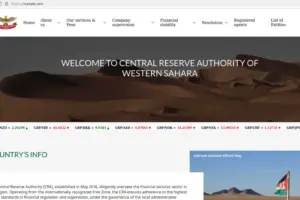
WS Management and Advisory Corporation aggressively marketed itself as an exclusive, authoritative regulatory body responsible for issuing licenses to cryptocurrency exchanges, foreign exchange (forex) brokers, and online gaming enterprises. The catch? The jurisdiction it claimed to regulate was the Western Sahara—a disputed and largely unrecognized territory in northwest Africa.
The Mechanics of the Shell Game
The operational blueprint of this scheme relied on deep digital obfuscation:
The Regulator’s Portal: The regulatory body operated through a web portal (crasadr.com), purporting to represent the Central Reserve Authority of the Western Sahara (CRASADR). The site offered formal guidance, bank setup assistance, and compliance licensing for digital asset ventures that could never secure approval in legitimate Western or Asian financial hubs.
Shared Infrastructure: Forensic analysis of server logs revealed direct digital overlap. Certa Payments’ historical corporate website (certa.website) shared a physical web server with 12 distinct domains, including rasd-state.ws—the designated web outpost for the so-called Central Reserve Authority.
Regulatory Laundering: By establishing a "licensed" status through a nonexistent or disputed state entity, Cryptomus and its sister platforms projected a superficial veneer of legitimacy to traditional banking partners, merchant acquirers, and prospective corporate clients, effectively laundering their operational standing on paper while facilitating industrial-scale money laundering on the blockchain.
Future Outlook: The End of the Road for Chameleonic Gateways?
The U.K.’s economic sanctions against Cryptomus, Heleket, VexPay, TokenSpot, and Tsunami Payments mark a watershed moment in the global fight against crypto-enabled financial crime. However, the saga of Cryptomus provides crucial lessons for the future of digital asset oversight.
The Whack-A-Mole Problem: Chameleonic crypto platforms have mastered the art of corporate metamorphosis. When pressured by fines or bad press, operators simply rebrand, spin up parallel infrastructure (as seen with the transition from Cryptomus to Heleket), and alter their front-facing domain names. Future regulatory frameworks must focus on real-time asset tracing and proactive infrastructure takedowns rather than retroactive penalties.
The Death of Unenforceable Fines: Canada’s experience with its uncollectible CAD $176 million fine demonstrated that monetary penalties alone are insufficient against illicit cross-border operators. The U.K.’s model—utilizing sweeping economic sanctions that criminalize domestic interaction and freeze banking rails—provides the necessary teeth to render an illegal payment processor functionally radioactive.
Closing the Loophole on Ghost Regulators: The exposure of the Western Sahara regulatory fiction highlights a glaring vulnerability in global corporate registries. Governments and financial intelligence units must increase scrutiny on corporate entities claiming licensure from disputed territories, non-sovereign micro-states, or dubious offshore authorities.
As Cryptomus and Heleket scramble to salvage their remaining liquidity pools under the crushing weight of U.K. sanctions, the message to the broader cybercrime underground is unambiguous: the era of unchecked, cross-border crypto evasion is facing coordinated, institutional pushback. While bad actors will inevitably attempt to engineer the next iteration of payment gateways, the international community has proven that when fines fail, targeted sanctions can successfully drive a stake through the heart of illicit financial infrastructure.