
Executive Overview
For creative professionals, video editors, 3D artists, and software developers, the past year has presented a punishing economic landscape. Upgrading to high-performance workstations capable of handling heavy rendering, complex timelines, and multi-layered generative AI workflows has transformed from a routine operational expense into a major capital hurdle. Driven primarily by an unprecedented global surge in demand for high-bandwidth memory (HBM) and unified memory architectures—spurred by the relentless, hyper-accelerated expansion of artificial intelligence infrastructure—component costs have skyrocketed.
Major hardware manufacturers have passed these upstream supply chain pressures directly to consumers. In June, Apple introduced steep price adjustments across its high-end MacBook Pro lineup, slapping a heavy $300 baseline price bump on configurations equipped for heavy creative lifting. For independent studios, freelancers, and small businesses already navigating a shifting economic climate, the premium felt like an exclusionary tax on professional-grade tools.
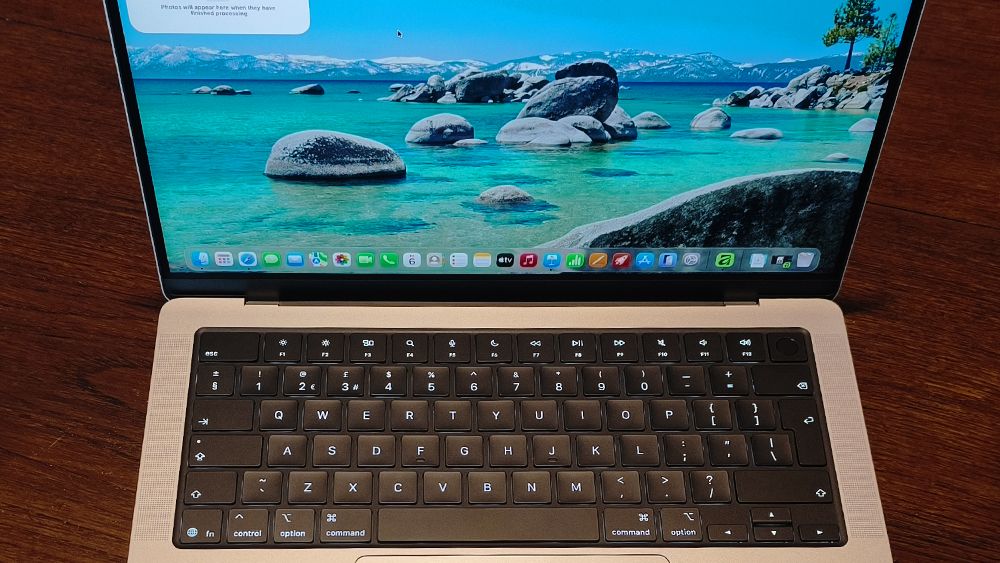
However, the retail market is finally showing signs of correction. In a major break from prevailing price trends, Amazon has launched a landmark discount on the current-generation MacBook Pro 14-inch, slashing the price of the M5 Pro configuration (equipped with 24GB of unified memory and a 1TB SSD) from its standard $2,499 retail price down to just $2,049. Representing a total savings of $430, this deal not only completely erases Apple’s recent summer price hikes but pushes the barrier to entry for top-tier mobile computing down to its lowest point this year. This report examines the broader macroeconomic forces driving component inflation, the real-world impact on creative industries, and an analysis of whether this current wave of discounts signals a broader normalization in the high-end laptop market.
Detailed Chronology: The Rise of Component Costs and the Apple Price Hike
To understand why a $430 discount on a MacBook Pro is making waves across the tech and creative sectors, it is necessary to trace the compounding supply chain pressures that defined the hardware market over the past eighteen months.
Q1–Q2 2024: The AI Gold Rush Begins
By early 2024, the enterprise AI boom had matured from an experimental tech sector into a global capital-expenditure race. Tech giants, cloud providers, and research labs scrambled to secure massive clusters of accelerators, GPUs, and specialized memory modules. Because high-capacity, high-speed RAM and flash storage are foundational to both enterprise server farms and consumer-grade unified memory architectures (like Apple’s M-series silicon), consumer electronics manufacturers found themselves competing directly with multi-billion-dollar AI infrastructure budgets for raw silicon allocations.
June 2024: The Tipping Point and Apple’s Price Correction
As wholesale memory wafer costs and packaging capacities tightened globally, consumer tech margins eroded. By mid-year, industry analysts noted that maintaining previous retail pricing structures had become unsustainable for major OEMs. In June, Apple implemented a widely discussed restructuring of its MacBook Pro pricing matrix. High-end configurations—particularly those stepping up to Pro and Max chips with expanded memory pools—absorbed baseline hikes of up to $300. For digital creators who rely on expansive RAM allocations to scrub through 8K video timelines or load dense 3D scenes without paging to disk, the cost of future-proofing their mobile workstations jumped out of reach.
Late 2024 to Present: Retailer Corrections and Inventory Shifts
Throughout the autumn retail cycle, major e-commerce platforms began deploying strategic price cuts to stimulate sluggish consumer upgrades. Because professional buyers had delayed hardware refreshes due to the summer price hikes, inventory build-ups prompted aggressive discounting. The current Amazon promotion—dropping the 14-inch M5 Pro model by $430—represents the apex of this post-summer retail correction, offering a rare window of relief for budget-conscious creators.
Supporting Context & Metrics: The Anatomy of a $430 Discount
When evaluating a laptop deal of this magnitude, it helps to break down the specific hardware configuration and the exact financial savings relative to historical market baselines.
| Specification Metric | Configuration Detail |
|---|---|
| Model | MacBook Pro 14-inch (Current Generation) |
| Processor | M5 Pro Chip (Featuring high-performance CPU/GPU cores) |
| Unified Memory | 24GB High-Bandwidth Architecture |
| Storage | 1TB High-Speed NVMe SSD |
| Standard Retail Price | $2,499.00 |
| Promotional Sale Price | $2,049.00 |
| Total Immediate Savings | $430.00 |
Why This Configuration Matters for Creatives
The pairing of an M5 Pro processor with 24GB of unified memory strikes a critical sweet spot for modern digital content creation. Unlike traditional architectures where CPU and GPU RAM are segregated, Apple’s unified memory pool allows the processor and graphics cores to access the same data pool instantly, vastly accelerating workflows in applications such as:
- Adobe Premiere Pro and DaVinci Resolve: Handling multi-stream 4K and 8K footage natively with hardware-accelerated ProRes decode/encode engines.
- Blender, Cinema 4D, and Maya: Rendering complex geometry, managing high-resolution texture maps, and utilizing GPU-accelerated ray tracing without running out of VRAM.
- Xcode and Local LLM Development: Compiling massive codebases or running lightweight local artificial intelligence models for coding assistance and asset generation.
The inclusion of a 1TB SSD further mitigates bottlenecks, offering sustained read/write speeds capable of transferring massive project files in seconds. Saving $430 on a machine of this caliber effectively neutralizes the inflation penalty imposed earlier in the year, restoring purchasing power to independent creators and freelancers.
Official Perspectives and Industry Reaction
The ripple effects of AI-driven hardware inflation have been a dominant topic of discussion among industry analysts, hardware reviewers, and creative trade organizations.
Market researchers tracking semiconductor supply chains have noted that the divergence between enterprise hardware consumption and consumer PC demand has created unprecedented volatility. "We are experiencing a structural shift in how silicon components are priced," explains a leading supply chain analyst. "Memory is no longer a commoditized, declining-cost component. It is a strategic asset heavily contested by hyperscalers building out large language models. Consumer laptop pricing is inevitably going to reflect that tug-of-war for the foreseeable future."
Creative professionals have voiced growing frustration over the rising cost of professional tools. In interviews and industry roundtables, independent studios have reported extending hardware replacement cycles from the traditional three-year window out to four or five years.
Regarding the sudden wave of steep discounts, retail economists suggest that promotional pricing events like Amazon’s current $430 markdown are designed to clear stagnant inventory ahead of the holiday shopping season and early-year product refresh cycles. While these markdowns provide temporary relief, industry advocates emphasize that systemic pricing pressures will likely persist until global manufacturing capacity for advanced packaging and high-bandwidth memory catches up with cumulative demand.
Future Outlook: What Lies Ahead for Professional Laptop Buyers?
As the technology sector looks toward the remainder of the decade, several key factors will dictate whether high-end laptop pricing remains volatile or begins to stabilize.
1. Manufacturing Expansion and Fab Capacity
Major semiconductor foundries, including TSMC, Samsung, and Intel Foundry, are investing tens of billions of dollars into expanding advanced packaging lines and memory manufacturing facilities (such as advanced packaging for stacked DRAM and HBM). However, fabrication plants take years to break ground, equip, and bring to full operational yield. Significant relief on raw memory component costs is unlikely to materialize before late next year at the earliest.
2. On-Device AI and Hardware Requirements
The push toward running complex, localized artificial intelligence models directly on consumer hardware means that baseline memory requirements are shifting upward. Where 16GB of RAM was once considered standard for professional workloads, 24GB to 32GB is rapidly becoming the minimum threshold for future-proofing a machine against impending software demands. Consequently, manufacturers may continue to command premium prices for upgraded memory tiers, even if baseline processor costs stabilize.
3. Strategic Purchasing Advice for Creatives
For professionals whose current machines are buckling under the weight of modern rendering, video codecs, or multitasking demands, waiting out the market may carry a hidden operational cost—lost time. Deals like the current $430 reduction on the 14-inch MacBook Pro M5 Pro demonstrate that proactive shoppers can still find significant value by leveraging major retail sales events.
Rather than waiting for a hypothetical broad market price collapse, prospective buyers are advised to monitor promotional windows closely, evaluate their specific memory and storage needs rather than overbuying, and take advantage of retail discounts that effectively roll back corporate price hikes. As the tech landscape continues to adapt to the demands of the AI era, seizing momentary market corrections will remain one of the most effective strategies for maintaining a cutting-edge creative studio without breaking the bank.