Executive Overview
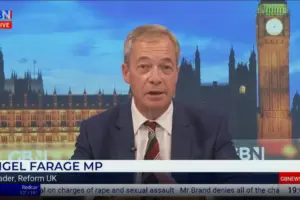
The intersection of politics and media has long been a subject of intense debate, academic scrutiny, and public interest. In the United Kingdom, however, this intersection has evolved into a regulatory outlier status that sets the nation apart from nearly every other European democracy. A landmark new research report published by the prominent think tank Demos reveals that the UK stands virtually alone in Europe by permitting serving politicians to host current affairs and news broadcasting programmes on national television channels.
Authored by Dr. James Painter of the Reuters Institute for the Study of Journalism, the comprehensive study surveyed 37 media regulators across Europe through the European Platform of Regulatory Authorities (EPRA). The findings are stark: in 35 out of the 37 surveyed European jurisdictions, there is a complete absence of serving politicians acting as anchors, hosts, or regular presenters of news and current affairs content on national television. Only Iceland and Malta emerged as exceptions, and even within those nations, the practice has historically been strictly limited, exceptional, and short-lived. Furthermore, 34 European countries either explicitly outlaw the practice via statutory regulation or impose substantial, prohibitive restrictions designed to safeguard the independence of the press.
By contrast, the UK media landscape has increasingly embraced the phenomenon of sitting Members of Parliament—representing various political parties—stepping out of the House of Commons chamber and directly into television studios to moderate debates, interview guests, and deliver editorial commentary. This report forces a critical reassessment of British broadcasting standards, regulatory frameworks enforced by Ofcom, and the fundamental trust that the public places in newsrooms. As media fragmentation accelerates and political polarization deepens, the Demos findings serve as a timely catalyst for an urgent national conversation regarding journalistic integrity, democratic accountability, and the future of public service broadcasting in the United Kingdom.
Detailed Chronology: The Normalization of Politician-Broadcasters in the UK
To understand how the United Kingdom arrived at its current regulatory outlier status, it is necessary to examine the gradual erosion of historical boundaries separating political office from journalistic presentation. For decades, British broadcasting was defined by a strict, albeit unwritten, code of conduct that kept active politicians firmly on one side of the interview table.
The Pre-Digital Era: Guardianship of Impartiality
For the better part of the late twentieth century, the BBC’s Producer Guidelines and the Independent Broadcasting Authority (IBA)—and later the Independent Television Commission (ITC)—enforced rigorous interpretations of due impartiality. While former politicians who had permanently stepped down from active party politics were occasionally welcomed into broadcasting roles (most notably former Prime Ministers or senior cabinet ministers providing historical retrospectives or analysis), serving MPs were strictly barred from acting as regular presenters of news and current affairs. The rationale was simple and foundational: an individual holding legislative power and representing a partisan constituency could not simultaneously act as an impartial referee of current affairs without creating an irreconcilable conflict of interest.
The Shift Toward Commercial Disruption
The structural transformation began in earnest with the proliferation of multi-channel digital television, the rise of rolling 24-hour news networks, and, most critically, the launch of dedicated opinion-led news channels in the UK. As broadcasters sought innovative ways to drive audience engagement, secure high-profile headlines, and capture market share in an increasingly crowded media ecosystem, the commercial value of utilizing high-profile political figures became undeniable.
Initially, this manifested as guest appearances, guest-hosting slots, or documentaries fronted by politicians—a practice that, while debated, was often defended under the guise of specialized access or educational insight. However, over the past decade, this boundary shifted dramatically. Serving MPs began securing regular, highly paid weekly or nightly contracts with prominent broadcasters, transforming them from news subjects into news curators.
The Turning Point: Regulatory Tests and Public Scrutiny
The appointment of sitting politicians to prime-time presenting roles sparked immediate controversy, leading to numerous complaints to Ofcom, the UK’s communications regulator. Broadcasters defended the practice by arguing that it offered audiences direct access to political figures, fostered vibrant debate, and complied with the statutory requirement for "due impartiality" when viewed across a broader programming schedule rather than within a single isolated broadcast.
Despite public unease and frequent pushback from media ethics watchdogs, the practice normalized. Politicians leveraged their broadcast platforms to communicate directly with the electorate, bypassing traditional journalistic filters. Meanwhile, newsrooms reaped the ratings rewards of controversy. It is against this historical backdrop of incremental boundary-pushing that the Demos report arrives, quantifying just how extraordinary the British model is when juxtaposed against the rest of Europe.
Supporting Context & Metrics: The European Landscape Versus the British Exception
The empirical data compiled by Dr. James Painter and published by Demos provides an unvarnished comparative analysis of European media regulation. The findings make it clear that the UK’s permissive approach is not merely a variation of standard European practices, but a stark anomaly.
Methodology and Scope
The research methodology involved surveying 37 national media regulators via the European Platform of Regulatory Authorities (EPRA). These regulators—representing a diverse spectrum of legal frameworks, media traditions, and democratic maturity across the continent—were asked to report on the legal, regulatory, and practical realities of serving politicians working as media presenters within their respective jurisdictions.
Key Quantitative Findings from the Demos Report:
- 35 out of 37: The number of surveyed European countries where there are zero active examples of serving politicians presenting news or current affairs programmes on national television channels.
- 34 out of 37: The number of European nations that either explicitly ban the practice through primary legislation or enforce substantial, legally binding restrictions that effectively prevent it.
- 2: The total number of European exceptions identified alongside the UK—specifically Iceland and Malta—where instances have occurred, though characterized as rare, strictly limited, and exceptionally short-lived.
Why Europe Imposes Strict Bans
Across continental Europe, media regulatory frameworks are heavily influenced by a post-war consensus prioritizing the protection of public trust in democratic institutions and independent journalism. Countries such as France, Germany, Sweden, and Italy maintain rigorous statutory provisions. In these nations, the rationale is built upon several core principles:
- The Principle of Separation: Legislative power and media curation must remain structurally divorced to prevent the undue influence of the state or party politics over public discourse.
- Electoral Fairness: Allowing a sitting politician regular access to a broadcasting microphone grants them an unfair platform advantage over political opponents who lack access to media channels.
- Journalistic Integrity: Professional journalism relies on holding power to account. When the person asking the questions is also a member of the governing or legislative apparatus, the adversarial nature of journalism is fundamentally compromised.
The UK Regulatory Framework: Ofcom and the "Due Impartiality" Test
In contrast, the UK relies less on categorical bans and more on overarching regulatory principles overseen by Ofcom. Under the Ofcom Broadcasting Code, broadcasters are permitted to use serving politicians as presenters, provided they adhere to rules concerning "due impartiality."
This regulatory approach assesses impartiality on a macro level across a broadcaster’s output over time, rather than demanding absolute neutrality in every individual segment. Broadcasters have successfully argued that having a politician present a show is permissible so long as opposing viewpoints are represented elsewhere in the schedule, or if the politician in question maintains sufficient editorial distance. However, the Demos report highlights that this flexible, principles-based system has left the UK uniquely exposed to a practice that virtually every other European neighbor deems incompatible with healthy democratic norms.
Official Statements and Expert Perspectives
The release of the Demos report has ignited a fierce debate among media executives, politicians, media ethicists, and regulatory bodies, drawing sharp divisions over the future of British broadcasting.
The Author’s Perspective: Dr. James Painter
Dr. James Painter, senior research associate at the Reuters Institute and author of the report, emphasized the striking isolation of the UK within the European democratic ecosystem.
"When you survey the regulatory landscape across Europe, the UK’s position is not just unusual; it is practically singular," Dr. Painter noted during the report’s launch. "While European regulators across 37 nations have largely converged around the principle that serving politicians and news presentation are fundamentally incompatible roles, the UK has moved in the opposite direction. This raises profound questions about public trust, regulatory oversight, and the distinctiveness of the British media model."
Broadcaster Defense: Fostering Debate or Chasing Ratings?
Defenders of the UK model—including executives from commercial networks that have utilized politician-presenters—argue that the practice breathes fresh life into political coverage and engages audiences who might otherwise disengage from traditional, dry political reporting.
A spokesperson for a major UK commercial broadcaster defended the practice, stating:
"Our programming is fully compliant with all Ofcom regulations regarding due impartiality. We believe that bringing diverse voices, including those with direct political experience, into our broadcasting line-up provides viewers with unique insights, fosters robust debate, and holds power to account in dynamic new ways. Audiences are sophisticated enough to evaluate the perspectives presented to them."
Critics and Watchdog Warnings: The Erosion of Trust
Conversely, media unions, civil society organizations, and academic critics have seized upon the Demos findings to demand an immediate regulatory overhaul. The National Union of Journalists (NUJ) and various press freedom watchdogs argue that blending the roles of politician and broadcaster blurs the boundaries of truth, undermines public trust in newsrooms, and places professional journalists at a disadvantage.
A prominent media ethics professor commented on the findings:
"When a politician who votes on legislation, represents a partisan whip, and holds political ambition is handed the anchor desk, they are not practicing journalism—they are practicing platform management. The Demos report proves that the rest of Europe recognizes the inherent conflict of interest here. It is time for Ofcom and UK lawmakers to re-examine whether our regulatory framework is fit for purpose, or if it simply serves commercial expediency at the expense of democratic integrity."
приятный Future Outlook: What Lies Ahead for UK Newsrooms?
As the debate catalyzed by the Demos report reverberates through media boardrooms, political offices, and regulatory chambers, the central question remains: Will the United Kingdom reform its broadcasting rules to align with the rest of Europe, or will it continue down its distinct path?
Potential Regulatory Shifts
Pressure is mounting on Ofcom to review its guidance concerning politician-presenters. While a total statutory ban—akin to those found in the majority of European nations—would require primary legislation and a significant shift in government policy, regulatory tightening remains a distinct possibility. Ofcom could face demands to introduce much stricter definitions of what constitutes "due impartiality" when a sitting MP is at the helm of a broadcast, potentially restricting politicians from conducting interviews with active political rivals or handling breaking news events.
Impact on Public Trust and Newsroom Culture
For UK newsrooms, the implications of this debate extend far beyond regulatory compliance. Trust in traditional media institutions is under continuous pressure in the digital age. If audiences perceive that news and current affairs are increasingly mediated by partisan political actors rather than independent journalists, public confidence in the fourth estate could erode further.
Conversely, commercial pressures are unlikely to vanish. Broadcasters operating in a hyper-competitive media market will continue to seek high-impact personalities capable of driving headlines and securing viewership. Navigating this tension between commercial viability and journalistic integrity will define the strategic choices of UK media organizations for years to come.
Conclusion
The Demos report by Dr. James Painter has provided an invaluable mirror for the United Kingdom, reflecting an image that stands in stark contrast to the rest of Europe. By documenting how 35 out of 37 European nations successfully bar serving politicians from presenting news programmes, the research strips away the notion that the UK’s approach is standard international practice. As the UK broadcasting sector looks to the future, it must grapple with a fundamental choice: whether to cling to its solitary outlier status or heed the European consensus that the microphone and the ballot box are instruments best kept in separate hands.