Executive Overview
In the modern media landscape, the boundaries separating political agency from journalistic scrutiny have grown increasingly porous. Nowhere is this truer—or more anomalous—than in the United Kingdom. According to a landmark research report published by the prominent public policy think tank Demos, the UK occupies a lonely outlier status across the European continent. Authored by Dr. James Painter of the Reuters Institute for the Study of Journalism, the study reveals that the UK is virtually alone among its European peers in permitting serving politicians to step out from behind the dispatch box and into the broadcast studio as presenters of mainstream news and current affairs programmes.
Surveying 37 national media regulators via the European Platform of Regulatory Authorities (EPRA), Dr. Painter’s research uncovers a startling continental consensus: in 35 out of the 37 countries examined, the practice of active politicians hosting current affairs broadcasts on national television simply does not exist. Only two other European nations—Iceland and Malta—exhibit historical exceptions, and even in those jurisdictions, the practice was marginal, tightly circumscribed, and notably short-lived. By stark contrast, 34 European nations either explicitly ban or substantially restrict politicians from anchoring the news, viewing the intersection of electoral politics and broadcast journalism as a fundamental conflict of interest that threatens democratic integrity, public trust, and the impartiality of the fourth estate.
This investigative report explores the mechanics of the Demos findings, examines the regulatory architecture governing British broadcasting, traces the historical evolution that brought the UK to this juncture, analyzes the implications for modern newsrooms, and assesses the future outlook for media policy in an increasingly polarized digital age.
Detailed Chronology: From Strict Separation to Studio Chairs
To understand how the UK arrived at a regulatory framework that permits elected officials to interview voters, interrogate political rivals, and shape national discourse from a broadcaster’s anchor desk, it is necessary to examine the historical trajectory of British broadcasting regulation.
The Post-War Settlement and the Birth of Impartiality (1950s–1980s)
For decades, British broadcasting was governed by a strict, almost monastic commitment to political neutrality. The BBC’s Royal Charter and the creation of the Independent Television Authority (ITA) under the Television Act 1954 established statutory obligations for "due impartiality" in news and current affairs. During this era, the idea of an active Member of Parliament—who holds legislative power and partisan allegiance—hosting a broadcast dedicated to current events would have been considered an administrative and ethical impossibility. Broadcasters were viewed as public trustees, and journalism was insulated from the immediate fray of party politics.
The Deregulation Wave and the Broadcast Act of 1990
The landscape began to shift incrementally with the deregulation of British media in the late 20th century. The Broadcasting Act 1990 restructured commercial television, replacing the ITA with the Independent Television Commission (ITC) and introducing a more commercially driven framework. While the statutory requirement for impartiality remained enshrined in law, the interpretation of how programmes were produced evolved. Independent production companies entered the market, and commercial networks sought innovative ways to drive ratings, leading to formats that occasionally blurred the lines between opinion commentary and traditional reporting.
The Rise of Cable, Satellite, and the 2003 Communications Act
A pivotal legislative milestone occurred with the passage of the Communications Act 2003, which established Ofcom (the Office of Communications) as the single regulator for the UK communications industries. While Ofcom inherited the strict due impartiality rules for television and radio broadcasts—particularly concerning news—the proliferation of multi-channel satellite, cable, and eventually digital streaming platforms created a fragmented media ecosystem.
Crucially, while Ofcom’s Broadcasting Code strictly prohibits politicians from acting as newsreaders, reporters, or interviewers on news programmes, loopholes and interpretive flexibilities have historically permitted politicians to host current affairs programmes, provided specific editorial safeguards—such as balancing viewpoints or ensuring the politician does not speak on matters where they have a direct ministerial or departmental interest—are met.
The Contemporary Era: The Launch of Partisan Channels (2021–Present)
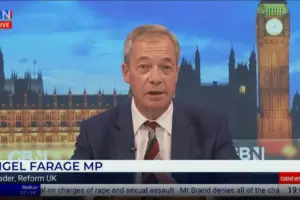
The debate reached a fever pitch in recent years with the launch of dedicated opinion-led television channels, such as GB News and NewsUK TV (TalkTV). These networks actively recruited serving MPs—most notably from the Conservative Party, including former cabinet ministers and backbenchers—to host regular weekly programmes. This development transformed a theoretical regulatory grey area into a daily reality. Suddenly, prime-time television viewers across the UK were watching active legislators set the news agenda, critique government policy, and interview constituents and colleagues on national television. It was against this backdrop of accelerating normalization that Demos and Dr. James Painter commissioned the sweeping European comparative study to benchmark the UK against its continental neighbours.
Supporting Context & Metrics: The European Panorama
The Demos report, titled "Politician-Presenters: How UK Regulation of Politicians Presenting News & Current Affairs Programmes Compares with Europe," provides empirical weight to the argument that the UK’s approach is a distinct exception rather than a global norm.
The EPRA Survey Methodology
Conducted via the European Platform of Regulatory Authorities, the survey gathered data from 37 national media regulators spanning Western, Central, and Eastern Europe, as well as Nordic and Mediterranean states. The objective was to map out legislative prohibitions, regulatory guidelines, and self-regulatory norms governing whether individuals holding elective or executive office can simultaneously serve as broadcast presenters of news and current affairs content.
Key Quantitative Findings
- 35 out of 37: In 35 of the surveyed countries, regulators confirmed that there are no active instances of serving politicians presenting news or current affairs programmes on national television networks.
- 34 out of 37: A total of 34 countries enforce explicit legal bans or substantial regulatory restrictions that prevent politicians from taking on broadcasting roles that entail editorial control or public-facing journalism during their term of office.
- 2 Exceptions: Only two nations—Iceland and Malta—reported historical or isolated instances where politicians had engaged in broadcast presentation. However, in both cases, the practice was strictly limited in scope, short-lived, and subsequently curtailed by public backlash or tightening regulatory interpretations.
- 1 Outlier: The United Kingdom remains the singular major European democracy where serving members of the national legislature routinely host current affairs programmes without breaching broadcasting codes, provided they navigate Ofcom’s complex matrix of "due impartiality" safeguards.
Why Europe Guards the Barrier
Conversations with European regulators cited in the Demos report underscore a philosophical divergence. Across continental Europe, public service broadcasting and media regulation are frequently anchored in constitutional principles designed to protect democratic institutions from media capture and partisan distortion.
In countries such as Germany, France, and the Nordic states, the separation of powers extends conceptually into the media sphere. Allowing a politician—who wields legislative votes, party discipline, and executive ambitions—to command a broadcast microphone is viewed by continental regulators as an unacceptable conflation of the political actor and the journalistic referee. It grants elected officials an unearned platform to frame debates, bypass traditional parliamentary accountability mechanisms, and project partisan narratives under the guise of independent broadcasting.
Official Statements and Expert Analysis
The publication of the Demos report has ignited a fierce debate among media ethicists, politicians, and regulatory bodies regarding the health of British democracy and the future of broadcast standards.
Dr. James Painter, author of the report from the Reuters Institute for the Study of Journalism, emphasized the stark nature of the international comparison:
"Our survey of 37 European regulators demonstrates beyond doubt that the UK is in a league of its own. While other European democracies have built robust firewalls to keep serving politicians out of the presenter’s chair—viewing it as an inherent conflict of interest—the UK has leaned in the opposite direction. This raises profound questions about how our media system values impartiality and whether the public can truly trust that current affairs programming is free from partisan self-interest."
A spokesperson for Demos elaborated on the broader democratic implications:
"Broadcasting is not just another industry; it is the central nervous system of our democratic public square. When lawmakers become broadcasters, the line between holding power to account and wielding media power for partisan gain is catastrophically blurred. The UK’s regulatory framework was designed for an analog era and is ill-equipped for a modern media market saturated with hyper-partisan incentives."
Conversely, defenders of the UK model—including executives from commercial networks that employ politician-presenters—argue that the practice enhances democratic engagement and provides transparency. Representatives from independent broadcast networks have frequently contended that allowing politicians to present programmes brings diverse political voices directly to the public, challenges legacy media orthodoxy, and offers viewers unvarnished access to the political mindset. They argue that Ofcom’s existing regulatory framework, which mandates due impartiality and demands that politicians do not interview constituents on matters concerning ongoing legal or ministerial disputes, provides an adequate safety net.
However, media unions and press freedom advocates, such as the National Union of Journalists (NUJ), have pushed back sharply. An NUJ representative stated:
"Journalism is a profession built on independence, verification, and critical distance from the subjects it covers. When an MP moonlights as a television host, the integrity of the journalism is compromised. It undermines the hard work of professional correspondents and erodes public trust in the news media at a time when misinformation is already rampant."
Future Outlook: Regulatory Reform and the Road Ahead
As the UK media landscape continues to evolve under the pressures of digital transformation, changing consumer habits, and the rise of opinion-driven broadcasting, the Demos report serves as a catalyst for a much-needed national conversation about regulatory modernization.
The Pressure on Ofcom
As the statutory regulator, Ofcom faces mounting pressure to re-evaluate how its Broadcasting Code is applied to politician-presenters. Critics argue that Ofcom’s current reliance on post-broadcast complaints and complex, case-by-case adjudications is reactive and toothless. As more politicians eye media secondments as a lucrative post-parliamentary—or even mid-career—side hustle, the regulator may be forced to consider whether tighter, more explicit statutory restrictions are required to align the UK with European norms.
The Public Trust Deficit
Trust in traditional news media remains a fragile commodity. In an era marked by democratic backsliding, rising populism, and deep political polarization, the perception of media neutrality is paramount. If audiences perceive that current affairs broadcasting is being co-opted by partisan actors seeking to amplify their own political brands, public faith in the impartiality of UK broadcasting—long considered a gold standard globally—will suffer irreparable damage.
Policy Recommendations for the Future
Drawing upon the international insights compiled by Dr. James Painter, media reform advocates are urging policymakers to consider several key interventions:
- Legislative Review: Parliament should commission an independent review of the Communications Act 2003 to determine whether the statutory definition of due impartiality remains fit for purpose in the digital age.
- Presumptive Bans: Ofcom should explore introducing a presumptive regulatory ban on serving legislators acting as primary presenters of news and current affairs programmes, mirroring the standard practice across 34 European jurisdictions.
- Enhanced Transparency: If politician-presenters are permitted to remain on air, stringent mandatory disclosures regarding financial compensation, lobbying interests, and editorial oversight must be implemented to ensure total transparency for viewers.
- Strengthening Public Service Media: Policymakers must reinforce the independence and funding of public service broadcasters (PSBs) to ensure they remain insulated from commercial imperatives that drive partisan sensationalism.
Conclusion
The Demos report acts as a mirror held up to British democracy, reflecting an uncomfortable truth: in the realm of broadcast regulation, the UK is increasingly out of step with the rest of Europe. As newsrooms grapple with the commercial and ethical pressures of the twenty-first century, the question of whether politicians belong in the presenter’s chair is no longer an academic abstraction. It is a defining test of whether the UK can protect the independence of its journalistic institutions or whether the line between governing the country and broadcasting to it will be erased entirely.