Executive Overview
Modern journalism is facing a profound crisis of confidence. Across democratic societies, traditional news formats—characterized by adversarial panels, rapid-fire soundbites, and sensationalized studio debates—are increasingly failing to inform the public. Instead, they frequently polarize communities, reduce complex socio-economic realities to partisan footballs, and leave audiences feeling alienated, misunderstood, and exhausted.
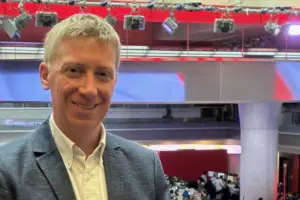
A stark illustration of this systemic failure unfolded during Suella Braverman’s high-profile appearance on the BBC’s flagship political debate program, Question Time. Set against the glaring glare of television studio lights, the format relied on a panel predominantly composed of career politicians, constrained by rigid time limits, and driven by provocative, pointed questioning. Rather than illuminating the delicate, deeply personal realities surrounding identity, integration, and immigration, the broadcast became a masterclass in performative antagonism. It was a recipe engineered for conflict, designed not to foster genuine understanding or societal healing, but to harvest viral clips for social media algorithms.
When complex human experiences are funneled through this adversarial lens, nuance is the first casualty. But as public trust in legacy media reaches historic lows, pioneering media innovators are asking a radical question: What if there is another way?
Enter the News For All project, a groundbreaking initiative spearheaded by journalist, researcher, and community organizer Shirish Kulkarni. Operating as a news innovation research fellow at Media Cymru and the founder of Inclusive Journalism Cymru, Kulkarni has spent the past year challenging the foundational assumptions of how news is gathered, produced, and consumed. Developed in partnership with a diverse coalition—notably including the Welsh Government and Welsh-language public broadcaster S4C—the project pivots away from the top-down, London-centric editorial model.
Instead, Kulkarni’s research explores a transformative hypothesis: What conditions does a marginalized or historically misunderstood community actually need to make sense of its own life together? By embedding researchers directly within a tight-knit community—specifically the former slate-mining town of Blaenau Ffestiniog in north Wales—the project offers a blueprint for a democratic, empathetic, and truly representative model of journalism. This investigative report examines the mechanics of this experiment, the systemic flaws of traditional broadcast media, the empirical context behind modern news distrust, and the roadmap for a restorative future in media production.
Detailed Chronology: From Studio Confrontations to Grassroots Discovery
To understand the urgent need for structural reform in journalism, one must trace the trajectory of modern media formats from institutional insularity to community-led inquiry.
Phase One: The Anatomy of Modern Broadcast Polarization
The contemporary political talk show format was codified in the late 20th century, optimizing for ratings, engagement, and dramatic tension. Programs like Question Time operate on an adversarial premise: pit individuals with opposing ideological viewpoints against one another, introduce a moderator to police the clock, and let the ideological clash unfold.
However, over the past decade, the cultural and political landscape has shifted dramatically. Issues of identity, immigration, and national belonging are no longer abstract policy debates; they touch upon the lived anxieties of everyday citizens. When high-profile political figures—such as former Home Secretary Suella Braverman—step onto these platforms, the discourse rarely accommodates the messy, multifaceted realities of multicultural neighborhoods or post-industrial towns.
The chronological sequence of such broadcasts is remarkably predictable:
- The Pre-Show Framing: Editors select sensationalized topics designed to provoke strong emotional responses.
- The Studio Environment: High-contrast lighting, live studio audiences instructed on when to applaud, and a panel of professional combatants create a pressure cooker.
- The Exchange: Complex socio-economic pressures are distilled into 30-second soundbites, interrupting nuance in favor of rhetorical dominance.
- The Aftermath: Social media amplifies the most divisive moments, entrenching existing tribal divides while leaving the broader viewing public feeling alienated and unrepresented.
Phase Two: Conceptualizing the "News For All" Initiative
Recognizing that traditional newsrooms were structurally incapable of repairing this fractured relationship with the public, Shirish Kulkarni began conceptualizing a counter-framework in the early 2020s. Moving beyond mere "diversity training" for existing journalists—which often treats symptoms rather than root causes—Kulkarni argued that the entire architecture of news production needed to be democratized.
With backing from Media Cymru, an organization dedicated to driving innovation in the Welsh media sector, and in collaboration with the Welsh Government and S4C, the News For All project transitioned from theoretical critique to empirical fieldwork. The core objective was to design a journalistic process where the subjects of news ceased to be passive sources or extraction points for London-based correspondents, and instead became active co-creators of narrative.
Phase Three: Ground Zero – Blaenau Ffestiniog
In 2023, the project established its primary testing ground in Blaenau Ffestiniog, a proud, Welsh-speaking, former slate-mining town nestled in the mountains of north Wales. Blaenau Ffestiniog embodies the complex challenges facing many post-industrial regions across the United Kingdom: economic transition, demographic shifts, housing pressures, and a deep-seated suspicion of metropolitan media outlets that historically mischaracterized or ignored rural Welsh realities.
Over the course of a year, Kulkarni and his team did not descend upon the town with predetermined editorial agendas or breaking news packages. Instead, they recruited and empowered 14 community co-researchers—local residents representing various walks of life, ages, and backgrounds.
Rather than asking, "What is the story here today?" the co-researchers interrogated a much deeper, more foundational prompt: "What conditions does this community need to make sense of its own life together?"
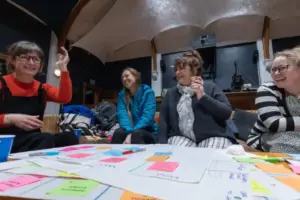
Through months of structured listening circles, open dialogues, and collaborative mapping exercises, the participants began to redefine what news should look like when it serves the psychological, social, and civic needs of a specific locale. The findings from this year-long immersion challenge the very pillars of 21st-century journalism.
Supporting Context & Metrics: The Crisis of News Trust
The urgency of Kulkarni’s work is underscored by alarming quantitative trends in media consumption and public trust across the UK and the broader Western world.
The Trust Deficit
According to data from the Reuters Institute for the Study of Journalism at the University of Oxford, overall trust in news has experienced a steady, precipitous decline. In the UK, public trust in the news hovers near historic lows, with fewer than 35% of citizens stating they trust most news, most of the time.
More damningly, regional and rural communities frequently report feeling actively misrepresented by national media outlets. When national journalists descend upon towns like Blaenau Ffestiniog, it is almost exclusively during moments of crisis—economic decline, political scandal, or social unrest. This "parachute journalism" fosters a transactional, extractive relationship: local trauma or controversy is harvested for national consumption, leaving the community to deal with the reputational and emotional fallout once the camera crews depart.
The Psychology of Adversarial Media
Neuroscience and media psychology offer clear explanations for why formats like Question Time fail to foster constructive dialogue. When audiences are exposed to high-conflict, adversarial media:
- The Amygdala Hijack: The brain’s fear and survival center is activated by aggressive rhetoric and interpersonal conflict, impairing higher-order cognitive processing and critical thinking.
- Polarization Reinforcement: Viewers tend to experience confirmation bias, interpreting ambiguous statements through partisan lenses and hardening their pre-existing ideological silos.
- Civic Exhaustion: Constant exposure to manufactured outrage leads to news avoidance. A growing segment of the population actively tunes out current events simply because consuming the news makes them feel helpless and distressed.
The Economic Imperative for Change
The traditional commercial model of news—reliant on advertising revenue driven by high click-through rates and outrage engagement—is financially unsustainable for local reporting and socially destructive for public cohesion. The News For All project posits that public-service media must pivot toward a relational economic and operational model. By investing time and resources into community capacity-building, media institutions can rebuild the social capital necessary to sustain healthy democratic engagement.
Official Statements and Stakeholder Perspectives
The implications of the News For All project have reverberated across the Welsh media landscape, drawing praise from public bodies, broadcasters, and academic institutions alike.
"We cannot continue to manufacture public discourse using tools that treat human identity and community cohesion as blood sport. The experiment in Blaenau Ffestiniog proves that when you hand the microphone—and the editorial pen—to the community itself, the quality of the conversation changes entirely. We stop arguing about identity and start building mutual understanding."
— Shirish Kulkarni, News Innovation Research Fellow, Media Cymru, and Founder, Inclusive Journalism Cymru
Public sector stakeholders have likewise emphasized the necessity of aligning public service broadcasting with genuine community empowerment. Representatives from Media Cymru noted that the initiative represents a vital step toward decentralizing media innovation in the UK, proving that cutting-edge journalism research does not need to originate from major metropolitan hubs like London or Manchester.
Furthermore, S4C—Wales’ iconic Welsh-language public service broadcaster—has monitored the project with keen interest. As a broadcaster mandated to reflect the distinct cultural, linguistic, and social fabric of Wales, S4C’s engagement highlights the critical importance of localized media models that respect regional nuances.
While traditional political figures and legacy network executives often defend adversarial formats as essential for "holding power to account," reformers like Kulkarni argue a vital distinction: holding power to account is entirely different from turning community identity into an arena for partisan combat. Accountability journalism requires rigor, patience, and depth—qualities systematically starved by the 60-second studio soundbite.
Future Outlook: A Blueprint for Restorative Journalism
As the News For All project concludes its foundational research phase, the critical question facing the media industry is scalability. Can the lessons learned in Blaenau Ffestiniog be translated into a sustainable, nationwide transformation of journalism?
1. Re-engineering Newsroom Protocols
Legacy newsrooms must re-evaluate how they approach stories involving identity, culture, and community dynamics. This requires dismantling top-down news desks where commissioning editors sitting miles away dictate local narratives. Instead, newsrooms should adopt participatory journalism frameworks, partnering with community co-researchers from the inception of an investigative piece.
2. Shifting Metrics of Success
Media organizations must move beyond vanity metrics—such as clicks, shares, and inflammatory engagement—and measure success through indicators of social cohesion, civic participation, and audience comprehension. If a news broadcast generates millions of views by stoking outrage but leaves a community fractured and misunderstood, it should be judged a journalistic failure.
3. Training the Next Generation of Journalists
J-schools and journalism training programs must update their curricula. Aspiring reporters need to be trained not just in shorthand, media law, and aggressive interview tactics, but in community organizing, trauma-informed reporting, listening methodologies, and restorative narrative techniques.
4. Policy and Funding Reforms
Public service broadcasters and government funding bodies should direct resources toward local innovation funds that prioritize relational journalism over sensationalism. By tying public funding to measurable improvements in community engagement and trust, regulators can incentivize a healthier media ecosystem.
Conclusion
The contrast between the glaring studio lights of national political talk shows and the quiet, deliberate listening circles of Blaenau Ffestiniog highlights the fork in the road currently facing modern journalism.
We can continue down the well-trodden path of manufactured outrage, adversarial soundbites, and polarizing identity debates—a path that generates high ratings in the short term while steadily eroding the foundations of democratic trust. Or we can embrace the radical, restorative vision championed by Shirish Kulkarni and the News For All project.
By recognizing that communities possess the innate capacity to make sense of their own lives when given the right conditions, media institutions can transcend the politics of division. Journalism can once again become what it was always meant to be: a mirror that reflects society with empathy, accuracy, and profound, enduring truth.