Executive Overview
The sprawling, decentralized ecosystem of global cybercrime has suffered a massive structural earthquake. Saif Al-din Khader—a teenager from Amman, Jordan, known by the hacker handle “Rey”—has been detained by local authorities and is reportedly cooperating extensively with the Federal Bureau of Investigation (FBI). Khader, identified by cybersecurity journalists as a central administrator and opportunistic franchise operator for the notorious data theft and extortion syndicate ShinyHunters, was captured at a critical inflection point: just as the group was executing an aggressive, high-stakes extortion campaign against a major aerospace logistics unit.
The detention of the young Jordanian cybercriminal is only one chapter in a turbulent narrative that has exposed the inner workings of modern corporate extortion. Over a matter of weeks, the cyber underworld watched in real-time as international law enforcement dismantled infrastructure, raided residences across Europe, and forced high-profile underground figures into the open. The saga has revealed how notorious cybercriminal banners are hijacked, franchised, and weaponized by younger, more erratic actors who treat multi-million-dollar extortion campaigns like social media clout-chasing.
This deep-dive report breaks down the anatomy of the ShinyHunters collapse, the exploitation of critical Oracle PeopleSoft zero-days, the bizarre crossover between high-tech hacking and alleged murder-for-hire plots in the Netherlands, and the shifting tactics of a transnational enterprise that dared to poke the world’s most powerful law enforcement agency.
Detailed Chronology: From Oracle Exploits to Amman Interrogations
The events leading up to Khader’s detention and the subsequent implosion of the modern ShinyHunters brand unfolded over a relentless sequence of months, characterized by daring zero-day exploitation, public taunting, and swift international counter-offensives.
The PeopleSoft Zero-Day Campaign
The technical foundation of the ShinyHunters resurgence dates back to June, when the group began weaponizing a critical software vulnerability (CVE-2026-35273) affecting Oracle PeopleSoft. Widely deployed by enterprise organizations, universities, healthcare providers, and government agencies for human resources, payroll, and hiring management, PeopleSoft servers became a prime target.
Oracle quickly issued patches, while cybersecurity giant Mandiant released urgent web application firewall (WAF) rules to protect organizations that could not immediately update their systems. Unfazed, ShinyHunters bypassed these security controls using sophisticated URL-encoding tricks. By late September, a joint threat intelligence report published by Mandiant and the Google Threat Intelligence Group (GTIG) confirmed that the group had mass-exploited the vulnerability, vacuuming sensitive data from dozens of corporate and institutional networks.

Breaching the FBI and the Cl0p Feud
Buoyed by their success against commercial targets, the hackers turned their crosshairs toward the ultimate law enforcement prize: the FBI’s recruitment database. While initial attempts to directly breach the agency’s PeopleSoft implementations met with resistance, the group eventually succeeded in compromising a recruitment portal.
Subsequent reporting by Reuters revealed that the FBI was forced to remove an Accenture contractor over failures to patch the vulnerability. The breach exposed sensitive records of more than 5,000 FBI personnel, including specialized unit assignments, medical histories, and psychiatric evaluations.
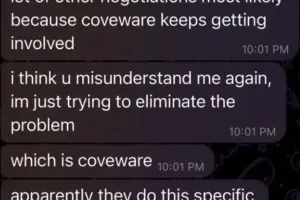
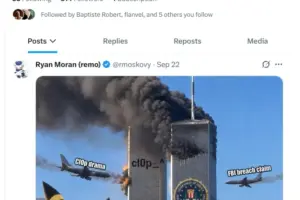
In a brazen display of ego, Rey seized operational control of the ShinyHunters moniker following the mid-September arrest of Dutch national Pepijn van der Stap. Rey began flooding social media with memes on Twitter/X, publicly claiming responsibility for the FBI hack while simultaneously attempting to frame Van der Stap—whose former hacker alias was “Umbreon”—by scattering the Dutchman’s digital avatars across taunting graphics. Rey also claimed to be actively extorting the established Cl0p ransomware cartel, posting extensive doxxing material on GitHub targeting the alleged Russian developers behind Cl0p.
The Net Closes: Arrests and International Raids
The public spectacle could not last. On September 15, Dutch special forces executed a dramatic raid utilizing flash-bang grenades on the Amsterdam residence of Pepijn van der Stap, arresting the 24-year-old on suspicion of orchestrating data thefts alongside ShinyHunters.
Weeks later, on October 3, Reuters broke the news that Saif Al-din Khader had been detained by Jordanian authorities in Amman. According to intelligence sources, Khader immediately began cooperating with federal investigators, turning over critical infrastructure keys and communications logs in exchange for leniency. Realizing the net was closing, Khader purged his social media accounts, though his GitHub-hosted cybercrime research and doxxing profiles remained accessible.
Supporting Context & Metrics: The Jeppesen ForeFlight Extortion
The catalyst that ultimately triggered maximum urgency within FBI investigation units was not the breach of the FBI recruitment database, but rather a dangerous escalation into critical aerospace infrastructure.

The Boeing Spin-Off Target
According to sources familiar with the ongoing investigation, Khader and his cell were actively extorting a navigation and digital aviation unit recently divested by global aerospace titan Boeing at the moment of his capture. The targeted entity was Jeppesen ForeFlight, a premier flight-planning and navigation subsidiary that Boeing sold to private equity firm Thoma Bravo in November 2025 for a staggering $10.55 billion.
Federal investigators grew deeply concerned over the Jeppesen ForeFlight extortion because the stolen information included navigation data and proprietary aviation systems that could introduce operational safety and security risks to global air travel.
The Royal Jordanian Connection
The intersection between Rey’s real-world identity and his cybercriminal activities carries a deeply ironic twist. Investigative profiles revealed that Khader’s father is employed as a pilot or senior staff member for Royal Jordanian Airlines, the flag carrier of Jordan, which relies heavily on a long-haul fleet of Boeing aircraft.
Digital forensics from a password-stealing malware infection on the Khader family’s shared home computer previously demonstrated that Rey’s father utilized identical credentials across multiple employee login portals for the airline. When investigative journalists reached out to the Khader family for comment prior to publication, Rey abruptly initiated his social media purge, realizing his digital footprint had completely betrayed him.
Official Statements and Corporate Responses
As the fallout from the ShinyHunters operation reverberates through corporate boardrooms and law enforcement agencies, key stakeholders have scrambled to address the security failures and public relations nightmares.
- Boeing Corporate Communications: Acknowledging the extortion claims, a Boeing spokesperson issued a guarded statement: "We are aware of claims by a threat actor regarding data allegedly associated with Boeing and our former subsidiary Jeppesen ForeFlight. We are actively reviewing the matter with the Jeppesen ForeFlight team."
- Jeppesen ForeFlight: Seeking to reassure commercial aviation clients, a company spokesperson maintained that the enterprise remained secure: "Based on our investigation to date into this claim and proactive security posture, there was no impact to our operations or products."
- The Cybercriminal Rationale: In interviews with security journalists at The Register, representatives for ShinyHunters defended their attack on the FBI as a necessary public relations move. They argued that the FBI’s May 2026 flash notice advising victims not to pay ransoms was unprofessional and damaging to their business model, prompting a technical counter-offensive to "demonstrate our technical capabilities and directly refute the misinformation disseminated by the FBI."
The Darker Underbelly: Murder-For-Hire Allegations in the Netherlands
While the focus in Amman centered on teenage digital extortion, investigations in Europe took a staggeringly dark turn involving Dutch suspect Pepijn van der Stap.

From Reformed Hacker to Murder Suspect
Media outlets in the Netherlands, including the prominent daily RTL, reported explosive new allegations against Van der Stap. Widely portrayed in tech media as a reformed hacker who had successfully reintegrated into society as an "offensive security lead" at Amsterdam-based cybersecurity firm Neo Security, Van der Stap is now suspected by Dutch authorities of commissioning at least two murders abroad.
Investigators indicate that Van der Stap issued orders for the contract killings prior to his dramatic September 15 arrest. Neo Security owner Benjamin Korper expressed shock, noting that while external forensic auditors found no evidence that Van der Stap had compromised Neo Security or its clients, the sudden police raid—executed with tactical flash-bang grenades—turned the firm’s operations upside down.
The Illusion of Rehabilitation
Before his initial 2023 conviction and four-year prison sentence, Van der Stap operated as a dual-threat actor: maintaining a day job as a software engineer at cybersecurity startup Hadrian while volunteering for the Dutch Institute for Vulnerability Disclosure (DIVD), all while secretly orchestrating high-profile corporate extortions.
When questioned about his deceit prior to his recent arrest, Van der Stap shrugged off moral criticisms: "You can throw a bunch of nice words at someone, but you can’t convince them if they don’t want to be convinced. I’m doing what I can to repay victims, and that’s all I can do." These words now ring hollow against the backdrop of capital crime allegations.
Future Outlook: The Franchise Model of Cybercrime
The era of centralized, tightly knit cybercriminal cartels is effectively dead. Much like the mythical "Dread Pirate Roberts" from cinematic lore, modern cybercrime brands operate on a franchise model where titles are bought, sold, and inherited by whoever possesses the PGP keys, forum access, and stolen credentials when the previous leadership is imprisoned or compromised.
The Death of the Brand
The original French-led core of ShinyHunters was largely neutralized years ago. The group that emerged in 2026 was a loose confederation of opportunistic freelancers—including young operators like Rey—who traded in SaaS database access, leveraged stolen credentials, and negotiated ransoms for a 25% to 30% cut.

Public sentiment within underground Telegram channels like "The Battle" has turned overwhelmingly hostile toward amateurs like Khader. Underground commentators mocked the teenager for "larping" under a legendary banner, causing over $200 million in cumulative damages while ultimately bungling operational security and inviting total law enforcement scrutiny.
What Comes Next?
The simultaneous detention of Saif Al-din Khader in Jordan and the incarceration of Pepijn van der Stap in the Netherlands mark a watershed moment for international cyber defense. However, cybersecurity analysts warn that arresting individual affiliates does little to stem the underlying market for corporate data theft. As long as software platforms like Oracle PeopleSoft contain exploitable zero-days, and as long as corporate contractors fail to patch basic perimeter defenses, new faces will emerge from the shadows to claim the vacant throne of enterprise extortion.