Executive Overview
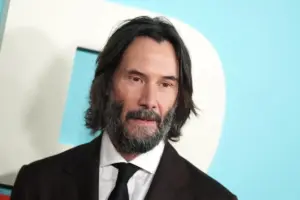
In a major casting shift that bridges Hollywood’s past with its modern streaming era, iconic action star Keanu Reeves has officially boarded Netflix’s high-stakes action feature Maelstrom. Reeves steps into the leading role following the departure of Reacher star Alan Ritchson, whose sudden exit from the project remains shrouded in mystery.
Directed by Jaume Collet-Serra—the filmmaker behind Netflix’s propulsive thriller Carry-On—Maelstrom promises a claustrophobic, adrenaline-fueled narrative. The plot centers on a Federal Marshal tasked with guarding the fiancée of a notorious arms dealer. As the woman prepares to turn state’s evidence and enter witness protection, the situation spirals into chaos. Events unfold over a single, terrifying evening as a catastrophic hurricane bears down upon them. Cut off from the outside world by torrential winds and rising floodwaters, and with all external reinforcements blocked from arriving, the duo must fend off a relentless onslaught of elite operatives dispatched by the arms dealer, all while battling the raw, destructive fury of nature just outside their window.
The film is more than just another entry in Netflix’s expanding slate of high-budget action cinema; it represents the resurrection of a legendary Hollywood property. Originally sold as a spec script to Warner Bros. all the way back in 1993, Maelstrom was famously dubbed "Die Hard in a hurricane." Now, more than three decades later, the project has finally found its path to production under the banner of producer Jeff Robinov, marking his inaugural venture as part of a major new creative partnership with Netflix.
With Reeves anchoring the production—adding yet another thrilling vehicle to a career already defined by genre-defining classics like The Matrix and John Wick—Maelstrom is instantly positioning itself as one of the streaming giant’s most anticipated upcoming blockbusters.
Detailed Chronology: From 1993 Spec Script to the Netflix Era
To truly understand the significance of Maelstrom moving forward, one must trace its remarkably winding 33-year journey through the corridors of Hollywood development.
The 1993 Bidding War and the Birth of a Concept
In an era before superhero franchises and interconnected cinematic universes dominated the box office, high-concept spec scripts were the undisputed currency of the entertainment industry. In 1993, a script penned by the late writer Gregory Fitzpatrick captured the imagination of Hollywood talent agents and studio executives alike.
The premise was brilliantly simple yet practically difficult to execute: trap characters in a hostile environment during a natural disaster, stripping away modern conveniences, communications, and law enforcement support, and pit them against an army of heavily armed mercenaries. The industry immediately tagged the project as "Die Hard in a hurricane."
At the time, a young Jeff Robinov—working as an agent before his ascension to the presidency of Warner Bros. Pictures—championed the script and successfully sold it to Warner Bros. in a fiercely competitive environment. According to archival reporting by Variety, the script commanded a massive spec sale ranging between $225,000 and $625,000 (an astronomical sum for the era, which translates to roughly $500,000 to $1.4 million when adjusted for inflation today).
Despite the early enthusiasm, soaring budget projections, technical limitations in practical weather effects of the era, and shifting studio priorities caused Maelstrom to languish in development hell. It became one of Hollywood’s most famous "lost" scripts—a legendary concept whispered about by screenwriters and producers, seemingly destined never to see the light of day.
The Modern Resurrection Under Jeff Robinov
Decades later, Jeff Robinov—now one of the industry’s most respected producers, having previously shepherded billion-dollar cultural phenomenons like Christopher Nolan’s The Dark Knight trilogy and The Hangover franchise—decided to revisit his professional roots.
Bringing the long-dormant property over to Netflix, Robinov established Maelstrom as the inaugural project under his newly minted producing deal with the streaming service. Recognizing that the cinematic landscape had evolved to embrace gritty, grounded, high-octane action thrillers, Netflix greenlit the revival. To bring the 1993 draft into the modern era, screenwriter Mark Bianculli (How to Rob a Bank) was brought on board to polish the screenplay, blending Fitzpatrick’s original pulse-pounding structure with contemporary pacing, stakes, and character dynamics.
The Ritchson Departure and the Reeves Pivot
The project gained significant momentum when Reacher breakout star Alan Ritchson was initially tapped to lead the film. Ritchson’s towering physical presence and proven capability to anchor muscle-bound action vehicles made him a natural fit for the Federal Marshal role.
However, industry insiders were sent scrambling when news broke that Ritchson had abruptly dropped out of the project. While official details regarding his departure remain closely guarded, production did not skip a beat. Recognizing the urgent need to secure a world-class replacement who could instantly elevate the project’s global prestige, the creative team turned to Keanu Reeves.
First reported by Page Six Hollywood, Reeves’ casting transformed Maelstrom overnight from an intriguing genre revival into a major A-list cinematic event.
Supporting Context & Metrics: The Business of Action and Inflation
The journey of Maelstrom offers a fascinating lens through which to examine the economics of Hollywood spec scripts, the shifting power dynamics of traditional studios versus streaming giants, and the enduring commercial viability of physical-action cinema.
Inflation and Spec Script Valuations
When Maelstrom was acquired in 1993, the spec market was vastly different. Mid-to-high six figures for an unproduced screenplay represented a major gamble for a studio. Adjusted for inflation, the original acquisition cost of up to $625,000 equates to over $1.4 million in contemporary currency.
While spec script sales of that magnitude still occur today, they are increasingly rare in an industry heavily reliant on pre-existing IP, comic book adaptations, and sequels. By reviving an original, high-concept script rather than relying on a pre-existing brand, Netflix and Jeff Robinov are betting that audiences still crave original thrillers anchored by high-concept premises.
The Streaming Advantage: Practicality Meets Global Reach
In 1993, simulating a hurricane while maintaining continuous, high-intensity action sequences across an entire feature film posed immense logistical and financial hurdles. Practical water tanks, massive wind machines, and complex stunt choreography were astronomically expensive and technically limited.
Today, advancements in visual effects, hybrid stage technologies (such as advanced LED volume stages combined with wet-weather practical sets), and the boundless global distribution platform of Netflix make Maelstrom far more viable. Furthermore, director Jaume Collet-Serra—who proved his knack for contained, high-tension action with Netflix’s Carry-On—is uniquely equipped to maximize the claustrophobic tension of a storm-locked location.
Keanu Reeves’ Unrivaled Box Office and Streaming Gravity
Keanu Reeves enters Maelstrom at a fascinating juncture in his legendary career. Over the past two decades, Reeves has not merely maintained his status as an action icon; he has redefined the genre.
- The Matrix Legacy: His work in the Wachowskis’ cyber-thriller universe permanently altered the visual language of Hollywood action.
- The John Wick Phenomenon: Across four massive theatrical installments, the John Wick franchise grossed well over $1 billion worldwide, establishing Reeves as a master of modern gun-fu and endurance-based stunt work.
- Diversification: Beyond action, Reeves continues to flex his creative range. Last year, he made his triumphant Broadway debut in Waiting for Gadot alongside his longtime Bill & Ted co-star Alex Winter, drawing critical acclaim for his stage presence.
Reeves’ involvement guarantees an immediate international audience for Maelstrom, bridging the gap between nostalgic action enthusiasts who remember the 1990s spec market and younger generations raised on his modern action masterpieces.
Official Statements and Industry Reactions
While formal press releases from Netflix regarding Alan Ritchson’s departure have remained concise—focusing primarily on the forward momentum of the production—industry analysts and creative partners have expressed immense enthusiasm for the film’s new direction.
Jeff Robinov, whose career is deeply intertwined with the history of the project, views Maelstrom as a full-circle moment. Transitioning from the agent who sold the script in a smoky 1990s Hollywood office to the veteran producer bringing it to life on the world’s largest streaming platform is a rare professional trajectory.
Director Jaume Collet-Serra has reportedly been collaborating closely with screenwriter Mark Bianculli and Reeves to tailor the Federal Marshal role specifically to Reeves’ distinct screen persona—one that blends stoic resilience, emotional depth, and lethal efficiency under pressure.
Industry observers have noted that Ritchson’s exit, while sudden, ultimately serendipitously aligned with Reeves’ availability, resulting in a fortuitous casting upgrade that instantly elevates the profile of the film. Talent agencies and studio executives are closely monitoring the production, viewing Maelstrom as a test case for whether premium, high-concept original action films can rival franchise IP in the streaming age.
Future Outlook: What’s Next for Maelstrom and Keanu Reeves?
With pre-production ramping up under the direction of Jaume Collet-Serra, Maelstrom is slated to begin principal photography in the coming months. Given the narrative constraints of the film—taking place over a single evening inside a storm-battered location—the production will likely utilize controlled soundstages and advanced weather simulation technology to bring the catastrophic hurricane to life.
For Netflix, Maelstrom represents a cornerstone of their ongoing push to deliver cinematic-quality action thrillers directly to subscribers’ homes. If the film captures the breathless, ticking-clock momentum of its legendary 1993 pitch ("Die Hard in a hurricane"), it has all the ingredients necessary to spawn a major new flagship action property for the platform.
Meanwhile, Keanu Reeves shows no signs of slowing down his exceptionally busy slate:
- Paramount Negotiations: Reeves is currently in advanced talks to lead James Wan’s upcoming gritty crime thriller The Gangster, The Cop, The Devil for Paramount Pictures.
- Voice Acting Return: Fans of his vocal work can look forward to hearing him reprise his fan-favorite role as Shadow the Hedgehog in Sonic the Hedgehog 4, scheduled for release in 2027.
As the cameras prepare to roll on Maelstrom, Hollywood is watching closely. A script that sat gathering dust on executive shelves for 33 years has finally been awakened—and with Keanu Reeves standing in the eye of the storm, Netflix’s upcoming thriller is shaping up to be one of the most explosive cinematic events of the streaming era.