Executive Overview
The modern automobile has long ceased to be merely a mechanical conveyance designed to move passengers from point A to point B. Increasingly, modern vehicles—particularly electric vehicles (EVs)—function as digital living rooms, mobile offices, and entertainment hubs. For millions of commuters, parents waiting during extracurricular practices, and EV owners tethered to public charging stations, dead time has traditionally been filled with endless smartphone scrolling or passive radio listening.
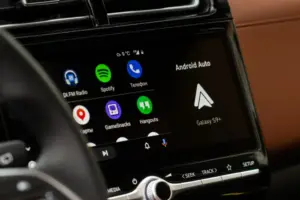
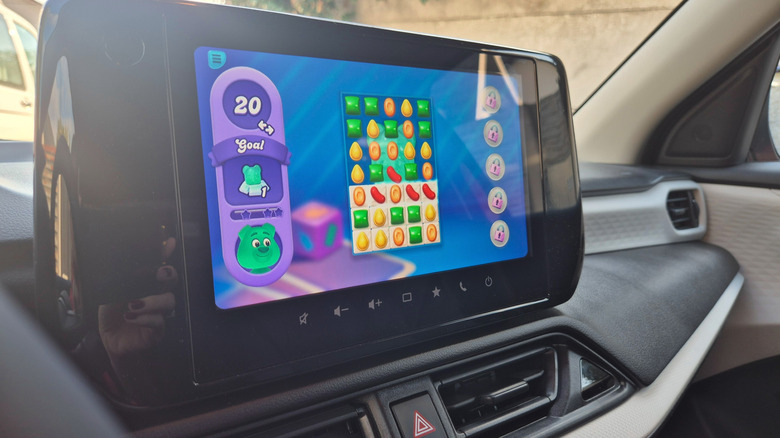
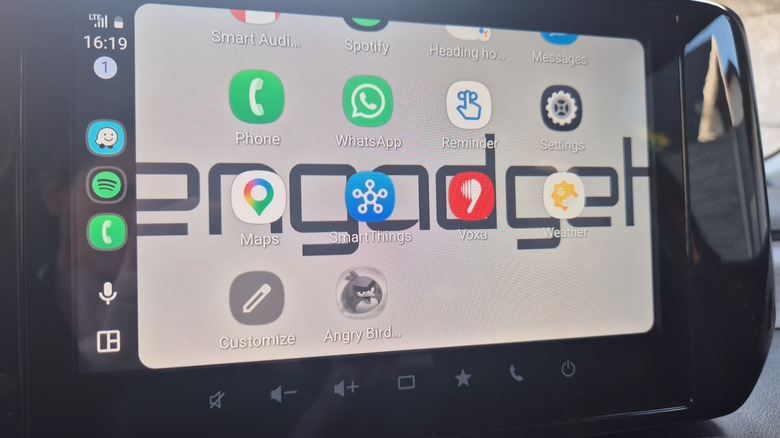
That dynamic shifted significantly when Google officially brought gaming support for Android Auto out of beta, opening the floodgates for developers to integrate car-compatible titles directly onto dashboard displays. While full-scale, high-octane titles like Call of Duty or Hearthstone remain absent from the platform for now, the introduction of a curated ecosystem featuring Angry Birds 2, Candy Crush Soda Saga, and educational children’s apps marks a major turning point.
Designed with safety as a non-negotiable prerequisite, the platform enforces strict parameters: games are exclusively accessible while the vehicle is parked, shutting down instantaneously the moment the car shifts into gear. This comprehensive overview examines the technical rollout, the available catalog, safety architecture, user experience, and the future trajectory of in-vehicle gaming as Android Auto transforms the dashboard into an interactive playground.
Detailed Chronology: From Beta Beginnings to Ecosystem Launch
The evolution of in-car entertainment did not happen overnight; it is the culmination of years of iterative software development, hardware upgrades, and shifting regulatory frameworks regarding driver safety and distraction mitigation.
The Infotainment Inflection Point
For years, automotive manufacturers and tech giants alike recognized the untapped potential of high-definition dashboard touchscreens. While Apple and Google dominated smartphone projection via CarPlay and Android Auto, their offerings were historically restricted to navigation, communication, and media playback. Safety advocates fiercely guarded against any feature that could pull a driver’s eyes away from the road.
However, as electric vehicle adoption surged, charging times introduced prolonged periods of stationary waiting—frequently ranging from 20 to 45 minutes per session. Simultaneously, connected car architectures grew powerful enough to handle more than basic Bluetooth audio streaming.
Entering the Beta Phase
Google recognized this emerging lifestyle shift and initiated experimental developer testing for in-car Android applications. During this phase, early adopters and select software creators tested the limits of dashboard hardware, optimizing touch latency, aspect ratios, and visual layouts for unconventional screen dimensions (ranging from ultra-wide horizontal panels to large vertical tablets).
The September 2026 General Availability Release
The definitive turning point arrived when Google officially transitioned Android Auto gaming support out of beta. Opening the software development kit (SDK) to all developers, the tech giant invited creators to build, optimize, and submit car-friendly software directly through the Google Play Store.
In the weeks following the public rollout, the initial catalog steadily expanded. Developers rushed to adapt casual titles, puzzle games, and family-friendly apps to take advantage of expansive dashboard real estate. Today, Android Auto stands as an official, sanctioned gaming ecosystem, bridging the gap between mobile gaming and automotive infotainment systems.
Supporting Context & Metrics: What’s on the Dashboard and How It Works
Understanding the current landscape of Android Auto gaming requires examining the available software library, hardware requirements, and the strict technical constraints governing the user experience.
The Launch Catalog: Quality Over Quantity
As of the ecosystem’s public rollout, just over 35 titles have been officially certified and adapted for Android Auto. These games fall into three distinct categories:
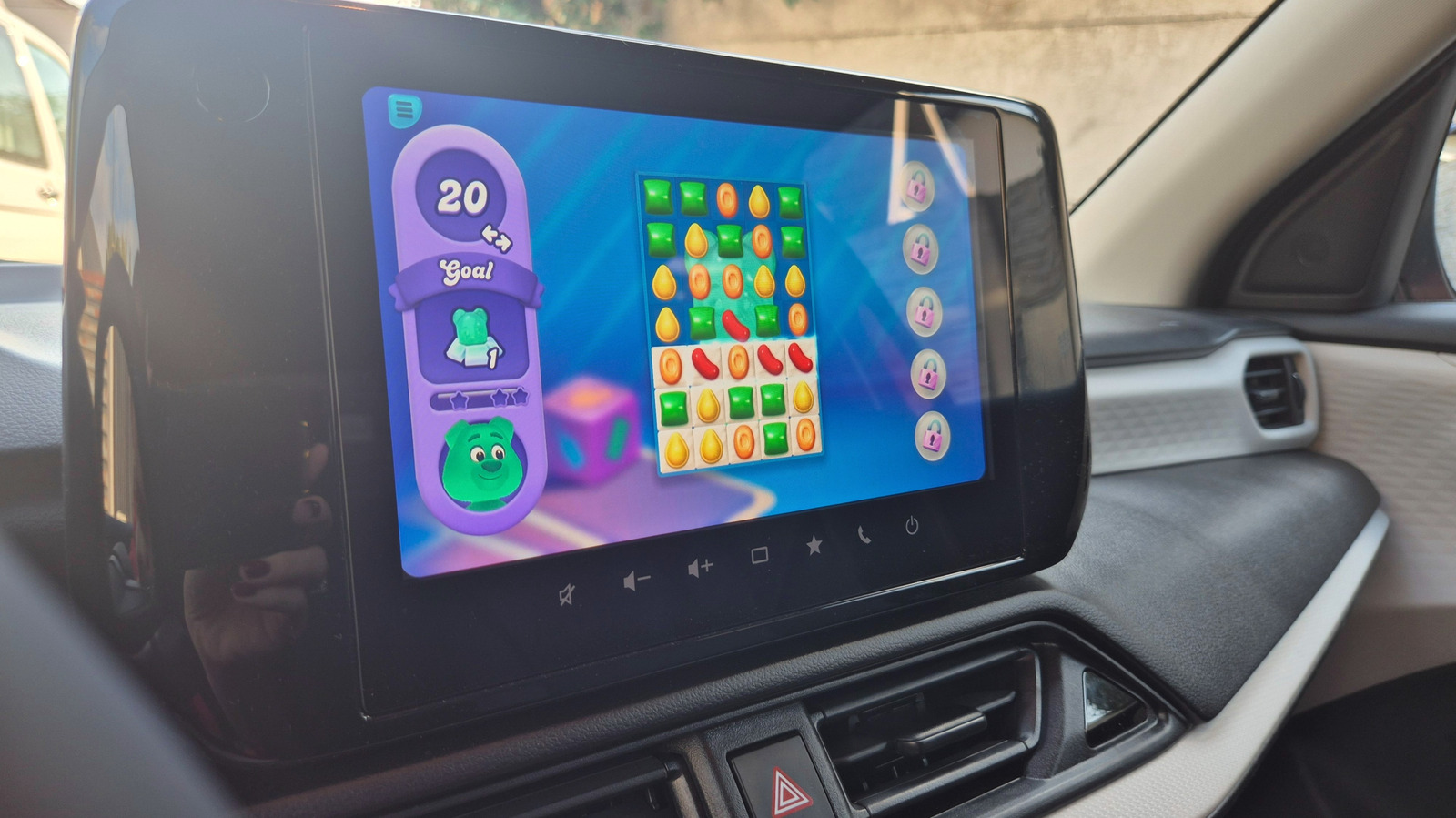
- Casual Puzzle and Arcade Hits: Familiar titles like Angry Birds 2, Candy Crush Soda Saga, and Beach Buggy Racing anchor the collection, offering recognizable gameplay loops scaled for dashboard displays.
- Family and Educational Apps: Recognizing that vehicles frequently double as family transport, a significant portion of the initial library focuses on younger audiences, featuring letter-tracing, basic mathematics, coloring, and apps like My Talking Tom Friends.
- Lightweight Web-Based Options (GameSnacks): For users who prefer not to download dedicated applications, Google’s built-in GameSnacks platform offers simple HTML5-based games to pass time during brief respites.
The Ironclad Safety Protocol: Parked-Only Enforcement
The most critical metric defining Android Auto gaming is accessibility. Critics and safety agencies frequently express concern over distracted driving, prompting Google to build an uncompromised safeguard into the software architecture.
- Motion Detection Integration: Games must be programmed to interface directly with the vehicle’s transmission sensors via Android Auto.
- Instantaneous Lockout: The moment a driver shifts the car out of Park (into Reverse, Drive, or Low gear), the gaming application instantly terminates or minimizes. The interface reverts directly to the standard Android Auto home screen, and the game’s icon is immediately grayed out.
- No Stoplight Loopholes: Drivers cannot bypass this restriction during red lights, heavy traffic crawls, or brief roadside stops unless the vehicle is placed securely back into Park.
Screen Mirroring vs. Native Apps
A common query among tech enthusiasts is whether users can simply mirror their smartphone screens to play any installed game on the dashboard. The answer is a definitive no.
Android Auto purposefully avoids full-screen phone mirroring for two reasons:
- UI Scaling & Optimization: Mobile games are designed for vertical smartphone aspect ratios with touch controls mapped to specific handheld ergonomics. Native Android Auto integration ensures that graphics scale correctly to wide or vertical car displays.
- Regulatory Compliance: Native apps allow Google and automotive manufacturers to maintain strict control over what software runs on the dashboard, preventing unauthorized or unsafe applications from slipping past safety reviews.
Controller Support and Ergonomics
While touching a dashboard screen works well for puzzle games like Candy Crush, racing titles present a distinct physical challenge. As noted in early evaluations, trying to steer Beach Buggy Racing 2 exclusively via touch inputs on a dashboard can feel cumbersome. Fortunately, many supported titles incorporate hardware controller compatibility, allowing users to pair a Bluetooth gamepad to their phone or vehicle system for a true console-style experience.
Official Statements and Industry Perspective
Google’s strategic pivot toward in-car entertainment reflects a broader philosophy regarding the changing nature of mobility.
"Our goal with Android Auto is to provide drivers and passengers with seamless utility, but also meaningful ways to enjoy downtime when the journey pauses," notes software development documentation surrounding the Android Auto ecosystem. "By opening the platform to developers, we are empowering creators to bring rich, safe, and engaging experiences straight to the dashboard."
Automotive analysts point out that infotainment software has become a primary selling point for modern car buyers. Traditional metrics like horsepower and torque are increasingly matched by processing power, display resolution, and software ecosystem versatility.
Industry watchdogs have also lauded Google’s rigid stance on safety enforcement. By hardcoding the "Parked-Only" restriction into the developer guidelines, the company has preemptively neutralized criticism from road safety advocacy groups, framing the feature not as a distraction hazard, but as an amenity designed explicitly for stationary environments—such as EV fast-charging stations, school pickup lines, and rest stops on long-distance road trips.
Future Outlook: Where Goes In-Car Gaming?
As the Android Auto gaming ecosystem matures, developers, hardware manufacturers, and consumers are looking ahead to what comes next.
Expanding the Library
The transition from 35 titles to a robust marketplace is entirely dependent on developer adoption. While casual puzzle games and kids’ apps dominate the current landscape, industry insiders anticipate mid-tier strategy games, turn-based titles, and advanced arcade adaptations entering the pipeline over the next 12 to 24 months. However, hardware constraints—such as varying processor speeds across different vehicle infotainment head units—mean resource-heavy, 3D open-world games will likely remain exclusive to high-end native automotive operating systems (like Android Automotive OS) for the foreseeable future.
The EV Charging Revolution
The rapid growth of the electric vehicle market acts as the primary tailwind for in-car entertainment. As charging infrastructure improves and speeds increase, drivers still find themselves parked for 15 to 30 minutes at a time. Turning the dashboard into an interactive arcade console directly addresses the monotony of public charging stations, transforming an administrative chore into an entertaining break.
Enhanced Controller Integration and Multi-User Play
Looking further down the road, experts predict deeper integration with mobile accessories. Expect more titles to support standard Bluetooth controllers natively, enabling backseat passengers—or front-seat occupants during extended parking sessions—to enjoy cooperative or competitive gaming sessions using the car’s premium sound systems and expansive displays.
Conclusion
Android Auto’s expansion into gaming represents a natural evolution of the connected vehicle. By carefully balancing entertainment with uncompromising safety protocols, Google has successfully turned the dashboard into a dynamic platform for downtime productivity and fun. Whether you are aiming for a high score in Angry Birds 2 while waiting for soccer practice to end or clearing rows of candy during an EV power-up, the modern commute just got a little more entertaining.