Executive Overview
In the highly competitive arena of home entertainment ecosystems, hardware innovation is only half the battle. While consumer electronics giants frequently lean on iterative hardware revisions to capture market share, software-driven feature expansion has increasingly become the gold standard for long-term customer satisfaction. LG Electronics, a titan equally renowned for its industry-leading OLED display technology and its robust audio engineering division, is doubling down on this philosophy.
The company has officially announced a sweeping, feature-rich software update for its acclaimed LG Sound Suite home theater system. Originally introduced to critical acclaim for its modular à la carte speaker architecture and sophisticated spatial calibration technologies, the Sound Suite is receiving a significant injection of new capabilities designed to broaden its audio format support, streamline streaming integration, and bolster network reliability.
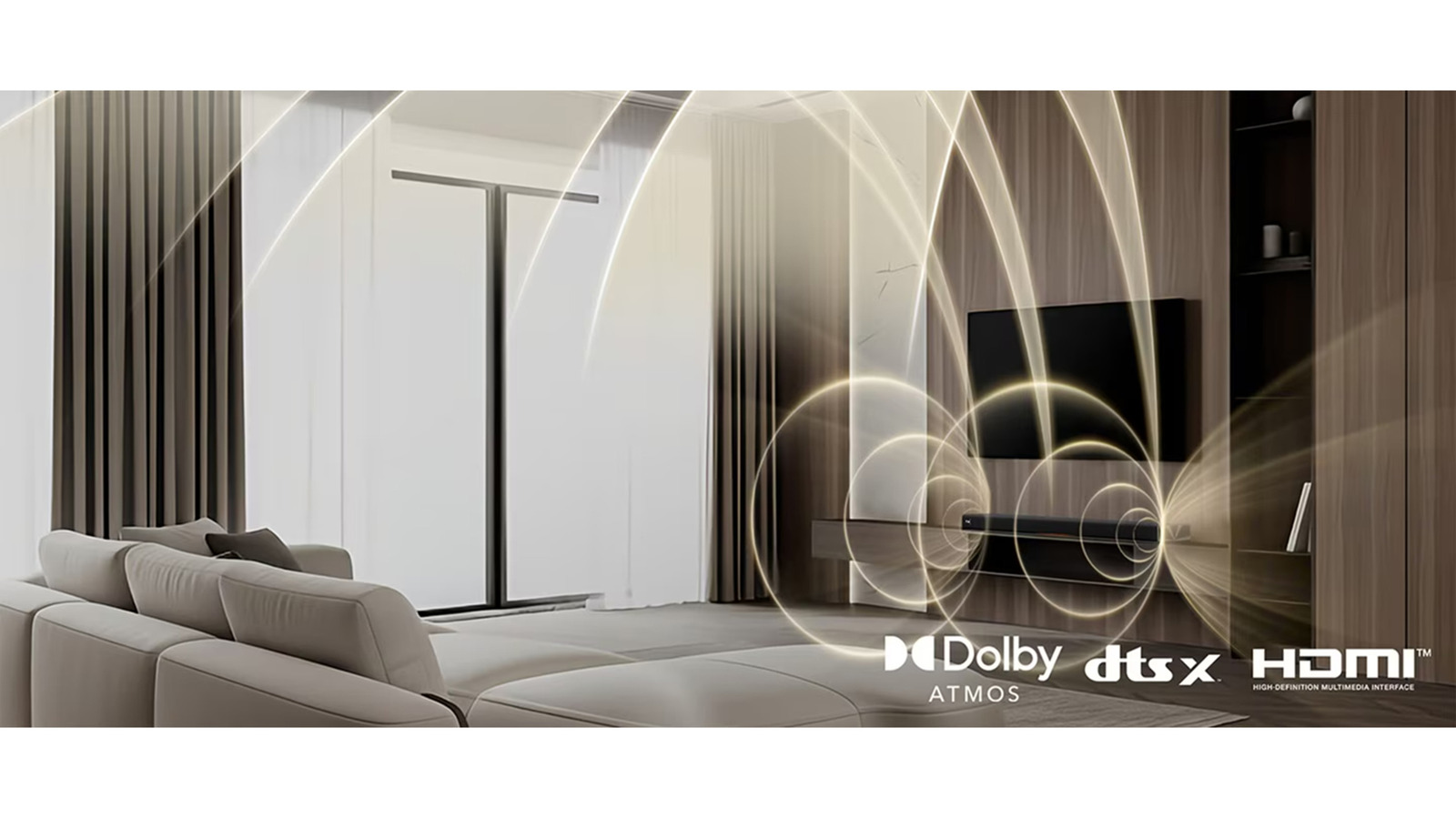
At the forefront of this update is the long-awaited integration of DTS:X object-based immersive audio support for the central H7 soundbar, effectively bridging the gap between competing spatial sound formats. Furthermore, LG is introducing native Google Cast functionality for seamless media streaming, expanded multi-subwoofer compatibility for bass enthusiasts, and advanced support for uncluttered Wi-Fi configurations operating across 6 GHz bands and 5 GHz DFS channels.
Beyond these immediate software deployments, LG has offered a tantalizing glimpse into its future product pipeline by teasing a proprietary Media Connect Hub currently under development. This upcoming hardware accessory is engineered specifically to streamline DTS:X playback from external sources, signaling LG’s deeper commitment to physical media and high-end home theater setups. As these updates begin rolling out globally across regional markets, the Sound Suite evolves from a promising modular experiment into a comprehensive, highly adaptable audio powerhouse.
Detailed Chronology: The Evolution of LG Sound Suite
To fully appreciate the scope of this latest software deployment, it is necessary to trace the developmental trajectory of the Sound Suite ecosystem.
The Genesis at CES
The Sound Suite first captured the attention of audio-visual enthusiasts and industry analysts during its high-profile debut at consumer technology showcases. Positioned as an antidote to rigid, pre-packaged surround sound bundles, the system was engineered around a radical premise: absolute spatial freedom.
Rather than forcing users into a standardized 5.1 or 7.1 channel layout dictated by living room constraints, the Sound Suite allowed consumers to select individual speakers à la carte. Whether a consumer required a minimalist stereo configuration or an expansive multi-speaker arrangement, the system leveraged Dolby Atmos FlexConnect technology to automatically calibrate audio delivery based on the precise physical placement of each speaker within a room.
Reviewers praised the system for its acoustic power, ease of calibration, and aesthetic versatility. However, early critiques noted that despite its premium positioning, the ecosystem was tethered exclusively to Dolby’s spatial audio paradigm, leaving enthusiasts of competing immersive formats longing for broader format parity.
Listening to the Consumer Base
Recognizing that high-end home theater consumers demand absolute format versatility, LG’s audio engineering divisions initiated a comprehensive review of user feedback collected following the commercial launch of the Sound Suite. The primary pain points identified by early adopters and reviewers included:
- The absence of DTS:X audio decoding on the central H7 soundbar.
- Limited casting options for casual music and podcast playback outside of proprietary ecosystems.
- Wireless network congestion issues when deploying multiple high-bandwidth wireless satellite speakers in urban environments with crowded 2.4 GHz and standard 5 GHz Wi-Fi channels.
- Caps on low-frequency integration for users demanding extreme bass reproduction.
The Software Rollout Phase
In response to these diagnostic insights, LG structured a multi-phase software deployment plan. Initiated via over-the-air (OTA) updates—which are currently making their way to users globally, subject to regional firmware schedules—this patch addresses the core technical limitations of the original launch configuration. By transforming the H7 soundbar into a multi-format spatial audio hub, LG has successfully repositioned the Sound Suite as a format-agnostic centerpiece capable of satisfying both cinephiles and audiophiles alike.
Supporting Context & Metrics: Under the Hood of the Upgrade
The integration of advanced audio formats and expanded network protocols requires a rigorous examination of the underlying technology. The latest Sound Suite update introduces several distinct technical enhancements that collectively elevate the system’s performance ceiling.
1. The Integration of DTS:X Spatial Audio
For decades, object-based audio formats have dominated the home theater conversation, with Dolby Atmos leading the charge in streaming services and broadcast media. However, DTS:X remains a critical format for physical media collectors, particularly those who invest heavily in 4K Ultra HD Blu-ray discs carrying DTS-HD Master Audio or IMAX Enhanced content encoded with DTS:X tracks.
By integrating DTS:X support into the H7 soundbar, LG ensures that Sound Suite owners no longer have to compromise when playing back physical media or select digital streaming files encoded with the DTS codec. DTS:X operates independently of fixed speaker channels, allowing sound objects to be placed and moved freely around, above, and behind the listener. When combined with the Sound Suite’s flexible speaker placement and Dolby Atmos FlexConnect calibration engine, the addition of DTS:X creates a truly agnostic spatial audio environment capable of handling any premium soundtrack thrown its way.
2. Google Cast Streamlining
While immersive spatial audio is vital for blockbuster cinema viewing, home theater systems are increasingly utilized as multi-room music playback devices. The inclusion of native Google Cast support on the H7 soundbar addresses this reality head-on.
Previously, streaming casual audio content to the Sound Suite required navigating proprietary apps or relying on secondary Bluetooth connections, which often introduced compression artifacts and range limitations. With Google Cast integrated directly into the system architecture, users can cast high-fidelity audio streams—including lossless tracks from services like Tidal, Qobuz, Apple Music, and Amazon Music, alongside podcasts and internet radio—directly from their smartphones, tablets, or laptops with a single tap.
3. Advanced Wireless Topography: Wi-Fi 6 GHz and 5 GHz DFS Channels
Wireless surround sound systems live and die by the stability of their local network topology. As homes become increasingly saturated with smart devices, smart lighting, security cameras, and laptops competing for limited wireless bandwidth, traditional 2.4 GHz and standard 5 GHz Wi-Fi channels frequently suffer from interference, packet loss, and latency spikes.
To combat this, LG has expanded the Sound Suite’s networking capabilities to support:
- Wi-Fi 6 GHz bands: Operating in the uncongested 6 GHz spectrum (where compatible routers are present), these channels offer massive bandwidth pipelines with virtually zero interference from legacy devices, ensuring uncompressed, high-bitrate audio transmission between the H7 soundbar and wireless satellite speakers.
- 5 GHz DFS (Dynamic Frequency Selection) Channels: DFS channels allow Wi-Fi devices to operate on frequencies normally reserved for radar systems. By utilizing DFS channels, the Sound Suite can automatically bypass congested consumer Wi-Fi lanes, maintaining a rock-solid, low-latency connection for multi-speaker synchronization.
4. Dual W7 Subwoofer Support
Bass response is a foundational pillar of any credible home theater system. While the standard Sound Suite package includes a powerful wireless subwoofer, certain audiophiles and home theater purists demand tactile, room-shaking low-end presence that a single driver cannot always deliver uniformly across irregular room dimensions.
With the new update, LG has officially introduced support for dual W7 subwoofer setups. Allowing users to pair a second W7 subwoofer to the ecosystem not only maximizes raw decibel output and headroom but also helps smooth out modal bass nulls and peaks within the room, resulting in cleaner, more balanced bass distribution regardless of seating position.
Official Statements & Industry Implications
The strategic pivot represented by this software update highlights LG’s broader ambitions within the premium audio market. While official corporate communications from LG emphasize customer-centric development, industry analysts are reading between the lines to understand the competitive ramifications.
"Home theater enthusiasts require absolute flexibility, uncompromising audio fidelity, and seamless access to content from every available source," notes an internal product briefing from LG’s Media Entertainment Solution division. "By advancing the LG Sound Suite experience with comprehensive DTS:X support, expanded wireless networking topologies, and enhanced multi-speaker configurations, we are empowering our users to curate their ultimate acoustic environment without technical boundaries."
Bridging the Format Divide
For years, the audio industry has witnessed a silent cold war between competing spatial audio codecs. By embracing DTS:X alongside its existing architectural strengths, LG is effectively adopting a Switzerland-like stance in the format wars. Rather than forcing consumers to choose between Dolby and DTS ecosystems, the Sound Suite now functions as an all-encompassing decoder. This move is expected to resonate strongly with high-end cinephiles who maintain extensive libraries of physical media, a demographic that historically viewed soundbar-centric systems with skepticism due to format limitations.
The Teaser: The Mysterious "Media Connect Hub"
Perhaps the most intriguing revelation accompanying the software rollout is LG’s official acknowledgment of a device currently under development: the Media Connect Hub for DTS:X devices.
While LG’s initial disclosures regarding the hub remain characteristically sparse, industry observers have quickly begun piecing together its potential utility. Given that many modern televisions and soundbars struggle with end-to-end lossless audio passthrough from legacy or specialized external hardware, a dedicated Media Connect Hub could serve as an external routing station.
- Hypothetical Architecture: The hub is widely anticipated to act as a centralized switching matrix designed to accept inputs from 4K Ultra HD Blu-ray players, media streamers, and high-end gaming consoles, subsequently decoding or routing uncompressed DTS:X audio streams directly to the Sound Suite environment with zero latency.
- Expanding Ecosystems: By creating a dedicated hardware companion for DTS:X content, LG is signaling that the Sound Suite is not merely a static product line, but an expanding modular platform designed to grow alongside future AV standards.
Future Outlook: The Next Frontier for Modular Home Theater
As the consumer electronics landscape shifts toward greater interoperability and software-defined hardware, LG’s ongoing refinement of the Sound Suite provides a masterclass in modern product lifecycle management.
What Lies Ahead for Sound Suite Owners?
With the current software update actively rolling out across global territories, the immediate future of the Sound Suite looks exceptionally bright. Users who previously hesitated to adopt the system due to the absence of DTS:X or casting limitations now have a compelling reason to reconsider. Furthermore, the inclusion of Wi-Fi 6 GHz and DFS channel support future-proofs the system against increasingly congested home network environments.
Looking further down the horizon, the eventual unveiling of the Media Connect Hub will likely serve as the next major catalyst for the ecosystem. If LG can deliver a seamless hardware bridge that eliminates the friction of routing complex spatial audio formats through traditional television ARC/eARC ports, it could establish a new benchmark for home theater integration.
The Broader Market Impact
LG’s aggressive enhancement of the Sound Suite sends a clear message to competing audio manufacturers: premium hardware alone is no longer enough to retain consumer loyalty. Success in the modern home entertainment market requires a commitment to continuous software evolution, format inclusivity, and architectural adaptability.
As the Sound Suite continues to mature, it bridges the historical divide between the convenience of all-in-one soundbars and the uncompromising performance of bespoke, multi-component home theater installations. For consumers willing to invest in high-end modular audio, LG has transformed a great system into an extraordinary one—proving that when it comes to the future of home entertainment, flexibility and fidelity can finally coexist.