Executive Overview
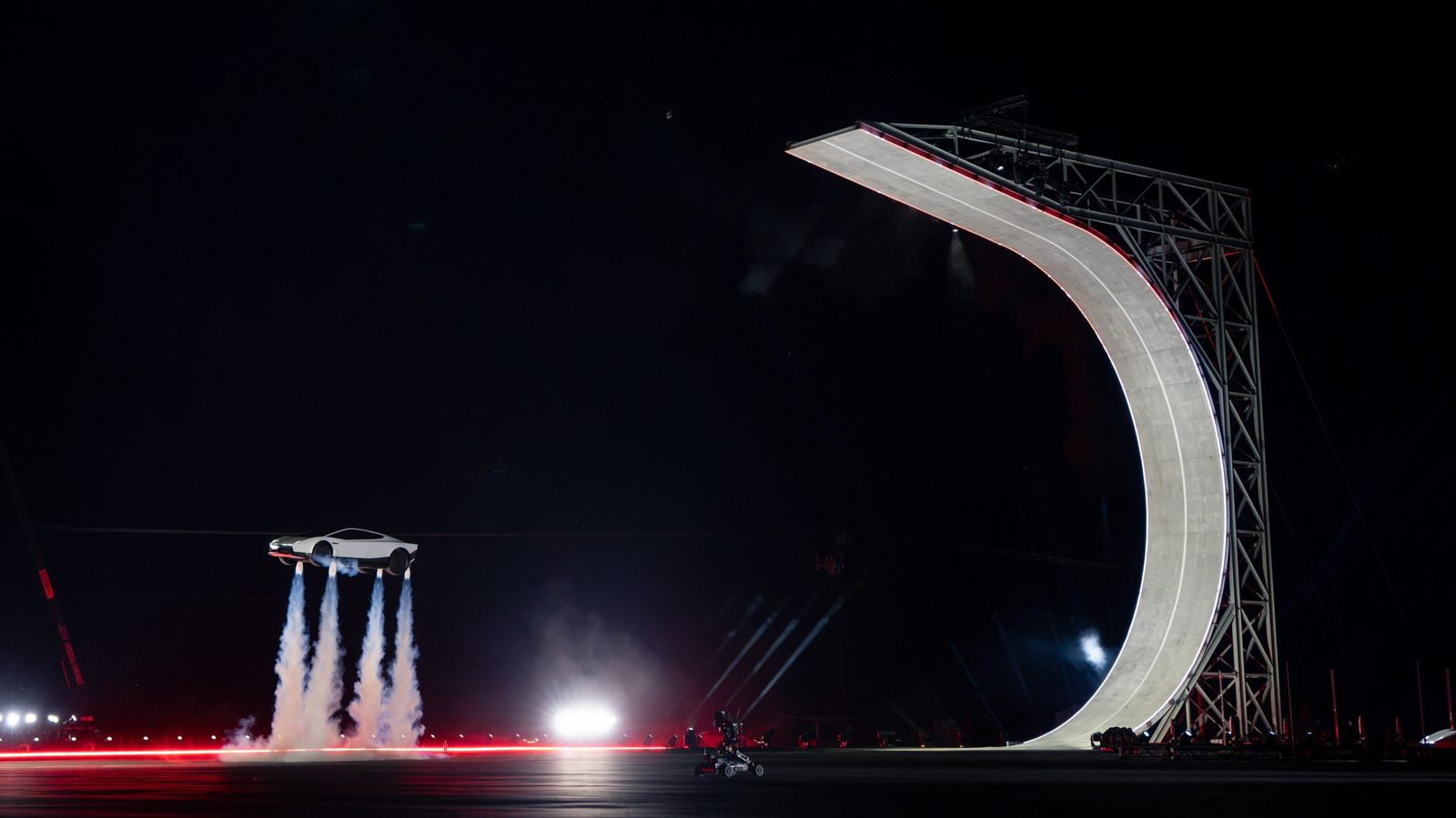
When Tesla formally reintroduced its long-delayed, highly anticipated next-generation Roadster, the automotive world braced for extraordinary performance figures. Promising a 0-60 mph sprint in under a single second and an angular, radical aesthetic heavily influenced by the Cybertruck, the supercar was designed to captivate headlines. Yet, the feature that ultimately stole the show was not its straight-line acceleration, but its purported ability to briefly take flight.
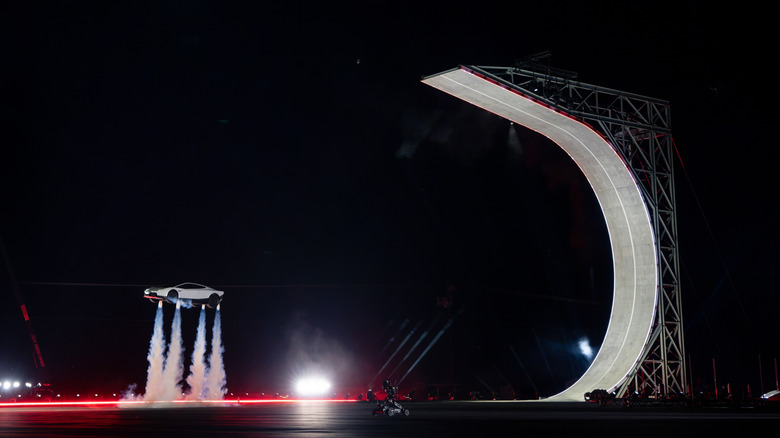
Tesla’s pitch is not science fiction in the traditional Back to the Future sense, but rather a calculated ballet of controlled falling, jumping, and flipping maneuvers executed via an array of high-pressure air thrusters. While the concept of a "flying" electric supercar sounds like a radical leap in consumer automotive engineering, the underlying technology is far from unprecedented.
Decades before Elon Musk envisioned sports cars utilizing cold-gas jets for stabilization and airborne acrobatics, the United States defense sector was engineering identical physics to intercept and obliterate intercontinental ballistic missiles.
At the intersection of high-performance consumer vehicles and aerospace engineering lies a fascinating technological crossover. The cold-gas thruster systems designed to stabilize Tesla’s upcoming "Rocket" trim share a profound conceptual lineage with Lockheed Martin’s historic Multiple Kill Vehicle (MKV) program.
Though separated by decades, vastly different operational environments, and distinct propulsion chemistries—compressed ambient air versus high-energy hot-fire rocketry—both systems highlight a fundamental truth in applied physics: thrusters are just as adept at flipping a high-end luxury vehicle as they are at hunting incoming ballistic threats in the vacuum of the upper atmosphere.
Detailed Chronology: From Star Wars Defense Initiatives to Silicon Valley Supercars
To fully understand how a consumer automobile wound up adopting aerospace-grade stabilization thrusters, one must trace a timeline spanning more than forty years of defense innovation and automotive evolution.
The Genesis of Multi-Target Interception (1980s–2000)
The intellectual property and conceptual framework driving modern maneuvering thrusters trace their roots back to the Reagan administration’s Strategic Defense Initiative (SDI), colloquially dubbed the "Star Wars" program. Initiated in 1983, SDI sought to develop a robust, space-based and ground-based shield capable of neutralizing massive waves of Soviet intercontinental ballistic missiles (ICBMs).
While the grand technological ambitions of SDI outpaced the material science of the era, it established a crucial doctrinal shift: the necessity of kinetic kill vehicles. Instead of relying on explosive warheads, these defense systems utilized direct, high-speed impact—"hitting a bullet with a bullet"—to disintegrate incoming threats.
Over the subsequent two decades, aerospace contractors refined the propulsion, guidance, and attitude control systems required to execute split-second directional changes in the thin upper layers of the atmosphere and lower Earth orbit.
The Lockheed Martin MKV Era (2004–2009)
The direct military ancestor of Tesla’s thruster technology crystallized in 2004. The United States Missile Defense Agency (MDA) awarded Lockheed Martin a landmark $760 million contract to develop the Multiple Kill Vehicle (MKV). The objective was revolutionary for its time: build the first defensive system capable of destroying multiple ballistic missile threats and sophisticated decoys using a single launch platform.
The MKV system was designed to deploy a carrier vehicle that would release several smaller, highly agile kill vehicles. Each of these sub-vehicles relied on an intricate array of rapid-response thrusters to maneuver violently, adjusting its trajectory and orientation on the fly to intercept fast-moving targets.
Development and rigorous component testing continued through the mid-2000s, punctuated by milestones such as Lockheed Martin’s successful propulsion component tests in August 2008. However, the geopolitical landscape and budgetary realities shifted dramatically at the close of the decade.
In April 2009, amid sweeping defense budget cuts championed by the Obama administration and Secretary of Defense Robert Gates, the original MKV project was officially canceled. Despite its retirement, the engineering data, fluid dynamics models, and thruster control algorithms established during the MKV program laid foundational groundwork for modern high-agglomeration maneuvering.
The Tesla Roadster Evolution (2017–Present)
Fast-forwarding to the commercial sector, Tesla first unveiled the second-generation Roadster concept in November 2017, promising jaw-dropping specifications that immediately captured the imagination of EV enthusiasts. However, production timelines slipped repeatedly as the company prioritized the scaling of higher-volume vehicles like the Model Y, the scaling of the global Supercharger network, and the prolonged engineering challenges of the Cybertruck.
On October 15, Tesla formally re-introduced the Roadster project with updated design philosophies and bold new capabilities. Alongside its Cybertruck-inspired angular design language and hyper-car performance metrics, Tesla confirmed the integration of a SpaceX-inspired option package.
By incorporating high-pressure air tanks and a network of ten strategically placed nozzles across the chassis, Tesla positioned the Roadster not merely as a fast car on asphalt, but as an experimental machine capable of controlled vertical jumps, stabilization correction, and short-duration aerial maneuvers—bringing military-grade attitude control down to terra firma.
Supporting Context & Metrics: How the Technologies Compare
While the conceptual parallels between Tesla’s Roadster and Lockheed Martin’s MKV are striking, a rigorous technical examination reveals distinct structural, chemical, and operational differences.
Propulsion Mechanics: Cold-Gas vs. Hot-Fire
The most critical engineering divergence between the two systems lies in how they generate thrust.
- Tesla’s Cold-Gas Architecture: Tesla has repeatedly emphasized that the Roadster relies strictly on cold-gas thrusters powered by compressed air stored in high-pressure onboard tanks. In a cold-gas system, no combustion or chemical reaction takes place at the nozzle. Instead, high-pressure gas is simply released through expansion valves, generating thrust through fluid momentum. Tesla notes that the Roadster is engineered to autonomously replenish these air tanks using an onboard compressor system, mitigating the need for frequent manual recharges.
- Lockheed Martin’s Hot-Fire Architecture: Conversely, historical documentation and press disclosures—such as Lockheed Martin’s August 2008 propulsion component announcements—confirm that the MKV relied heavily on "hot-fire" testing protocols. Hot-fire thrusters involve the ignition of solid or liquid chemical propellants, generating high-temperature exhaust gases. This method yields a significantly higher thrust-to-weight ratio and greater specific impulse, which is essential for intercepting hypervelocity missiles moving at Mach numbers well into the double digits.
Implementation and Trims
Tesla has structured the deployment of its thruster technology across specific tiers of the Roadster lineup, acknowledging both regulatory hurdles and practical engineering limitations:
- The Performance Trim: Completely devoid of thruster hardware; intended for traditional track and road driving.
- The Thruster Trim: Features a limited arrangement of air nozzles restricted to the rear of the vehicle, primarily aiding in traction management and high-speed stabilization.
- The Rocket Trim: The flagship iteration featuring the full complement of ten high-pressure air nozzles and dual onboard air tanks, unlocking the vehicle’s full suite of jumping, flipping, and dynamic handling maneuvers.
Significantly, Tesla has included vital disclaimers regarding these capabilities, explicitly stating that the thruster system is not approved for public road use. This restriction underscores the extreme regulatory challenges associated with operating a street-legal vehicle that expels high-velocity gas jets in standard traffic environments.
Official Statements and Industry Perspectives
The convergence of military missile defense engineering and consumer supercars has sparked intense debate among automotive journalists, aerospace engineers, and regulatory analysts.
Industry analysts point out that while the marketing spectacle of a "flying" Tesla Roadster is brilliant for brand visibility, the underlying hardware represents a genuine engineering achievement in fluid dynamics packaging. Fitting high-pressure containment vessels, automated compressors, and high-response solenoid valves into a passenger vehicle chassis without compromising structural crash safety or passenger cabin space requires immense thermal and structural optimization.
Conversely, aerospace historians view the crossover with amused fascination. Veterans of the 2000s-era Missile Defense Agency initiatives note the irony of defense technology migrating from multi-million-dollar suborbital interceptors to six-figure consumer electric vehicles.
As one retired aerospace propulsion engineer remarked anonymously, “We spent years trying to figure out how to keep interceptors stable in the dead silence of the upper atmosphere using millimeter-second bursts of gas. Seeing those exact control algorithms adapted to make a sports car pull off a stunt-show kickflip is a testament to the universality of physics.”
Tesla executives, including CEO Elon Musk, have consistently framed the SpaceX package option as an exploration of the boundaries between terrestrial automotive engineering and aerospace propulsion. Musk has frequently teased that the technology will allow the vehicle to "push the limits of physics," blending electric powertrain torque vectoring with active aerodynamic and pneumatic control.
Future Outlook: The Intersection of Automotive and Aerospace Engineering
As the automotive landscape hurtles toward greater electrification, autonomy, and performance boundaries, the integration of aerospace technology into consumer vehicles is likely to accelerate. However, the path forward for systems like the Roadster’s thruster package is fraught with regulatory, safety, and commercial hurdles.
Regulatory and Safety Roadblocks
The immediate barrier to widespread adoption of pneumatic thruster systems on consumer vehicles is regulatory compliance. National highway traffic safety administrations across the globe maintain stringent guidelines regarding vehicle emissions, external projections, and kinetic hazards.
A vehicle discharging high-pressure air streams in a crowded parking lot or a congested highway introduces severe liability risks to pedestrians, cyclists, and surrounding motorists. Consequently, Tesla’s designation of the thruster package as "not approved for public road use" signals that these features will likely be restricted to closed private tracks, specialized stunt exhibitions, or regulated proving grounds.
The Next Frontier of Vehicle Dynamics
Despite regulatory hurdles, the cross-pollination of aerospace stabilization tech into automotive design opens intriguing doors for extreme performance applications. Active pneumatic stabilization could redefine how heavy electric vehicles handle high-speed lateral loads, emergency evasive maneuvers, and track-day dynamics. By utilizing directional gas pulses to supplement traditional tire traction, future hypercars may achieve handling thresholds previously thought impossible within the limits of rubber-to-asphalt friction.
Furthermore, as companies like SpaceX continue to refine rapid-reusability, materials science, and composite pressure vessel manufacturing, the manufacturing cost of high-pressure carbon-composite air tanks is expected to decline. This could pave the way for trickle-down technological benefits, where military-derived attitude control systems become feasible auxiliary features for niche high-performance EVs.
Ultimately, whether the Tesla Roadster’s thrusters are viewed as a brilliant marketing masterclass, an expensive novelty, or a genuine leap in vehicle dynamics, they serve as a powerful reminder of technological convergence. The exact physics once deployed to shield nations from ballistic threats are now being repurposed to push the physical limits of a car—proving once and for all that whether you are hunting ICBMs or executing a stationary flip, thrusters remain unmatched in their ability to defy gravity.