Executive Overview
Federal law enforcement agencies in the United States and Europe are aggressively expanding an investigation into the international cybercrime syndicate known as ShinyHunters. Following a high-profile breach of the Federal Bureau of Investigation’s recruitment portal, investigators have uncovered an unsettling nexus between prominent ransomware negotiation firms and the cyber extortionists.
According to sources close to the sprawling federal probe, U.S. and European authorities have identified executives across multiple ransomware negotiation and cybersecurity firms who allegedly maintained uncomfortably close, illicit relations with the extortion group. In one particularly startling development, investigators believe a U.S.-based executive actively helped operate a public pressure website utilized by ShinyHunters to force victims into paying multi-million-dollar ransoms.
The widening investigation has already triggered international arrests, high-stakes extraditions, and profound soul-searching within the cyber insurance and incident response industries. As prosecutors piece together encrypted chat logs, authorities are grappling with an uncomfortable truth: the multi-billion-dollar ransomware remediation market may harbor internal actors who exploit conflicts of interest to maximize payouts, turning a lucrative business into a collaborative enterprise with the very threat actors they claim to fight.
Detailed Chronology: From Dutch Raids to Canadian Indictments
The current enforcement blitz follows years of escalating cyberattacks attributed to ShinyHunters. Operating under various aliases and shifting its leadership structure over the years—shifting from early French-based operators to teenage administrators like "Rey"—the syndicate has extorted upwards of $70 million from corporate and government targets in 2026 alone.
The Fall of Pepijn van der Stap
The dominoes began to fall on the evening of September 15, 2026. In a high-risk raid featuring flash-bang grenades, Dutch law enforcement authorities arrested convicted hacker and prominent ShinyHunters suspect Pepijn van der Stap. Police successfully apprehended Van der Stap while he was actively logged into his Signal messaging accounts, granting investigators immediate, real-time access to his recent communications.

The decrypted chats quickly blew the lid off international cyber syndicates. According to sources close to the investigation, Van der Stap’s Signal communications provided the blueprint for unraveling a murder-for-hire plot targeting individuals abroad, alongside a treasure trove of direct chats with ransomware negotiators based in Canada and the United States. Furthermore, the messages revealed that these Western negotiators frequently possessed inside details about newly breached ShinyHunters victims before the victims themselves realized they had been compromised.
The Breach of the FBI
Just as Dutch police were scooping up Van der Stap, ShinyHunters executed a brazen cyberattack in late September targeting fbijobs.gov, the official FBI recruitment website. The hackers taunted federal authorities by threatening to release deep personnel files, including medical records, Social Security numbers, home addresses, and specialized unit information.
The direct assault on the bureau galvanized federal law enforcement. Moving with uncommon speed, authorities detained individuals who had maintained communication lines with Rey and other suspects. Notably, Reuters reported that Rey was detained by Jordanian authorities in early October and is actively cooperating with the FBI.
The Arrest of Edward Dubrovsky
On October 9, the investigation reached the corporate cybersecurity sphere. The FBI arrested Edward Dubrovsky, a 54-year-old Canadian cybersecurity executive and author of a recent book on handling cyber extortion. Dubrovsky was charged in U.S. federal court with threatening to disclose hacked data and interfering with interstate commerce through extortion.
According to federal court records and prosecutors, Dubrovsky’s encrypted chats with Van der Stap confirmed that the Canadian executive knew ShinyHunters had successfully compromised FBI servers. Despite this intimate knowledge, Dubrovsky never alerted the bureau, remaining silent until the hackers publicly threatened to publish the agency’s personnel records. Federal prosecutors have requested that Dubrovsky remain in custody pending trial, keeping court records under seal.

Supporting Context & Metrics: The Mechanics of "Shinywire" and Conflict of Interest
The investigation’s focus on negotiation firms highlights structural vulnerabilities within the incident response marketplace. Investigators are scrutinizing how stolen data is leveraged and how corporate negotiators interface with criminal syndicates.
The Anatomy of Shinywire
Federal investigators believe that at least one executive at a prestigious U.S.-based consulting firm—employing over 1,000 associates—played an active role in operating shinywire[.]com, a now-defunct victim extortion portal. Active between May 3 and October 16, 2026, the site listed nearly 100 organizations compromised by ShinyHunters.
Each listing featured samples of stolen data, explicit extortion demands, and countdown timers. Organizations that refused to negotiate within seven days faced the publication of their proprietary files on the dark web via the Tor network. Prominent victims listed on the platform included American medical technology giant Intuitive Surgical, which suffered a credential compromise via a targeted phishing campaign earlier in the year.
The Business of Extortion and Perverse Incentives
The intersection of ransomware negotiation and criminal enterprise is lubricated by a controversial financial model. Many negotiation and remediation firms charge clients a percentage of the total ransom paid rather than a flat retainer.
Industry experts argue this creates an inherent, dangerous conflict of interest. As Mark Camillo, CEO of cyber insurance industry group CyberAcuView, points out, negotiators who earn a cut of multi-million-dollar payouts have a financial incentive to encourage payment rather than resistance, and little motivation to aggressively negotiate prices down.

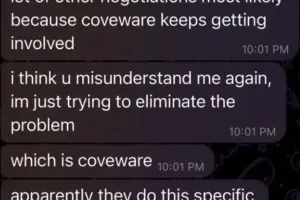
This dynamic is compounded by aggressive actions from the threat actors themselves. Internal Telegram chats recovered by investigators revealed that ShinyHunters leadership explicitly complained about reputable incident response firms like Coveware and Unit 221B, which consistently advise victims not to pay ransoms. In April and May 2026 logs, ShinyHunters operators lamented that Coveware’s advice was actively depressing their collection rates, leading the frustrated cybercriminals to discuss methods to "eliminate the problem."
Official Statements and Industry Fallout
As the scandal reverberates through the global cybersecurity community, corporations and institutional stakeholders are scrambling to distance themselves from the accused executives while addressing systemic governance failures.
Cypfer and Corporate Distancing
Following the arrest of Edward Dubrovsky, Canadian cybersecurity firm Cypfer issued a formal statement disclaiming any knowledge of or involvement in Dubrovsky’s alleged illicit activities. Cypfer noted that it learned of Dubrovsky’s arrest via media reports and confirmed it has received no outreach from law enforcement.
The company emphasized its current ownership structure under the Apros Group, a holding company led by former FBI special agent Jason Hogg. Cypfer also stressed that it maintains no corporate or operational relationship with CyberSteward Inc., another firm linked in legal disputes to Dubrovsky and former business partner Daniel Tobok (whom former colleagues historically linked to the moniker "Ghostbyte" during the 2018 Dharma ransomware investigations).
Department of Justice Crackdowns
The U.S. Department of Justice has increasingly set its sights on compromised remediation channels. Beyond the Dubrovsky case, the DOJ charged MonsterCloud CEO Zohar Pinhasi with wire fraud and conspiracy for allegedly billing customers for remediation while secretly paying hackers behind their clients’ backs—pocketing millions in the arbitrage. Similarly, ransomware negotiator Angelo Martino was sentenced to 70 months in prison for leaking confidential client negotiating positions directly to the BlackCat/ALPHV ransomware group to maximize payouts.

These prosecutions signal a profound shift in federal enforcement strategy: prosecutors are no longer solely targeting the individuals writing malicious code or deploying ransomware payloads, but are actively dismantling the professional facilitators who monetize the enterprise.
Future Outlook: Rebuilding Trust in Incident Response
The unfolding ShinyHunters investigation marks a watershed moment for the cybersecurity industry. For years, the incident response and cyber insurance sectors operated under a veil of discretion, where silence and quiet settlements were preferred over transparency and regulatory disclosure.
The revelation that senior executives at Western cybersecurity and negotiation firms may have actively aided cyber extortionists—and in some cases, helped operate public extortion portals—shatters the illusion of professional immunity within the market.
Moving forward, the industry faces severe structural reckonings:
- Regulatory Scrutiny: Law enforcement agencies will likely demand tighter oversight, licensing, and transparency requirements for third-party ransomware negotiators and incident response providers.
- Fee Restructuring: The practice of percentage-based ransom fees will face intense regulatory and client pushback, as corporate boards demand flat-fee models to eliminate perverse financial incentives.
- Mandatory Reporting: The failure of executives to report compromises involving critical infrastructure and federal agencies—such as the FBI recruitment portal breach—will likely catalyze stricter legislative mandates regarding disclosure compliance.
As federal courts process the trials of Edward Dubrovsky and other co-conspirators, the cybersecurity industry must confront the reality that the greatest threats to corporate and national security do not always lurk behind anonymous Tor onion sites overseas; sometimes, they sit across the negotiating table.