EXECUTIVE OVERVIEW
The launch of Grand Theft Auto 6 has finally shattered years of speculative silence, delivering players back to the neon-drenched, sun-scorched sprawl of modern-day Leonida. While the return to Vice City has dominated gaming headlines, conversations within the community and critical circles quickly converged on a subtler, yet fundamentally transformative, overhaul: the complete reimagining of the iconic Wanted level and law enforcement AI.
Rockstar Games has long prided itself on pushing the boundaries of simulated open-world behaviors, but GTA 6 takes a massive psychological and systemic leap forward. Gone are the days of simply driving out of a flashing red-and-blue radius until the authorities magically forget your transgressions. Instead, the developers have introduced a dynamic web of consequence, featuring the return of the classic six-star scale, the introduction of the persistent "Heat" system, and an intricate communication framework between witnesses, dispatchers, and heavily armed response units.
For veterans of the franchise, escaping the long arm of the law is no longer an exercise in memorizing alleyways and map blind spots; it is now a calculated tactical retreat driven by line-of-sight mechanics, real-time investigative intelligence, and lasting consequences that follow protagonists Jason and Lucia long after the sirens fade.
DETAILED CHRONOLOGY: FROM TEASER TO LAUNCH DAY
The August Paradigm Shift
The first formal glimpse of Grand Theft Auto 6, unveiled by Rockstar Games in August, immediately sent shockwaves through the gaming community. Beyond the breathtaking fidelity of the engine, the dense crowds, and the chaotic fidelity of Leonida’s ecosystem, eagle-eyed fans noted distinct anomalies in the background police responses. Vehicles moved with purpose, officers communicated with tactical synergy, and the traditional UI cues associated with crime and punishment appeared heavily altered.
Industry analysts and fans alike began parsing every frame of the extended gameplay look, realizing that the fundamental rhythm of the series’ "cops-and-robbers" loop had undergone major surgery. The August trailer served as the opening salvo, signaling that Rockstar was aiming for a higher tier of immersive realism—one where the sandbox reacts to the player’s actions with genuine investigative logic rather than instantaneous, omniscient retribution.
Launch Day Realities and System Discovery
With the official worldwide release of GTA 6, players have finally stepped foot into the definitive version of Leonida, putting Rockstar’s bold design claims to the ultimate test. Early hands-on experiences, comprehensive breakdown demos, and developer interviews have painted a vivid picture of how the revamped system operates in practice.
The transition from the teaser expectations to live gameplay has highlighted a series that values tactical depth over arcade-style evasion. Players are quickly learning that crimes cannot be committed with impunity in public spaces, and that the stakes of a routine street-level holdup escalate far differently than they did a decade ago in Grand Theft Auto V. The sheer granularity of the dispatch system means that every shattered storefront window, every gunshot, and every unmasked getaway vehicle feeds directly into a living, breathing legal apparatus.
SUPPORTING CONTEXT & METRICS: ANATOMY OF THE NEW WANTED SYSTEM
From Five Stars to Six: A Nostalgic Yet Modernized Scale
One of the most visually striking and immediately noticeable differences between GTA 5 and GTA 6 is the reintroduction of the sixth Wanted level. For the past decade, GTA 5 players topped out at five stars, capping the military and federal response at a tier that, while chaotic, ultimately felt predictable.
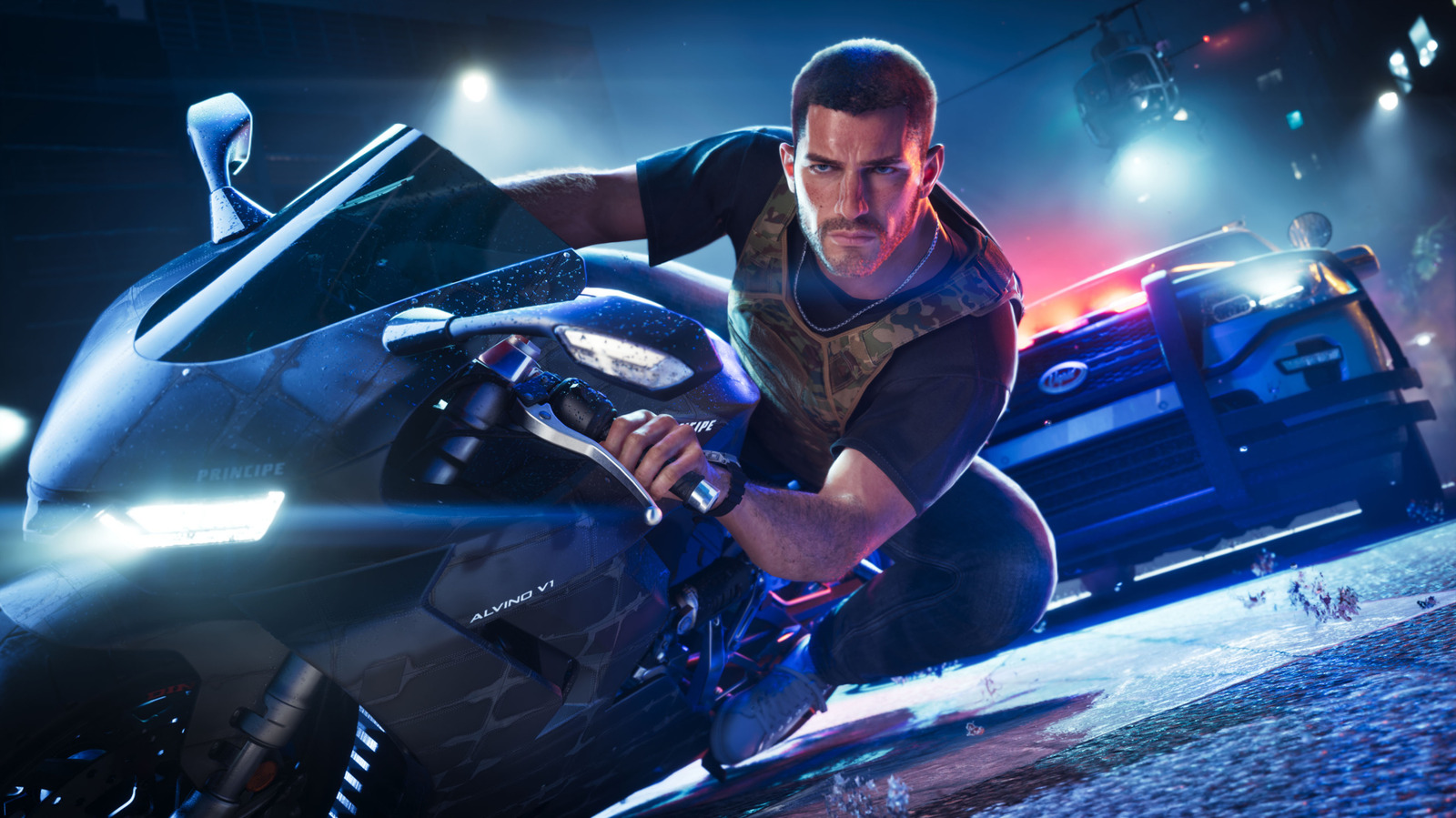
By pushing the ceiling back to six stars, Rockstar is reaching deep into the franchise’s DNA. The six-star system harkens back to legacy titles like Grand Theft Auto III—and even further back to the classic top-down eras where police response was signaled by stylized law enforcement icons. However, this is not mere nostalgia; it is a functional necessity.
In GTA 6, lower star ratings represent localized, standard precinct responses—a few squad cars tailing a suspect through the suburbs. As the scale climbs, the response grows increasingly militarized, culminating at six stars where pursuit is no longer confined to a single district. Instead, high-tier wanted levels trigger map-wide dragnets, ensuring that high-stakes criminal enterprises result in unforgettable, cinematic gauntlets rather than routine driving drills.
The Witness and Dispatch Framework
Crucially, committing a crime in GTA 6 does not automatically flash a star onto your screen. According to deep dives and interviews with industry insiders like Rockstar North co-studio head Rob Nelson, the system is now governed by environmental awareness.
For the law to take notice, a civilian witness must actually observe the infraction and report it, or an automated security alarm must be triggered.
"The Wanted system in GTA 6 requires that someone witness the crime, or an alarm needs to be set off for it to be reported to the law," Nelson explained during early preview sessions. "Our dispatch is extremely specific in what it knows."
This specificity changes player agency completely. Players can meticulously plan robberies, eliminate lone witnesses before they reach for a cell phone, or disable security networks to prevent alarms from pinging local precincts. The dispatch center acts as an active brain, relaying vehicle descriptions, clothing choices, and last-known trajectories to officers in the field.
Visual Cues and the Psychology of the Chase
Once you are officially branded as wanted, the user interface communicates vital operational data through intuitive visual changes in the iconic star ratings:
- Solid White Stars: These indicate that law enforcement has a direct line of sight on your position. Officers can see you, track your movements, and apply direct pressure.
- Flashing White Stars: Triggered the moment you successfully break line of sight, these signify that the police know roughly where you were, but you have a window to duck into cover or change vehicles.
- Red Stars: These appear when you are lingering near a fresh crime scene, indicating that the authorities are sweeping the immediate area despite not having a visual lock on your exact location.
- Hollow White Stars: This elusive state occurs when police are actively searching for you across a wider perimeter, but they have no current intelligence on your appearance, vehicle, or specific whereabouts.
Adding to the tension, GameSpot and other early testers have confirmed a major UI omission: players will no longer see police units tracked in real-time on their minimaps. This deliberate removal strips away the safety net of omniscient radar awareness, forcing players to rely on environmental cues, audio design, and direct visual reconnaissance to plot their escape routes. At six stars, this handicap becomes critical, as pursuit vectors span the entire regional map, turning every major highway and back alley into a high-stakes gamble.
The Persistent Threat of the "Heat" System
Compounding the traditional Wanted level is the newly integrated Heat system. Even after you successfully evade active pursuit and your stars fade away, the police do not instantly wipe your slate clean. Leonida’s law enforcement agencies retain pieces of actionable intelligence—Heat—regarding Jason, Lucia, and the vehicles they frequent.
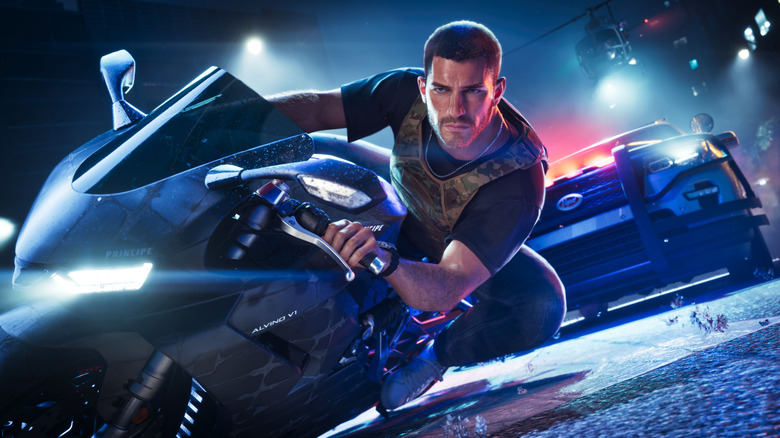
This means that driving the exact same getaway car past a patrol cruiser hours later can instantly reactive suspicion, bridging the gap between momentary criminal acts and long-term consequences. It forces players to think like actual fugitives: ditching cars, altering their appearance, and lying low in safehouses until the local constabulary cools its collective heels.
OFFICIAL STATEMENTS & INDUSTRY REACTION
The rollout of GTA 6 and its revolutionary mechanics has sparked widespread acclaim across the development and critical communities. Industry veterans have praised Rockstar Games for refusing to rest on its laurels, noting that modern open-world design has stagnated in recent years due to over-reliance on predictable arcade loops.
Rob Nelson’s insights during press briefings emphasized the studio’s obsession with behavioral authenticity. By moving away from magical, automatic detection systems and replacing them with witness-dependent, dispatch-driven logic, Rockstar has elevated the simulation layer of open-world gaming.
"We wanted the player to feel the weight of the world around them," notes industry commentary following the release. "A crime in Leonida isn’t an isolated event in a vacuum; it ripples through a connected, reactive digital ecosystem."
Critical consensus from outlets like IGN, GameSpot, and various gaming historians underscores that GTA 6 has successfully modernized the cops-and-robbers dynamic. Rather than frustrating players with unfair mechanics, the heightened transparency of the star system—combined with the brutal elimination of minimap police tracking—strikes a delicate balance between tactical depth and pulse-pounding exhilaration.
FUTURE OUTLOOK: THE EVOLUTION OF OPEN-WORLD CRIME SIMULATION
As millions of players flood into the digital ecosystem of Leonida, the long-term impact of GTA 6‘s Wanted and Heat systems is only beginning to reveal itself. The shift toward investigative realism sets a bold new benchmark for the entire open-world genre. Developers attempting to craft sandbox crime games in the coming decade will inevitably look to Rockstar’s blueprint as the gold standard for blending cinematic spectacle with intricate behavioral AI.
Furthermore, the integration of these mechanics hints at breathtaking possibilities for future content updates and online iterations. If a single-player campaign demands this level of strategic evasion, witness management, and vehicular discretion, the implications for multiplayer sandbox environments are staggering.
For now, Jason and Lucia’s descent into a life of crime in Vice City is defined by every shattered window, every unmasked getaway, and every flash of a six-star sky. Rockstar Games has proven that even the most established, time-tested mechanics in gaming can be entirely reborn, transforming the simple act of running from the law into a deeply immersive, psychological chess match.