
Executive Overview
For decades, the intersection of commerce and conscience has been a geopolitical and economic minefield. Most mainstream corporations prefer the safe harbor of neutrality, calculating that keeping their heads down is the surest way to maximize shareholder value and avoid alienating potential buyers. Yet, one brand has consistently thumbed its nose at this playbook, turning social and political advocacy into a core business model: Ben & Jerry’s.
From renaming its classic "Chubby Hubby" flavor to "Hubby Hubby" in celebration of marriage equality to spearheading campaigns against racial injustice and the undue influence of money in politics, the Vermont-based ice cream maker has long demonstrated that corporate values can—and perhaps should—be baked right into the product.
This philosophy extends far beyond clever marketing campaigns. The brand’s co-founders, Ben Cohen and Jerry Greenfield, have a well-documented history of putting their physical freedom on the line for causes they believe in. Their activism ranges from high-profile arrests at the U.S. Capitol during the 2016 Democracy Awakening demonstrations to more recent protests regarding foreign policy and humanitarian crises.
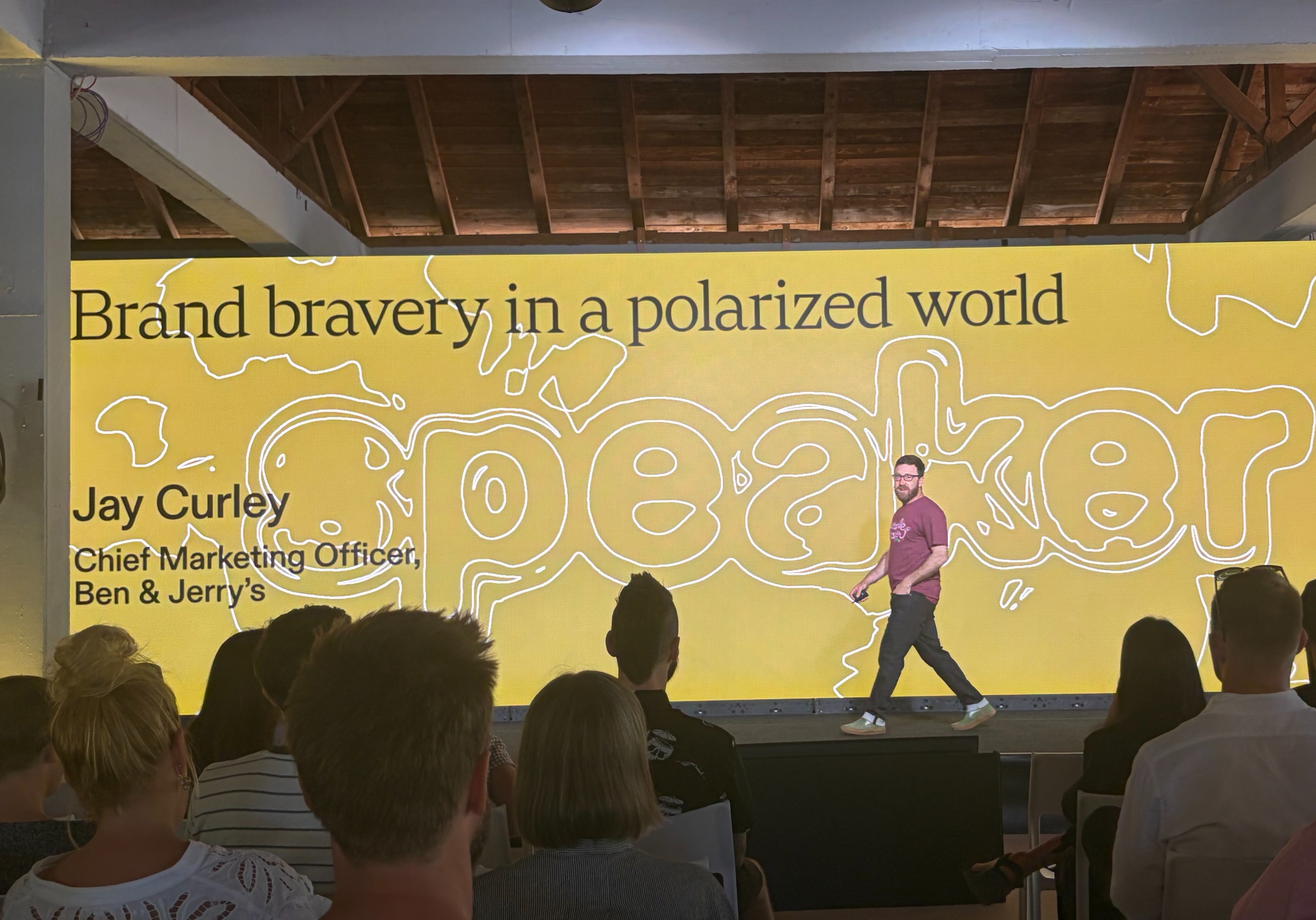
At the annual Paradigms conference in Croatia, Chief Marketing Officer Jay Curley took to the stage to unpack this legacy. In an exclusive interview following his address, Curley discussed why brands must stop hiding behind corporate fence-sitting, why the pursuit of perfection should never paralyze progress, and how radical authenticity has allowed Ben & Jerry’s to navigate the stormy waters of modern public opinion.
Detailed Chronology: A History of Corporate Disruption
The timeline of Ben & Jerry’s activism is deeply intertwined with the socio-political movements of the late 20th and early 21st centuries. Understanding the brand’s current stance requires looking back at the pivotal moments that transformed a small-town ice cream shop into a global symbol of corporate dissent.
1978–1990s: Humble Beginnings and Foundational Ethics
Founded in Burlington, Vermont, in 1978 by childhood friends Ben Cohen and Jerry Greenfield, the company established a three-part mission statement early on: a Product Mission, an Economic Mission, and a Social Mission. Unlike traditional corporations that treated corporate social responsibility (CSR) as an afterthought or a public relations bandage, Ben & Jerry’s integrated social activism into its operational DNA. Early initiatives focused on sustainable sourcing, fair trade ingredients, and support for family-owned dairy farms.
April 2016: Democracy Awakening
A watershed moment for the brand’s executive leadership occurred in April 2016. During the Democracy Awakening demonstrations at the U.S. Capitol in Washington, D.C., both Ben Cohen and Jerry Greenfield were arrested alongside hundreds of other activists. The protests targeted the corrupting influence of big money in politics and the erosion of voting rights. Rather than distancing themselves from the arrests, the company leveraged the event to amplify its message, proving that the founders’ personal convictions were inseparable from the brand’s identity.
July 2016: The Black Lives Matter Stance
Months after the Capitol protests, Ben & Jerry’s released a bold, unequivocal statement endorsing the Black Lives Matter movement. The move was widely praised by civil rights organizations but drew immediate backlash, boycotts, and fierce criticism from conservative groups and law enforcement associations. Despite the turbulence, executive leadership stood firm, cementing the brand’s reputation for wading into polarizing racial justice debates that other Fortune 500 companies actively avoided.
May 2025: Continuing the Fight
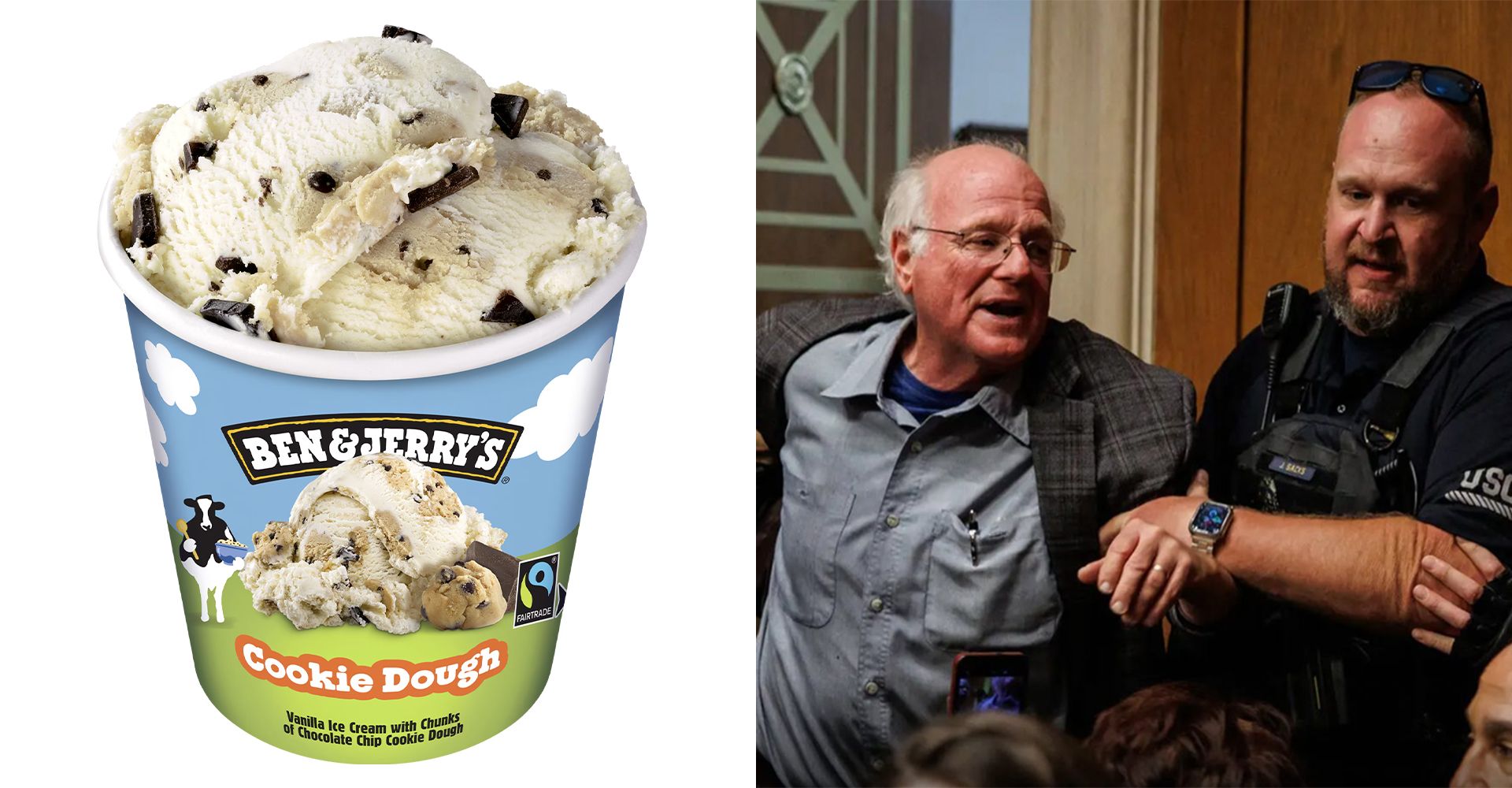
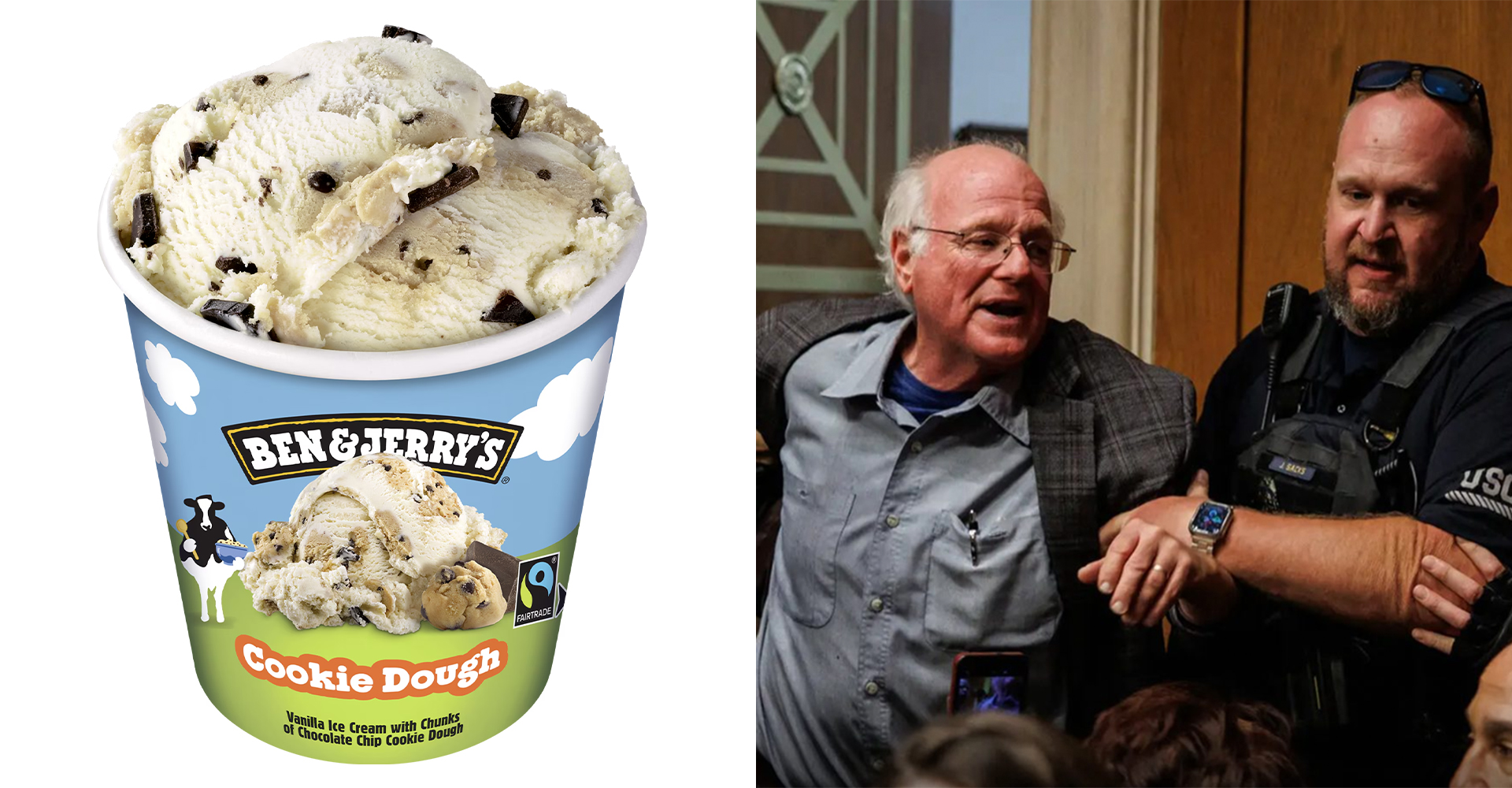
The tradition of founder-led civil disobedience continued into the mid-2020s. In May 2025, Ben Cohen was once again arrested during a demonstration at the U.S. Senate, this time protesting United States military aid to Israel and drawing attention to the escalating humanitarian crisis in Gaza. The arrest underscored that even as a globally recognized subsidiary of a multinational conglomerate (Unilever), the brand’s foundational ethos remained stubbornly unyielding.
2026: The Paradigms Conference
Speaking at the Paradigms conference in Croatia, CMO Jay Curley reflected on these milestones, arguing that the modern consumer no longer tolerates corporate apathy. The conference served as a platform to re-examine how creative marketing can serve as a catalyst for systemic change.
Supporting Context & Metrics: Navigating the Risk of Alienation
Corporate activism is not without its financial and operational perils. When a brand takes a definitive stand on a controversial issue, it inevitably risks alienating a segment of its consumer base. Yet, data and consumer behavior trends suggest that modern audiences—particularly Millennials and Gen Z—increasingly demand authenticity and purpose from the companies they support.
The Risk-Averse Corporate Landscape
During his discussion at Paradigms, Curley addressed the elephant in the room: why do so many major corporations remain paralyzed by fear when it comes to social issues?
"I think traditional businesses are risk-averse," Curley explained. "They have a traditional belief that it’s better to stay neutral and avoid polarising issues. For some businesses, that might be the right approach. But I feel that brands that stand for something, and have communities they value and connect with, have to show up. Ultimately, I think it’s general aversion to risk that keeps businesses out of these issues."
Choosing the Right Battles
With thousands of global issues demanding attention, how does a mid-sized ice cream manufacturer decide which causes to champion? Curley outlined a rigorous strategic framework:
- Alignment with Core Values: Every campaign must trace its roots back to the foundational social mission established by Cohen and Greenfield.
- Impact Potential: The brand evaluates where its unique visibility, energy, and financial resources can genuinely move the needle.
- Relevance to Emerging Movements: Ben & Jerry’s looks for grassroots social movements that can benefit from amplification by a trusted consumer brand.
- Capacity for Focus: Recognizing that a brand cannot be everywhere at once, leadership concentrates its efforts on a select few high-impact campaigns.
The Reality of Imperfection
One of the most profound insights shared by Curley was the acknowledgment that corporate activism is inherently messy. Waiting for an organization to achieve moral perfection before speaking out is, in effect, a choice to remain silent forever.

"In a way, even when we don’t get everything right, I usually feel that we did the right thing," Curley noted. "It also takes a lot of courage to be imperfect. If we waited until Ben & Jerry’s was perfect in every aspect of racial justice as an organisation, we would never use our voice, because we’re never going to be perfect. I look back at our Black Lives Matter statement from 2016, and there are things we could ideally have tweaked or expressed better. That said, I think it was really important that we spoke out when we did, rather than waiting until everything was perfect."
Navigating Customer Backlash
When asked how the company handles customers who feel alienated by its progressive stances, Curley maintained a remarkably pragmatic perspective:
"I’m grateful that we live in a free country where people can choose what they want to buy. There are plenty of people who may not be deeply aligned with us on a values level but love Cookie Dough, so they buy it. I think that’s fine. Equally, some people decide not to buy our products, and that’s their choice. My hope is that people understand what we’re doing and why. If they decide Ben & Jerry’s isn’t for them, that’s fine with us."
Official Statements and Industry Perspectives
The conversation around purpose-driven marketing often invites skepticism. Critics frequently label corporate activism as "woke washing" or a superficial marketing ploy designed to capture younger demographic groups. However, industry insiders point to a select group of pioneers who have managed to integrate values into their operations successfully.
When asked to identify other brands successfully navigating this space, Curley pointed to a few notable kindred spirits:
- Patagonia: Praised for its relentless commitment to environmental conservation, including donating its entire company ownership to fight climate change.
- Lush Cosmetics: Recognized for its long-standing ethical campaigns against animal testing, human rights abuses, and environmental degradation.
- Penzeys Spices: A lesser-known U.S. spice merchant lauded by Curley for its unapologetically bold stances on social justice issues, which has successfully cultivated a deeply loyal customer base through transparent advocacy.
Internal Alignment and Dissent
Even within a company founded on progressive ideals, maintaining ideological harmony among employees is a complex challenge. Curley addressed how Ben & Jerry’s manages internal friction:
"Most people who work at Ben & Jerry’s are here specifically because of our values. But there’s no values test, and anyone is welcome to work here, so there are certainly times when people disagree. I think that’s okay. What we try to do is educate and engage people internally on the issues, so they understand what we’re doing and why. If they still disagree, that’s fine."
Future Outlook: The Evolution of Purpose-Driven Brands
As we look toward the future of global commerce, the tension between commercial growth and social responsibility is only intensifying. Consumers are increasingly skeptical of hollow corporate messaging, and regulatory bodies are cracking down on misleading sustainability and social impact claims.
For Ben & Jerry’s, the path forward involves deepening its commitment to systemic change while inspiring a new generation of entrepreneurs to abandon corporate neutrality. The brand’s trajectory suggests that future marketing leaders will no longer be able to hide behind safe, sanitized messaging. Instead, they will be forced to choose: remain invisible in an increasingly polarized world, or take a stand, risk the backlash, and build a resilient community united by shared values.
As Jay Curley summarized in Croatia, the ultimate measure of a brand is not just the quality of its products—whether it’s Cookie Dough, Chocolate Fudge Brownie, or plant-based alternatives—but the legacy it leaves behind in the communities it serves. In a marketplace dominated by caution, Ben & Jerry’s remains a potent reminder that courage, creativity, and conviction can indeed change the world, one pint at a time.