Executive Overview
For the better part of the last fifteen years, Search Engine Optimization (SEO) has stood unchallenged as the most consistently profitable digital marketing channel. Debates regarding the flaws of last-click attribution have filled conference rooms for over a decade, yet SEO remained the undisputed "money channel"—the one executives leapt at because the return on investment was immediate, quantifiable, and seemingly endless.
Those days are officially over.
The era of easy organic traffic—what many seasoned marketers privately refer to as "traffic for old rope"—has drawn to a close. Audience journeys have fractured into complex, cross-channel odysseys, and the unblemished shine of traditional search has been tarnished by algorithm updates, shifts in consumer behavior, and a tidal wave of low-quality, AI-generated content.
Yet, reports of search’s death are greatly exaggerated. Google remains the world’s largest active discovery engine, processing over 5 trillion searches annually and handling the vast majority of user journeys close to the point of purchase. But the rules of engagement have fundamentally changed. You can no longer build a brand purely through keyword targeting and technical SEO optimizations.

Today, survival and success require real presence, undeniable heft, rigorous quality control, and a pre-existing audience. Google knows it has a quality problem—evidenced by the fact that over a third of internet pages published post-ChatGPT exhibit signs of AI authorship—and the tech giant is slowly evolving its algorithm to prioritize human trust, brand equity, and multi-platform authority over mere technical compliance. For marketers, this means the traditional playbook is dead. SEO is no longer enough; marketers must become true multidisciplinary brand builders.
Detailed Chronology: The Evolution of Google’s Quality Crusade
To understand how the search landscape arrived at this crossroads, we must examine the seismic regulatory and algorithmic shifts implemented by Google over the past few years—shifts designed to purge low-effort, SEO-first content from the web and construct an ecosystem centered on brand loyalty and human authority.
The Helpful Content Update (HCU): Nuking the SEO-First Web
The catalyst for this modern era of search was the Helpful Content Update (HCU). For independent publishers, niche comparison sites, and aggressive affiliate marketers, the HCU was nothing short of devastating. Many sites built by hyper-competent SEOs—platforms that possessed pristine technical architecture and deep keyword optimization, but zero wider brand presence or offline recognition—were completely wiped out overnight.
While the rollout was handled with the blunt, automated coldness typical of Silicon Valley, the underlying thesis was difficult to argue with: Google could not afford to let pure SEOs rule the web if it wanted to maintain a trustworthy user ecosystem.

The collateral damage was immense. Content created solely to manipulate search engines was systematically decimated. Independent review sites bore the brunt of this purge. Consider the case of HouseFresh, an independent air-quality review site dedicated to first-hand product testing. By its own admission, the HCU stripped the site of more than 90% of its organic search traffic, watching daily visitors plummet from over 4,000 in September 2023 to just 200 by early 2024. Subsequent updates in early 2024 finished the job, occasionally elevating spammy Reddit threads and outdated Quora posts above rigorously tested editorial reviews.
Similarly, Retro Dodo, a prominent retro gaming publication, saw its organic traffic fall by 85%. Meanwhile, platforms like Reddit experienced a meteoric 190% surge in visibility, solidifying its status as Google’s new darling for "first-hand human experience"—a pivot accelerated by major data-licensing agreements between the tech giant and community-driven platforms.
The Site Reputation Abuse Mandate
While algorithmic adjustments like the HCU targeted niche operators with sweeping, sitewide demotions, Google’s handling of "Site Reputation Abuse" took a more calculated, surgical approach. Instead of broad algorithmic nukes, Google deployed manual actions against major publishers engaging in parasitic SEO—renting out high-authority subfolders to third-party operators for voucher codes, online gambling, and instant-loan offers.
While these manual actions successfully purged low-quality commercial insertions from prestigious mastheads, they occasionally degraded the immediate quality of search results page one, forcing users to sift through unconventional alternative sources for commercial queries. Nevertheless, the underlying message was clear: Google was actively defending its ecosystem by protecting large brands that contribute meaningfully to its broader digital and advertising economies, while penalizing those attempting to arbitrage legacy domain authority.

Supporting Context & Metrics: The Modern Discovery Paradigm
The intersection of search, artificial intelligence, and demographic shifts has rewritten the laws of discoverability. Clickstream data and recent industry reports reveal stark transformations in how modern audiences interact with the web:
- The AI Content Surcharge: According to a Pew Research Center snapshot, signs of AI authorship can now be found in over one-third of all web pages published since the release of ChatGPT. This unprecedented flood of synthetic "slop" has forced search engines to place an existential premium on human verification and authentic expertise.
- The Death of the Navigational Click: Data from iPullRank indicates that 86% of Google clicks go to a site the searcher did not name. Only 14% of queries are purely navigational. Out of 5 trillion annual searches, this represents a massive opportunity—provided a brand has the authority to capture unbranded discovery traffic.
- Demographic Fragmentation in Media Consumption: Consumer habits are bifurcating sharply along generational lines. Research shows that 48% of 18-to-24-year-olds prefer to consume news and information via video (32%) or audio (16%), while only 42% prefer reading. Conversely, the exact opposite is true for audiences aged 55 and older.
- Zero-Click Behavior and Youth Disillusionment: The same iPullRank research highlights that 52.3% of searches conducted by 18-24 year-olds end without a click, compared to 42.7% for the 55-64 demographic. Furthermore, older cohorts are nearly seven times more likely to click on a search advertisement than Gen Z users. Younger demographics view transactional search engines like Google with functional indifference, placing their trust instead in creators, peers, and social networks rather than traditional corporate brands.
Official Statements and Strategic Shifts
Google’s strategic pivot away from static, text-based publisher dominance toward a dynamic, creator-led loyalty ecosystem is no accident. It is the result of deliberate infrastructural design.
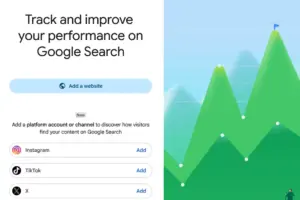
In official statements via the Google Search Blog, executives have repeatedly emphasized the integration of social networks and individual creators into traditional discovery mechanisms. Notably, features within Google Discover have expanded to incorporate direct social accounts, social posts, and follow buttons from platforms like X, Instagram, and YouTube Shorts.
As stated in official Google documentation regarding Discover updates:

"Discover will make it easier to ‘find, follow and engage with creators’—with X, Instagram and YouTube Shorts already integrated, and more platforms to come."
This prioritization of YouTube and X over traditional text-only publishers in feeds like Discover demonstrates that Google recognizes a fundamental psychological shift: trust has migrated from faceless corporate mastheads to individual human creators.
To capitalize on this reality, Google is constructing a comprehensive audience loyalty ecosystem. By rewarding platforms that foster genuine recurring engagement rather than purely transactional, single-session search visits, the platform is attempting to future-proof its user experience against the rising tide of AI-generated content parity.
Future Outlook: How Marketers and SEOs Must Adapt
As we look toward the future of digital marketing, the mandate for professionals is crystal clear. Technical optimization and keyword dominance are no longer sufficient differentiators. To survive and thrive, marketers must adopt a holistic, multi-disciplinary approach founded on several core pillars:

1. Build Real Trust and Off-Site Authority
Search success now requires a robust brand footprint that exists entirely independently of Google. Robust direct and branded traffic, strong third-party mentions, and verified off-site credentials act as the ultimate corroboration of E-E-A-T (Experience, Expertise, Authoritativeness, and Trustworthiness). If your brand disappears from search tomorrow, does anyone type your URL directly into a browser? If the answer is no, your business model is built on borrowed land.
2. Move Beyond Last-Click Attribution
The customer journey is too fragmented for last-click models to offer meaningful insights. Marketers must measure incremental uplift—tracking how specific campaigns, brand-building initiatives, and multi-channel touches influence conversion rates and audience behavior over weeks and months, rather than relying on flawed, single-touch attribution reports.
3. Embrace Multimodal and Creator-Led Content
Because younger audiences heavily favor video, audio, and social-first discovery, publishing strategies must evolve. Brands must learn to collaborate with independent creators, leveraging their pre-built audiences and humanized trust. Similarly, publishers must diversify away from text-heavy models by investing seriously in video production, podcasting, and multi-format storytelling.
4. Treat Publishing as the Start of the Lifecycle
The era of writing an article, hitting publish, and letting Google do all the heavy lifting via passive organic search is over. Marketers must master purposeful distribution. Using fundamentals like the "Golden Hour" rule forces teams to think about distribution beyond the homepage from the very first minute of content creation—utilizing social channels, email lists, partnerships, and community touchpoints to seed engagement before search engines even crawl the URL.

Final Thoughts
SEO is not dead, but it can no longer carry the entire weight of a digital marketing strategy. The future belongs to marketers who understand human psychology, master multi-channel distribution, measure true business impact over vanity metrics, and build genuine community loyalty. Stop relying on search engines to find your audience for you—go where your audience lives, build real trust, and do interesting work.