Executive Overview
As smart homes burgeon with connected appliances, high-end streaming consoles, and ubiquitous mobile devices, the backbone of our digital lives—the home network—faces unprecedented strain. For years, consumers have been forced into a false dichotomy: embrace the untethered freedom of Wi-Fi or submit to the rigid, albeit lightning-fast, constraints of Ethernet cables.
However, modern network architecture reveals that this is not an “either/or” proposition. The most resilient, high-performing home networks rely on a deliberate, strategic hybrid of both mediums. While Wi-Fi provides the indispensable convenience required for smartphones, tablets, and IoT ecosystems, Ethernet delivers the raw throughput, near-zero latency, and unwavering reliability demanded by competitive gaming, heavy cloud computing, and high-definition media streaming. By understanding the technological mechanics, capabilities, and limitations of both systems, homeowners can curate a balanced network environment where convenience and performance coexist seamlessly.
Detailed Chronology: The Evolution of Home Networking Standards
To appreciate why a hybrid approach is mandatory today, one must trace the rapid technological leaps that brought us to current Wi-Fi and Ethernet standards. The journey from tangled telephone lines to multi-gigabit wireless frequencies has transformed how we consume data.
The Wi-Fi Timeline: From 2.4GHz Foundations to Wi-Fi 7
- The Early 2000s (Wi-Fi 3 and Wi-Fi 4): Wireless networking entered mainstream consciousness relying primarily on the 2.4GHz band. While it offered decent range and obstacle penetration, speeds were sluggish (measured in tens of megabits), and congestion was a constant adversary.
- 2013 (The Arrival of Wi-Fi 5 / 802.11ac): Wi-Fi 5 popularized the 5GHz band, delivering a massive speed boost and relieving the crowded 2.4GHz airspace. It became the gold standard for laptop and smartphone connectivity for nearly a decade.
- 2020–2021 (Wi-Fi 6 and Wi-Fi 6E): Marking a generational shift, Wi-Fi 6 introduced advanced technologies like OFDMA (Orthogonal Frequency-Division Multiple Access) and MU-MIMO to handle densely populated device environments efficiently. Shortly after, Wi-Fi 6E unlocked the pristine, wide-open 6GHz band for compatible devices, dramatically reducing interference.
- Present Day (Wi-Fi 7): The newest frontier maximizes the 6GHz spectrum with wider channels (up to 320MHz) and Multi-Link Operation (MLO), allowing devices to transmit data across multiple bands simultaneously for unprecedented wireless speeds and ultra-low latency.
The Ethernet Timeline: From Coaxial Beginnings to Multi-Gigabit Copper
- 1980s–1990s (10BASE-T to Fast Ethernet): Early wired networks operated at a modest 10 Mbps over copper wires, graduating to Fast Ethernet (100 Mbps) as the internet age accelerated.
- Late 1990s–2010s (Gigabit Ethernet / Cat5e/Cat6): The standardization of 1 Gbps (Gigabit) Ethernet over Cat5e and Cat6 cabling became the bedrock of office and enthusiast home networking, easily outstripping the consumer internet speeds of the era.
- The Multi-Gig Era (Cat6a, Cat7, and Cat8): As fiber-optic internet brings multi-gigabit speeds directly to residential doorsteps, physical infrastructure has evolved. Today, 2.5 Gbps, 5 Gbps, and 10 Gbps ports are standard on high-end motherboards and routers, supported by heavy-duty shielded cabling designed to eliminate cross-talk and maintain signal integrity over distance.
Supporting Context & Metrics: Decoding the Performance Gap
When evaluating network performance, users frequently notice a discrepancy between the internet speeds they pay their Internet Service Provider (ISP) for and the speeds reported on wireless devices. This performance gap is rooted in fundamental physical and architectural differences between airwaves and copper wires.
The Bottlenecks of Wireless
Wi-Fi signals are inherently fragile. Unlike a dedicated cable, air is a shared, chaotic medium subject to severe environmental degradation:
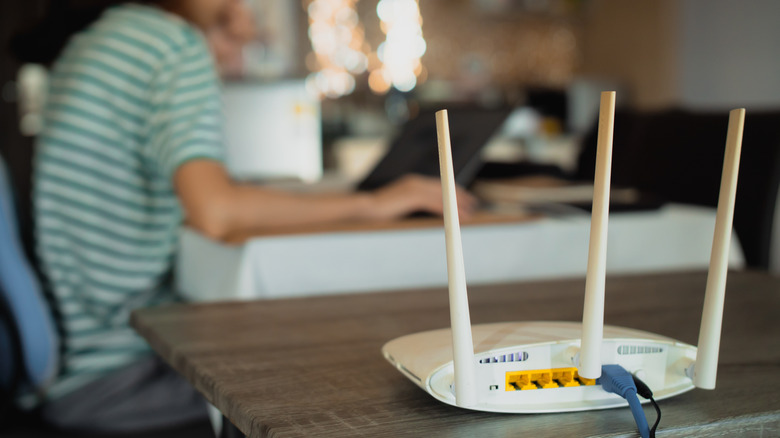
- Overhead and Half-Duplex Operation: Wi-Fi is half-duplex, meaning a device cannot simultaneously send and receive data; it must take turns. Furthermore, network management overhead consumes a portion of the available bandwidth just to keep devices connected.
- Environmental Interference: Physical barriers—particularly concrete, brick, and metal—severely attenuate wireless signals. Furthermore, older 2.4GHz networks routinely battle interference from household appliances like microwaves, Bluetooth devices, and baby monitors, as well as overlapping channels from neighboring Wi-Fi routers.
- Distance and Attenuation: Signal strength drops off exponentially with distance, resulting in slower modulation schemes and reduced throughput the further a device moves from the router or access point.
The Superiority of Wired Infrastructure
Ethernet bypasses virtually all of these pitfalls through strict engineering advantages:
- Full-Duplex Transmission: Ethernet cables feature distinct internal wire pairs dedicated to sending and receiving data simultaneously, effectively doubling the communication potential.
- Immunity to Electromagnetic Interference: Copper cables encased in proper shielding (such as Cat6a or higher) are impervious to ambient radio frequencies, household appliances, and structural obstacles.
- Latency Stability: While raw speed (bandwidth) dictates how fast you can download a file, latency (ping) dictates responsiveness. Ethernet consistently delivers the lowest possible ping, a critical metric for real-time applications.
| Metric / Feature | Wi-Fi (Latest Standards: Wi-Fi 6E / 7) | Ethernet (Wired: Cat6a / Cat8) |
|---|---|---|
| Duplex Mode | Half-Duplex (Send/Receive take turns) | Full-Duplex (Simultaneous Send & Receive) |
| Typical Latency | Higher, subject to jitter and packet loss | Exceptionally low, rock-solid stability |
| Interference Susceptibility | High (Walls, appliances, neighbors, distance) | None (Shielded copper, direct connection) |
| Best Suited For | Smartphones, tablets, IoT, roaming devices | Gaming PCs, consoles, 4K streaming, NAS |
| Mobility | Complete spatial freedom | Tethered to a fixed port location |
Strategic Implementation: When to Use Wi-Fi vs. Ethernet
Creating a healthy home network requires assigning the right medium to the right task.
Deploying Wi-Fi for Convenience and Mobility
It is neither practical nor aesthetically pleasing to wire every single gadget in a modern household. Wi-Fi remains irreplaceable for:

- Mobile and Wearable Devices: Smartphones, tablets, and laptops that move dynamically from room to room require untethered access.
- The Smart Home Ecosystem: IoT devices—including smart bulbs, security cameras, robotic vacuums, and smart plugs—almost exclusively rely on Wi-Fi (or low-power mesh protocols like Zigbee/Matter) because they lack physical Ethernet ports and demand very little bandwidth.
- Casual Media Consumption: Streaming YouTube videos, browsing social media, or listening to Spotify will run flawlessly over a modern dual- or tri-band Wi-Fi connection without the user ever noticing minor latency fluctuations.
Deploying Ethernet for Maximum Performance
For stationary equipment handling heavy data loads, a wired connection is non-negotiable:
- Competitive Gaming: Online gaming lives and dies by packet delivery and ping. An Ethernet connection eliminates the micro-stutters, packet drops, and latency spikes inherent to wireless channels, ensuring split-second inputs register instantly.
- Content Creation and Large Transfers: Professionals uploading 4K video files to cloud storage or syncing massive data libraries to a Network Attached Storage (NAS) drive will experience exponential time savings over a multi-gigabit wired link.
- High-End Entertainment Centers: Dedicated streaming boxes, home theater PCs, and next-generation consoles (such as the PS5 Pro, which supports advanced Wi-Fi 7, but still benefits from the absolute stability of a wired drop) prevent buffering during bandwidth-heavy 4K HDR streams.
Technical Deep Dive: Navigating Router and Cable Standards
Maximizing your hybrid network means ensuring your hardware standards match your performance expectations.
Understanding Wireless Bands and Generations
- Dual-Band vs. Tri-Band/Quad-Band: Standard routers broadcast across 2.4GHz and 5GHz bands. Tri-band routers introduce a second 5GHz band or a 6GHz band, preventing congestion. In mesh configurations, high-end routers often dedicate one band purely to backhaul communication between mesh nodes, leaving the other bands entirely free for client devices.
- The 6GHz Advantage: Available on Wi-Fi 6E and Wi-Fi 7, the 6GHz spectrum offers wide channels free from legacy device clutter. However, its range is shorter, and client devices (phones, laptops, consoles) must possess specialized hardware chips to connect to it.
Demystifying Ethernet Categories
Selecting the wrong cable can bottleneck an otherwise expensive multi-gigabit fiber connection:
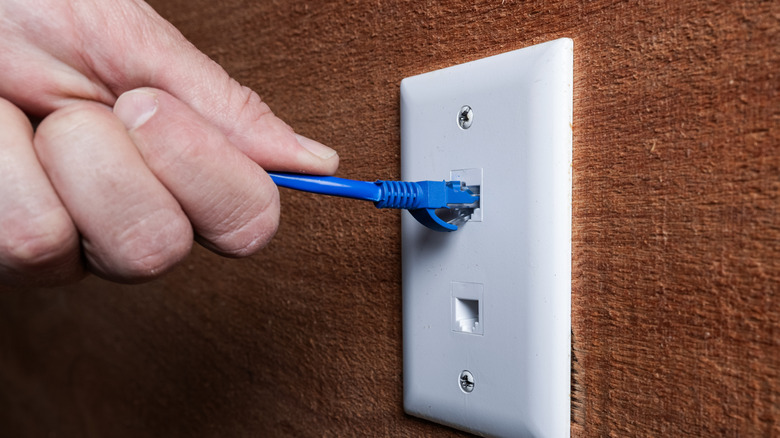
- Cat5e: The baseline for basic gigabit (1 Gbps) networking up to 330 feet. Adequate for standard home setups, but showing its age.
- Cat6: Supports up to 10 Gbps, but distance is restricted to roughly 180 feet for top speeds.
- Cat6a (Recommended): Supports full 10 Gbps speeds up to the full 330-foot limit with heavy shielding against interference. It represents the sweet spot for future-proofing home installations.
- Cat8: Primarily engineered for enterprise data centers, supporting up to 40 Gbps over short distances. Generally overkill for residential use unless running extreme enthusiast setups.
Future Outlook: The Convergence of Smart Infrastructure
As internet service providers roll out symmetrical 2-gigabit, 5-gigabit, and 10-gigabit fiber connections to residential neighborhoods, the infrastructure inside our homes must evolve to prevent internal bottlenecks.
Looking forward, the distinction between wired and wireless will continue to blur through intelligent software management. Modern routing platforms increasingly utilize multi-link aggregation, dynamically shifting traffic between high-speed Wi-Fi 7 airwaves and wired backhauls based on real-time application demands. Furthermore, advances in Power over Ethernet (PoE) and fiber-to-the-room (FTTR) architectures are making it easier than ever to route discreet, high-speed lines through residential properties without tearing down drywall.
Ultimately, the future does not belong exclusively to cables or airwaves. By consciously deploying Ethernet where uncompromising reliability and speed are paramount, and reserving Wi-Fi for mobile convenience, consumers can build a robust, future-proof digital ecosystem capable of handling whatever technological demands lie ahead.