Executive Overview
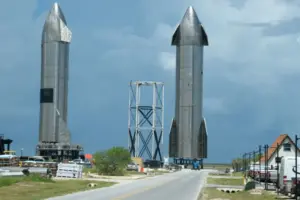
In the grand theater of space exploration, the adage that "bigger isn’t always better" is frequently put to the test. Yet, when humanity looks toward establishing a permanent multi-planetary presence, the physics of deep-space transit demand an unprecedented leap in scale. Enter the SpaceX Starship: a monolithic spacecraft and booster combination that defies conventional aerospace engineering. Standing at an awe-inspiring 407 feet when fully stacked, Starship is not merely a vehicle; it is a paradigm shift in how we conceive of heavy-lift rocketry, orbital refueling, and the economics of space travel.
To comprehend the sheer magnitude of Starship, one must look past mere numbers. Standing taller than Hyperion—the world’s tallest known living tree—and soaring one-third higher than the Statue of Liberty (pedestal included), Starship currently holds the crown as both the tallest and most powerful rocket ever flown. Generating a staggering 18.1 million pounds-force of liftoff thrust, this titan of engineering is designed to do more than merely break the bonds of Earth’s gravity. It is the designated workhorse for humanity’s return to the lunar surface under NASA’s Artemis program and the foundational vessel for future crewed missions to Mars.
However, immense scale brings extraordinary challenges. From obliterating concrete launch pads during its inaugural orbital flight tests to pioneering complex in-space cryogenic propellant transfers, Starship represents both the bleeding edge of aerospace capability and a labyrinthine engineering hurdle. This report delves deep into the dimensions, raw power, operational mechanics, and monumental logistical strategies required to make the Starship vision a reality.
Detailed Chronology: From Concept to Orbital Dominance
The journey of the Starship program is a masterclass in rapid prototyping, iterative failure, and aggressive development. Unlike traditional aerospace programs that spend decades in design phases before bending metal, SpaceX adopted a "build, test, blow up, repeat" philosophy that radically accelerated its path from a drawing board concept to a flying orbital-class vehicle.
The Early Iterations: Hop Tests and Hopper Prototypes
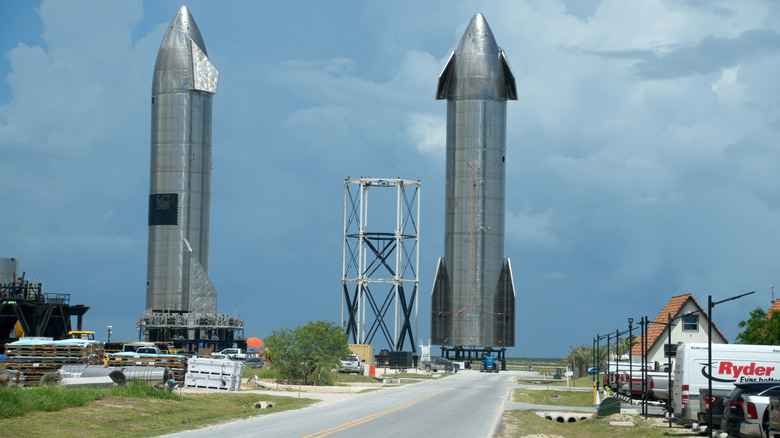
The genesis of Starship traces back through various iterations, originally announced by Elon Musk under monikers like the Mars Colonial Transporter (MCT), the Interplanetary Transport System (ITS), and the BFR (Big Falcon Rocket). By 2019, the program took a tangible physical form in the flats of Boca Chica, Texas (now known as Starbase).
Early sub-orbital prototypes, affectionately dubbed "Starhopper," resembled rudimentary water towers powered by a single Raptor engine. These modest hops—reaching altitudes of 150 meters—proved the basic aerodynamics, attitude control, and landing burn mechanics of a stainless-steel vehicle. As testing progressed to higher-altitude prototypes like SN8, SN9, and SN15, SpaceX began testing complex aerodynamic flip maneuvers and multi-engine relights, culminating in the first successful high-altitude flight and soft landing of SN15 in May 2021.
The Integrated Flight Test Era
The true baptism by fire occurred on April 20, 2023, during Starship’s first full-stack orbital flight test. The metrics were historic: the fully stacked vehicle roared off the pad with 16.7 million pounds of thrust. However, the sheer ferocity of the Super Heavy booster’s exhaust proved too much for standard civil engineering, vaporizing the concrete launch pad, carving a crater into the earth, and raining debris across 385 acres of surrounding marshland.
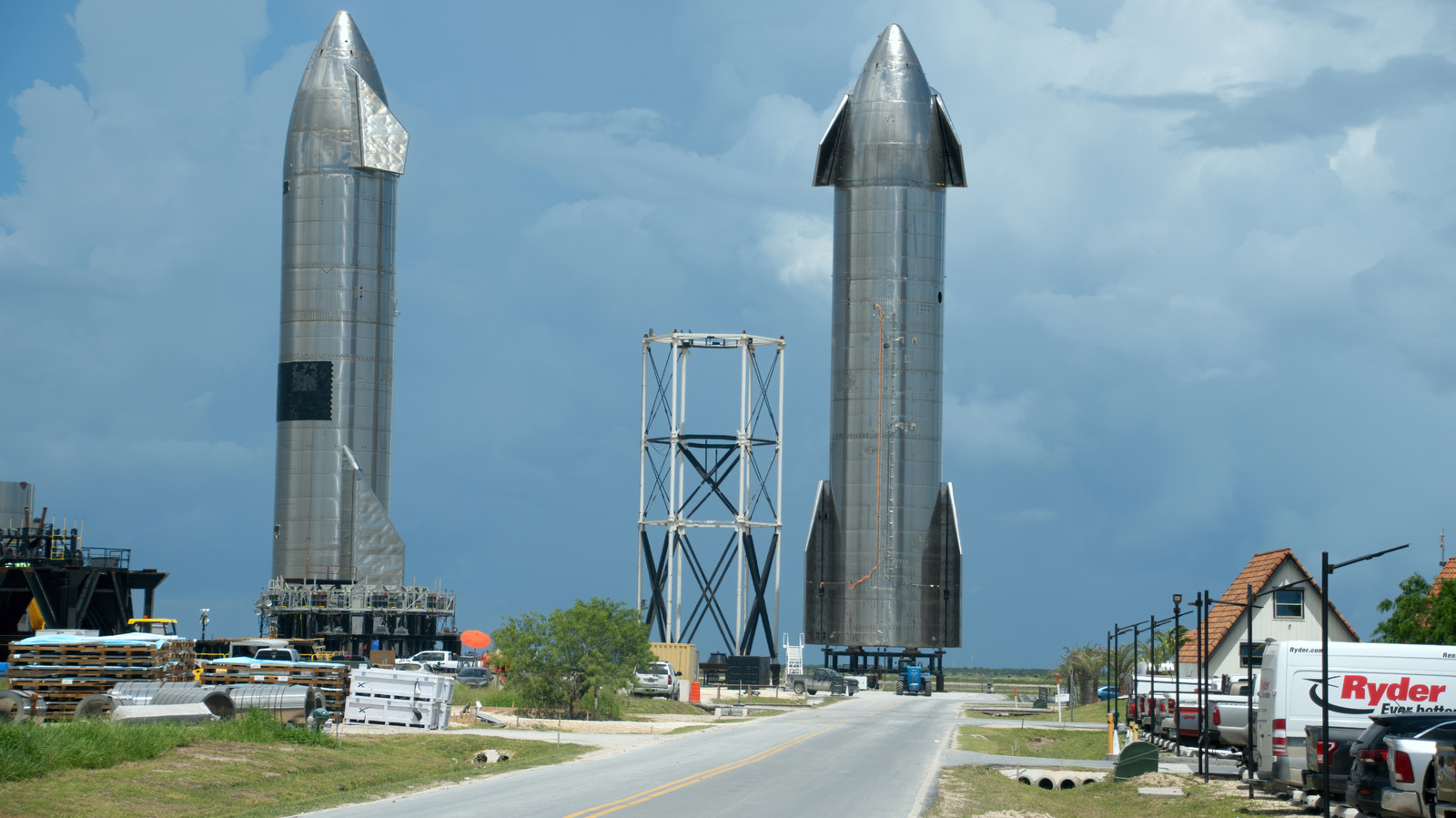
Despite structural failures leading to a controlled self-destruct over the Gulf of Mexico, the test provided invaluable telemetry. This prompted SpaceX to construct a massive, water-cooled steel deflector plate—a "flame shroud"—along with upgraded launch mounts. Subsequent flight tests steadily achieved monumental milestones: precise hot-staging separations, controlled splashdowns in the Indian and Atlantic oceans, and, most recently, the breathtaking mechanical catch of the Super Heavy booster by the launch tower’s "chopstick" arms during Flight 5. Each iteration has systematically chipped away at the engineering unknowns, paving the way for operational readiness.
Supporting Context & Metrics: Architecture and Powering the Titan
To truly appreciate what makes Starship tick, one must examine its anatomical breakdown and the thermodynamic powerhouses driving its ascent.
Anatomy of a Giant
The Starship launch vehicle is divided into two primary, rapidly reusable stages:
- The Super Heavy Booster (Bottom Stage): Standing at an imposing 236.2 feet, the Super Heavy acts as the first-stage lifter. Its primary purpose is to punch the entire assembly through the dense lower layers of Earth’s atmosphere before separating and executing a propulsive return to the launch site. It boasts an immense propellant capacity of 3,650 metric tons.
- The Starship Spacecraft (Upper Stage): Perched atop the booster is the 170.6-foot spacecraft itself. Designed to carry both cargo and up to 100 passengers (or massive satellite constellations like Starlink), it holds an additional 1,600 metric tons of propellant.
Combined, the vehicle manages a staggering gross propellant load of 5,250 metric tons, requiring exquisite staging precision and hyper-efficient propulsion.
The Raptor Engine Dynasty
At the heart of Starship’s performance is the Raptor engine, a marvel of modern rocketry that burns a cryogenic mixture of liquid methane ($CH_4$) and liquid oxygen ($LOX$). Unlike legacy kerosene-fueled engines, methane burns cleaner, reducing soot buildup and making it a viable candidate for in-situ resource utilization (ISRU) on Mars, where methane can be synthesized from atmospheric carbon dioxide and water.
- Super Heavy Power: The booster is powered by an astonishing cluster of 33 Raptor engines, generating a cumulative 18.1 million pounds-force of liftoff thrust (upgraded from the initial 16.7 million pounds seen in early tests). For comparison, NASA’s legendary Space Launch System (SLS)—currently the only other heavy-lift vehicle in active operation—produces between 8.8 million and 9.4 million pounds of max thrust. Starship effectively doubles the competition’s output.
- Upper Stage Configuration: Once the Super Heavy separates, the Starship upper stage ignites its own propulsion suite. This consists of three standard Raptor engines optimized for atmospheric flight and three Raptor Vacuum (RaptorVac) engines featuring massive, bell-like expansion nozzles designed to operate efficiently in the vacuum of space. The upper stage delivers approximately 3.5 million pounds-force of thrust.
The Orbital Refueling Paradigm: Journey to the Moon and Beyond
While Starship’s raw power is sufficient to blast heavy payloads into Low Earth Orbit (LEO), the physics of deep-space transit present a severe limitation. Can Starship journey to the Moon or Mars without stopping? The short answer is no.
For NASA’s Artemis lunar landing missions, where SpaceX acts as the provider for the Human Landing System (HLS), Starship must contend with the "tyranny of the rocket equation." The spacecraft burns through a vast majority of its propellant just to break free of Earth’s gravity well and reach LEO. To proceed onward to lunar orbit and descend to the surface, an intricate orbital refueling choreography must take place.
The Multi-Launch Logistics Dance
Executing a lunar mission requires a tightly timed sequence of uncrewed and crewed flights:
- The Propellant Depot Launch: A specialized Starship tanker or depot is launched first into Earth orbit, serving as a massive cryogenic filling station.
- The Tanker Fleet: A series of subsequent tanker Starships launch, docking with the depot to transfer their remaining liquid methane and liquid oxygen.
- The Lunar Lander Launch: Finally, the Starship HLS variant launches, docks with the orbiting depot, and fills its tanks to absolute capacity.
- The Crew Rendezvous: Meanwhile, NASA astronauts launch aboard the Orion spacecraft via the Space Launch System. Orion docks with the fully fueled Starship HLS waiting in Earth orbit.
- Trans-Lunar Injection and Descent: The crew transfers into Starship, which fires its engines to leave Earth orbit, travel to the Moon, enter lunar orbit, and descend to the surface for lunar surface operations.
Cryogenic Management: The Ultimate Technical Frontier
Managing, transferring, and storing extremely cold propellants (liquid oxygen boils at -183°C; liquid methane at -162°C) in the radiative, zero-gravity environment of space is arguably the most formidable engineering challenge of the modern space era. Solar radiation, boil-off, and fluid dynamics during transfer demand advanced insulation, active refrigeration systems, and precise guidance control. Success in this domain will not only unlock the Moon, but serve as the foundational stepping stone for crewed missions to Mars.
Future Outlook: Redefining Humanity’s Reach
As SpaceX continues its flight test campaign, the implications of a fully operational, rapidly reusable Starship system extend far beyond government contracts and lunar footprints.
In the near term, the primary milestones involve perfecting the "chopstick" catch mechanism for both boosters and upper stages, scaling up launch frequencies, and executing the first successful in-flight cryogenic transfer demonstrations in orbit. Once these boxes are checked, NASA’s Artemis III and subsequent missions will rely heavily on Starship’s gargantuan habitable volume and payload capacity.
Looking further ahead, Starship is explicitly engineered to make humanity a multi-planetary species. The ability to rapidly reuse both stages drastically reduces the cost per kilogram to orbit, opening doors for commercial space stations, industrial manufacturing in microgravity, solar system exploration, and eventually, the colonization of Mars.
While skepticism regarding timelines remains a staple of the aerospace industry, the physical reality of Starship’s towering presence on the Texas coastline cannot be ignored. Whether viewed through the lens of raw engineering audacity or geopolitical space races, Starship represents an inflection point in human history—a bridge between our Earthbound past and a boundless, starry future.