Executive Overview
Every time a user submits a query into a search engine like Google or an AI interface like ChatGPT, a complex, high-speed digital exchange occurs beneath the surface. Your browser and a vast collection of distributed backend services engage in a candid conversation regarding intent, relevance, and algorithmic routing.
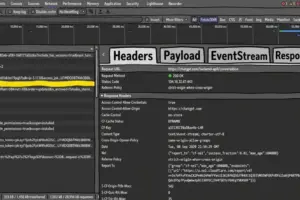
For the vast majority of web users, marketers, and developers, this stream of communication remains entirely invisible. Yet, it sits in plain sight, accessible via a single keystroke (F12) within the Network tab of tools like Chrome DevTools.

By closely monitoring this data stream, digital marketers can uncover high-value search exploits, understand precise content freshness windows, and decode the multi-tiered indexing systems driving modern AI engines. Far from requiring an elite data science team, intercepting and analyzing these network requests demands little more than digital curiosity, a standard browser, and modern AI automation agents. In an era where traditional ranking tactics are heavily commoditized, possessing proprietary insights extracted directly from backend communications represents one of the few sustainable competitive advantages left in the search engine optimization (SEO) industry.
Detailed Chronology: Uncovering the Architecture of Modern Search
From Backgammon Probabilities to Search Exploits
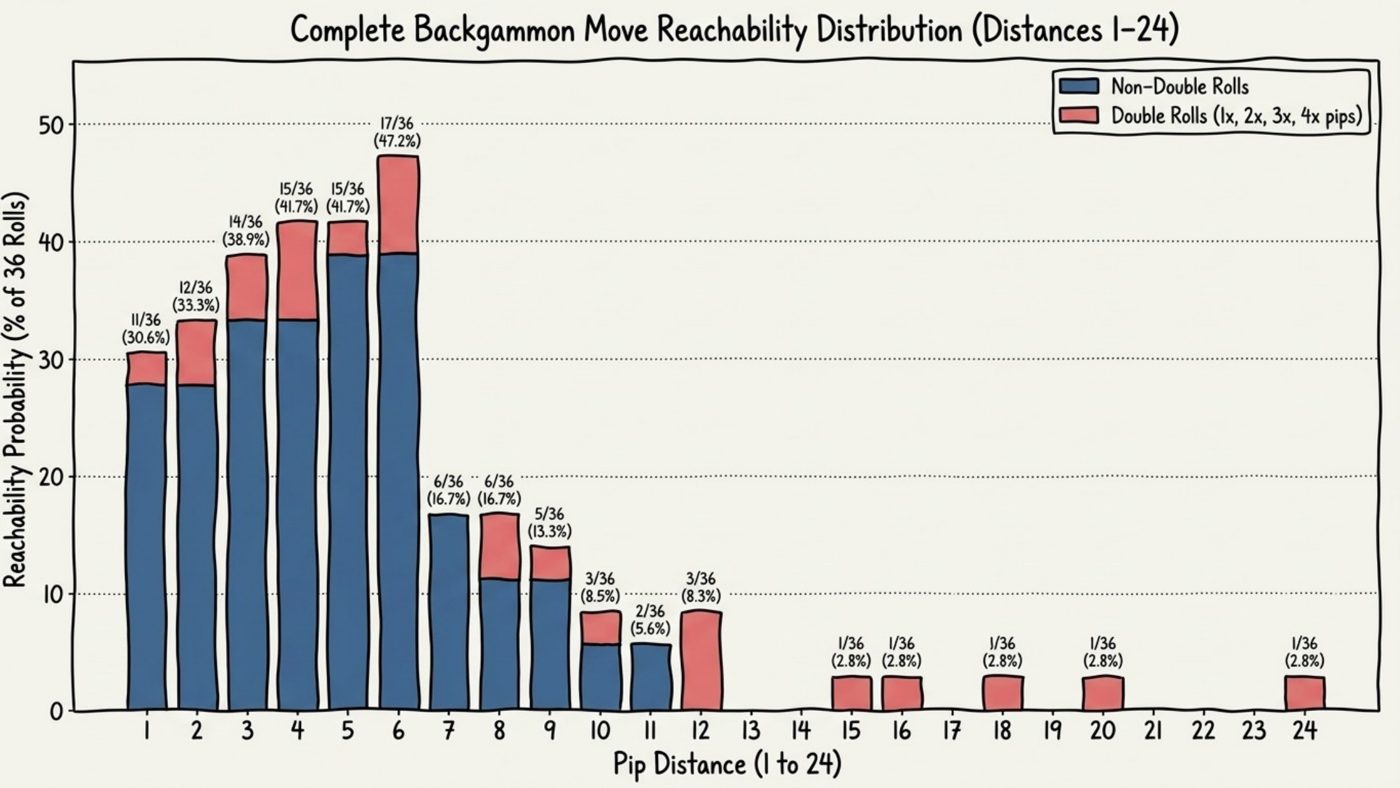
The motivation to analyze raw network traffic often stems from a gamer’s mentality—the relentless pursuit of a statistical edge. Just as calculating the reachability distribution of dice rolls in backgammon reveals where to block an opponent or leave a piece exposed, studying backend network traffic exposes the underlying mechanics of search algorithms.
This analytical approach recently led to the discovery of a major Google search vulnerability that earned a $13,337 payout through the Google Vulnerability Reward Program. The panel noted that the "exploitation likelihood is high" and that the issue "qualified as an abuse-related methodology with high impact."
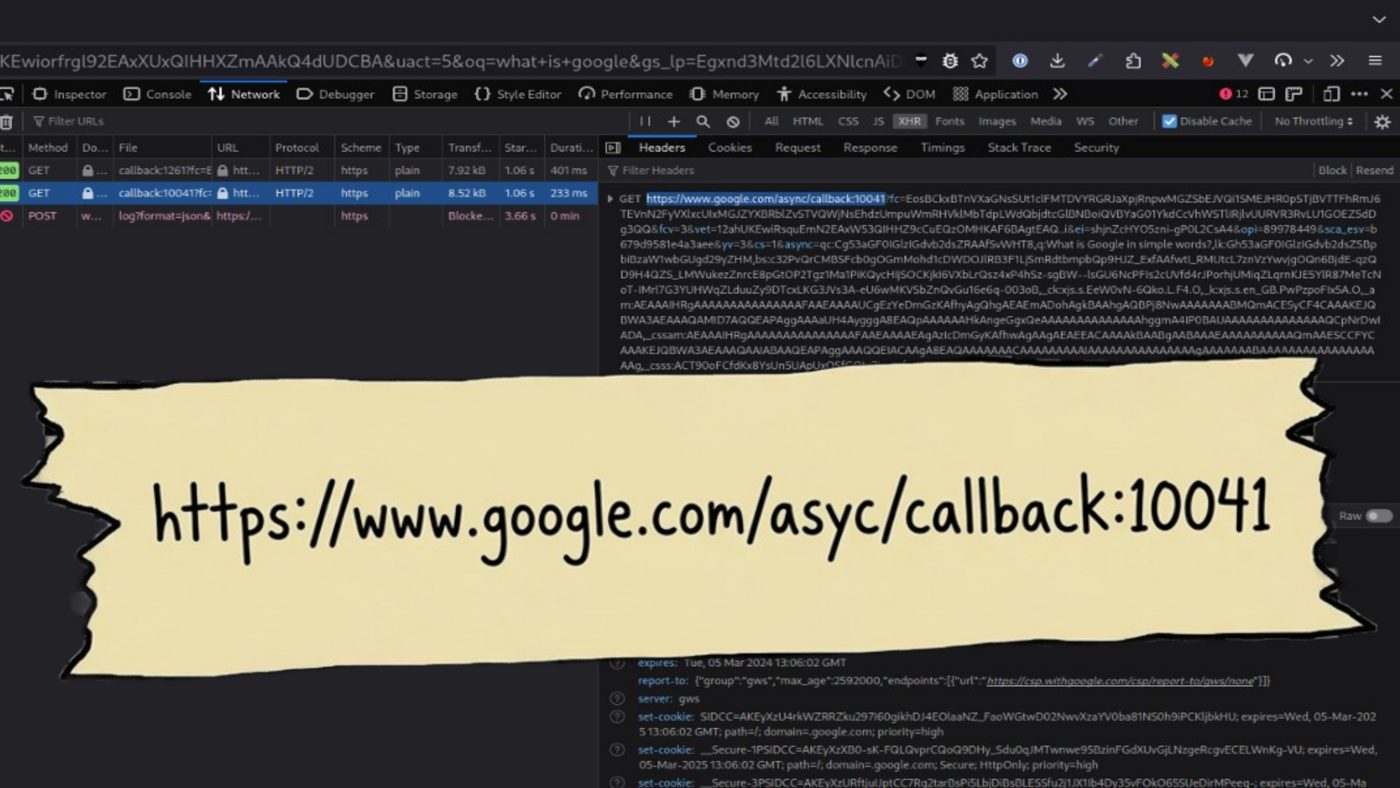
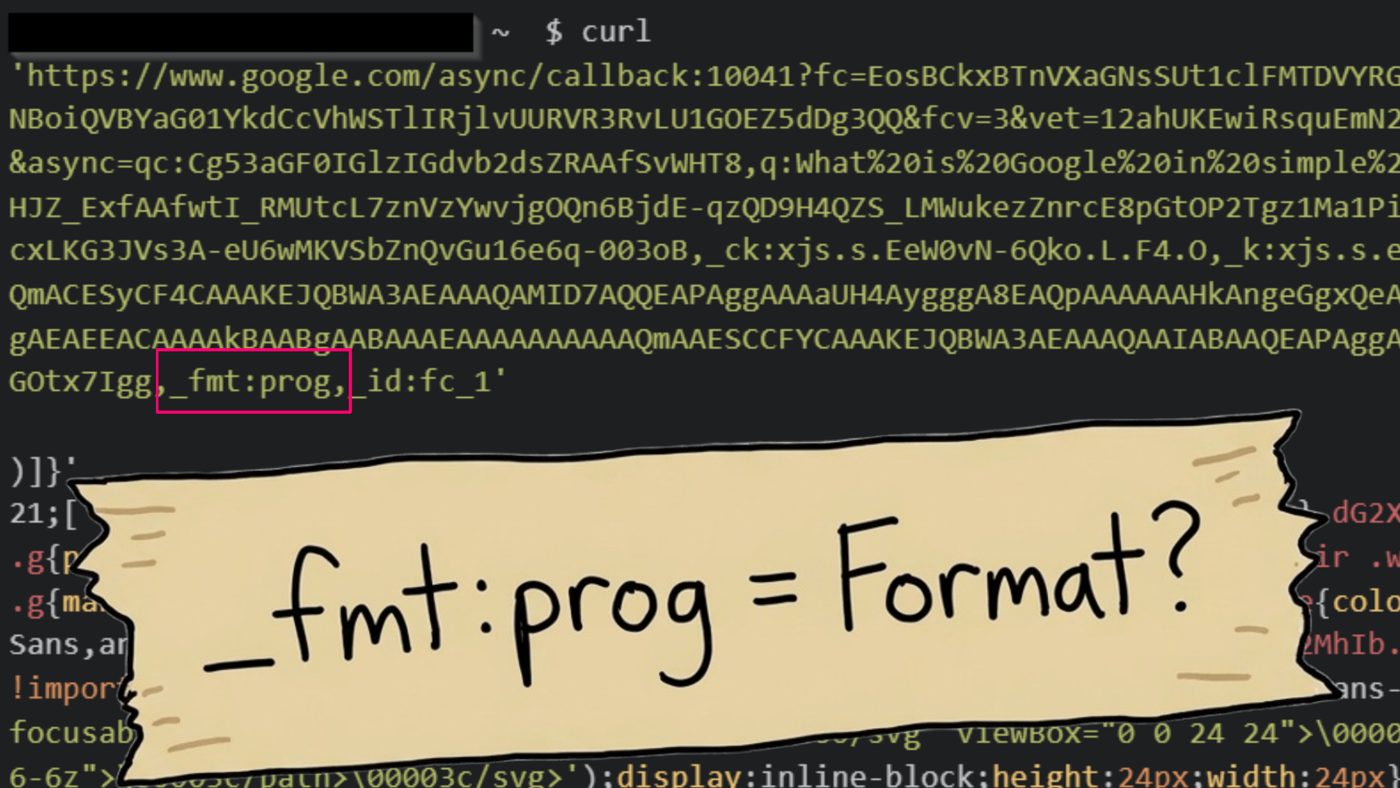
The discovery began with an investigation into Google’s asynchronous callback URLs. While reviewing request headers, analysts noticed an unusually large parameter string attached to a callback endpoint. Firing the request off via a command-line curl utility initially returned an unformatted wall of data. However, observing a parameter named _fmt set to prog (an abbreviation presumed to stand for "format"), an experiment was conducted: the parameter was completely deleted.

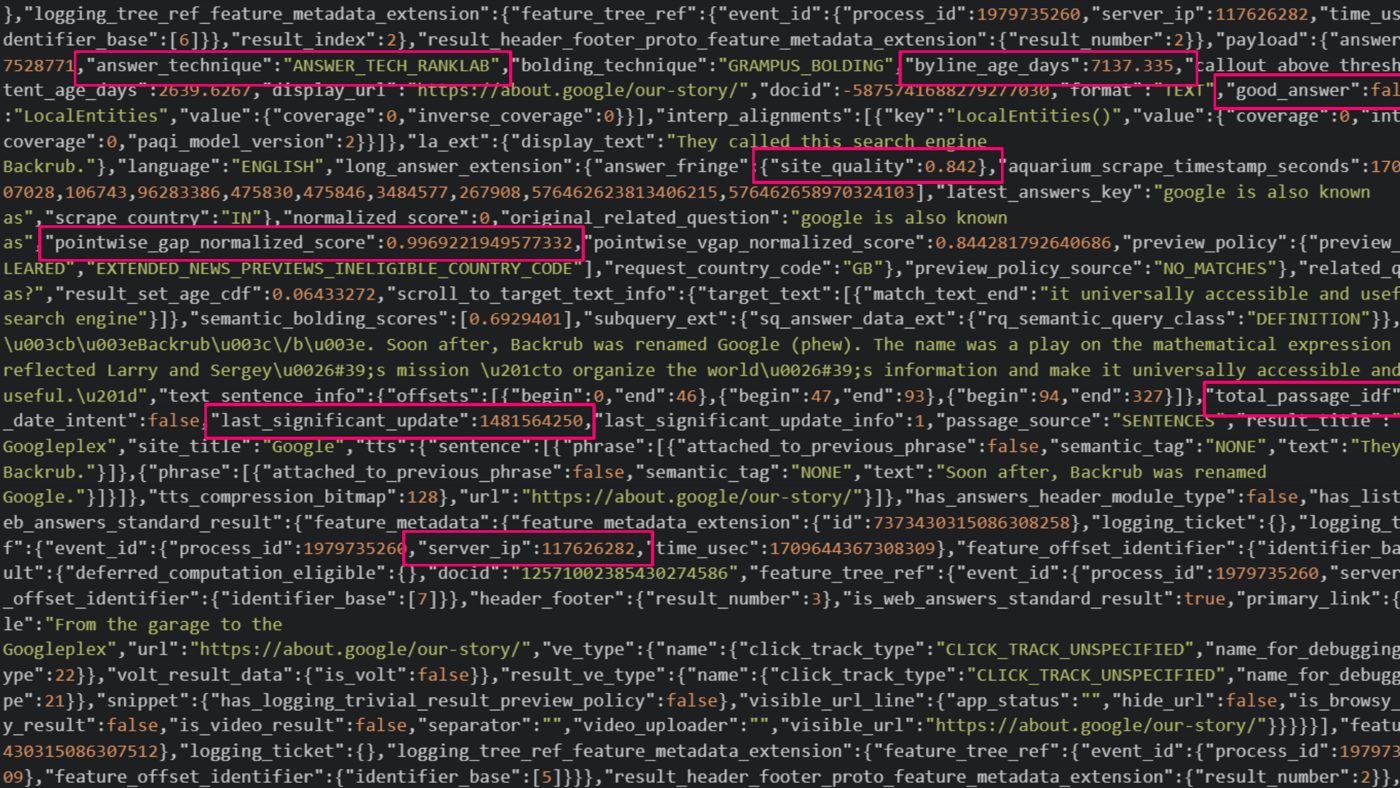
The result was an immediate, unintended exposure of structured JSON data from Google’s backend. The server responded with granular metadata, including:
- Internal site quality scores.
- Inverse document frequency (IDF) scores.
- Epoch timestamps detailing when pages were last significantly updated.
- Origin server IP addresses and algorithmic confidence metrics.
Translating Raw Data into Content Strategy: QueryClassifier.com
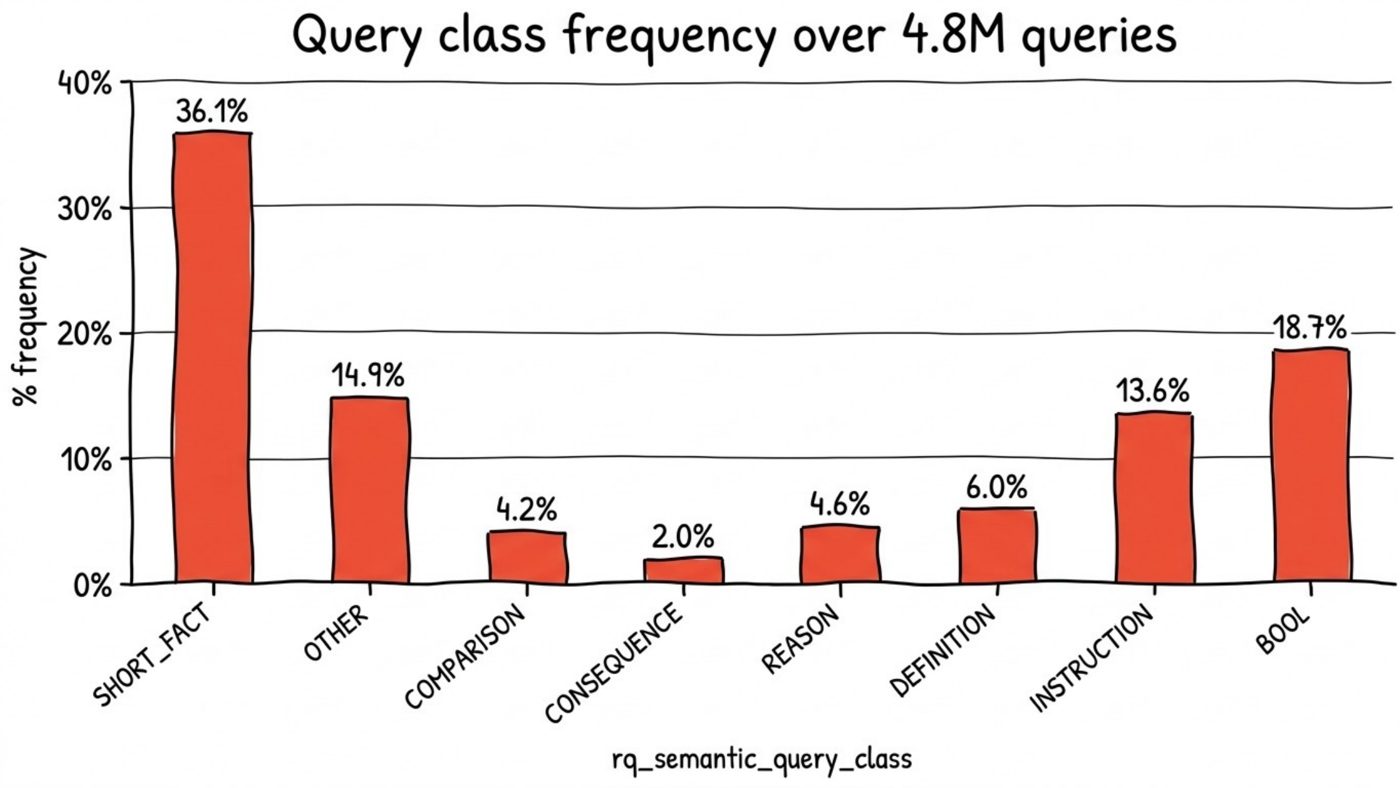
While the raw metadata offered deep technical visibility, the network traffic also revealed how Google classifies user intent. The analysis of a 4.8-million-query sample showed that Google routes search requests into eight distinct "refined query" semantic classes.
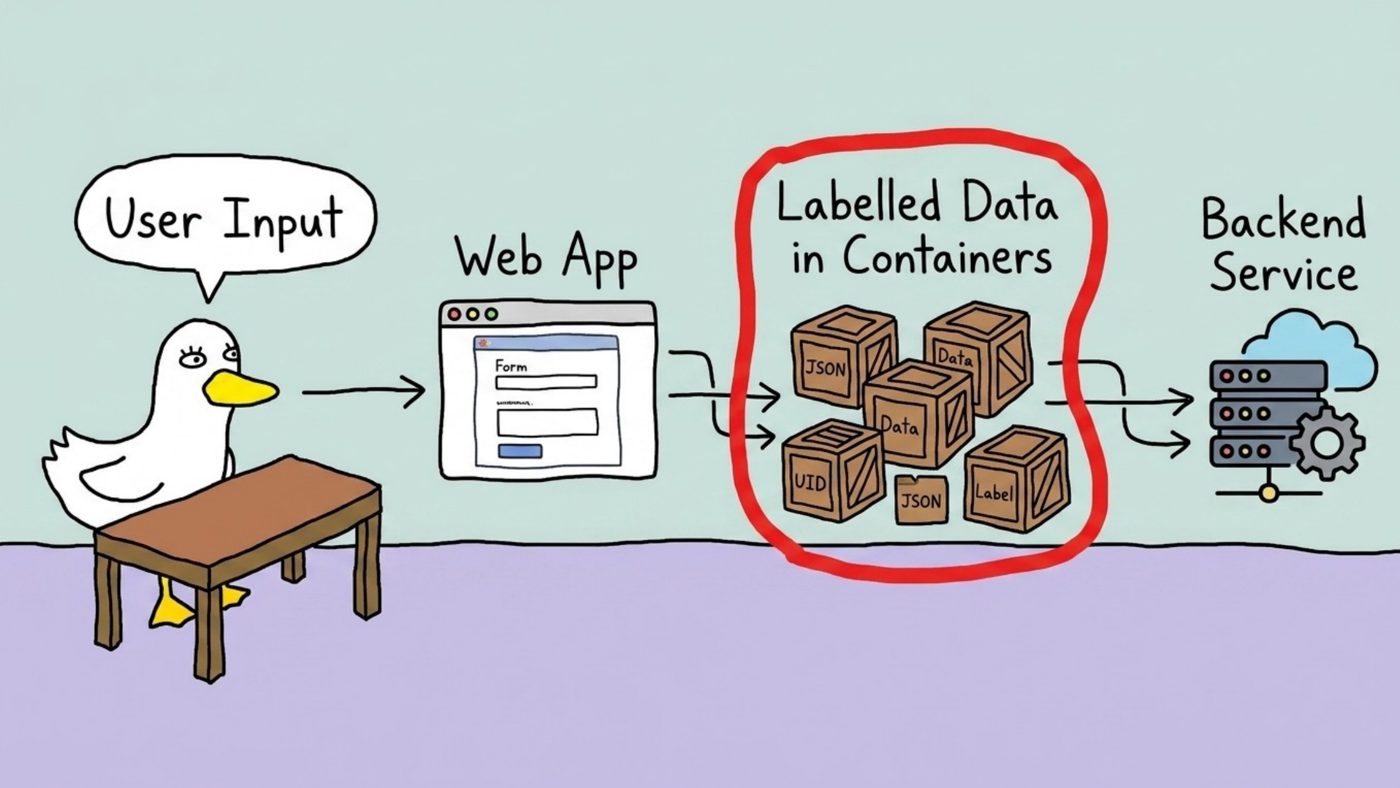
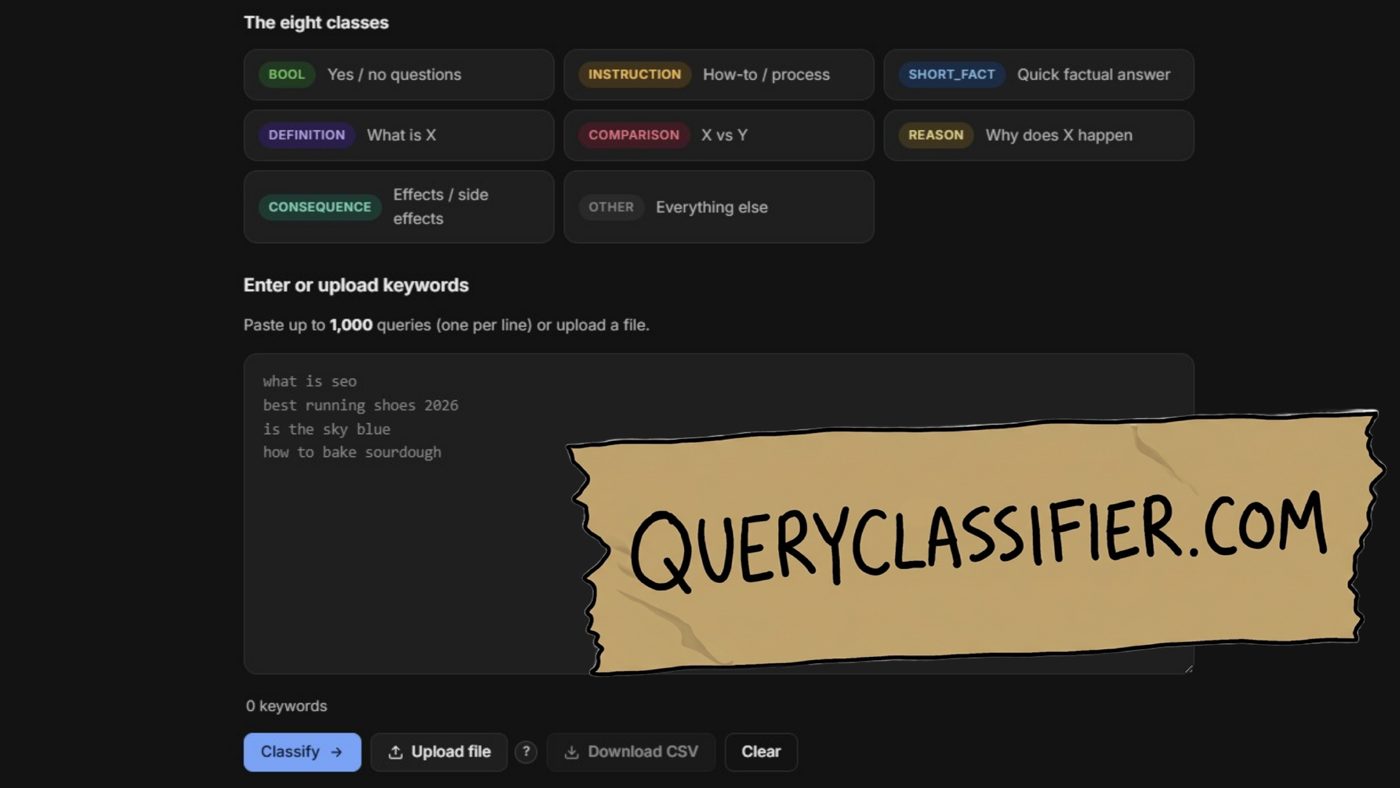
Armed with this labeled dataset, developers downloaded DistilBERT—a smaller, faster variant of BERT retaining approximately 96% of its performance while operating with a 40% reduction in size. Fine-tuning the model over a 50-hour period on a standard gaming laptop birthed QueryClassifier.com, a free public tool that predicts how Google will categorize any given search query.
For content marketers, knowing a query’s semantic class allows teams to align their content architecture with Google’s hidden expectations. Because a strong correlation exists between query classification and the SERP features displayed, organizations can optimize for specific layout elements at scale long before publishing.
Intercepting ChatGPT’s "Fan-Out" Queries and Source Sets
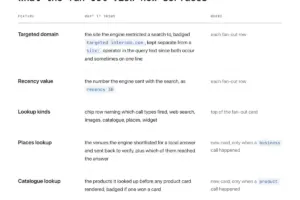
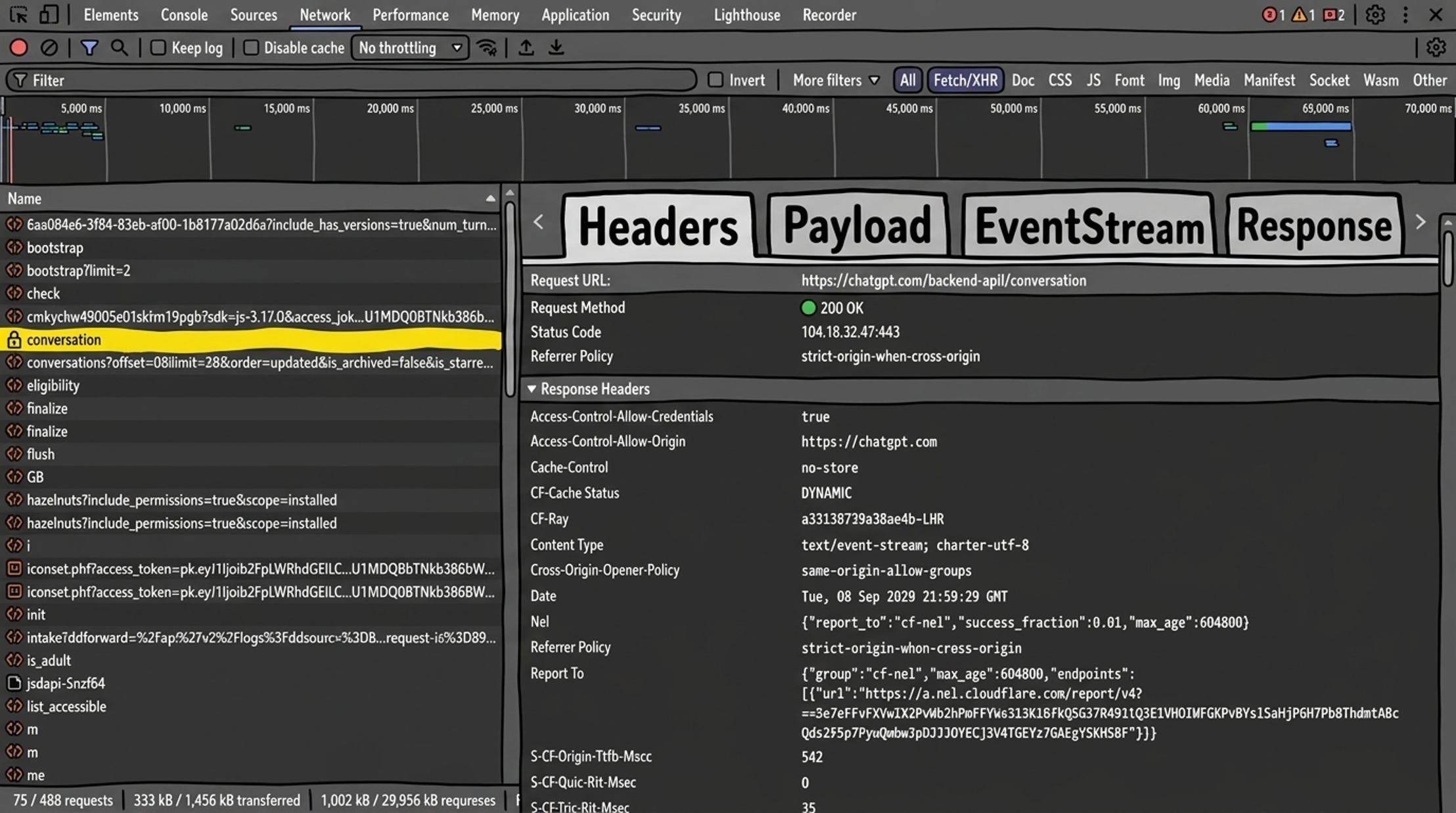
As conversational AI engines captured significant search market share, the focus of network analysis shifted from traditional search engines to large language models. Early manual inspection of the conversation network endpoint in ChatGPT revealed the presence of hidden search_model_queries—often referred to as "fan-out" queries. These are the secondary search terms the AI generates behind the scenes to gather context before formulating an answer.
Subsequent investigations using automated browser orchestration (utilizing tools like Perplexity Computer and custom Chrome extensions loaded in developer mode) shed light on how ChatGPT sources its information. Analysis of the result_source data field revealed that the platform pulls results from specialized source sets.
According to deeper architectural studies conducted by platforms like Peec AI, these sources span a family of vertical indexes collectively known as "Labrador," covering:
- The general web and PDFs.
- Academic repositories (arXiv) and Wikipedia.
- Local, financial, legal, medical, and shopping databases.
Supporting Context & Metrics: Decoding the Numbers
Understanding the internal mechanics of search engines and AI agents requires looking past user-facing interfaces and evaluating empirical data captured from network payloads.
Google Query Classification Distribution
Based on a sample of 4.8 million English queries extracted from backend telemetry, search inputs are systematically sorted into defined semantic categories. This classification dictates whether Google serves transactional, informational, navigational, or conditional results, directly influencing the layout of the Search Engine Results Page (SERP).
ChatGPT Freshness Windows
Network data reveals that when ChatGPT executes a search via its underlying toolsets, the generated query is appended with a vertical pipe and an integer representing a time window measured in days:
- High-velocity financial queries (e.g., stock valuations): 2-day freshness window.
- Fast-moving news and sports events (e.g., weekend league scores): 7-day window.
- Commercial software evaluations (e.g., enterprise tools): 30-day window.
- Deep technical guidance & earnings reports: 90-day window.
- Community-sourced opinions & user forums (e.g., Reddit product discussions): 365-day window.
The Great Reddit Citation Drop vs. Reality
A notable longitudinal study by Petra Labs tracking 113,500 ChatGPT interactions documented a dramatic shift in August 2026, when Reddit’s share of final AI citations fell by roughly 80% over a single day following the rollout of default model updates.
However, network traffic telemetry captured by browser extension tools like FanoutFox tells a different story. While direct citations plummeted, backend site: search queries targeting Reddit remained robust. This data confirms that ChatGPT continues to consume community discussions heavily to validate brand sentiment and product efficacy, even if it ultimately cites the vendor’s primary domain in the final output. Counting visible links reveals what an AI chooses to display to the user; intercepting network streams reveals what the model actually reads.
Official Statements and Industry Perspectives
The practice of inspecting browser developer tools to understand search architecture has sparked significant debate across the digital marketing community.
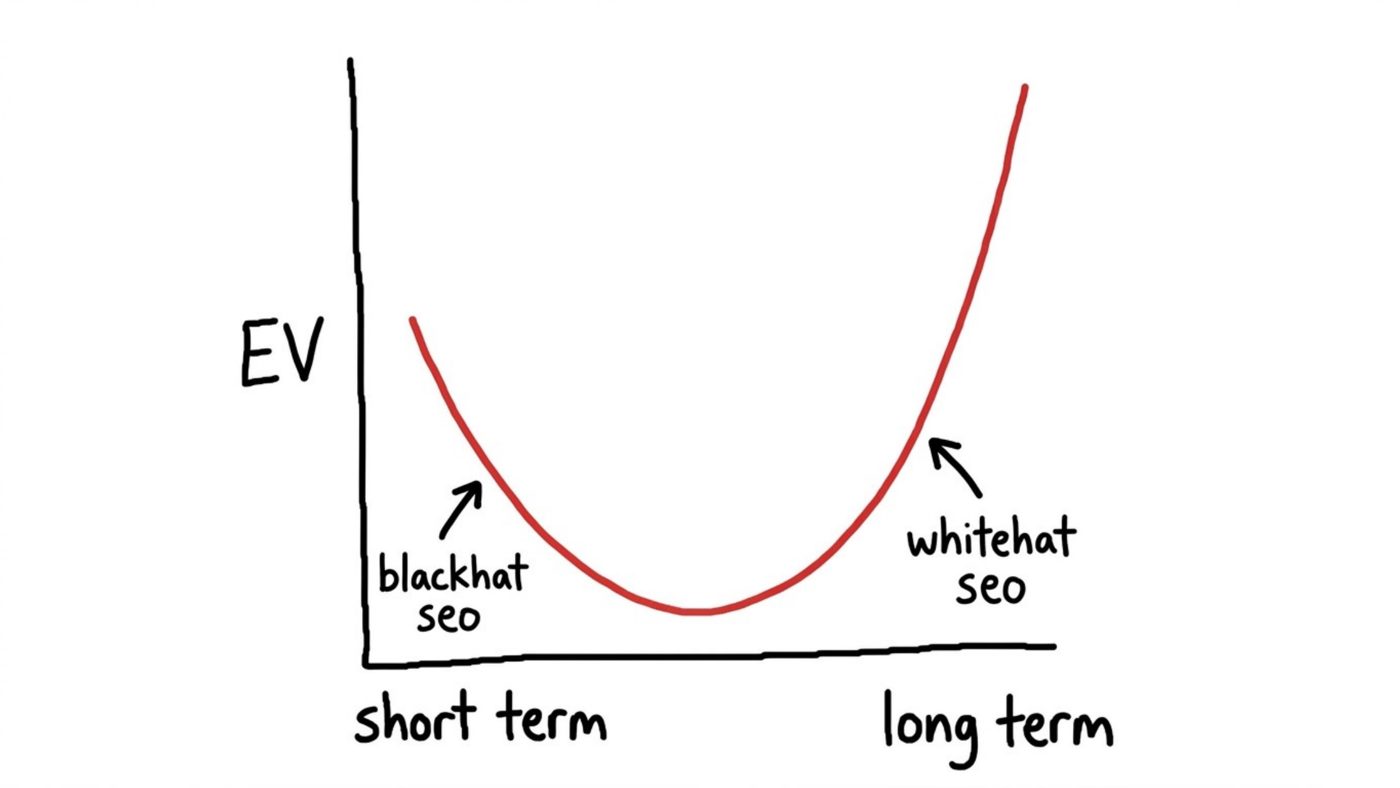
Industry veterans emphasize that while black-hat tactics relying on short-term expected value (EV) often trigger rapid algorithmic countermeasures and domain penalties, passive observation of network traffic represents a secure, white-hat approach to strategic intelligence. As Mark Williams-Cook noted during documentation of his findings:
"Optimization is the sum of cumulative gains and edges. Gaining this knowledge allows you to stack 1% on your competition over time in a way that is impossible for them to imitate. This isn’t some ‘hack’ technique like a listicle they can copy in 10 minutes."
Platforms and independent researchers have increasingly validated the existence of these distributed backend pipelines. Analyses from technical SEO researchers such as Suganthan Mohanadasan and Tomek Rudzki underscore that modern search engines and generative models are no longer monolithic entities. Instead, they operate as federated microservices passing rich structured signals—ranging from quality scores to specialized index tags—directly through client-facing network channels.
Future Outlook: The Evolution of Web Intelligence
As search engines and conversational AI platforms harden their defenses against automated scraping, the methodology of extracting insights from network traffic will continue to evolve.
- The Rise of AI-Assisted Telemetry: Analysts are increasingly deploying local AI agents and custom-built browser extensions in developer mode to execute bulk prompt research. This bypasses traditional scraper blocks by operating within legitimate user sessions while passively recording underlying payload structures.
- Dynamic Protocol Shifts: Because engineering teams frequently alter backend naming conventions—such as Google shifting callback parameter strings or OpenAI modifying its
search_model_queriessyntax—sustainable intelligence gathering requires continuous, automated monitoring rather than static scripts. - Strategic Content Alignment: Organizations that leverage backend data to identify precise freshness windows, query classes, and multi-source retrieval patterns will maintain a permanent advantage over competitors relying solely on surface-level keyword research and public documentation.
Ultimately, the data exchanged between user browsers and backend servers remains one of the most transparent windows into the digital economy. Those willing to open the developer tools, examine the data crates in transit, and decode the underlying logic will continue to command a sustainable edge in search optimization.