As global energy costs continue to fluctuate and climb, households everywhere are looking closer at their utility bills. From smart thermostats to LED bulb selections, consumers are auditing their living spaces to root out energy vampires and inefficient appliances. Yet, while large-scale appliances like refrigerators, HVAC systems, and washing machines receive the lion’s share of attention, home entertainment setups often fly under the radar.
Specifically, home sound systems represent a hidden frontier of electrical consumption. Whether you are an casual listener streaming background music on a smart speaker or an audiophile running a complex rig of vintage tube amplifiers and floor-standing speakers, understanding how your sound system uses energy is crucial. A typical home sound system draws anywhere from 20 to 50 watts in standby mode, scaling up to 200 watts or more at maximum volume.
However, "typical" is a rare luxury in consumer audio. From esoteric hi-fi combinations to power-hungry multi-channel home theaters, your specific audio footprint depends on a myriad of hardware choices, listening habits, and standby behaviors. This comprehensive guide explores how to assess, measure, and calculate the true cost of powering your home sound system—and offers actionable strategies to trim your electricity usage without sacrificing fidelity.
Executive Overview
The modern home is saturated with consumer electronics that demand constant power. Among them, home audio equipment occupies a unique niche because its power consumption is dynamic. Unlike a refrigerator that cycles on and off based on internal temperatures, an audio system’s energy draw fluctuates in direct response to the user’s interaction: the volume knob, the playback source, and whether the device is left idling in a "ready" state.
At its baseline, a sound system consumes energy simply by remaining plugged into the wall. This standby power—often referred to as "phantom load" or "vampire draw"—keeps receivers connected to Wi-Fi, prepares Bluetooth modules for instant pairing, and keeps internal logic boards warm. When active, the system’s power demands scale dynamically. Turntables and CD players require minimal electricity to spin media, but amplifiers—the workhorses of any sound system—must convert that signal into kinetic energy to move speaker cones, a process that generates heat and drains watts rapidly.
For the cost-conscious consumer, managing this consumption requires more than guesswork. By understanding the hardware variables, employing simple metering tools, and applying basic mathematical formulas, you can demystify your audio gear’s energy profile. Furthermore, incorporating modern smart-home hardware can completely eliminate phantom drain, ensuring you only pay for the music you actually listen to.
Detailed Breakdown: Anatomy of Audio Energy Consumption
To effectively manage your sound system’s power consumption, it helps to break down how different audio components consume electricity. Not all gear is created equal, and understanding the mechanical and electrical differences between components can help you spot inefficiencies in your setup.
1. The Role of Amplifiers: The Power Hogs
At the heart of almost any serious sound system is an amplifier, and it is almost always the single largest consumer of electricity in the chain. Amplifiers take a weak audio signal and boost it to a level capable of driving speakers.
- Class A vs. Class AB vs. Class D: Audiophiles often debate the sonic purity of different amplifier topologies, but from an energy perspective, the differences are stark. Class A amplifiers are notoriously inefficient, drawing maximum power constantly regardless of whether music is playing quietly or at a deafening roar. They convert a massive amount of that energy into waste heat. Class AB amplifiers are more common and scale their power draw somewhat better, but still consume significant idle power. Class D (switching) amplifiers, on the other hand, are remarkably efficient, often boasting energy efficiencies upwards of 90%, making them a much greener choice for eco-conscious listeners.
- Volume and Power Draw: There is a direct, linear relationship between playback volume and energy consumption. As you turn the volume up, the amplifier must send more electrical current to the speaker voice coils to overcome resistance and create larger sound pressure waves. Pushing a system to its maximum volume can easily quadruple its baseline active power draw compared to quiet, background listening.
2. Source Components: Turntables, CD Players, and Streamers
Compared to amplifiers, traditional source components are relatively benign energy consumers.
- Turntables: A manual turntable requires only a small amount of electricity to spin the platter via a motor and power the phono cartridge’s internal electronics (if built-in). Even fully automatic turntables consume minimal wattage—typically under 10 watts.
- CD and Media Players: Laser pickups and digital-to-analog converters (DACs) require steady, clean power, but their draw rarely exceeds 15 to 30 watts during active playback.
- Network Streamers and Smart Speakers: This category introduces a modern caveat. Because smart speakers and Wi-Fi-enabled audio streamers must maintain a constant connection to your home network to respond to voice commands or casting protocols, their standby power draw is notably higher than legacy analog gear. They are essentially mini-computers running lightweight operating systems 24/7.
3. Active vs. Passive Speakers
The design of your speakers also dictates energy usage.
- Passive Speakers: These speakers do not plug into the wall; they rely entirely on speaker wire connected to an external amplifier or receiver. While the amplifier does the heavy lifting, the speakers themselves add no direct electrical overhead.
- Active (Powered) Speakers: Frequently found in computer setups, modern bookshelf studios, and portable Bluetooth units, active speakers feature built-in amplifiers. Because each speaker (or the primary master speaker) houses its own amplification circuitry, they inherently draw power whenever they are switched on or left in a listening-ready standby state.
4. The Hidden Drain: Standby Power and Peripherals
Leaving battery-powered components—such as portable Bluetooth speakers or rechargeable wireless subwoofers—permanently plugged into AC power can degrade their internal lithium-ion or nickel-metal hydride cells over time, shortening the lifespan of the hardware.
Furthermore, auxiliary accessories like USB charging docks, Bluetooth adapters, and external DACs often draw a steady trickle of electricity even when no devices are attached. While a single USB charger drawing 0.5 watts in standby seems negligible, multiplying that across an entire home populated with smart devices, chargers, and audio peripherals results in a compounding phantom load that quietly inflates monthly utility bills.
Supporting Context & Metrics: Measuring Your Setup
You cannot manage what you do not measure. While manufacturer specifications provide a theoretical baseline, real-world operating conditions often diverge from laboratory numbers. To gain an accurate picture of your sound system’s energy consumption, follow a structured auditing process.
Step 1: Inventory Your Gear
Begin by cataloging every individual component in your audio chain. This includes:
- Turntables / CD Players / Tape Decks
- Network Streamers / Pre-amps / DACs
- Amplifiers / Receivers / Soundbars
- Subwoofers (powered subwoofers draw continuous power to feed their internal plate amps)
- Powered Speakers / Wireless Satellites
Consult the manufacturer specifications printed on the rear panels or user manuals to note the rated wattage (often listed as maximum power consumption).
Step 2: Deploy a Watt Meter
Manufacturer specs often reflect worst-case scenarios or theoretical maximums rather than everyday use. To capture real-world data, invest in an inexpensive plug-in watt meter (often referred to as a Kill A Watt meter or similar power monitoring device).
- Plug the watt meter directly into a wall outlet.
- Plug your audio equipment (or a power strip containing your entire audio rig) into the meter.
- Measure Active Use: Take readings while playing music at your normal listening volume. Next, crank the volume up to test the upper bounds of your system’s power draw. This establishes a realistic operating range.
- Measure Standby Use: Turn off your music, leave the system connected as you normally would when finished listening, and check the meter’s idle readout. You may be surprised to see how many watts your system consumes simply by sitting ready.
Step 3: Leverage Smart Plugs
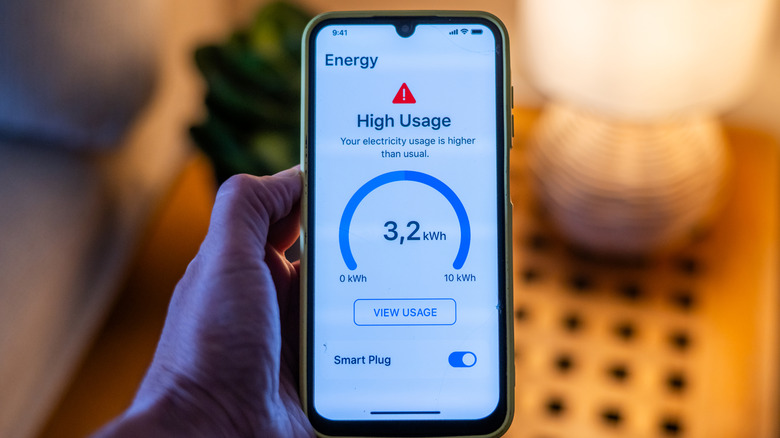
For ongoing monitoring and control, smart plugs represent one of the best investments a modern consumer can make. Beyond functioning as remote switches, many smart plugs feature built-in energy monitoring dashboards accessible via smartphone applications. They track cumulative kilowatt-hours (kWh) over days, weeks, and months, giving you granular insight into your audio habits without requiring manual meter readings.
Calculating Energy Costs and Financial Impact
Once you have gathered the wattage figures for your audio setup, calculating the financial cost is a straightforward mathematical exercise. You can plug your numbers into an online electricity calculator, or use the standard formula below to determine your exact expenses.
The Formulas
$$textDaily Energy (kWh) = fractextWattage times textDaily Operating Hours1,000$$
$$textMonthly Cost = (textDaily kWh times textDays per Month) times textCost per kWh$$
A Real-World Example
Consider a standard mid-tier home audio setup featuring a 100-watt amplifier used for an average of five hours a day across a 30-day month.
-
Calculate Daily Energy:
$$frac100text W times 5text hours1000 = 0.5text kWh per day$$ -
Calculate Monthly Energy:
$$0.5text kWh times 30text days = 15text kWh per month$$ -
Calculate Monthly Cost:
According to recent data from the Federal Reserve and U.S. Energy Information Administration, the average cost of electricity in the United States sits at approximately $0.196 per kWh.
$$15text kWh times $0.196 = mathbf$2.94text per month$$
Over the course of a year, running that single 100-watt amplifier racks up roughly $35.28 in electricity costs. While less than $36 a year may not break the bank—roughly equivalent to a few cups of specialty coffee or a few months of a basic streaming subscription—it is important to remember that this figure represents only the amplifier. When you add powered subwoofers, network streamers, auxiliary turntables, and continuous standby draw, the total annual cost of a sprawling home entertainment system can easily triple.
Furthermore, this mathematical framework is universally applicable. The exact same formula can be used to audit your entire household—comparing the running costs of traditional incandescent bulbs versus efficient LEDs, or measuring the vampire load of gaming consoles, desktop computers, and kitchen appliances.
Expert Recommendations and Best Practices
Optimizing your home sound system for energy efficiency does not mean you have to unplug your gear and live in silence. By adopting a few smart habits and deploying readily available technology, you can drastically reduce your audio footprint while preserving audio fidelity and hardware longevity.
1. Eliminate Vampire Draw with Smart Plugs
The single most effective way to eliminate phantom energy consumption is to cut power at the wall when equipment is not in use. However, manually unplugging a complex array of audio components is tedious.
Smart plugs offer an elegant workaround. By scheduling your audio system to power down completely during overnight hours or while you are away at work, you eliminate 100% of standby power draw. Many smart plugs can be integrated with smart home ecosystems, allowing you to turn off your entire sound system with a simple voice command or automated routine.
2. Upgrade to Class D Amplification
If you are in the market for new audio gear, look closely at the amplification technology under the hood. Modern Class D amplifiers offer staggering energy efficiency gains over older Class A and Class AB designs. They run significantly cooler, waste far less electricity, and deliver pristine audio performance without inflating your monthly utility bill.
3. Practice Disciplined Listening Habits
Be mindful of how long your system remains active when background music is no longer needed. Many modern receivers and streamers feature auto-standby or auto-shutoff timers. Enable these settings in your device menus so that the hardware powers down automatically if no audio signal is detected after 20 or 30 minutes.
4. Protect Battery-Operated Gear
If your sound system incorporates portable Bluetooth speakers, wireless subwoofers with internal backup cells, or rechargeable remote controls, avoid leaving them permanently tethered to high-output chargers once they reach 100% capacity. Utilizing smart charging plugs or unplugging devices once charged helps preserve battery chemistry and prevents unnecessary trickle-charge energy waste.
Future Outlook: The Evolution of Green Audio Engineering
As global emphasis on sustainability intensifies, the consumer electronics industry is facing mounting pressure to reform hardware energy profiles. Regulatory bodies in regions like the European Union have already enacted strict standby power limits (often targeting the infamous "one-watt" or "half-watt" standby thresholds) for consumer goods, forcing manufacturers to engineer more efficient power supplies.
In the realm of home audio, the future points toward smarter, highly integrated components. We are already witnessing the rise of advanced power-management microchips that can dynamically throttle power delivery across multi-zone amplifiers down to the milliwatt level when specific channels are inactive. Furthermore, the continued refinement of digital signal processing (DSP) and Class D topologies means future hi-fi systems will deliver even greater sonic clarity while sipping, rather than gulping, electricity.
For the consumer, the path forward is clear. By taking a proactive approach—auditing inventory, measuring actual power draws, and utilizing smart-home automation—you can enjoy high-fidelity sound without compromising your household budget or environmental footprint. In an era of rising energy costs, fine-tuning your sound system is a small adjustment that strikes all the right chords.