Executive Overview: The Sensory Deficit in Digital Retail
In the traditional retail paradigm, the "moment of truth" occurs in the palm of the shopper’s hand. A consumer picks up an object, tests its weight, gauges its flexibility, and feels the grain of the material. This sensory feedback loop is the primary driver of conversion; it builds confidence and diminishes the perceived risk of a purchase. For decades, e-commerce has struggled to bridge this "tactile gap." While digital storefronts have mastered the art of high-definition visuals and interactive 360-degree spins, they have historically failed to communicate the physicality of a product.
However, a new wave of innovative e-commerce leaders is shifting the narrative. By moving away from static, clinical product photography and toward context-rich, sensory-driven imagery, these brands are successfully translating physical attributes—texture, consistency, and chemical reaction—into digital assets. This article explores how leading brands like Backdrop, Fireclay Tile, and Lush are redefining the digital shopping experience by using light, motion, and application to "let the customer touch" products through their screens.
Detailed Chronology: The Evolution of E-commerce Visuals
The history of online product photography is one of increasing sophistication. In the early 2000s, the goal was simple: provide a clear, well-lit image on a white background to prove the item existed. This "catalog-style" approach prioritized neutrality over engagement.

The Rise of Lifestyle Integration
As the mid-2010s approached, the industry pivoted toward "lifestyle photography." Brands began placing products in curated, aspirational settings—a couch in a designer living room, a watch on a model’s wrist. While this improved storytelling, it often obscured the granular details of the product itself. The texture of the fabric or the finish of the metal became secondary to the "vibe" of the lifestyle scene.
The Current Frontier: Sensory Realism
In the last three years, we have entered the era of "Sensory Realism." Leading brands have realized that for specific categories—home improvement, cosmetics, and textiles—the "vibe" is not enough. Customers want to see the roller marks in the paint and the glaze on the tile. The focus has shifted from what the product is to how the product feels and behaves. This evolution is driven by the necessity to reduce return rates and increase customer trust in an increasingly saturated digital market.
Supporting Context & Metrics: The Science of Sensory Perception
Why does texture matter? Psychologically, the "Endowment Effect" suggests that individuals place a higher value on an object once they feel they have interacted with it. When a shopper cannot physically touch an item, they experience a "sensory void" that often leads to cart abandonment.

The Role of Light and Contrast
Photography experts emphasize that light is the primary vehicle for communicating texture. A flat, evenly lit image destroys depth. Conversely, cross-lighting—where the light source hits the object at an angle—creates shadows in the pits, grooves, and grains of a material.
- Case Study: Backdrop Paint. By abandoning the traditional digital color swatch, Backdrop provides a masterclass in texture. Their product pages feature high-resolution imagery of paint applied to a physical wall. By showcasing the subtle imperfections—the roller marks and the natural light hitting the wall—they provide the user with a mental model of the finished result.
- Case Study: Fireclay Tile. Fireclay utilizes extreme close-ups. By capturing the way light reflects differently across the surface of a crackled ceramic glaze, they inform the customer of the material’s handmade nature. The viewer can practically "feel" the slick, cold surface through the screen.
The Power of Motion and Transformation
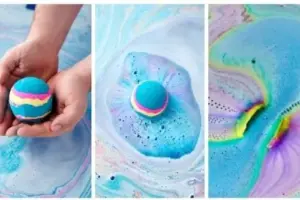
For consumables, the tactile experience is often synonymous with chemical reaction. Lush Cosmetics has revolutionized this by showcasing products in action rather than in stasis. Their imagery of bath bombs dissolving illustrates the transformation—from a solid, dry object to a fizzing, colorful experience. This reduces the cognitive load on the consumer, who no longer has to guess what the product will do in their own home.
The Strategic Shift: Metrics That Matter
Data from conversion rate optimization (CRO) studies suggests that "experiential" imagery significantly impacts key performance indicators:

- Reduced Return Rates: When customers have a realistic understanding of texture and consistency, their expectations are better aligned with the reality of the product, leading to fewer "not as described" returns.
- Increased Time-on-Page: Rich, textured imagery encourages users to linger, explore, and interact with the content, which correlates with higher brand affinity.
- Higher Conversion Rates: By mimicking the physical in-store experience, brands can move hesitant shoppers through the sales funnel more efficiently.
Official Perspectives: Industry Best Practices
Industry analysts and digital UX designers agree that the future of e-commerce lies in the "Human-Centric Digital Storefront." The consensus is that brands should adopt the following "Tactile Photography" protocols:
- Prioritize Material Over Packaging: A jar of scrub on a white background tells the customer nothing about the product’s viscosity. Showing a "smear" of the product on a finger or a clean surface immediately communicates texture, grit, and quality.
- The "Half-and-Half" Approach: Similar to the Backdrop wall example, showing a "before-and-after" or "half-finished" state provides essential context. It turns a static image into a narrative of labor and result.
- Dynamic Lighting: Brands should mandate that product photography sessions include "grazing light" shots that highlight the topography of the item, rather than just soft, diffused lighting that flattens features.
Future Outlook: The Intersection of AI and Sensory Design
As we look toward the future, the integration of Augmented Reality (AR) and Artificial Intelligence will likely further bridge the tactile gap.
Advanced Haptic Simulation
While we are still in the early stages, the development of haptic feedback interfaces—where mobile devices simulate textures through vibration patterns—could eventually provide a literal sense of touch. Until then, brands will rely on increasingly hyper-realistic 3D rendering and macro-photography.

The AI-Powered "Texture Engine"
We anticipate the rise of AI tools capable of automatically generating "sensory-rich" imagery from standard product files. By analyzing the material properties of an object, AI could soon simulate how a specific fabric would drape or how a specific paint finish would catch the light in a user-provided photo of their own room.
Conclusion: The Return to Human-Centricity
The shift toward sensory-driven e-commerce is not merely a stylistic trend; it is a fundamental correction to the impersonal nature of early online retail. As consumers become more discerning and competition grows more fierce, the brands that win will be those that honor the human need for physical context. By showing the roller marks, the fizzing water, and the ceramic glaze, brands are doing more than selling products—they are providing the sensory reassurance that turns a digital visitor into a loyal customer.
The message to merchants is clear: Stop showing your product as a sterile, isolated object. Start showing it as a material that occupies space, reacts to its environment, and interacts with the user. In the digital age, the most successful brands are those that prove they understand the physical world better than anyone else.