Executive Overview: A Paradigm Shift in Campaign Control
For years, the professional digital marketing community has grappled with a singular, systemic frustration: the "black box" nature of Google Ads’ automated campaign types. Whether it was the broad-reaching Performance Max (PMax) or the rigid structure of traditional Search campaigns, advertisers have historically been forced to accept an "all-or-nothing" approach to channel distribution. If you wanted the reach of Google’s vast ecosystem, you had to surrender granular control over where your budget landed.
That era of forced compliance is finally beginning to wane. Last month, Google unveiled a significant update to its platform architecture: Channel Prioritization. This feature represents a pivot toward transparency and advertiser autonomy, allowing users to designate specific ad channels as "High" or "Low" priority. While it does not grant the absolute surgical precision of manual bidding, it provides a crucial lever to rein in spend on underperforming placements while protecting budget for high-conversion zones.
For performance marketers, this is a landmark development. It marks the first time Google has explicitly acknowledged that the "automated everything" model may not always align with the nuanced objectives of a specific business. By enabling advertisers to influence the weighting of budget distribution across Search, Discover, Gmail, Maps, YouTube, and the Display Network, Google is effectively inviting brands to participate in the optimization process rather than merely observing it.
Detailed Chronology: From Rigid Automation to Flexible Prioritization
The evolution of Google Ads has been marked by a relentless drive toward automation. Starting with the introduction of Smart Bidding and culminating in the forced migration to Performance Max, Google consistently signaled that machine learning was superior to human intuition. However, as the industry matured, the limitations of this "all-or-nothing" paradigm became glaringly apparent.
The Problem of "Blind" Spend
Performance Max campaigns, in particular, were designed to be omni-channel powerhouses. They were built to find conversions wherever they lived within Google’s property map. Yet, this efficiency often came at the cost of budget leakage. Advertisers frequently reported that their PMax campaigns would disproportionately favor low-intent inventory—such as the Display Network or low-quality Search Partners—at the expense of high-intent Google Search traffic.
Until this recent update, the only remedy was to exclude these channels entirely. This created a binary choice: either allow the algorithm to burn budget on questionable placements or cut off the channel entirely, thereby losing any potential incremental conversions that might have existed in those spaces.
The Announcement
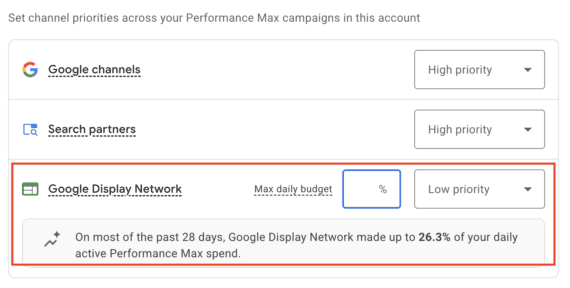
In late 2026, Google quietly introduced the "Channel Prioritization" feature. Unlike previous iterations of "optimization" tools that relied on opaque algorithm adjustments, this feature provides a tangible UI element where advertisers can toggle priorities. By setting a channel to "Low," an advertiser essentially signals to the machine learning model that this specific channel is a secondary priority, prompting the system to throttle spend according to a 28-day historical spend percentage model.
Supporting Context & Metrics: Analyzing the Data
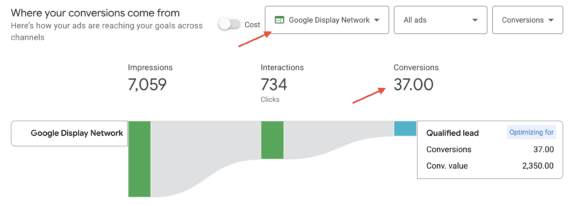
The efficacy of this new tool relies entirely on the advertiser’s ability to interpret data correctly. As the saying goes, "Data without context is just noise." Google has paired the prioritization toggle with updated reporting in the "Insights and Reports" section, which is vital for informed decision-making.
The Conversion-to-Spend Ratio
To effectively use channel prioritization, one must look beyond top-line spend. For example, if the Display Network consumes 26% of a campaign’s budget but generates 48% of the conversions, it is mathematically clear that this channel is a powerhouse for that specific brand. In this instance, labeling it as "High" priority is a no-brainer.
Conversely, consider a scenario where a channel consumes 30% of the budget but delivers a mere 5% of conversions. In the past, this spend would be "baked in" to the algorithm’s decisions. Now, by moving this to "Low" priority, the advertiser can set a maximum daily spend percentage. This is not just a cosmetic change; it is a fundamental shift in how the algorithm allocates capital. It forces the system to re-evaluate the utility of the budget it is deploying.
Strategic Testing: The Search Partner Case Study
One of the most anticipated applications of this feature is within Search campaigns, specifically regarding Search Partners. For years, experienced media buyers have viewed Search Partners as a "hidden" source of unqualified traffic—a place where budgets go to die.
Previously, the choice was binary: toggle "Include Search Partners" to "On" or "Off." With the new prioritization, we can now enter a "testing phase." By setting Search Partners to "Low" priority, a marketer can cap the daily expenditure to a minimal percentage. This allows the campaign to remain active on these networks—keeping the potential for reach alive—without allowing the spend to spiral into non-performing inventory. It is a nuanced approach that turns a blunt instrument into a precision tool.
Official Perspectives: Navigating the "Google Channels" Grouping
While the industry has lauded the introduction of channel prioritization, it is not without its limitations. Perhaps the most significant hurdle is the "Google Channels" grouping.
The Aggregation Trap
Google’s current implementation allows for a single priority setting to cover five distinct channels: Search, Discover, Gmail, Maps, and the Display Network. From an infrastructure perspective, this is a convenience for Google, but from a strategic perspective, it is a bottleneck for the advertiser.
These five channels possess vastly different user intents and ad formats. A user engaging with Google Maps is fundamentally different from one browsing Gmail. By grouping these into a single bucket, Google is still maintaining a level of "all-or-nothing" restriction. If an advertiser finds that their brand performs well on Discover but poorly on the Display Network, they cannot yet isolate those two. They are forced to treat them as a single entity.
The Transparency Concern
There is also the question of "algorithmic respect." Will Google’s machine learning model strictly adhere to the maximum daily percentages set by the advertiser, or will it find ways to circumvent these limits if it "thinks" a conversion is imminent? Historically, Google’s systems have been programmed to prioritize conversion volume above all else. Advertisers must remain vigilant. The "Low" priority toggle is a request, not a hard-coded firewall. If the system decides it can meet a CPA goal by ignoring the "Low" priority designation, it may well do so.
Future Outlook: The Road Toward Granular Control
The introduction of channel prioritization is a clear admission from Google: the era of blind, unchecked automation is ending. As competition for ad space intensifies and brands become more sophisticated about their CAC (Customer Acquisition Cost) and LTV (Lifetime Value) metrics, they are demanding more control.
The Next Steps for Advertisers
For the modern media buyer, the strategy moving forward should be twofold:
- Aggressive Auditing: Before toggling any priority settings, perform a deep dive into your channel performance reports. Do not base your decisions on a single week of data; look at the 28-day window to account for the volatility inherent in machine learning models.
- Incremental Testing: Do not overhaul your account in a single day. Select one campaign, set a "Low" priority for a suspected underperforming channel, and observe the results over a full budget cycle.
What to Expect in 2027
Looking ahead, we can expect Google to continue refining these controls. If the "Channel Prioritization" feature sees widespread adoption, it is highly likely that Google will be forced to decouple the "Google Channels" grouping. Providing the ability to set unique priorities for Maps versus YouTube would be the next logical evolution.
Ultimately, this update is a win for the professional advertiser. It acknowledges that while machine learning is an incredible engine for scale, it requires a human pilot to navigate the specific business objectives of the brand. As we move into the next year, the winners in the Google Ads space will be those who master the delicate balance between trusting the algorithm and applying the necessary guardrails to ensure that every dollar spent is a dollar invested in growth, not just an expense on the balance sheet.
The "all-or-nothing" wall has been breached. It is now up to the marketing community to show Google that we can handle the responsibility of more granular control—and in doing so, demand even more transparency in the future.