Executive Overview
In the ever-expanding universe of digital art, concept design, and traditional illustration, few publications command the authority and reverence of ImagineFX. As the premier destination for fantasy and sci-fi artists, the magazine continually pushes the boundaries of creative instruction, artistic exploration, and industry insight. Issue 273 arrives as a monumental masterclass for creatives across the globe, offering a deep dive into the enchanting world of fantasy book illustration, meticulous world-building, and the technical prowess required to bring futuristic and magical concepts to life.
This latest installment is much more than a collection of tutorials; it is an investigative look into the minds of master creators. From the intricate cartography that grounds sprawling fantasy epics to the behind-the-scenes visual development of modern media projects like Orbitals, this issue bridges the gap between raw imagination and polished execution. Furthermore, readers are granted an exclusive, rare peek behind the doors of a veteran Disney artist’s personal studio, providing a tangible connection to the physical and mental spaces where world-renowned animation and concept art are born.
Whether you are a seasoned digital painter looking to refine your brushwork, a 3D modeler aiming to master hard-surface sci-fi assets, or an aspiring world-builder eager to map out uncharted territories, Issue 273 of ImagineFX serves as an indispensable guide. This review explores the core pillars of the new issue, breaking down its major feature articles, technical workshops, and the broader implications these artistic methodologies hold for the future of the digital art industry.
Detailed Chronology: A Journey Through Issue 273
To fully appreciate the scope of the latest ImagineFX, one must journey through the carefully curated progression of its pages. Each section of the magazine is designed to build upon the last, taking the reader from the macro-level conceptualization of entire worlds down to the micro-level execution of individual assets and brushstrokes.
Phase One: Cartography and the Architecture of Fantasy Worlds
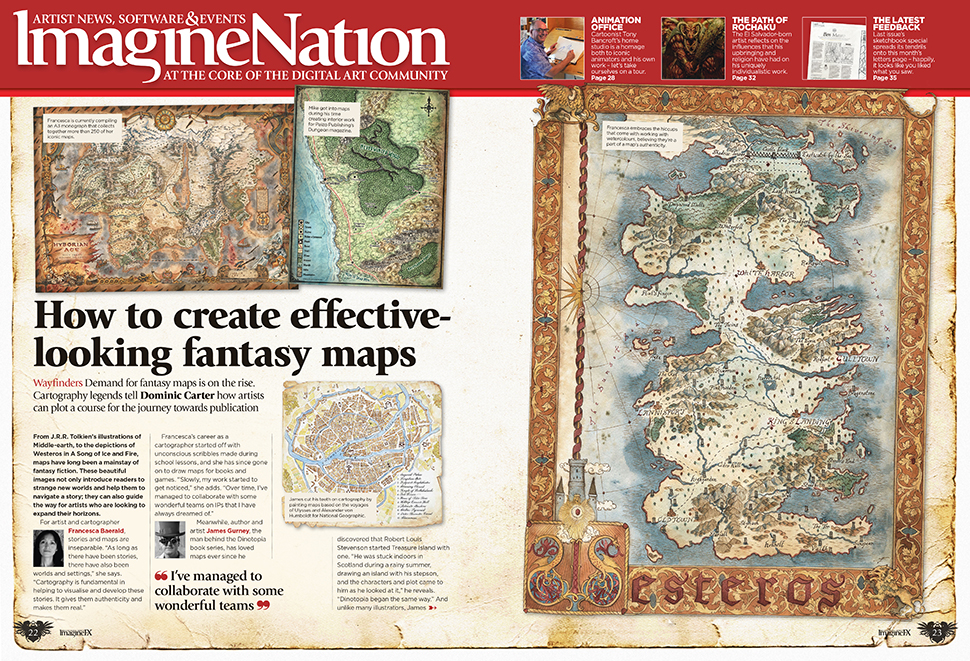
The journey begins at the very foundation of speculative fiction: the map. Long before characters pick up a sword or step onto a starship, they must exist within a space. Issue 273 opens with a comprehensive deep-dive into the art of fantasy world-building through cartography. Historically, maps have served as the anchor of fantasy literature—from J.R.R. Tolkien’s Middle-earth maps drawn by his son Christopher, to the complex geopolitical layouts of modern grimdark fantasy.
The magazine’s featured cartography guide breaks down the transition from rough, napkin-sketched topography to rich, parchment-textured, highly detailed digital maps. Artists are taught how to blend geological realism with whimsical fantasy elements, ensuring that mountain ranges, river networks, and ancient kingdoms feel both believable and structurally sound. This foundational step emphasizes that a great fantasy illustration is often supported by an equally compelling narrative geography.
Phase Two: The Cover Artist’s Process
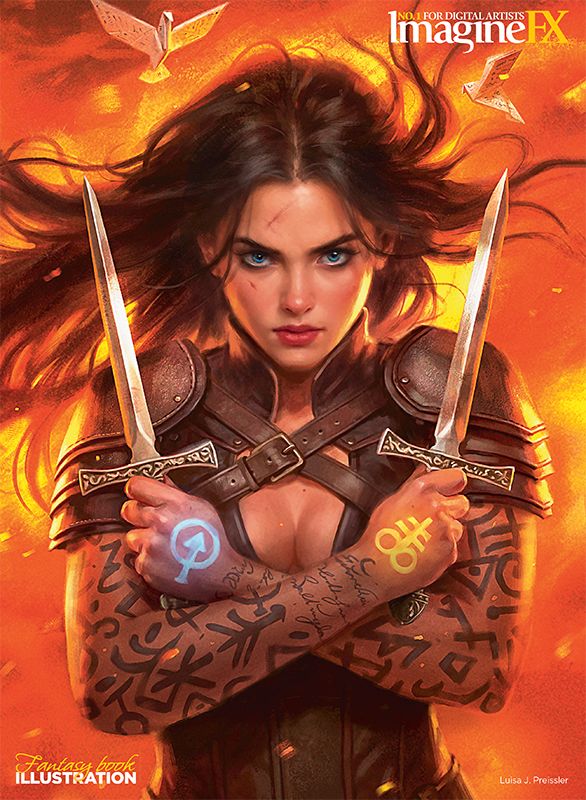
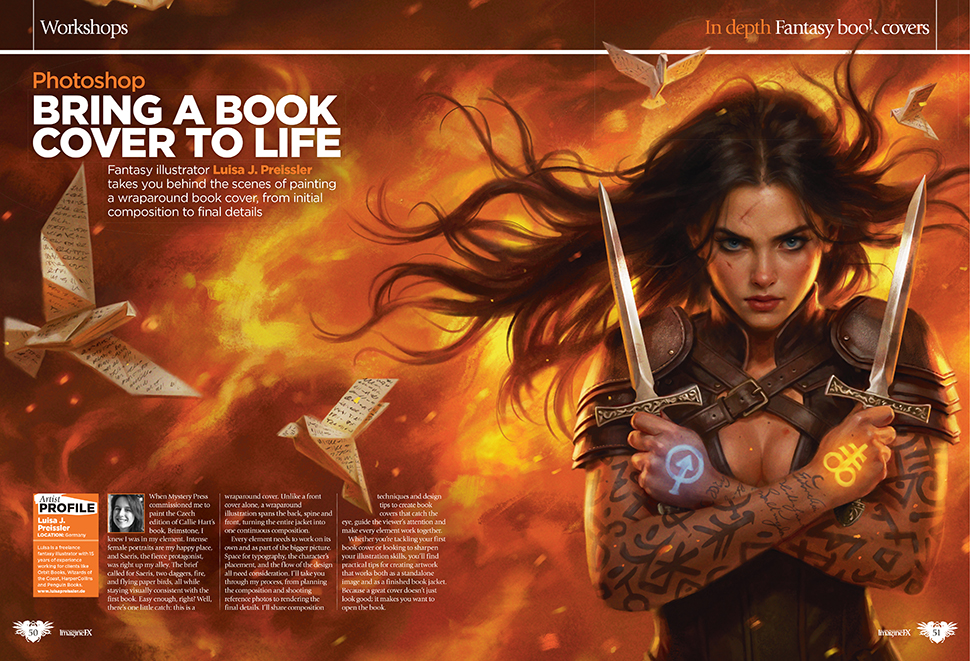
Moving from the macro view of the world to the micro focus of narrative storytelling, the magazine shifts its lens to the creation of striking fantasy book covers. The cover is the ultimate hook of any literary work, tasked with distilling hundreds of pages of plot, character development, and atmosphere into a single, arresting visual.
In a step-by-step masterclass, the issue’s featured cover artist pulls back the curtain on her creative pipeline. Readers are guided through the initial ideation phase—exploring thumbnail sketches, silhouette dynamics, and compositional focal points—before watching the piece evolve through color blocking, lighting refinement, and texturing. By demonstrating how to establish a strong focal point and invoke emotional resonance through color theory, the tutorial empowers readers to tackle their own commercial publishing commissions with confidence.
Phase Three: Visual Development in Modern Media (Orbitals)
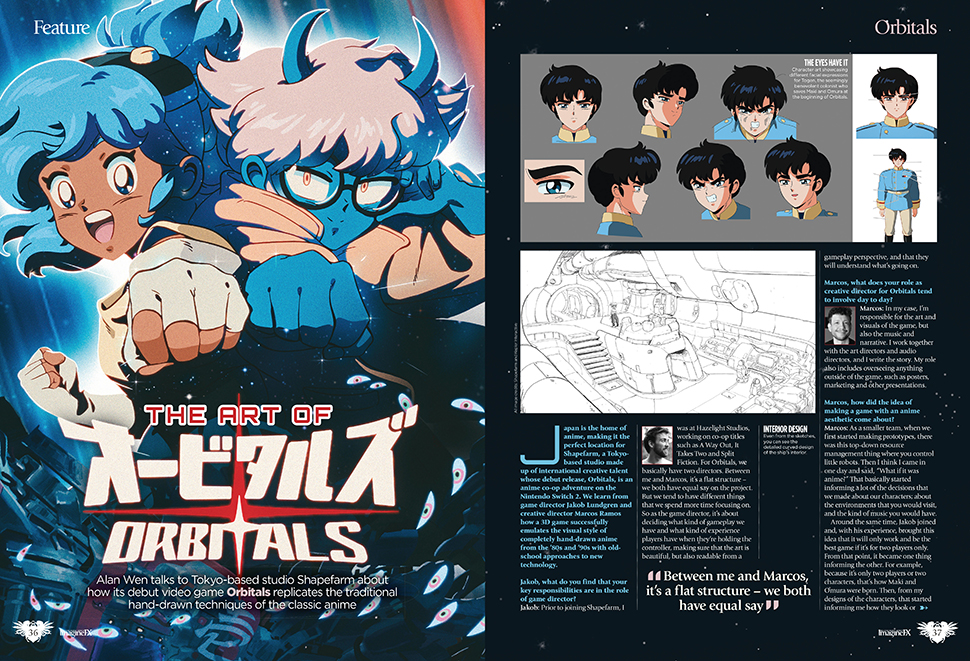
As the creative landscape evolves, so too does the demand for multi-disciplinary world-building. Issue 273 bridges traditional publishing with modern digital entertainment by exploring the visual development process behind Orbitals.
This segment serves as an investigative look into how cohesive art styles are established for complex narrative projects. Concept artists and visual directors will find immense value in seeing how initial mood boards translate into finalized character designs, environmental layouts, and atmospheric color scripts. The Orbitals feature highlights the collaborative nature of modern entertainment art, demonstrating how individual creative sparks are forged into a unified visual identity.
Phase Four: Inside the Disney Artist’s Sanctuary
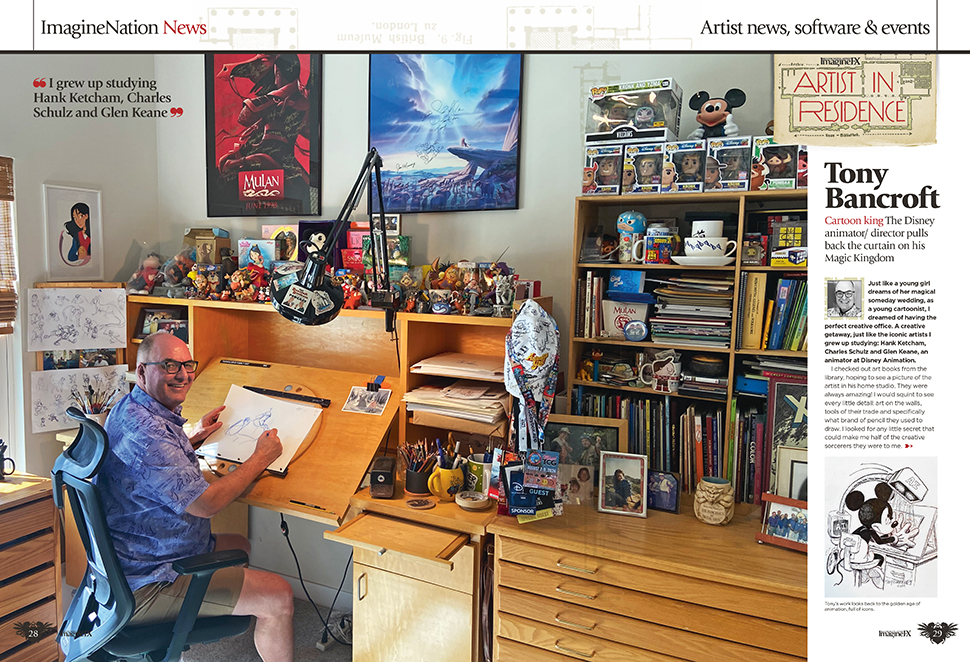
Perhaps one of the most anticipated segments of the new issue is the exclusive studio tour. For aspiring artists, understanding the psychological and physical environment of a master is just as important as learning software shortcuts.
Issue 273 takes readers behind the closed doors of a veteran Disney artist’s studio. This isn’t merely a walkthrough of desk setups and hardware configurations; it is a profound look into the creative rituals, reference libraries, and traditional sketchbooks that fuel some of the world’s most beloved animation and conceptual designs. The tour showcases the harmonious coexistence of traditional mediums—sketchbooks, gouache paints, and sculpted maquettes—with cutting-edge digital workstaions, proving that great artistry remains rooted in fundamental craft regardless of the medium.
Phase Five: Hard-Surface Modeling and Sci-Fi Texturing
Concluding the issue’s instructional journey, the magazine pivots sharply from 2D illustration into the realm of three-dimensional space. For artists looking to expand their skill sets beyond the digital canvas, the issue offers a comprehensive, step-by-step guide to modeling, texturing, and rendering a sci-fi weapon.
Moving into the third dimension requires a different cognitive framework—one that balances mechanical engineering logic with aesthetic appeal. The tutorial guides readers through block-out phases, high-to-low poly workflows, UV unwrapping, and advanced texturing techniques using industry-standard software. By the time the weapon is rendered with dynamic, cinematic lighting, the reader has experienced a complete cross-disciplinary masterclass in asset creation.
Supporting Context & Metrics: The State of Fantasy and Sci-Fi Art
To understand why publications like ImagineFX maintain such vital cultural and economic importance, one must look at the broader metrics of the creative industries today. The global fantasy and science fiction markets—spanning publishing, video games, film, and tabletop gaming—continue to experience unprecedented growth, driven largely by a digital-first economy and a surging global appetite for immersive storytelling.
| Sector | Estimated Global Growth Rate (YoY) | Primary Visual Driver |
|---|---|---|
| Fantasy & Sci-Fi Publishing | +6.4% | Custom Book Covers & Special Editions |
| Game Development (AAA & Indie) | +8.1% | Concept Art & Hard-Surface Modeling |
| Digital Art Education & Subscriptions | +12.3% | Curated Tutorials & Back-Catalogue Access |
The demand for high-end digital illustration training has grown exponentially. According to recent publishing metrics, subscriptions to specialized art resources—particularly those offering digital back-catalogues—have seen double-digit increases year-over-year. Readers and professionals are no longer satisfied with superficial overviews; they require deep, authoritative insights from industry veterans.
ImagineFX addresses this demand directly. By bundling single-issue availability through platforms like Magazines Direct with comprehensive print-and-digital hybrid subscriptions—which grant access to over 150 issues of the digital back catalogue—the publication has created an encyclopedic repository of modern digital art history and technique. This expansive archive functions as a living university for artists who may not have access to traditional, high-cost fine art academies.
Official Statements and Industry Insights
The philosophy driving Issue 273 reflects a broader cultural shift within the professional art community: a renewed appreciation for cross-discipline versatility. In official commentary surrounding the release of the latest issue, the editorial team emphasized the necessity of adaptability in the modern creative market.
"Today’s digital artist cannot afford to remain confined to a single silo," notes a senior editorial spokesperson for the publication. "Whether you are painting a fantasy book cover, designing UI elements for a sci-fi game, or mapping out the geopolitical boundaries of a fictional continent, the fundamental rules of composition, lighting, and storytelling remain absolute. Issue 273 was curated to break down those artificial barriers between 2D painting, 3D modeling, and traditional craftsmanship."
Industry veterans who contributed to the issue have similarly echoed the importance of mentorship and studio transparency. The featured Disney artist noted during the studio walkthrough segment: "We often look at finished films or published books as miraculous, monolithic achievements. But the truth is found in the messy desks, the discarded sketches, and the endless iteration. Opening up the studio doors isn’t about showing off a pristine workspace; it’s about demystifying the creative struggle and showing younger artists that persistence is the true medium of the craft."
Future Outlook: The Evolution of Fantasy Illustration
As we look toward the horizon of the digital arts, the intersection of traditional principles and emerging technologies presents both exhilarating opportunities and complex challenges. With the rapid integration of artificial intelligence tools into the creative workflow, the value of human-driven conceptual design, distinct stylistic voice, and traditional foundational mastery has never been higher.
Publications like ImagineFX stand at the vanguard of this evolution. By continuing to champion human artistry—from the organic flow of a hand-drawn fantasy map to the deliberate polygonal placement of a sci-fi rifle—the magazine reinforces the irreplaceable nature of human perspective in storytelling.
Looking forward, the future of fantasy illustration will likely see an even greater fusion of mediums. Illustrators are increasingly expected to understand basic 3D blocking to enhance their perspective and lighting accuracy, while 3D artists are returning to traditional painting fundamentals to give their textured models organic life. Issue 273 captures this exact crossroad, offering a roadmap for artists who refuse to be boxed into a single category.
For those eager to secure their copy, single issues and subscription packages—including comprehensive access to the sprawling 150+ issue digital back catalogue—are currently available through Magazines Direct. As the creative industries race toward tomorrow, keeping pace with masterclasses of this caliber is not merely a hobby for aspiring professionals; it is an absolute necessity.