Executive Overview: A Fresh Coat for a Digital Institution
For nearly two decades, CSS-Tricks has served as the North Star for front-end developers, designers, and web enthusiasts. Yet, in the fast-paced ecosystem of the modern web, stagnation is the enemy of relevance. After five years of operating on the v19 theme—a tenure that equates to an eternity in web development standards—the platform has finally undergone a significant structural and aesthetic evolution.
The transition to v20 is not a radical, top-down reconstruction of the site’s identity. Rather, it represents a calculated, iterative "rollup" of improvements designed to modernize the site’s codebase, enhance accessibility, and prune away the "ghosts" of legacy technical debt. While casual observers might find the visual changes subtle, the architectural underpinnings tell a story of meticulous optimization, performance gains, and a renewed commitment to the principles of clean, maintainable web design.

Detailed Chronology: Excavating the Technical Debt
The decision to overhaul the theme was driven by the necessity of clearing out nearly 19 years of accumulated digital clutter. In the world of long-running web properties, technical debt is an invisible weight that slows down iteration and complicates maintenance.
The Great Ghost Busting
The primary phase of the v20 rollout involved a rigorous audit of the site’s assets. The team identified and purged significant amounts of "dead" code. JavaScript files, which had become bloated with legacy snippets—including antiquated newsletter integration scripts, obsolete Flexbox workarounds, and redundant jQuery lazy-loading libraries—were stripped back. This housekeeping effort resulted in a measurable reduction in the global JavaScript footprint, dropping from 151.6 KB to 133.8 KB.
Perhaps the most significant pruning action was the formal retirement of the CSS-Tricks Forum. Archived in 2018, the forum had persisted as a dormant, resource-heavy artifact within the database. By deactivating the bbPress plugin and purging the associated database entries, the site reclaimed 400 MB of space, simultaneously eliminating the need for numerous custom templates that had been tethered to the legacy forum structure.
Modernizing the Workflow
The development environment itself received a long-overdue modernization. For years, the team had been operating within a rigid, aging Gulp-based workflow that frequently threw errors and hampered productivity. By stabilizing and modernizing the build process, the development team has shifted from a state of "enduring errors" to one of seamless, high-speed deployment, allowing for more fluid future updates.
Supporting Context & Metrics: The Philosophy of Performance
While the visual updates to CSS-Tricks are designed to be elegant and user-centric, the true success of v20 is found in its performance metrics and security hardening.
Security and AI-Assisted Auditing
In an era where security vulnerabilities are a constant threat to content management systems, the v20 project integrated a holistic security audit. Interestingly, the team leveraged artificial intelligence (Claude) as a force multiplier. By cross-referencing recent WordPress security advisories with the theme’s existing codebase, the AI identified potential vulnerabilities—such as unescaped custom field calls—that might have otherwise escaped human notice. This "gopher" approach allowed the lead developers to focus on high-level front-end architecture while ensuring the platform remained robust against modern threats.
Sass Refactoring and Design System Integration
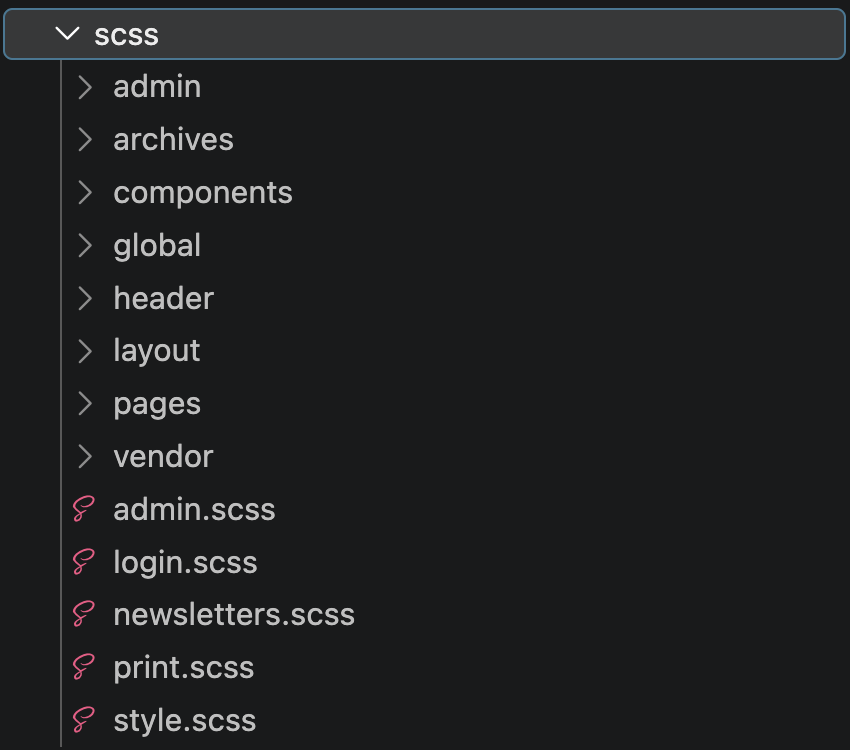
The project also marked a transition toward a more disciplined CSS structure. While the team remains committed to Sass for its organizational benefits, they moved away from a "flat" file structure in favor of a more modular approach. By implementing semantic design tokens—standardizing colors, spacing, and typography—the site has achieved a level of consistency that was previously impossible.
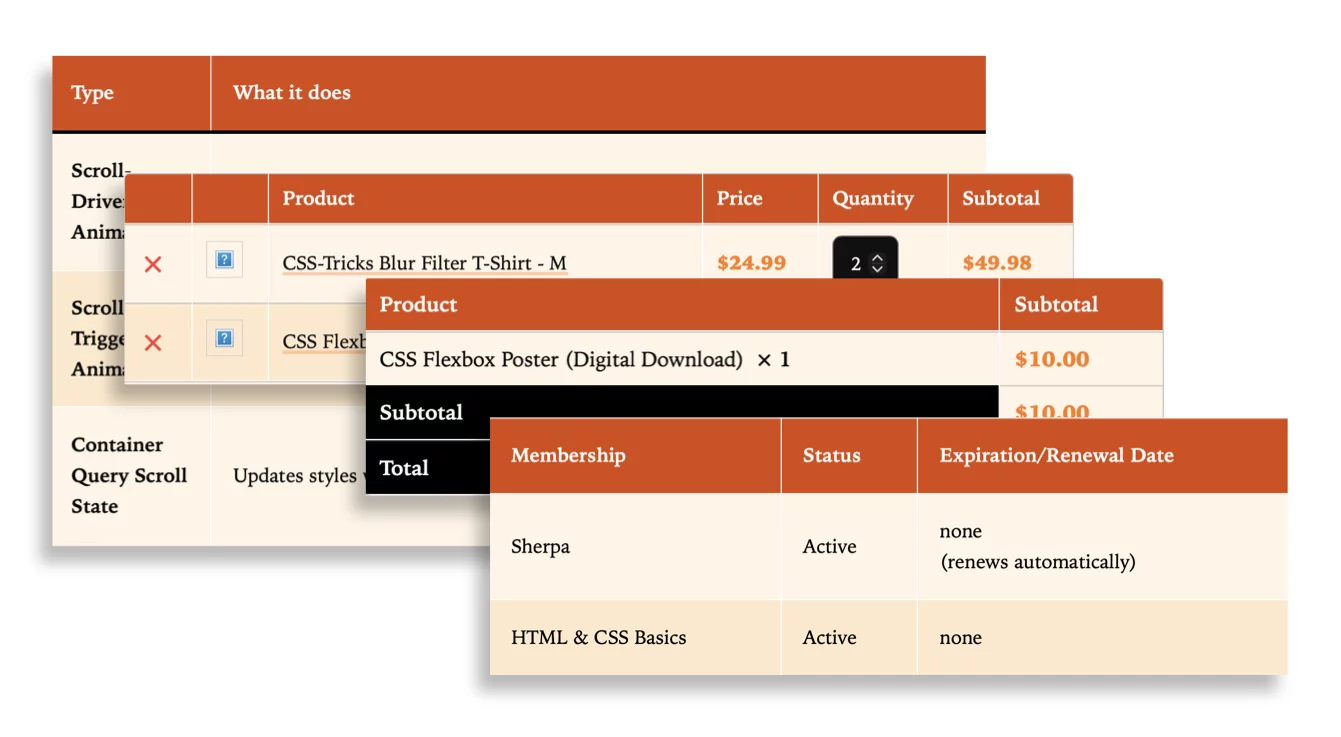
This shift enabled the introduction of a more cohesive design system, particularly regarding form and table styling. Historically, components generated by third-party plugins like WooCommerce or Gravity Forms often clashed with the site’s native aesthetic. The v20 update standardizes these elements, ensuring that even dynamic components feel like an integrated part of the CSS-Tricks ecosystem.

Lighthouse Performance Data
The transition provides a fascinating look at the efficacy of these optimizations. Using Google Lighthouse as a benchmark, the results are clear:
| Metric | v19 | v20 |
|---|---|---|
| Performance | 71 | 72 |
| Accessibility | 86 | 91 |
| Best Practices | 75 | 100 |
| SEO | 92 | 90 |
While performance scores saw a marginal increase, the most significant gains were in Accessibility and Best Practices. Most notably, the Total Page Weight plummeted from 2.03 MB to 1.24 MB, a nearly 40% reduction that directly correlates to faster load times and improved user experience on constrained devices.
Official Statements: The "Jawbreaker" and the "Blob"
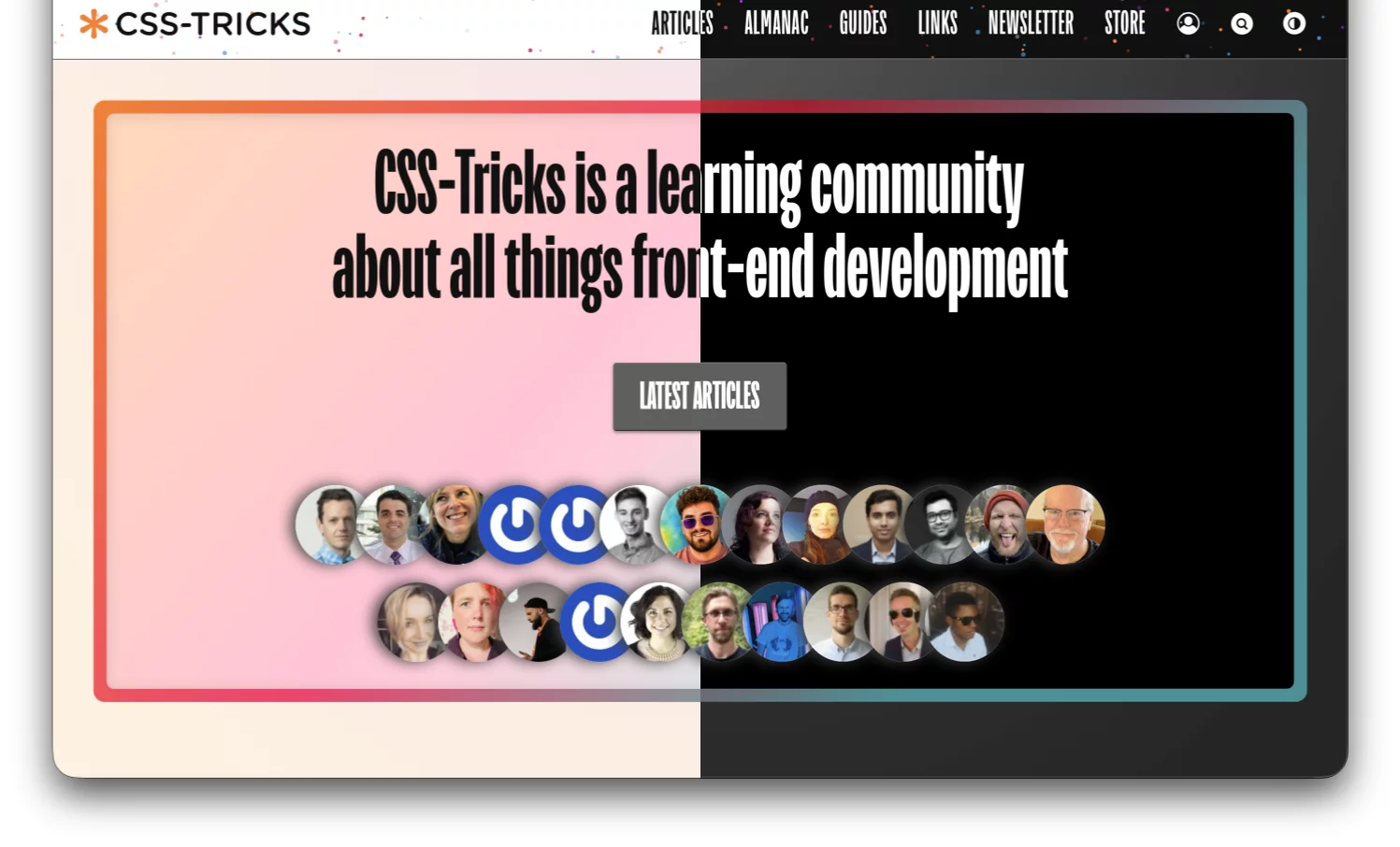
A defining feature of the v20 aesthetic is the introduction of a light/dark mode toggle and the "Jawbreaker" texture. The team opted for a system-aware toggle that respects user preferences while maintaining the site’s unique visual character.
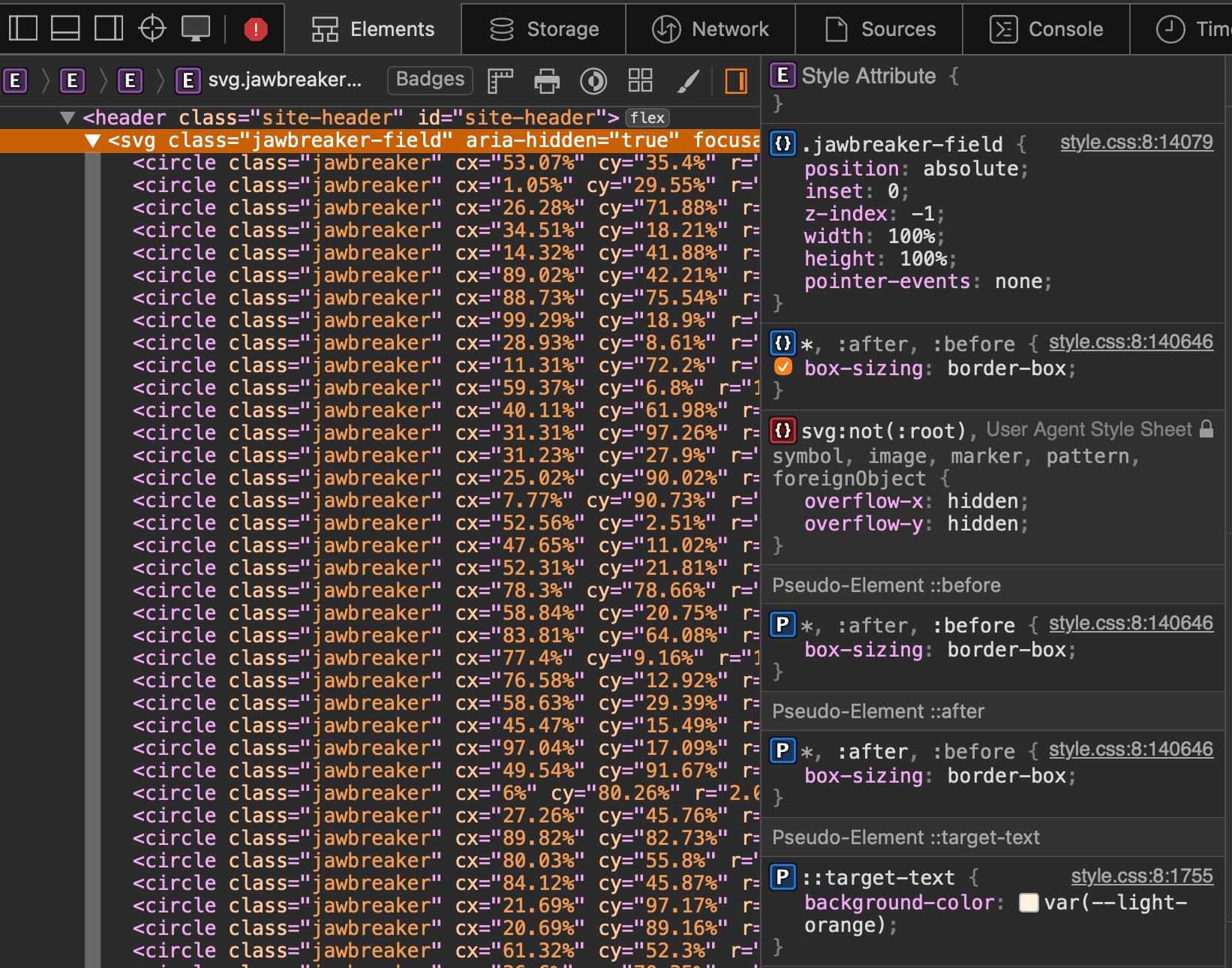
The "Jawbreaker" texture—a playful, candy-inspired background of dots—serves as the new visual hallmark for the header and footer. It is a testament to the power of SVG and PHP integration, where random distribution is used to create a dynamic, twinkling effect.
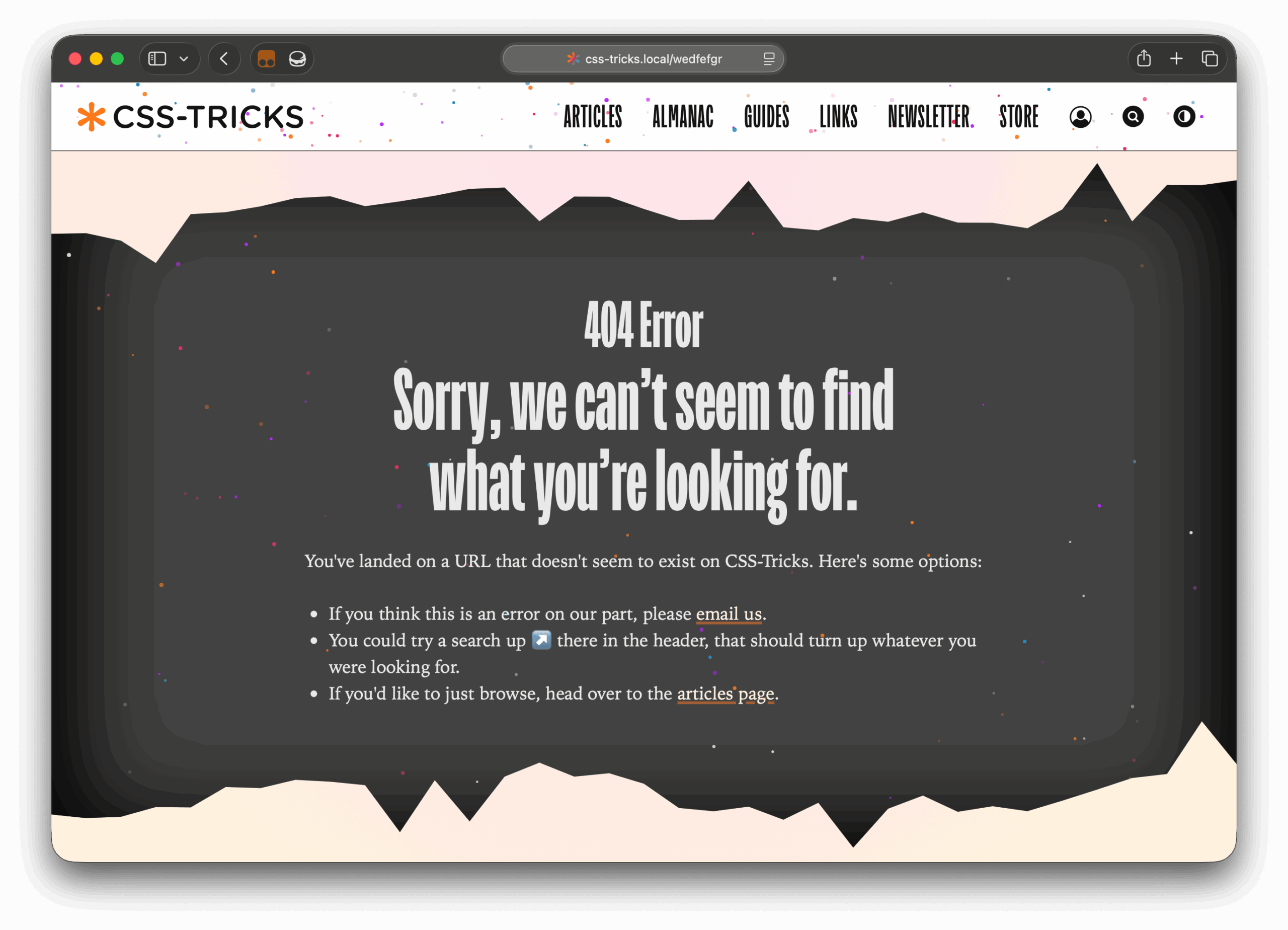
Similarly, the homepage now features "blobs"—gradient-filled shapes that react to user interaction. By utilizing modern CSS features like border-shape and random(), the team has created an interactive, generative UI element that feels fresh, modern, and distinctively CSS-Tricks.
Navigation and User Experience
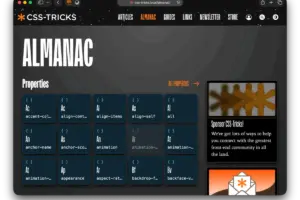
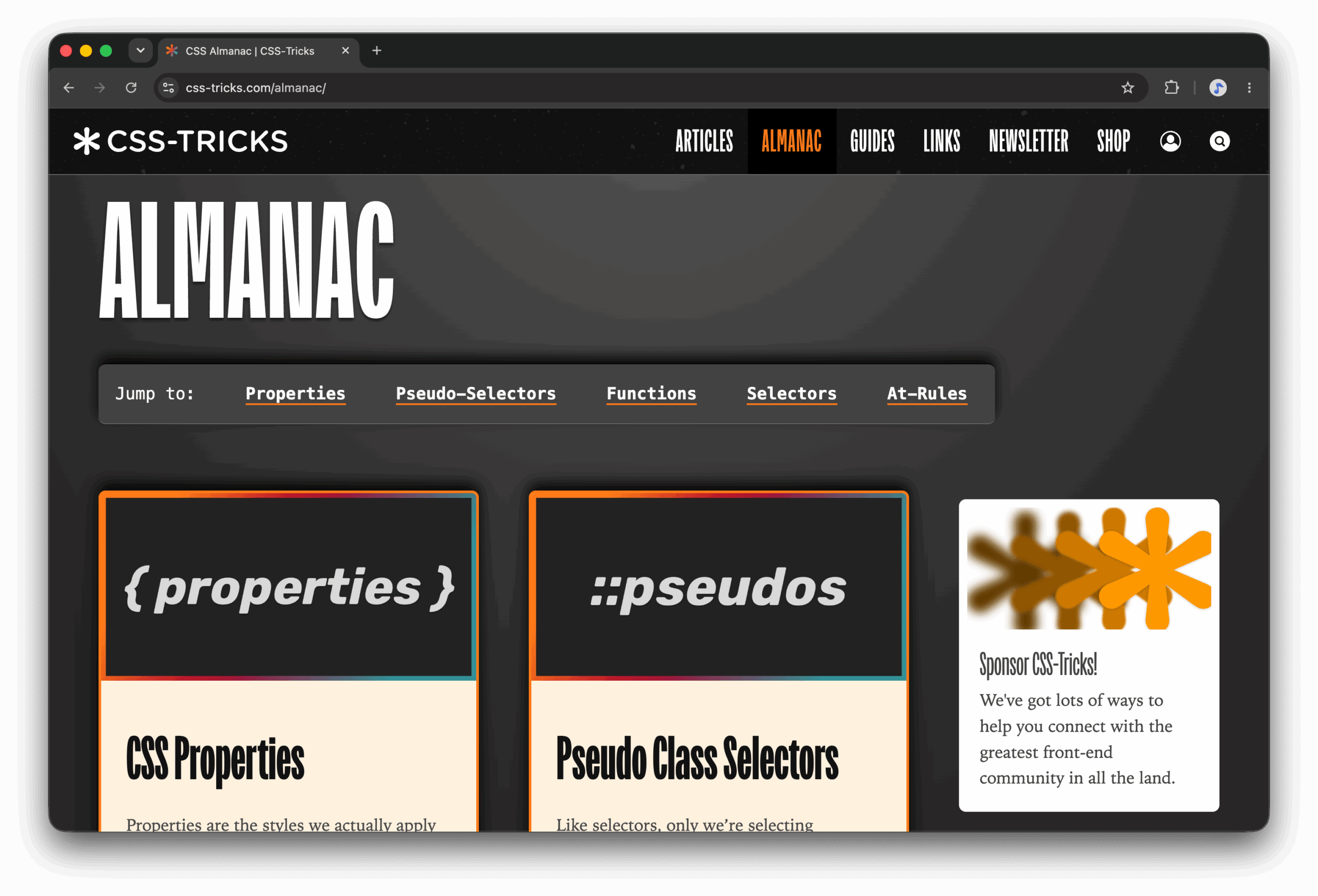
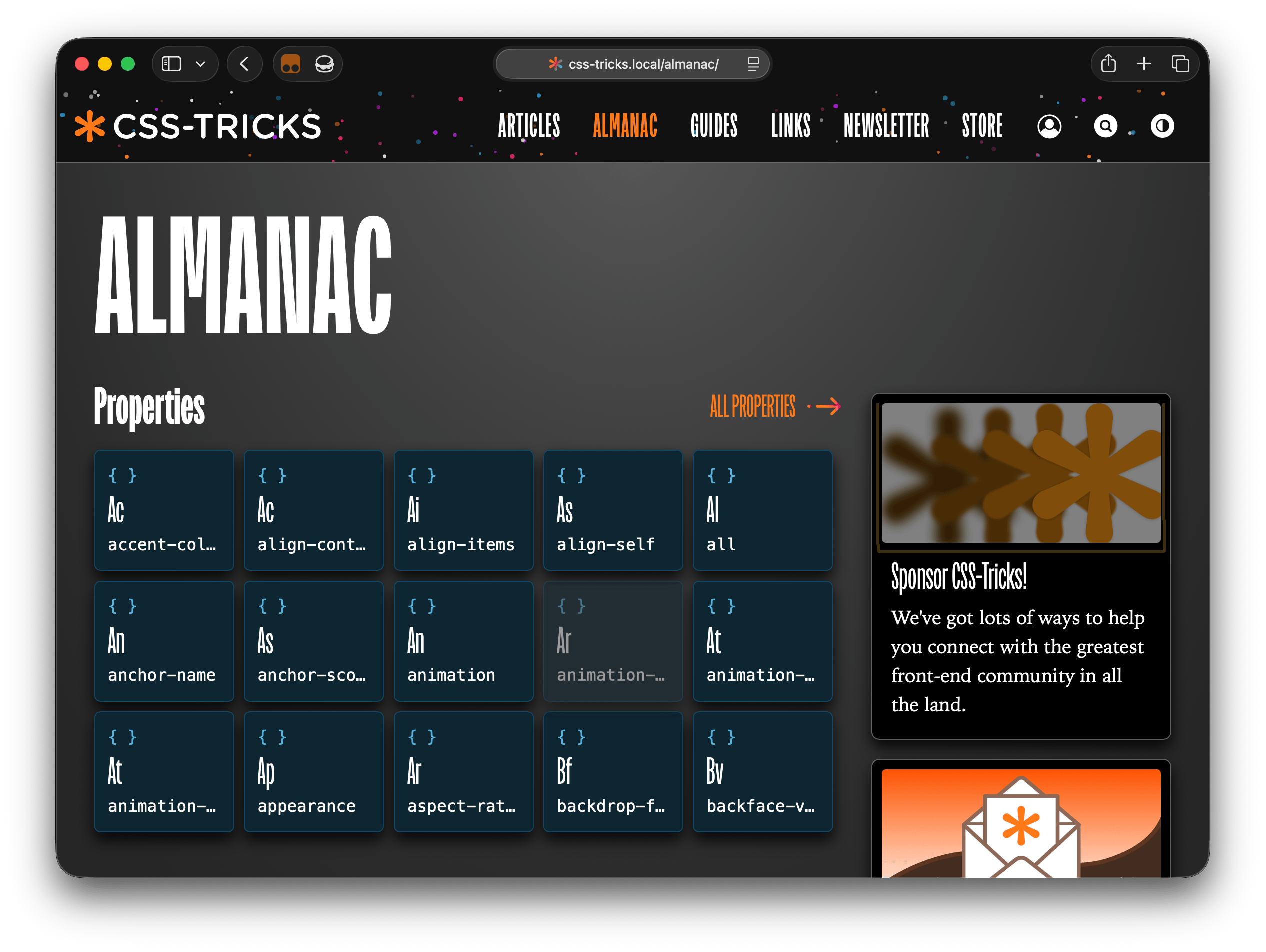
The overhaul also addressed the "Almanac" and "Guides" indexes. Previously criticized for being visually uninspiring and functionally opaque, the new index layouts provide a much clearer roadmap for readers. By treating the Almanac like a periodic table of CSS and providing a categorized, visual grid for the Guides, the site has transformed from a vertical scroll of text into a high-utility knowledge base.
Future Outlook: A Living Document
The release of v20 is not a destination, but a milestone. The team acknowledges that the transition is incomplete in several areas, including the ongoing optimization of the main content container and the future refinement of the Authors index.
The project demonstrates a critical shift in the philosophy of managing a legacy web platform. Instead of opting for a "nuclear option" rewrite—which often alienates long-term users and introduces unforeseen bugs—the CSS-Tricks team has demonstrated that the most effective path forward is through iterative, component-based evolution.
As the web continues to evolve, the ability to shed technical debt while maintaining the soul of a site is a skill that few organizations master. With v20, CSS-Tricks has proven that it is capable of self-renewal, ensuring that it remains as relevant to the next generation of developers as it was to those who visited its pages in 2007. The bugs will be squashed, the tweaks will continue, and the site will remain, as always, a laboratory for the best the web has to offer.