
Executive Overview: A Season of Rapid Evolution
As we transition into the autumn of 2026, the web development landscape is undergoing a profound structural shift. The last fortnight has been defined by a convergence of high-level API maturity and a return to the fundamentals of CSS architecture. We are witnessing a transition from "hacks and workarounds" toward native, browser-level solutions for long-standing UI frustrations.
From the introduction of the <geolocation> element to the potential revolution of the class prefix selector, the browser is becoming more expressive, more performant, and significantly more capable of handling complex state management without the need for bloated JavaScript dependencies. This edition of What’s !important analyzes these critical updates, providing the technical context necessary for engineers to integrate these advancements into their production workflows today.
Detailed Chronology: Technical Breakthroughs
The Evolution of Interaction: Tooltips and Interest Invokers
Interaction design is often the silent killer of user experience. Abhishek Jakhar recently reignited the discourse on tooltip behavior, arguing that effective tooltips require a "delayed-then-instant" lifecycle—a buffer to prevent accidental triggers, followed by immediate dismissal to reduce visual clutter.
However, the industry is moving beyond custom JavaScript timing loops. Chris Coyier has championed the modern implementation of "Interest Invokers," specifically utilizing interest-delay-start and interest-delay-end. While currently confined to the Chromium engine, this represents a major leap in declarative UI. By offloading interaction logic to the browser’s engine, we eliminate the jitter often associated with mouse-out events, ensuring that the UI remains responsive even during high-latency scenarios.
The <geolocation> Element
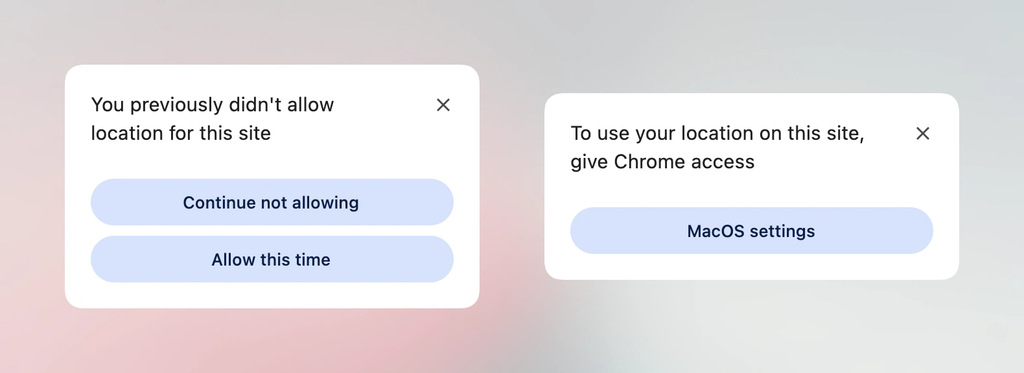
The Geolocation API has historically been one of the most cumbersome features for developers, often requiring complex handshake logic between hardware satellites, Wi-Fi triangulation, and cellular tower data. The new <geolocation> element simplifies this pipeline.
As noted in recent documentation from Piccalilli, this element brings native handling to location permission requests. While it introduces new styling constraints that developers must navigate, the ability to bridge the gap between legacy API calls and the new declarative element allows for a robust, progressive enhancement strategy. Developers can now utilize the new element where supported while falling back to the standard API for older browser versions, ensuring no user is left behind.
Syntax Highlighting via ::highlight()
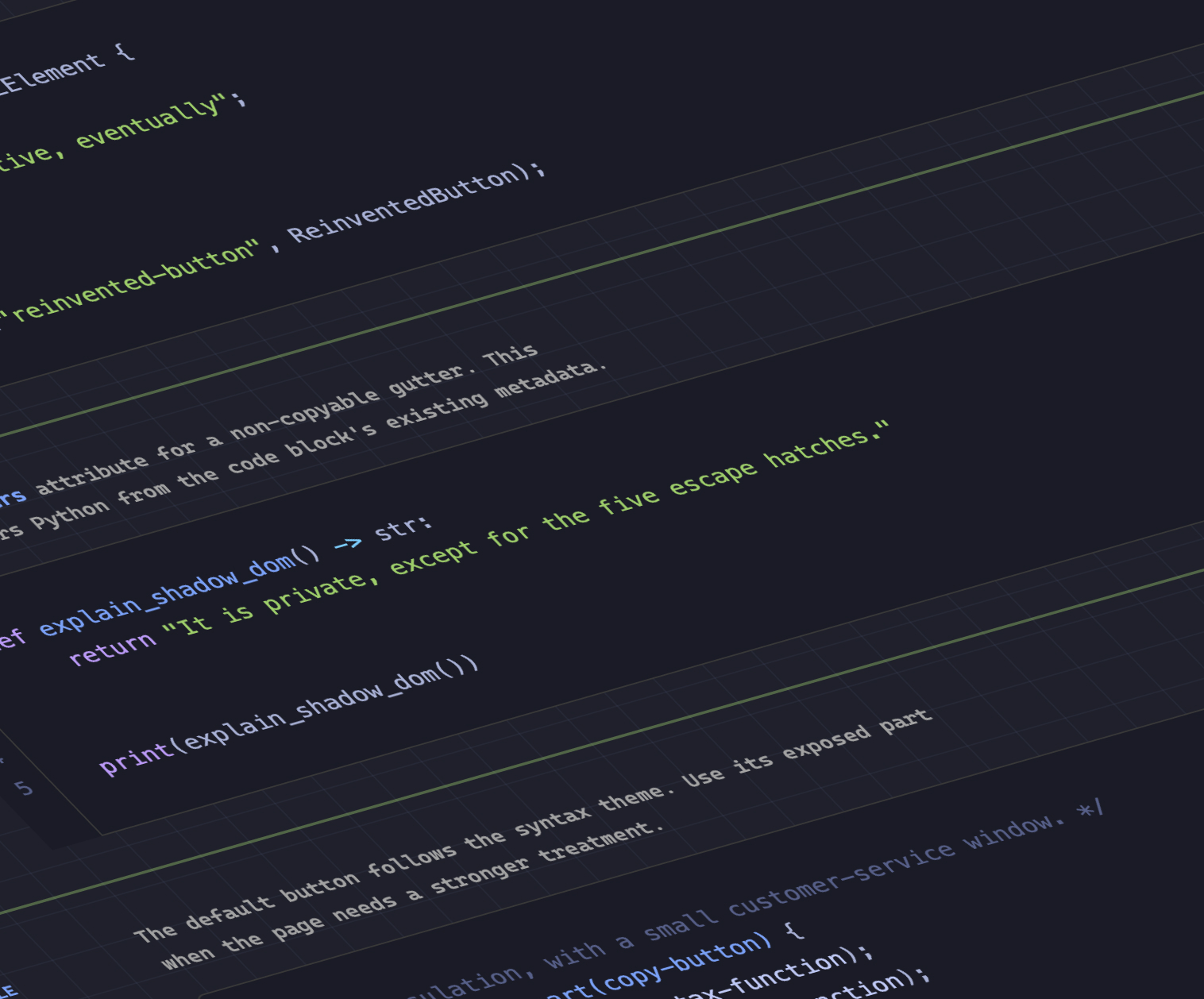
The era of heavy, library-dependent syntax highlighters may be nearing its end. Dave Rupert’s MicroLighter project serves as a compelling proof-of-concept for the power of the native ::highlight() API. By leveraging the browser’s own rendering engine to style text ranges, MicroLighter demonstrates a significant performance gain over DOM-heavy highlighting methods. This move toward native browser rendering for syntax is a critical step in reducing the "time-to-interactive" (TTI) for developer-centric blogs and documentation sites.
Supporting Context & Metrics: Grid and State Management
Grid Geometry and CSS Variables
Temani Afif has provided a breakthrough technique for extracting CSS Grid metadata into custom properties. By mapping grid indices—specifically row and column counts—to CSS variables, developers can now build highly responsive interfaces that react to the internal structure of the grid itself.
The requirement that columns maintain equal widths is currently a limitation, but the implications for "hover proximity" effects are immense. By calculating the distance between grid cells via CSS variables, we can create complex, organic animations that were previously only possible through heavy coordinate-based math in JavaScript. This marks a shift toward "Geometry-Aware CSS," where the stylesheet understands the layout as a coordinate system rather than a static visual arrangement.
The Tri-State Dark Mode Debate
The architectural debate regarding dark mode toggles has reached a fever pitch. While Lea Verou advocates for a clean two-state system, others like Bramus argue for the necessity of a tri-state model (Light, Dark, and System Default).
The industry consensus, bolstered by recent work from Vale.Rocks, appears to be converging on an "Auto-until-overridden" approach. This ensures that the system-level preference remains the source of truth until the user explicitly dictates otherwise. This state-persistence model is critical for accessibility, as it prevents the "flicker" that often occurs when site-specific preferences override OS-level settings on page load.
Official Statements and Emerging Standards
The Class Prefix Selector
Perhaps the most anticipated proposal is the class prefix selector. Currently in the discussion phase, this selector (.something-*) aims to replace the inefficient and often brittle attribute selectors like [class^="something-"].
Why this matters:
- Performance: Attribute selectors force the browser to scan the entire attribute string, which is computationally expensive during large-scale DOM updates.
- Readability: The proposed syntax is significantly cleaner, reducing the "noise" in CSS files.
- Maintainability: It enforces a stricter naming convention that aligns with modern BEM or utility-first methodologies.
Geoff Graham has noted that the simplicity of this proposal suggests a rapid path to standardization. If implemented, it will fundamentally change how CSS frameworks—like Tailwind or Bootstrap—handle class generation.
Feature Detection: named-feature()
Bramus has also introduced the @supports named-feature() function, a significant expansion of the @supports block. Traditionally, @supports only queried for the existence of CSS properties. The named-feature() function allows for querying specific, granular capabilities—such as whether a browser correctly respects transforms during anchor positioning. This is a game-changer for feature detection, allowing developers to target specific browser bugs with surgical precision without resorting to messy user-agent sniffing.
Future Outlook: The Balancing Act
As we look toward the final quarter of 2026, the focus is clearly on "balancing" the web. Ahmad Shadeed’s work on flex-wrap: balance is a testament to this. Much like text-wrap: balance solved the issue of uneven typography, flex-wrap: balance ensures that flex items are distributed equitably across containers, preventing "orphaned" items on a final row.
What to Watch:
- Declarative UI: Expect to see more "invoker" patterns replacing JavaScript-driven toggles.
- Browser-Native Utilities: The move to integrate syntax highlighting and grid-coordinate tracking into the CSS engine suggests a future where the browser does more of the heavy lifting.
- Standardization: Keep a close watch on the CSS Working Group regarding the class prefix selector; this will likely be the single most impactful change to CSS authoring workflows in the next two years.
In conclusion, the web is becoming increasingly sophisticated. For the professional developer, this means less time spent fighting with JavaScript to mimic native behavior and more time spent architecting scalable, performant systems that leverage the browser’s expanding native toolkit. The transition from the "JavaScript-everything" era to the "Native-first" era is well underway, and the developers who adapt to these new primitives will be the ones defining the user experiences of the coming decade.
As the leaves begin to turn, so too does the industry. We are moving away from the brittle workarounds of the past toward a more stable, performant, and declarative future. Stay tuned to What’s !important as we continue to track these developments through the end of the year.