Executive Overview: Cutting Through the Noise
In the contemporary digital landscape, the term "Artificial Intelligence" has become synonymous with both utopian promise and existential dread. For developers, designers, and stakeholders, the discourse surrounding AI has reached a state of profound saturation—often referred to as "AI fatigue." This exhaustion is not necessarily a reaction to the technology itself, but rather to the polarizing binary of the hype cycle: the breathless evangelism of Silicon Valley versus the apocalyptic prognostications of industry skeptics.
However, beneath this cacophony of marketing noise lies a critical, under-explored territory: the practical, day-to-day integration of machine learning and generative tools into established development workflows. The challenge facing the modern professional is no longer about whether AI will exist, but rather how it can be harnessed to augment human creativity rather than displace it.
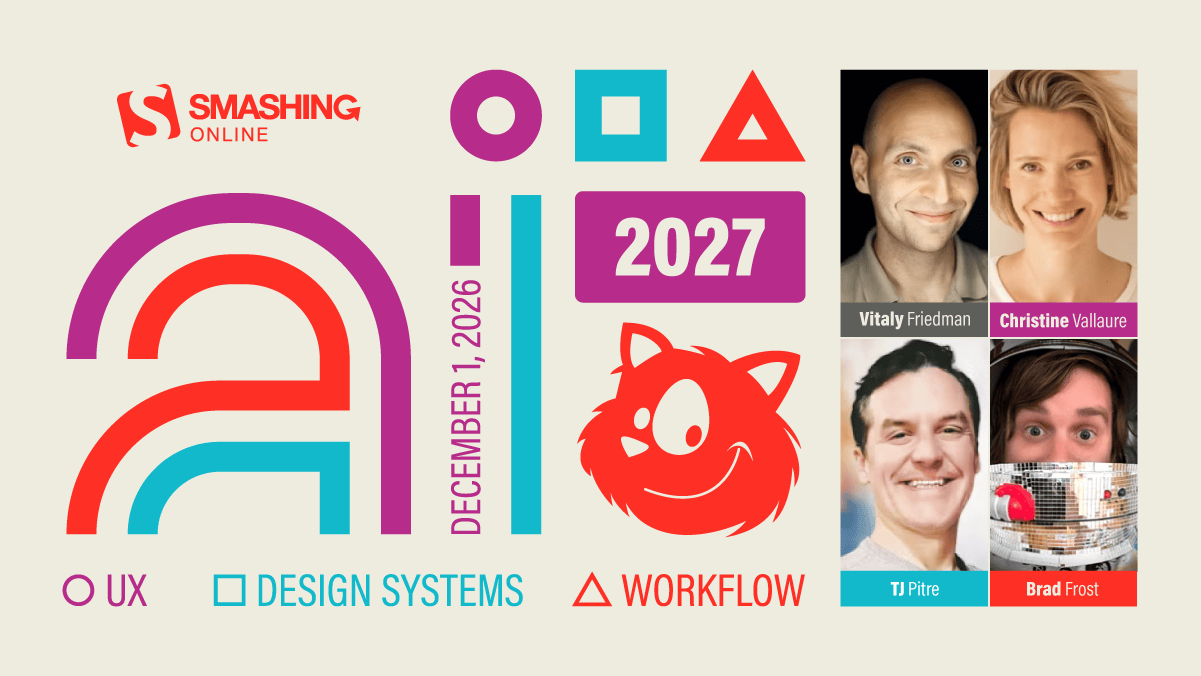
To address this, Smashing Magazine—an industry pillar known for its rigorous, evidence-based approach to web development—is hosting a specialized virtual conference on December 1, 2024. Titled "AI in Design Systems," this event seeks to move the needle from theoretical abstraction to tangible application. By focusing on design systems, the conference promises to demonstrate how AI can manage the complexity of scale, improve documentation, and streamline the bridge between design tokens and production code.
Detailed Chronology: From Concept to Implementation
The trajectory of AI within the design systems community has been swift, moving from experimental scripts to integrated enterprise solutions.
Phase I: The Era of Automation (2020–2022)
Initially, AI was relegated to simple automation tasks. Design systems practitioners utilized rudimentary algorithms to assist with color contrast checks, basic asset naming conventions, and simple image optimization. During this period, the conversation was largely about efficiency—reducing the "drudgery" of design operations.
Phase II: The Generative Explosion (2023)
The emergence of Large Language Models (LLMs) and sophisticated image generation tools shifted the paradigm. Suddenly, AI wasn’t just cleaning up metadata; it was generating components, writing documentation, and translating design intent into functional code. This shift brought a wave of anxiety, as professionals questioned the sustainability of their roles in an environment where AI could theoretically "build" a system from scratch.
Phase III: The Integration Reality (2024–Present)
We have now entered the age of pragmatic integration. Industry leaders are beginning to realize that AI functions best as an "augmented intelligence" layer within a design system. It is no longer about AI replacing the architect; it is about the architect using AI to solve the "last mile" problem of design system maintenance—the tedious, repetitive, yet vital work that keeps a design language consistent across thousands of screens.
Supporting Context & Metrics: The Design System Dilemma
Design systems are, by their nature, massive, evolving, and notoriously difficult to maintain. As organizations grow, the "tax" of maintaining a design system—updating documentation, refactoring code, and ensuring cross-platform consistency—often leads to organizational burnout.
The Metrics of Complexity
- Maintenance Overhead: Industry studies suggest that design system teams spend upwards of 40% of their time on maintenance rather than innovation.
- Adoption Rates: While 85% of large enterprises claim to have a design system, less than 30% report high levels of adoption across engineering teams. The friction is often caused by outdated documentation or code that is difficult to implement.
- The AI Opportunity: Preliminary research indicates that AI-assisted documentation and component mapping can reduce maintenance time by an estimated 15-25%. By leveraging AI to scan existing codebases and automatically suggest updates to component libraries, teams can reclaim significant bandwidth.
The upcoming Smashing Conference aims to provide the framework for these metrics, showing how practitioners can move from "fighting" their design systems to scaling them intelligently.
Official Statements: The Voices of the Experts
The strength of the Smashing AI conference lies in its curation. Rather than inviting speculative tech-pundits, the organizers have selected practitioners who are currently grappling with these challenges in the trenches.
The speaker lineup includes:
- Brad Frost: An architect of the Atomic Design methodology, Frost brings a critical lens to how AI can either support or undermine the structure of modular design.
- Christine Vallaure: Known for her deep expertise in design systems and UX, Vallaure’s insights into the ethics of AI implementation are essential for teams concerned about data privacy and algorithmic bias.
- Vitaly Friedman: As the creative lead of Smashing, Friedman’s focus remains on performance, accessibility, and the long-term maintainability of the web.
- TJ Pitre: Bringing a fresh, forward-looking perspective on how AI impacts the day-to-day workflow of front-end engineering.
In discussions leading up to the event, the consensus among these experts is clear: AI is not a magic wand. It is a sophisticated tool that requires a strong foundation of human-led strategy. Without a solid design system in place, AI-generated components are merely "garbage in, garbage out" at high speed.
Future Outlook: The Evolution of the Designer’s Role
The next decade of web development will be defined by the "AI-in-the-loop" model. We are moving toward a future where designers and developers will act as editors and curators of AI-generated content.
The Shift Toward Orchestration
In the future, the design system manager will become a "Design Systems Orchestrator." Instead of manually building every component, they will supervise the AI as it generates variants, ensuring that the output adheres to the brand’s visual identity, accessibility standards, and performance constraints. This shift requires a higher level of technical literacy, as the ability to prompt, iterate, and audit AI outputs will become a core competency.
The Importance of Human Oversight
As we look toward 2027 and beyond, the most successful companies will be those that prioritize human oversight. AI can optimize for efficiency, but it lacks the nuance of brand strategy, user empathy, and cultural context. The Smashing Conference on December 1 serves as a critical checkpoint in this transition, offering a space for professionals to calibrate their expectations and learn from those who have already started the process.
Invitation: Join the Conversation
For those who have felt overwhelmed by the noise of the last two years, this conference offers a breath of fresh air. It is a pragmatic, low-stakes environment to engage with the best minds in the field.
- Event Date: December 1
- Registration: Smashing AI Conference
- Discount Code: Use
AITRICKSCSSduring registration to receive a special discount, courtesy of the partnership between Smashing and CSS-Tricks.
Furthermore, in an effort to democratize access to this knowledge, we have been provided with two free tickets to distribute. These will be awarded to the first two commenters who provide a meaningful contribution to the discussion on this post. Please ensure you use your real email address when commenting so that we can facilitate the transfer of the tickets.
The future of design systems is being written right now. It is up to us to ensure that this future is built on a foundation of careful consideration, craftsmanship, and human-centric design. We look forward to seeing you there.