Executive Overview
For specialty coffee enthusiasts and casual caffeine consumers alike, the annual Black Friday retail window represents the single most strategic moment of the year to invest in high-end kitchen appliances. While the official November shopping holiday traditionally serves as the climax for consumer discounts, retailers have upended conventional shopping schedules by launching aggressive price cuts weeks in advance. Leading the charge in the home-barista sector are significant markdowns on premium bean-to-cup systems, most notably a striking £250 discount on the critically acclaimed Sage The Barista Touch available through major electronics retailers like Currys.
The modern consumer landscape for at-home coffee preparation has shifted dramatically away from basic drip-filter machines and single-use pod systems toward sophisticated, all-in-one espresso apparatuses. This shift is driven by a growing appreciation for artisanal brewing techniques, economic considerations regarding daily café expenditures, and technological advancements that democratize barista-level skills. This comprehensive report examines the early Black Friday coffee machine market, dissects the engineering behind top-tier bean-to-cup systems, analyzes the economic rationale driving these early seasonal promotions, and provides strategic guidance for consumers looking to optimize their kitchen counter space and brewing capabilities.
Detailed Chronology: The Evolution of Early Black Friday Appliance Sales
The phenomenon of early Black Friday deals is not an accidental marketing shift; it is the result of a carefully orchestrated retail strategy that has evolved significantly over the past decade. Understanding this timeline helps consumers navigate the crowded marketplace and secure the best possible value on high-ticket items like premium espresso machines.
Phase 1: The Traditional Post-Thanksgiving Rush (Pre-2015)
Historically, major appliance discounts were strictly restricted to the 24-to-48-hour window immediately following Thanksgiving in the United States, a trend that gradually bled into UK retail culture via Cyber Monday and Black Friday imports. During this era, consumers faced overcrowded stores, limited stock availability, and fierce competition for deeply discounted flagship items. High-end kitchen brands—such as Sage, De’Longhi, and Jura—rarely participated in these aggressive volume sales, preferring to maintain strict manufacturer-suggested retail pricing (MSRP) to preserve brand prestige.
Phase 2: The Digital Acceleration and "Cyber Week" (2015–2019)
As e-commerce platforms like Amazon, Currys, and John Lewis matured, the traditional single-day shopping event expanded into a week-long digital festival known as "Cyber Week." Retailers recognized that spreading out promotional windows alleviated massive supply chain bottlenecks and server crashes. During this period, brands began introducing tiered discounting strategies, allowing early-adopting shoppers to access mid-tier kitchen gadgets ahead of the Thanksgiving rush. However, flagship bean-to-cup espresso machines remained largely resilient to early markdowns, usually seeing only modest 10% to 15% price adjustments on the actual day of the event.
Phase 3: Supply Chain Shifts and October Kickoffs (2020–Present)
Global supply chain disruptions, fluctuating consumer confidence, and inventory management challenges forced a paradigm shift in retail economics. To mitigate revenue volatility and capture consumer spending earlier in the fourth-quarter fiscal period, major retailers began rolling out "Early Black Friday" or "Black Friday in October" campaigns.
In the current market climate, November has effectively become a month-long promotional runway. Retailers now drop prices on premium items—such as the £250 reduction on Sage The Barista Touch—weeks before the traditional November date. This strategy allows brands to lock in consumer commitments early, preventing shoppers from comparison-shopping or switching to competitor brands during the frenzied final week of November. For the savvy consumer, this means the historical anxiety of missing out on limited stock is replaced by an extended window of price stability and unhurried product research.
Supporting Context & Metrics: The Engineering and Economics of Bean-to-Cup Systems
To understand why a £250 discount on a machine like the Sage The Barista Touch is a noteworthy market event, one must analyze the technological integration and economic value proposition inherent in modern bean-to-cup appliances.
The Mechanics of Freshness: Why Bean-to-Cup Dominates
The culinary consensus among professional baristas is unequivocal: coffee begins to lose its volatile aromatic compounds mere minutes after grinding. Pre-ground coffee, while convenient, suffers from rapid oxidation, resulting in a flat, bitter, or muted flavor profile.
Bean-to-cup machines solve this fundamental chemical challenge by integrating a precision burr grinder directly into the brewing chassis.
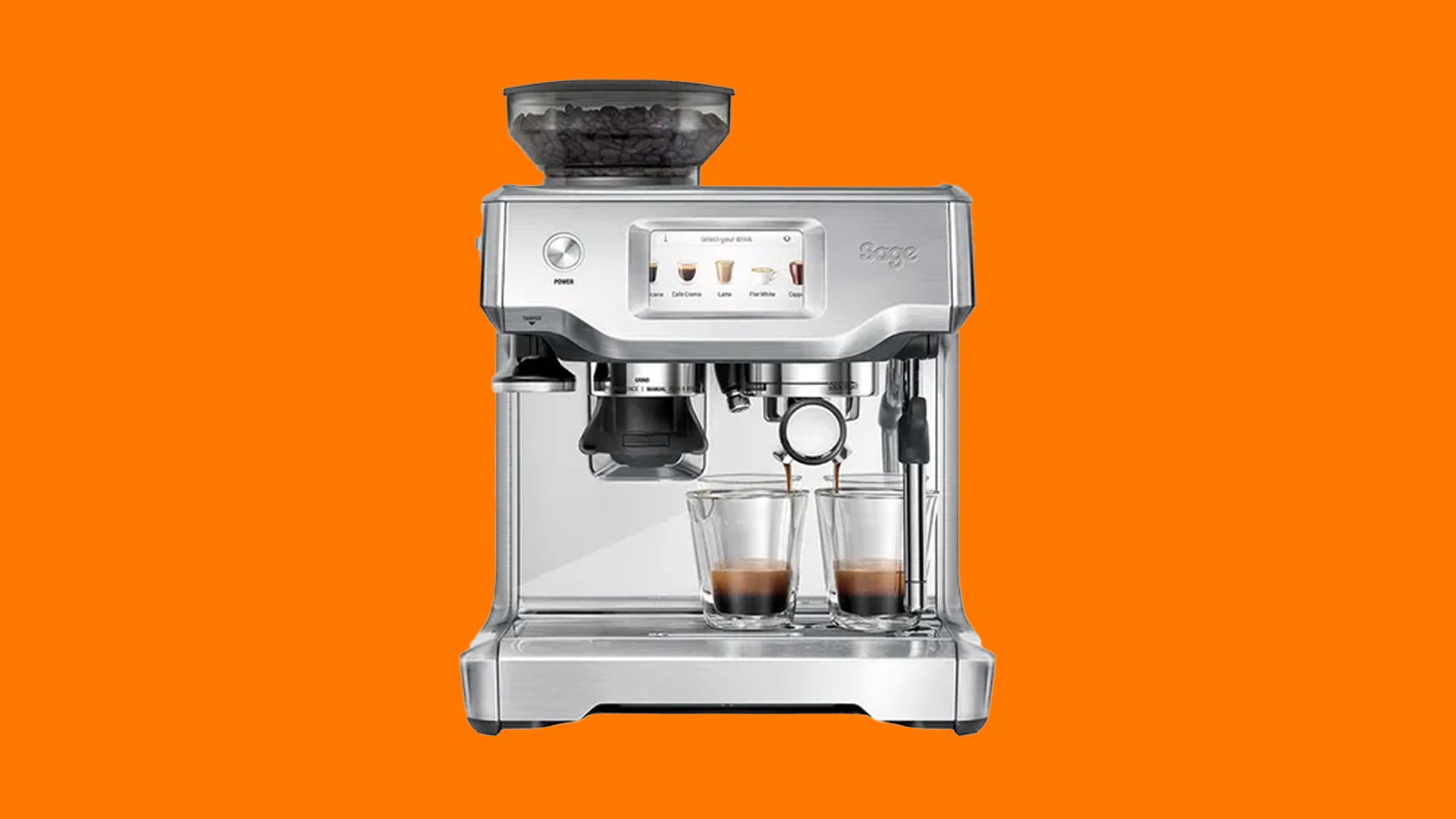
- Integrated Burr Grinders: Unlike cheap blade grinders that chop beans inconsistently and generate excessive heat (which scorches the coffee grounds), integrated conical or flat steel burr grinders crush the beans to a uniform particle size. This ensures optimal extraction during the pressurized brewing cycle.
- All-in-One Efficiency: Historically, achieving café-quality espresso at home required purchasing a standalone grinder, a high-pressure espresso machine, an external tamper, and a milk frothing pitcher. This fragmented approach demands significant counter space, multiple electrical outlets, and a steep learning curve. Modern all-in-one units consolidate these functions into a single footprint, addressing both spatial and aesthetic concerns in contemporary kitchens.
Market Metrics and Consumer Trends
Recent home-kitchen appliance market reports indicate a steady upward trajectory in the sales of premium coffee equipment. Several key factors underpin this growth:
- The Post-Pandemic Brewing Renaissance: Following extended lockdowns, consumers invested heavily in upgrading their domestic culinary environments. The home coffee station evolved from a simple kettle-and-mug setup into a dedicated architectural focal point of the modern kitchen.
- Long-Term Return on Investment (ROI): With specialty coffee prices averaging between £3.50 and £4.50 per cup in major metropolitan areas, purchasing a premium bean-to-cup machine priced at roughly £750 to £1,000 (especially when discounted by £250) breaks even remarkably fast. For a two-person household consuming two coffees a day, a high-end machine frequently amortizes its initial capital cost within six to eight months of daily use.
Official Statements & Industry Insights
Industry leaders and home-design experts have increasingly focused on how kitchen appliances intersect with modern interior aesthetics and lifestyle choices. While manufacturers typically guard their exact margin structures, statements from major retail analysts and product designers shed light on the philosophy behind these flagship promotions.
The Design Perspective
Interior and product design publications, such as Creative Bloq, frequently highlight the intersection of industrial design and culinary utility. Modern coffee machines are no longer hidden away in pantries; they are sculptural elements designed to complement minimalist, industrial, and contemporary kitchen schemes.
"Whether you like your coffee black or with milk, the Black Friday sales are the best moment of the year to finally upgrade your home coffee making setup," notes design and consumer tech expert Joe. "An all-in-one machine saves having to buy separate appliances and find the space and sockets for them, marrying functional engineering with sleek countertop aesthetics."
Retailer Strategies
Retail executives point out that discounting flagship models like the Sage Barista Touch serves a dual purpose. First, it drives high-intent traffic to e-commerce platforms and physical showrooms during a crowded retail season. Second, it acts as an entry point into the broader ecosystem of coffee accessories—including specialty beans, cleaning kits, designer mugs, and knock boxes—which carry healthy retail margins and ensure ongoing customer engagement long after the initial hardware purchase is complete.
Future Outlook: What Lies Ahead for the Home Coffee Market?
As we look toward the future of domestic culinary technology, several clear trajectories are emerging that will shape how consumers interact with their morning cup of coffee.
1. Smart Integration and AI-Driven Extraction
The next generation of bean-to-cup machines is moving beyond digital touchscreens into the realm of artificial intelligence and machine learning. Future iterations of high-end espresso makers will likely feature adaptive extraction algorithms that automatically adjust grind size, water temperature, and pressure profiling in real-time based on the specific roast profile, age, and humidity levels of the coffee beans loaded into the hopper.
2. Sustainability and Repairability
Consumer demand is increasingly shifting toward sustainable manufacturing practices. As environmental regulations tighten and consumer consciousness evolves, future coffee machine designs will place greater emphasis on modular repairability. Rather than treating high-end appliances as disposable items when a single pump or gasket fails, manufacturers are beginning to design systems with easily replaceable internal components, extending the operational lifecycle of premium kitchen investments.
3. Price Stabilization and Market Accessibility
While flagship models will always command premium pricing due to the precision engineering required, competition within the bean-to-cup sector is fierce. As more brands enter the all-in-one space, foundational technologies—such as PID temperature control and integrated thermal-jet heating systems—will trickle down into mid-tier price brackets. However, for those seeking the pinnacle of domestic brewing capability right now, early Black Friday promotions remain the absolute benchmark for acquiring top-tier hardware at historically low price points.
Conclusion
The convergence of advanced culinary technology, evolving retail calendars, and attractive seasonal discounting makes the current early Black Friday window an ideal time for upgrading home coffee infrastructure. With substantial price reductions—exemplified by major markdowns on flagship models like Sage The Barista Touch—consumers no longer need to compromise between financial prudence and barista-quality daily indulgence. By understanding the underlying engineering of bean-to-cup systems and leveraging extended promotional windows, buyers can secure a sophisticated, space-saving kitchen centerpiece that will deliver exceptional coffee for years to come.