
Executive Overview: The Rise of Agentic Commerce
The ecommerce landscape is undergoing a structural transformation. As we move through the final quarter of 2026, the industry is witnessing a shift from passive digital tools to "agentic commerce"—a paradigm where artificial intelligence no longer merely assists with tasks but autonomously executes complex business workflows.
This week’s industry update highlights a surge in innovation across B2B payments, programmatic advertising, and AI-driven customer experience. From Sprinklr’s marketing automation to Shopify’s aggressive expansion into local payment methods and AI-integrated operations, merchants are being equipped with unprecedented autonomy. The common thread connecting these disparate releases is the drive toward "unified intelligence"—the ability to synthesize data from marketing, logistics, and payments into a single, actionable stream. As retailers prepare for the holiday rush and look toward 2027, the focus has shifted from simple digitization to the orchestration of intelligent, cross-channel ecosystems.

Detailed Chronology: Key Innovations and Releases
The AI Agent Revolution
The most significant trend this week is the proliferation of autonomous AI agents designed to handle specialized business functions.
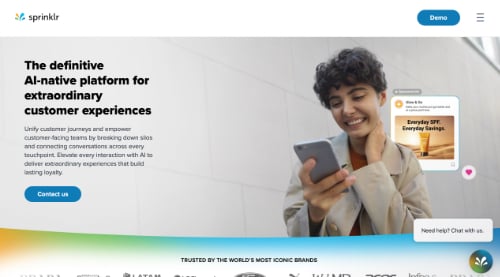
- Sprinklr’s Marketing AI Agents (Beta): Enterprise-grade marketing is becoming increasingly automated. Sprinklr’s new suite—covering Ideation, Creative, Campaign Execution, Compliance, Community, and Budget Optimization—marks a shift from using AI for generation to using it for governance. By scaling and localizing content while maintaining brand safety, Sprinklr aims to reduce the "friction of execution" that plagues large organizations.
- Virid’s MarketAgility MCP Connector: Addressing the need for interoperability, Virid has launched a Model Context Protocol (MCP) connector. This allows retailers to connect their backend store data (inventory, orders, catalogs) to leading LLMs like Claude and ChatGPT. The result is the ability to manage an entire retail store using natural language, bypassing the need for complex dashboard navigation.
- Omnichat’s $10M Series A: Confirming the viability of this sector, Omnichat secured $10 million in funding led by Openspace Capital. The investment is earmarked for scaling their agentic platform and their "OmniClaw" AI business analyst, signaling that investors are betting heavily on the "agent-first" approach to customer experience.
Financial Infrastructure and B2B Payments
Efficiency in the B2B supply chain is reaching a new level of velocity as fintech giants streamline capital movement.
- Stripe’s Free Instant B2B Payments: By launching "Stripe Pay," the payment processor is removing the latency and cost barriers traditionally associated with B2B transactions. The ability to move funds instantly between U.S. and U.K. profiles via the command-line interface or dashboard is a major win for lean, high-volume merchants.
- Amazon Business Value Intelligence: Procurement is no longer just about cutting costs. Amazon’s new tool provides a granular look at operational efficiency and compliance. By grounding these metrics in third-party benchmarks, Amazon is positioning itself as a strategic partner in corporate procurement, moving beyond the simple "buy-and-ship" model.
- Amazon’s Returnless Refunds in Europe: In a move designed to lower the total cost of returns, Amazon is expanding its "Returnless Resolutions" program across France, Germany, Italy, Spain, and the U.K. By allowing merchants to set price thresholds for returnless refunds, Amazon is optimizing the reverse logistics chain for low-value items.
Marketing, Discovery, and Social Commerce
The boundary between social media engagement and point-of-sale conversion is effectively dissolving.
- AnyMind Group & Meta Partnership: This collaboration marks a turning point for live commerce. By connecting social discovery on Facebook and Instagram to flexible checkout options, the partnership allows brands to convert viewers into buyers without forcing them to leave the social environment or navigate to a clunky landing page.
- Pinterest Programmatic Deals: Pinterest is maturing its ad infrastructure by allowing programmatic buying. By integrating with major DSPs like Google DV360 and Yahoo DSP, Pinterest is making its high-intent visual inventory accessible to the broader programmatic advertising ecosystem.
- Omnisend’s Holiday Toolkit: Recognizing the importance of the upcoming sales season, Omnisend has rolled out "Social Capture" and gamified popups. These tools are explicitly designed to combat the rising cost of acquisition by turning social traffic into owned, first-party data.
Supporting Context & Metrics: The Data Behind the Tools
The current wave of innovation is driven by a clear economic mandate: efficiency through integration. Merchants are currently battling "tool sprawl," where too many disparate platforms create data silos.

Key Performance Drivers
- Incremental Impact Measurement: Adobe’s new Marketing Campaign Analytics is a direct response to the difficulty of attributing ROI in a post-cookie world. By isolating the "incremental lift" of a specific campaign from market seasonality, the tool provides a more accurate picture of performance than standard ROAS (Return on Ad Spend) metrics.
- Product Discovery Optimization: Fast Simon and NielsenIQ are both focusing on the "AI-powered discovery" layer. As search behaviors shift from keyword-based queries to natural language discovery, merchants who do not optimize their product content for these AI frameworks risk being invisible to the modern consumer.
- WhatsApp Automations: Shopify’s push into WhatsApp messaging reflects the global shift toward conversational commerce. With abandoned cart and browser recovery rates significantly higher in messaging apps than in traditional email, this is a strategic move to improve conversion rates for mobile-first shoppers.
Official Statements and Industry Perspective
"The era of manual campaign management is drawing to a close," says a spokesperson for one of the leading enterprise marketing platforms. "Our focus is moving toward ‘autonomous governance’—where AI ensures that brand voice and compliance are maintained while the system handles the heavy lifting of execution."
Regarding the new B2B payment features, industry analysts note: "The friction in B2B payments has historically been a tax on growth. By eliminating that friction, providers like Stripe are unlocking liquidity for small and medium-sized businesses, allowing them to reinvest capital into inventory and marketing faster than ever before."

Amazon’s move to expand Returnless Resolutions suggests a long-term shift in the psychology of ecommerce. For merchants, the cost of processing, inspecting, and restocking low-value goods often exceeds the wholesale value of the item. By embracing "Returnless Resolutions," merchants are shifting from a cost-minimization mindset to a customer-retention-first strategy.
Future Outlook: The 2027 Horizon
As we look toward the 2027 fiscal year, three major trends are likely to dominate the merchant tech landscape:

- The Consolidation of the "AI Stack": Merchants will move away from having five or six disjointed AI tools. Instead, we expect to see the rise of "operating system" platforms that bundle marketing, inventory management, and customer support agents into a single, interoperable stack—much like what Shopify is attempting with its "Exponential" release.
- Hyper-Local and Cross-Border Agility: As global markets become more interconnected, the ability to support local payment methods (Alipay, WeChat Pay, etc.) and automate cross-border compliance will become a baseline requirement for any serious merchant.
- From "Search" to "Shopping Agents": The future of product discovery is no longer the search bar; it is the personalized AI assistant. Merchants who fail to ensure their product data is "machine-readable" for these agents will find themselves locked out of the next generation of consumer shopping experiences.
The innovations announced this week represent more than just new features; they represent the maturation of the digital economy. The tools available to merchants today are exponentially more powerful than those of even two years ago, setting the stage for a highly competitive and automated 2027. Merchants who adopt these agentic, integrated solutions now will be the ones who define the future of the retail sector.