Executive Overview
The foldable smartphone market is currently defined by a "bigger is better" philosophy. As industry titans like Samsung, Honor, and OPPO race to expand screen real estate, a fresh wave of industry intelligence suggests that Vivo is charting a radically different course. According to recent reports from the well-regarded industry tipster Digital Chat Station (DCS), Vivo is actively developing a "wide-fold" smartphone that prioritizes portability over expansive displays.
While the current industry standard—championed by the Samsung Galaxy Z Fold 8 and various upcoming competitors—settles firmly on internal displays around the 7.6-inch mark, Vivo’s proposed design reportedly targets an internal screen size of under 6.5 inches. This deliberate shift toward a more compact form factor, slated for a potential 2027 release, represents a bold gamble: that consumers are growing weary of heavy, tablet-sized devices and are ready for a foldable that fits comfortably in a pocket without sacrificing the sophisticated utility of a dual-screen device.
Detailed Chronology: From Rumor to Roadmap
The journey of the "wide fold" concept has been one of the most persistent threads in mobile hardware speculation. For years, the industry has watched as Vivo and its peers—most notably Honor—have sought to challenge the dominance of the South Korean market leader.
The Emergence of the "Wide Fold" Narrative
The conversation surrounding wide-fold devices gained significant traction following the success of Samsung’s refined folding architecture. As consumers gravitated toward wider aspect ratios that more closely mirrored traditional smartphone ergonomics, competitors began to pivot their R&D efforts. Initial reports suggested that both Vivo and Honor were looking to create direct alternatives to the Galaxy Z Fold series.
The Digital Chat Station Leak
The most recent development surfaced on the Chinese social media platform Weibo, where the reliable tipster Digital Chat Station (DCS) provided the first concrete details regarding Vivo’s internal direction. According to the leak, Vivo has moved past the conceptual stage. DCS indicates that the majority of the device’s hardware components are already "finalized," suggesting that the company is moving toward prototyping and supply chain integration.
The 2027 Horizon
Perhaps the most surprising detail is the projected timeline. By aiming for a 2027 release, Vivo is signaling that it is not rushing to join the current generation of foldables. Instead, it is likely waiting for advancements in battery density, hinge durability, and screen panel efficiency to catch up with its ambitious compact vision. This extended development cycle suggests a desire to deliver a polished, high-performance product rather than a stop-gap device.
Supporting Context & Metrics: The "Small" Revolution
To understand why a sub-6.5-inch internal display is considered "small" in the current landscape, one must look at the prevailing metrics of the foldable market.
The Current Benchmark: 7.6 Inches
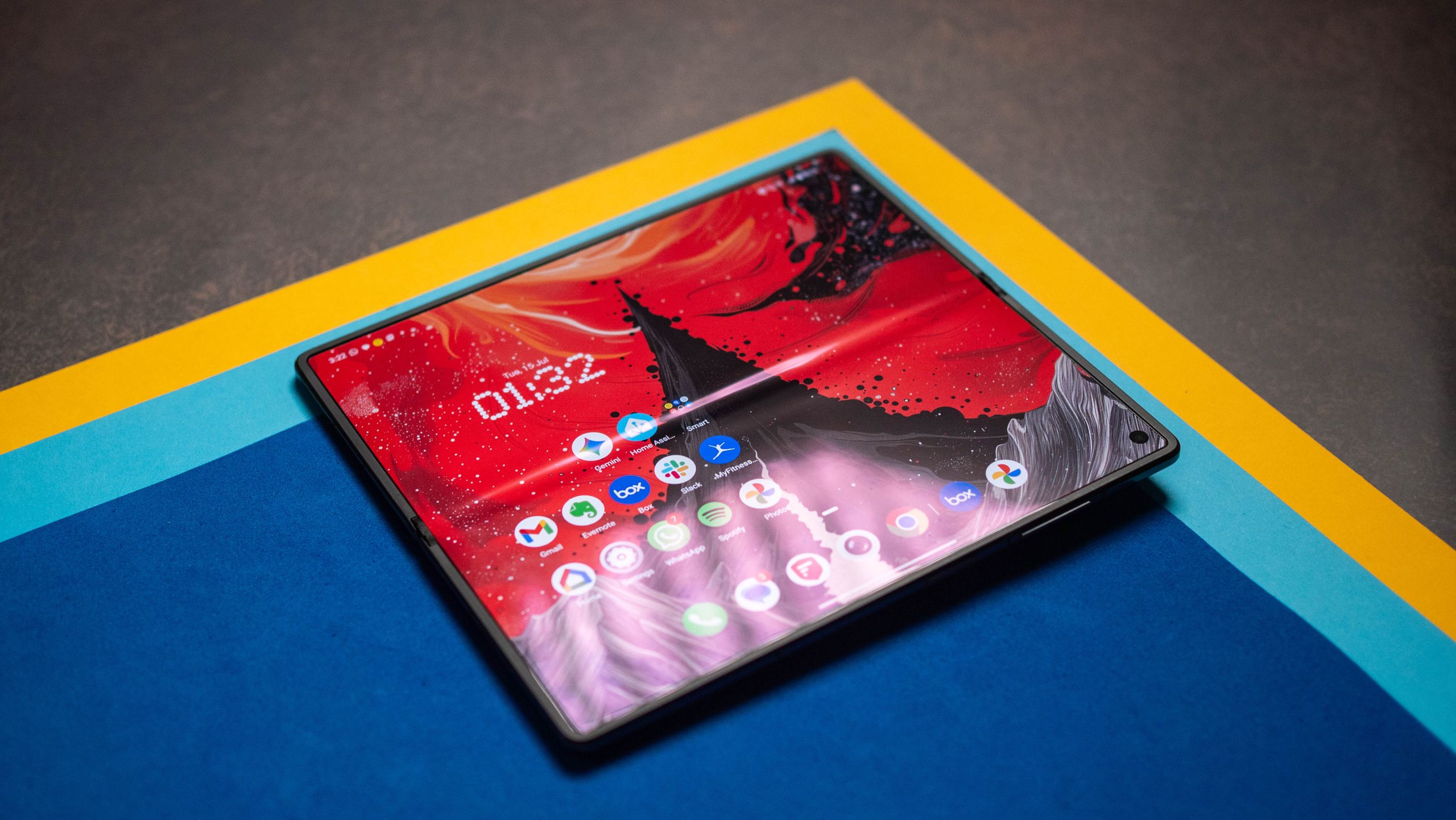
The 7.6-inch internal display has become the unofficial "gold standard" for horizontal foldables. The Galaxy Z Fold 8, as well as rumored upcoming devices from OPPO, utilize this dimension to provide a tablet-like experience. This size is ideal for multitasking, split-screen productivity, and media consumption. However, it comes with a trade-off: weight, bulk, and a higher center of gravity that can make one-handed use nearly impossible.
Vivo’s "Compact" Strategy
By potentially dropping to a 6.5-inch internal screen, Vivo is essentially creating a bridge between the traditional "clamshell" (flip) foldables and the "book-style" foldables. If the device remains thin and lightweight, it could solve the primary pain point for many potential adopters: the feeling that they are carrying a brick in their pocket.
Competitive Comparison Table
| Brand | Potential Internal Screen Size | Target Market Focus |
|---|---|---|
| Samsung | 7.6 inches | Productivity & Media |
| Honor | 7.6 inches | Performance & Battery |
| OPPO | 7.6 inches | Advanced Hardware Integration |
| Vivo | < 6.5 inches | Portability & Ergonomics |
The data indicates that while competitors are pushing for massive 7,000mAh batteries and ultra-high-resolution displays within larger frames, Vivo’s differentiator is pure usability. The tech community on platforms like Weibo has largely reacted positively to this news, noting that if the internal specifications—such as the processor and camera array—remain flagship-grade, the smaller size could actually be a significant competitive advantage.
Official Statements and Industry Sentiment
While Vivo has not issued an official press release confirming the device’s existence—which is standard procedure for a product still years away from production—the silence from the manufacturer is telling. In the world of high-end mobile tech, "no comment" is often the clearest indication that R&D is proceeding according to plan.
Industry analysts suggest that Vivo is in a unique position. Having already established itself as a leader in photography-centric foldables with the X Fold series, the company has the brand equity to experiment. There is a prevailing sentiment among analysts that the foldable market is reaching a point of saturation regarding the "large tablet" form factor. By diversifying into a compact segment, Vivo could capture a demographic of power users who want the "foldable" experience but value the aesthetic and physical convenience of a standard smartphone.
Future Outlook: Challenges and Opportunities
The road to 2027 is paved with significant technological hurdles. A smaller foldable device poses unique engineering challenges that the industry has yet to fully master.
The Thermal and Battery Challenge
Reducing the footprint of a device limits the available space for battery cells and thermal dissipation hardware. To maintain a competitive edge, Vivo will likely need to rely on next-generation battery chemistries (such as silicon-carbon anodes) that offer higher energy density in smaller packages. Furthermore, as the device becomes more compact, the heat generated by modern high-performance chipsets—such as future iterations of the Snapdragon 8 series—must be managed through innovative cooling solutions like vapor chambers that take up minimal volume.
Market Positioning
If Vivo successfully launches a sub-6.5-inch wide-fold device, it will create a new sub-category. This product will likely be marketed not just as a "phone," but as a premium lifestyle accessory. Its success will hinge on whether consumers view it as a replacement for their daily driver. If the display is too small to offer meaningful multitasking benefits, it risks being overshadowed by cheaper, more powerful traditional phones.
The Long Game
Vivo’s move is, ultimately, a long-term play. By distancing itself from the "bigger is better" race, the company is attempting to define the next evolution of the form factor. If the 2027 launch date holds, we can expect to see early leaks regarding hinge materials, display panel technology, and software optimization for this unique aspect ratio over the next 18 to 24 months.
Conclusion
The foldable smartphone market is moving toward a fork in the road. While the industry has spent the last five years proving that folding screens are viable, the next five years will be defined by refinement. Vivo’s strategy to shrink the footprint of its wide-fold device is a bold, potentially genre-defining move. Whether it becomes the new standard for users who crave pocketability or remains a niche experiment will depend on how well Vivo can balance its internal components against the constraints of its compact chassis. For now, all eyes are on the laboratory, waiting to see if Vivo can truly "fold" the future into a smaller, more convenient shape.