Executive Overview
The global animation industry stands at a critical technological crossroads. For decades, the craft of hand-drawn and digitally assisted 2D animation has relied on meticulous, labor-intensive workflows that have remained fundamentally unchanged despite the digitization of production lines. Today, however, studios are being forced to re-evaluate their pipelines as artificial intelligence transitions from a speculative novelty into a functional, production-ready reality.
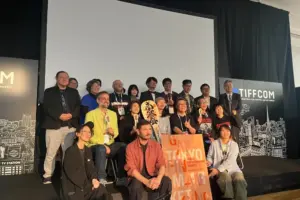
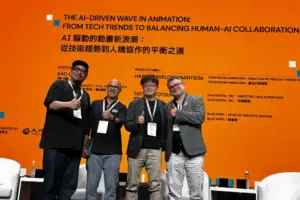
At the Taiwan Creative Content Fest (TCCF) in Taipei, industry leaders gathered to debate this paradigm shift, offering contrasting perspectives from the forefront of Eastern and Western animation production. Central to the discourse was OLM Digital, the powerhouse Japanese animation studio behind the globally revered Pokémon anime series and films. Board Director and CTO Yotsukura Tatsuo unveiled a proprietary, workflow-friendly AI coloring tool developed under a government-backed initiative. Designed to alleviate the crippling labor bottlenecks of traditional production without infringing upon external datasets, OLM’s innovation highlights a pragmatic shift in how studios view automation.
Simultaneously, international heavyweights—including Canadian software developer Toon Boom Animation and French studio Blue Spirit—are grappling with the same operational hurdles, constrained by radically different regional attitudes, strict platform mandates, and diverse budgetary pressures. While Japanese studios like OLM view AI as a mechanism to reclaim creative freedom within fixed budgets, Western counterparts navigate complex regulatory frameworks established by streaming giants like Netflix and Amazon. This article provides an in-depth examination of these developments, exploring how artificial intelligence is reshaping the future of animation workflow optimization, intellectual property management, and creative integrity.
Detailed Chronology: The Genesis and Evolution of OLM’s AI Tool
The journey toward OLM Digital’s breakthrough coloring tool began within the framework of ANIMINS, a rigorous 15-month research and development project led by Yotsukura Tatsuo. The project operated under GENIAC, a prominent generative AI program overseen by Japan’s Ministry of Economy, Trade and Industry (METI). Tasked with investigating how Japanese anime creators could safely and effectively integrate AI into traditional pipelines, the research initiative officially concluded in February.
Unlike conventional generative AI models—which typically demand vast, web-scraped corpuses of training data that often run afoul of copyright concerns—OLM engineered an entirely localized, project-specific paradigm.
- The Pilot Phase: Instead of training on external libraries, an artist manually colors just three initial frames of a sequence.
- The Learning Curve: The system analyzes these three hand-painted frames to absorb the specific line shapes, shadows, and color palette of the production in approximately 90 seconds.
- Execution: Once calibrated, the tool processes each remaining frame in roughly 15 seconds. The system operates on a compounding scale of accuracy: the more reference frames an artist provides by hand, the more precise the automated coloring becomes.
"Strictly speaking, it isn’t generative AI," Yotsukura emphasized during his TCCF presentation, underscoring that the technology acts as an intelligent assistive filter rather than an autonomous creator. By training exclusively on a production’s internal assets, the tool eliminates the risk of copyright infringement. Furthermore, it exhibits dynamic adaptability; if a brand-new character or creature—such as a fantasy dragon—is introduced midway through a series, the system adapts instantly to the new visual parameters.
During its proof-of-concept testing, OLM estimated that the tool successfully reduced the baseline painting workload by approximately 30%. However, this operational efficiency introduced a new downstream challenge: quality control checkers, tasked with reviewing every single colored frame for consistency, found their workloads slightly increased to maintain the studio’s exacting visual standards.
Supporting Context & Metrics: Software Solutions and Production Realities
The bottleneck of frame painting and in-betweening is a universal pain point across the global animation sector. Major software providers are racing to deploy proprietary tools to solve these exact friction points.
Toon Boom Animation and Ember
Canadian software titan Toon Boom Animation—creator of industry-standard packages Harmony and Storyboard Pro—is tackling the same logistical hurdles through its upcoming AI suite, Ember. According to Product Marketing Director Harry Ravelomanantsoa, the beta testing phase for Ember’s automated coloring tool is drawing to a close, with automated in-betweening features expected to enter beta testing shortly.
The real-world impact of these technologies is stark. Ravelomanantsoa highlighted a test conducted by a Manila-based studio using Toon Boom’s suite: a complex scene that previously required between 15 hours of manual labor for a 90-second to two-minute sequence had its production time slashed to a mere two to three hours.
OLM’s Global Footprint and Pipeline Scale
OLM employs approximately 600 production staff distributed across strategic hubs in Japan, Malaysia, Thailand, and the United States. While the studio is internationally famous for producing the television series and theatrical films of the Pokémon franchise (distinct from Game Freak’s video game division), its portfolio is remarkably diverse. OLM’s current slate encompasses youth-oriented hits like Beyblade and Hanakappa, alongside critically acclaimed, adult-skewing prestige titles like The Apothecary Diaries.
Yotsukura, who also serves as CTO for the group’s Malaysian and Thai subsidiaries, noted that maintaining an in-house R&D division is an extreme rarity within the Japanese anime ecosystem. This structural advantage allows OLM to experiment with bleeding-edge technologies without jeopardizing commercial delivery schedules.
Beyond Coloring: AI Agents and Production Management
OLM’s R&D division is not stopping at color flats. The studio is actively experimenting with AI applications for in-betweening, but Yotsukura suggests that the most profound operational gains may come from indirect administrative efficiencies.
In large-scale anime productions—which frequently involve upwards of 100 staff members over multi-year lifecycles—institutional memory often breaks down. Collaborating with a startup partner from the GENIAC project, OLM is exploring anime-specific AI agents designed to assist newly onboarded directors or production managers. For instance, these agents could recall a founding director’s specific stylistic intent for a particular cut in a series that has run for a decade or more.
Additionally, these intelligent agents could streamline approvals and license management for secondary and tertiary uses of IP titles—a revenue stream Yotsukura identifies as the most critical financial pillar of the modern anime business. Because these administrative and licensing domains are legally sensitive, OLM is proceeding with extreme caution.
Official Statements: Navigating the Gap Between Demos and Production Realities
The discourse at TCCF underscored a profound philosophical divide regarding the limits of artificial intelligence in professional art. Yotsukura used a poignant analogy to describe the frustration inherent in current AI adoption, comparing it to gacha—the Japanese capsule-toy machines where each JPY500 ($3.30) turn (roughly equivalent to an AI generation credit) offers a randomized prize.
"AI gets close enough to 80% to raise expectations," Yotsukura explained. "Raising it from there to 90% or 100% turns into work so hard it can make you heartsick."
While hobbyists and casual creators may find an 80% accuracy threshold acceptable, professional animators operate under unforgiving industrial standards. Anime is intensely sensitive to color theory, and many generative AI editing tools inadvertently alter subtle RGB values, throwing off the color balance even when an image appears correct to an untrained eye.
This sentiment was reinforced by Toon Boom’s Ravelomanantsoa, who neatly summarized the desired division of labor:
"The creative stays with the artist, and the mechanical time goes to AI, to Ember."
Yotsukura echoed this philosophical boundary, noting that true artistic direction remains fundamentally human:
"AI can only do what it has learned. The kind of images that move audiences in cinemas, and the never-before-seen ideas behind hit anime, still have to come from people."
The Western Studio Perspective: Regulatory Walls and Regional Divides
In stark contrast to the integrationist approach favored in Japan, Western studios face stringent regulatory hurdles imposed by major streaming conglomerates.
Charles Beirnaert, Chief Creative Officer of French animation studio Blue Spirit—the creative force behind Netflix’s critically acclaimed Blue Eye Samurai—revealed that his studio utilizes zero artificial intelligence on Netflix projects.
"We’re not allowed to use AI for the Netflix projects," Beirnaert stated.
Whenever Blue Spirit inquires about permissible AI integration stages, the answer from the streaming platform is an absolute prohibition, though Beirnaert acknowledged enforcement nuances may vary across different partners. Under Netflix’s official production partner guidelines issued in August 2025, creators are legally mandated to disclose any intended use of generative AI, requiring explicit written approval before any generative material can touch the final master product. On concurrent Amazon productions, Blue Spirit is permitted to use AI solely for early character and robot pre-visualization, with strict mandates that no generative assets reach the final screen.
Outside of restrictive client mandates, Beirnaert’s internal team has been experimenting with AI on independent vertical tests. In one internal test, a traditional CG pilot that normally required a team of 20 artists roughly three months to produce was nearly replicated by a single person using AI tools over the course of a few days. While the resulting animation fell short of human benchmarks, Beirnaert conceded that the AI-generated backgrounds surpassed expectations.
Nevertheless, Beirnaert drew a hard ethical line:
"For me, AI is not meant to replace animators. The day every animator is replaced, I will change job and do something else."
Future Outlook: Economic Motivations and Industry Convergence
The debate at TCCF also highlighted a fundamental discrepancy in how Eastern and Western producers view the financial utility of AI.
When questioned about potential cost savings, Beirnaert offered a rough estimate of saving €1 million on an €8 million budget, suggesting that AI could successfully rescue mid-budget European projects that stall out when they are 80% to 90% financed.
OLM operates under an entirely different economic model. Yotsukura noted that Japanese studios are typically contracted after a production budget has already been locked in stone. Consequently, OLM does not view AI as a tool to shrink budgets or trim payrolls, but rather as a mechanism to inject higher production values and creative freedom into fixed-budget timelines.
"A year or two ago, the question was how many staff AI could replace," Yotsukura observed. "Now it is shifting toward new shots that AI tools made possible."
Moderator Kao Chieh, a lecturer at Shih Chien University, attributed these divergent attitudes to a foundational philosophy gap between Eastern and Western animation industries. Where Western producers frequently look to automation for budget mitigation and workforce optimization, Japanese studios view technology as a collaborative partner to an already robust creative culture.
Drawing a historical parallel, Yotsukura compared the current anxiety surrounding AI to the introduction of 3DCG into the anime industry decades ago.
"Twenty years ago, I kept rejecting it, saying, ‘How could this ever be used in anime?’ Now it’s unthinkable for anime not to have 3DCG."
He predicts that AI will permeate production workflows far more rapidly than 3DCG did, simply because its baseline output quality is exceptionally high from inception.
As the industry looks toward the horizon, the consensus among forward-thinking executives is clear. Japanese anime already possesses an abundance of creative storytelling and artistic talent, but sustainable scaling requires technological modernization. As Yotsukura concluded:
"I think ‘not using AI’ is probably no longer an option from here on."
Ultimately, the future of animation will not be defined by a zero-sum war between human artists and silicon models, but by how skillfully the industry can delegate mechanical toil to algorithms while fiercely safeguarding the human soul of the craft.