Executive Overview
Two decades after officially retiring his iconic tracksuit-wearing persona, British comedian and master satirist Sacha Baron Cohen has dusted off the neon sportswear to resurrect Ali G. The satirical character returns in Ali G: Who Iz I?, which debuted in select theaters before its streaming rollout on Amazon Prime. The theatrical and streaming run has brought Baron Cohen back into the global spotlight, prompting a fresh wave of retrospective interviews regarding his most infamous, boundary-pushing celebrity encounters.
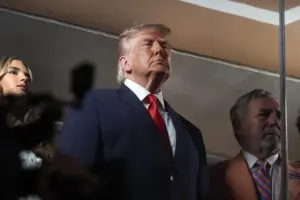
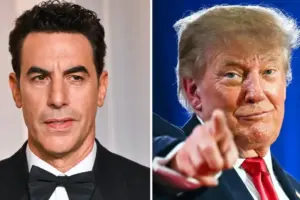
Among the most discussed relics of Baron Cohen’s satirical past is his legendary 2003 interview with Donald Trump, filmed during the height of Da Ali G Show. During a recent live taping of Josh Horowitz’s Happy Sad Confused podcast at New York’s 92nd Street Y—as well as a subsequent appearance on Kara Swisher and Scott Galloway’s Pivot podcast—Baron Cohen offered unprecedented, behind-the-scenes insights into his interaction with the real estate mogul-turned-politician.
Far from dismissing Trump as a mere buffoon, Baron Cohen reflected candidly on the "power moves," calculated intimidation tactics, and unrecognized tactical brilliance that he believes fueled Trump’s astonishing political ascent. As Ali G: Who Iz I? introduces the infamous interviewer to a new generation, Baron Cohen’s reflections offer a compelling intersection of modern comedy, media manipulation, and political analysis.
Detailed Chronology: From Trump Tower to the 92nd Street Y
The 2003 Encounter: Inside Trump Tower
To fully understand Baron Cohen’s recent commentary, one must rewind to 2003. Long before Trump launched his 2015 presidential campaign or hosted NBC’s reality juggernaut The Apprentice, he was primarily known as a New York City real estate developer, billionaire tabloid fixture, and corporate brand. At the time, Baron Cohen and director James Bobin were touring the United States capturing footage for Da Ali G Show, a series that routinely blindsided unsuspecting public figures, academics, and politicians with absurd questions posed by the ignorant, wannabe-gangsta interviewer.
Arriving at Trump Tower for their scheduled interview, Baron Cohen and Bobin experienced firsthand the psychological conditioning often deployed by high-powered executives. While almost every other elite subject Baron Cohen interviewed was strictly punctual, Trump kept the production crew waiting for approximately 40 minutes.
During the wait, Baron Cohen recalled feeling visibly "intimidated." The tension in the green room was amplified by Trump himself, who could be heard through the walls shouting a stream of explicit, profanity-laced tirades over the phone at then-lawyer and business associate Rudy Giuliani. Baron Cohen later remarked that the shouting was loud enough to offend "the likes of delicate Jewish ears," adding that he eventually realized this theatrical display of anger was a calculated psychological tactic. "Later on, I heard that he used to do that with other people," Baron Cohen told the audience at the 92nd Street Y. "It really was a power move."
The Bait-and-Switch Reaction
The psychological chess match continued when Trump finally emerged. According to Baron Cohen, Trump was initially charmed by director James Bobin, whom the comedian described as a "very handsome, blond, Oxford-educated" Englishman. Trump reportedly assumed Bobin was the primary authority figure and intellect in the room.
However, the moment Trump realized he would not be engaging in an upscale, intellectual discourse with a polished British gentleman, but rather sitting across from Ali G—a caricature asking nonsensical questions about ice cream glove businesses and anti-gravity technology—his demeanor "immediately" shifted.
The interview was ultimately cut short when Ali G proposed a particularly ridiculous business venture involving ice cream gloves, prompting Trump to storm out of the room. Baron Cohen later learned from a companion who rode in the car with Trump immediately following the shoot that the future president was "furious."
Despite his anger, Trump’s subsequent public condemnation of Baron Cohen only fueled the comedian’s promotional machine. "He actually went out publicly a couple of times to criticize me," Baron Cohen recalled. "And in the end, we used all those clips and used them to advertise another show that I did."
The Live Taping at the 92nd Street Y
Flash forward more than twenty years. Seated across from host Josh Horowitz at New York City’s prestigious 92nd Street Y, Baron Cohen—now promoting Ali G: Who Iz I?—deconstructed the anatomy of that 2003 interview. Rather than relying solely on easy laughs, the comedian engaged in a nuanced psychological autopsy of his former subject.
Baron Cohen argued that society made a critical, recurring error in evaluating Trump’s political viability. By consistently writing him off as a "nincompoop" or a punchline, political opponents and media analysts fundamentally misunderstood his resilience, adaptability, and enduring electoral appeal.
Supporting Context & Metrics: The Anatomy of Satire and Political Appeal
Deconstructing the Comedy of the Far-Right
Baron Cohen’s analysis of Donald Trump extended beyond historical anecdotes during his media tour. During a joint appearance with Kara Swisher and Scott Galloway on the Pivot podcast, the comedian offered a striking assessment of Trump’s rhetorical style, identifying humor as a core component of his political arsenal.
"He’s amusing," Baron Cohen told Swisher and Galloway, noting that there is "a huge amount of comedy in the way he speaks."
Rather than viewing Trump’s colloquialisms, hyperbole, and rally banter as accidental gaffes, Baron Cohen argued that the delivery is often deliberate and calculated. "He’s intentionally being funny," Baron Cohen explained. He further observed that modern political movements—particularly on the far right—have successfully weaponized comedy, irony, and sarcasm as defensive shields to deflect serious journalistic scrutiny and dismiss valid criticisms.
The "Elements of Brilliance"
By acknowledging these strategic communication tactics, Baron Cohen arrived at a sobering conclusion regarding Trump’s unprecedented political longevity and his return to the White House for a second term.
"We were too easy to dismiss him as a nincompoop," Baron Cohen reflected during the 92nd Street Y conversation. "There are elements of brilliance to him, otherwise. And that explains his appeal with the fact that he’s there for a second term, the fact that he’s transforming this country. I won’t say positively or negatively."
This objective framing highlights a central tension in Baron Cohen’s own body of work. Throughout his career—from Borat and Bruno to The Dictator and Who Is America?—Baron Cohen has consistently exposed the absurdities, prejudices, and gullibility of the powerful. Yet, his recent reflections suggest a reluctant respect for figures who understand media manipulation on a mass scale. In Baron Cohen’s view, Trump’s ability to navigate, co-opt, and weaponize modern media landscapes mirrors the very subversive tactics the comedian has employed throughout his professional life.
Official Statements and Public Remarks
The press tour for Ali G: Who Iz I? has generated widespread media attention, punctuated by sharp, quotable insights from Baron Cohen regarding his interaction with American political royalty. Below are key excerpts from his recent public appearances:
-
On the Initial Meeting at Trump Tower (Josh Horowitz, Happy Sad Confused):
"As Ali G, I had the privilege of sitting with some of the smartest and most powerful people in the world, and all of them were punctual… Donald Trump kept us waiting for about 40 minutes."
-
On Trump’s Intimidation Tactics:
"I heard that he used to do that with other people. It really was a power move."
-
On Trump’s Reaction to the Prank:
"I actually met a woman who was in the car with him after that interview, and he was apparently furious. He actually went out publicly a couple of times to criticize me. And in the end, we used all those clips and used them to advertise another show that I did."
-
On Underestimating Trump’s Capabilities:
"We were too easy to dismiss him as a nincompoop. There are elements of brilliance to him, otherwise. And that explains his appeal with the fact that he’s there for a second term, the fact that he’s transforming this country."
-
On Trump’s Rhetorical Humor (Pivot Podcast with Kara Swisher and Scott Galloway):
"He’s intentionally being funny. And if you have a look on the far right, they use comedy and sarcasm as an engaging way to dismiss criticisms."
Future Outlook: The Relevance of Subversive Comedy in a Polarized World
The simultaneous theatrical and streaming release of Ali G: Who Iz I?—landing on Amazon Prime—marks a fascinating cultural milestone. Bringing back a character created in the late 1990s raises an inevitable question: Can old-school ambush comedy survive in an era of hyper-awareness, deepfakes, and hyper-polarized media?
When Baron Cohen launched Da Ali G Show, the internet was in its relative infancy, and public figures could still be caught off guard by an interviewer asking whether the sun was hotter than the moon. Today, public figures media-train extensively, and internet sleuths can dissect a press junket within minutes. Yet, as Baron Cohen’s recent reflections demonstrate, the core dynamics of power, intimidation, and media manipulation remain unchanged.
By revisiting his encounter with Donald Trump, Baron Cohen is not merely engaging in nostalgic name-dropping or promotional hype. He is drawing a direct line between the theatricality of entertainment and the mechanics of modern political power. Trump’s mastery of the news cycle, his ability to weaponize humor, and his resilience in the face of continuous institutional assault represent a level of media engagement that even the world’s most sophisticated satirists must analyze with a degree of awe.
As Ali G: Who Iz I? reaches audiences worldwide, the character serves as a nostalgic time capsule of 2000s counter-culture, while Baron Cohen’s commentary provides a sharp, contemporary lens on the populist leaders who dominate today’s global stage. In a world where the boundary between serious governance and performance art has permanently dissolved, Sacha Baron Cohen’s unique brand of provocation feels more relevant—and more complicated—than ever before.