Executive Overview
The international film co-production ecosystem converged in the Japanese capital this week for the seventh iteration of the Tokyo Gap-Financing Market (TGFM), a premier industry platform held in tandem with TIFFCOM, the content market arm of the prestigious Tokyo International Film Festival. Amidst a fiercely competitive selection of 24 international feature film projects, it was the deeply personal Taiwanese drama Uncle, directed by emerging filmmaker Yen Hao-hsuan and produced by industry veteran Patrick Mao Huang alongside Sung Chin-hsuan, that emerged as the undeniable breakout star of the event.
Capturing both the coveted Tokyo Project Award and the newly established Asian Gen-Z Award, Uncle cemented its status as one of the most anticipated upcoming arthouse titles in the pan-Asian region. The film’s twin victory highlights a growing appetite for stories that tackle complex social taboos and intimate familial dysfunctions without relying on sentimental tropes.
Beyond the triumphs of the Taiwanese delegation, the closing ceremony of the seventh TGFM served as a showcase for boundary-pushing global cinema. Notable wins included the Japanese-Canadian co-production Wild Zero Overdrive, which claimed the White Light Post-Production Award, and Brazil’s Nature Boy, which secured the Mellow Tunes Sound Design Award. This report provides an exhaustive, multi-faceted analysis of the award-winning projects, the jury’s deliberations, the strategic mechanics of the Tokyo Gap-Financing Market, and the broader socioeconomic implications of the recognized films on the global festival circuit.
Detailed Chronology of the 7th TGFM Awards Ceremony
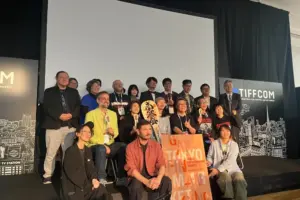
The culmination of the seventh Tokyo Gap-Financing Market unfolded on Friday afternoon, hosted with poise by TIFFCOM managing director Ikeda Kaori. The ceremony brought together a high-profile assembly of international producers, festival programmers, financiers, and directors, all vying for crucial in-kind support, post-production services, and international visibility to bridge their final financing gaps.
The event’s jury was comprised of heavyweight industry professionals: Nam Jongsuk, programmer at the Bucheon International Fantastic Film Festival and managing director of the Network of Asian Fantastic Films (NAFF); Meiske Taurisia, a renowned producer at Palari Films; and Paolo Bertolin, a veteran consultant for the Venice International Film Festival.
The Rise of Uncle: A Double Victory
The ceremony’s proceedings shifted dramatically when Uncle was announced as the recipient of the Asian Gen-Z Award—a special prize now in its second year, carrying a cash incentive of JPY 500,000 (approximately $3,300 USD). Uniquely positioned, this award is adjudicated by a specialized committee of five film students drawn from prominent universities and graduate programs, charged with identifying a project that possesses undeniable resonance for audiences aged 20 to 28.
Barely moments later, as the overarching prizes for the main market were distributed, Uncle was called to the stage once more to receive the flagship Tokyo Project Award. Director Yen Hao-hsuan, visibly moved by the double victory, admitted to the press that he had entered the market with modest expectations.
"I certainly didn’t expect to win both of these honors," Yen remarked following the ceremony. "I will take this incredible energy, validation, and financial momentum straight into the physical production and finishing phases of the film."
Genre Revival and Latin American Craft
Following the Taiwanese sweep, the spotlight shifted across genres and geographies. The Japanese-Canadian co-production Wild Zero Overdrive, produced by Takegei Company Limited, captured the White Light Post-Production Award. The honor grants the production $25,000 worth of state-of-the-art post-production services courtesy of Thailand’s premier post-house, White Light. True to the anarchic spirit of the film’s punk-rock roots, the acceptance portion devolved into a joyful, communal shout of "Rock and roll!" shared by winners and presenters alike.
Rounding out the major grants, the Brazilian feature Nature Boy, directed by Matias Mariani and steered by production powerhouse Primo Filmes, secured the Mellow Tunes Sound Design Award. This prize unlocks up to $10,000 in specialized sound design and mixing services from Thailand-based Mellow Tunes, offering a vital resource to elevate the film’s sonic landscape ahead of international festival submissions.
Supporting Context & Metrics: The Anatomy of a Winning Project
To understand why Uncle captured the imagination of both student juries and veteran festival programmers, one must examine its genesis, creative lineage, and thematic architecture.
The Personal Genesis of Uncle
Set against the rural backdrop of Taiwan between the tumultuous years of 1997 and 2000, Uncle is fundamentally a work of autofiction. Director Yen Hao-hsuan drew directly from his own formative 18-year experience living alongside his uncle, a man diagnosed with an intellectual disability.
The narrative explores a deeply uncomfortable, rarely discussed psychological terrain: a young boy’s initial profound devotion to his uncle slowly metastasizes into feelings of shame and alienation as the boy grows older, enters adolescence, and eventually leaves his rural home for the wider world. By interrogating the fragile boundaries of familial duty, societal stigma, and maturing egoism, the film avoids easy moral binaries.
Production Pedigree and Regional Circuit Momentum
A project of this thematic weight requires experienced hands to navigate international financing structures. Uncle is backed by producer Patrick Mao Huang, the founder of Flash Forward Entertainment. Huang’s production credits are formidable, notably including Tiger Stripes, the critically acclaimed genre-bending feature that won the Grand Prize at the Cannes Critics’ Week. Co-produced alongside Sung Chin-hsuan, the project has maintained a rigorous festival-market itinerary. Prior to its triumph in Tokyo, Uncle made its initial Asian market debut earlier in the month at the prestigious Busan Asian Project Market (APM), where it successfully courted early international interest.
Institutional Support: TGFM and TIFFCOM Metrics
The Tokyo Gap-Financing Market continues to grow as a vital nexus for global co-productions. Operating as a core pillar of TIFFCOM—Japan’s largest content market—TGFM specifically targets producers of feature-length fiction films, animations, and series who have secured a portion of their financing (typically at least 70%) but require a final financial push, co-production partners, sales agents, or post-production collaborators to greenlight principal photography.
The 2024 edition curated a rigorous selection of 24 distinct projects from across the globe, spanning diverse aesthetic traditions, budget tiers, and narrative formats. Through organized one-on-one meetings, project pitches, and networking mixers, TGFM functions as an economic engine designed to transform promising screenplays into globally distributed cinematic realities.
Official Statements and Jury Perspectives
The critical consensus surrounding the winning projects reflects a broader industry shift toward uncompromising storytelling, authenticity, and cross-cultural resilience.
Juror Insights on Uncle
Nam Jongsuk, speaking on behalf of the TGFM main jury, offered a sharp critique of conventional melodramas and explained precisely why Uncle stood out among the 24 competing titles:
"This project looks unflinchingly at modern society and bravely goes against prevailing social prejudices, refusing to sugarcoat its subject matter," Nam stated. "As a jury, we were looking for a cinematic voice that refuses to compromise. We hope and trust that Yen will deliver an uncompromising piece of cinema that challenges audiences globally."
The student committee responsible for the Asian Gen-Z Award echoed these sentiments, emphasizing the timely, urgent nature of Yen’s vision:
"Above all, the student jury recognized this as a story that fundamentally demands to be told right now," the representatives noted in their official citation. "What impressed us most was how the film successfully resists simplistic emotional appeals, choosing instead to portray the raw, unfiltered complexities of human relationships."
Bridging Cultures: The Frontières Partnership
The triumph of Wild Zero Overdrive also underscores the growing institutional linkages between Asian and Western genre markets. The film arrived in Tokyo via the Frontières fiction feature selection—the direct result of an inaugural strategic partnership between TIFFCOM and the co-production market of Canada’s renowned Fantasia International Film Festival.
Directed by Takeuchi Tetsuro, Wild Zero Overdrive serves as a direct follow-up to his legendary 1999 cult classic Wild Zero. The production reunites the filmmaker with the iconic, real-life Japanese punk band Guitar Wolf, who famously headlined the original film and lent their leather-clad, garage-rock ethos to the franchise’s enduring global legacy. By integrating Canadian co-production frameworks with classic Japanese rock-and-roll sensibilities, the project exemplifies the modern cross-border alliances championed by TIFFCOM.
Future Outlook: What Lies Ahead for the 2024 TGFM Slate?
As the seventh Tokyo Gap-Financing Market draws to a close, the immediate focus for the awarded filmmakers shifts from the pitching room to the editing suite and production set.
The Road Ahead for Uncle
For Yen Hao-hsuan and producers Patrick Mao Huang and Sung Chin-hsuan, the dual victories in Tokyo and Busan provide critical momentum. Securing the Tokyo Project Award not only grants prestige but acts as a powerful seal of approval for international sales agents and secondary funding bodies. With its financing gaps closing, Uncle is well-positioned to move toward principal photography. Given the pedigree of Flash Forward Entertainment and the universal resonance of its coming-of-age-meets-family-disability narrative, the film is an early favorite for selection at major international film festivals (such as Berlin, Cannes, or Locarno) upon its completion.
The Evolution of the Asian Gen-Z Award
The continued success of the Asian Gen-Z Award—now entering its second successful year—signals a vital demographic evolution within the Tokyo International Film Festival ecosystem. By empowering film students to curate projects that speak directly to the 20-to-28 age bracket, TGFM ensures that the festival market remains attuned to shifting youth consumption patterns, digital-age storytelling sensibilities, and emerging thematic urgencies.
Conclusion
The 2024 Tokyo Gap-Financing Market has once again proven its mettle as an indispensable incubator for global cinema. By rewarding bold, socially conscious narratives like Uncle, boundary-pushing genre revivals like Wild Zero Overdrive, and deeply textured auteur projects like Nature Boy, TGFM reaffirms that international co-production remains the beating heart of independent filmmaking. As these projects utilize their newly won grants, post-production services, and cash prizes to cross the finish line, audiences worldwide can look forward to a wave of uncompromising, beautifully crafted cinematic visions hitting the silver screen in the coming years.