Executive Overview
The intersection of artificial intelligence, grief, and commerce has long been explored in science fiction, yet few cinematic works dare to examine this modern frontier through the lens of a black dramedy. Enter Talk to Me When You Are Dead, the ambitious debut feature from Singaporean filmmaker Alvin Lee. Currently making waves at the Asian Project Market (APM)—housed within the Asian Contents & Film Market (ACFM) at the Busan International Film Festival—the project tackles a deeply unsettling contemporary phenomenon: the monetization of human memory and the rise of the digital afterlife.
Produced by acclaimed filmmaker Anthony Chen alongside Gina Tan, the near-future narrative follows Yong Yi, a widowed programmer who builds a digital replica of his late wife, Kate, merely to survive the crippling isolation of his grief. What begins as an intimate, desperate coping mechanism quickly morphs into an enterprise when an opportunistic friend spots a lucrative gap in the market. Together, they launch a startup dedicated to selling "grief-bots" to the newly bereaved.
As the business scales, Yong Yi is hired for a clandestine, high-paying assignment: to quietly record the memories of a terminally ill, celebrated architect named Mr. Yun. Under the guise of a casual acquaintance, Yong Yi infiltrates the dying man’s life to extract the data needed for his digital twin. Yet, as the two form a bond mirroring that of a father and son, moral lines blur. When Mr. Yun’s health deteriorates, Yong Yi faces a harrowing ultimatum—prioritize the lucrative corporate contract or protect the fragile, living human who has unexpectedly mended his fractured spirit. This escalating crisis finally forces the programmer to confront the unresolved trauma surrounding Kate’s death.
Far from being a purely cynical take on technology, Talk to Me When You Are Dead examines the delicate equilibrium between genuine human connection and digital preservation. Rooted in the personal grief of its director and shaped by some of Southeast Asia’s most formidable cinematic minds, the project stands poised to redefine how international audiences conceptualize loss in an era dominated by synthetic media.
Detailed Chronology and Narrative Genesis
The conceptual roots of Talk to Me When You Are Dead trace back four years, germinating in the fertile, albeit painful, soil of personal tragedy. At the time, director Alvin Lee was navigating the suffocating aftermath of his best friend’s untimely death. While wrestling with this profound loss, Lee received an unusual request from a relative who asked him to use emerging generative AI tools to create a moving video tribute of a deceased family member.
Reluctantly, Lee complied. The resulting artifact delivered an immediate, potent wave of comfort to the grieving family—a paradox that has haunted the filmmaker ever since.
"I made it, and it gave real comfort to people I love, and I still do not know what to think about that," Lee reflects. "The person in it was not really him, but the comfort it created was real. That contradiction became the starting point of the film."
Rather than rushing the concept to paper, Lee allowed the thematic complexities to marinate over several years of artistic development. The screenplay underwent rigorous structural revisions, evolving through multiple iterations before arriving at its current, highly polished third draft. This meticulous development process caught the attention of producer Anthony Chen, who had monitored Lee’s trajectory since his student days in film school. Chen collaborated closely with the emerging director to distill his raw personal experiences into a commercially viable, universally resonant feature narrative.
Following years of refinement, the project has now broken cover on the international stage at the Busan International Film Festival’s Asian Project Market. For Lee and his production team, Busan serves as the launchpad—an ideal ecosystem to introduce the film’s provocative premise to global financiers, co-producers, and industry veterans.
Supporting Context & Metrics: The Real-World Rise of the Digital Afterlife
While Talk to Me When You Are Dead is set in a speculative, near-future Singapore, its thematic heartbeat is anchored firmly in the anxieties of the present day. The global market for grief-tech, AI avatars, and digital legacy preservation is no longer confined to the realms of speculative fiction; it is a booming, multi-million-dollar industry.
The Emergence of Grief-Bots and AI Avatars
In recent years, advancements in natural language processing, voice cloning, and deepfake generation have enabled tech startups to offer "virtual resurrection" services. Companies across the globe now permit users to upload text messages, voice recordings, and video footage of deceased loved ones to train conversational AI models. These models are designed to mimic the speech patterns, quirks, and personality traits of the departed, allowing the living to text, call, or even video-chat with interactive digital avatars of the dead.
This technological leap has sparked intense ethical debates among psychologists, sociologists, and technologists. Proponents argue that grief-bots serve as a transitional bridge, helping individuals process acute bereavement by offering a sense of continued presence. Detractors, however, warn of pathological attachment, arguing that synthetic preservation short-circuits the natural grieving process, trapping individuals in an endless loop of denial and emotional stagnation.
Alvin Lee’s Philosophical Inquiry
This exact tension forms the ideological core of Lee’s debut feature. Through the trajectory of Yong Yi—who transitions from a grief-stricken user to a purveyor of synthetic mourning—the film questions whether digital preservation can ever truly substitute for the messy, irreplaceable pain of human mortality.
"We can also live in comfort and denial, but many times the pain that breaks us is part of us, and vital to our growth," Lee notes. "That is what makes us human."
By framing this existential crisis through the lens of a black dramedy, Lee ensures that the film avoids heavy-handed moralizing. Instead, it invites audiences to laugh through their discomfort, weighing the seductive convenience of technological escapism against the difficult, beautiful necessity of emotional reality.
Official Statements and Creative Collaboration
The journey of Talk to Me When You Are Dead is as much a testament to robust regional collaboration as it is to Lee’s singular vision. As a first-time feature director, Lee has secured the backing of some of the most influential figures in contemporary Asian cinema.
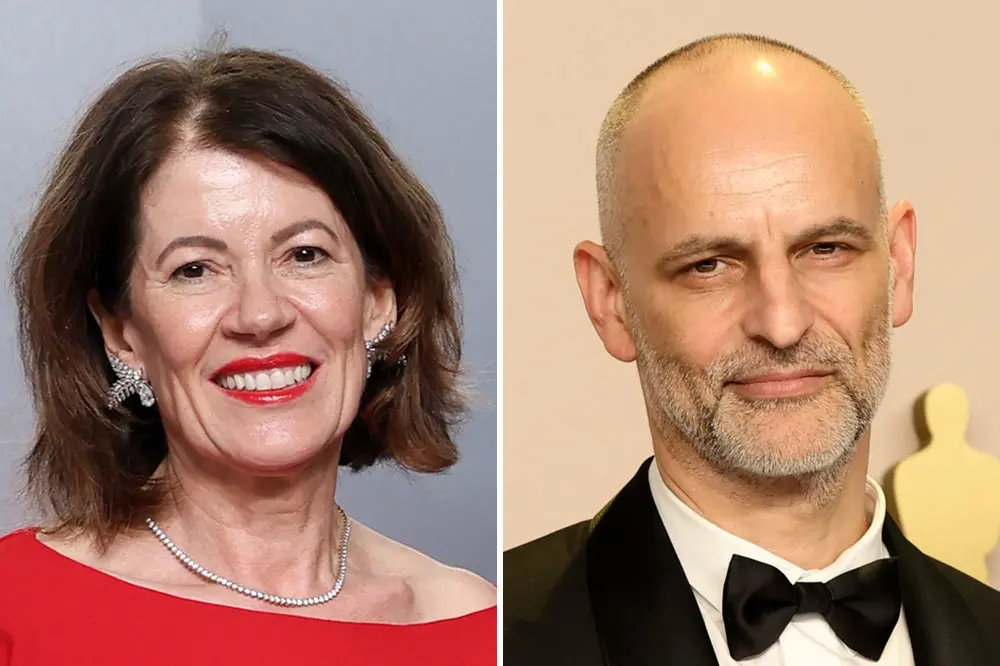
Producer Anthony Chen, whose own directorial works have consistently garnered international acclaim, recalls watching Lee’s evolution from a promising film student to a mature visual storyteller.
"It has taken a few reiterations before we landed on this idea, and I’m heartened that it comes from a personal place yet has wide universal appeal," Chen states. Chen’s oversight has been instrumental in guiding the project through its formative development stages, ensuring that the script balances its localized Singaporean backdrop with themes that transcend geographical borders.
Producer Gina Tan, who first crossed paths with Lee five years ago while collaborating on one of his short films, lauds his distinct directorial voice. Tan points to Lee’s rare ability to tackle emotionally volatile subject matter without sacrificing levity.
"He does not flinch from the hard things, but he never lets them become heavy-handed," Tan observes. "That sensibility is precisely what Talk to Me When You Are Dead demands, and precisely why he is the right person to make it."
Future Outlook: Beyond Busan and Upcoming Slate
As Talk to Me When You Are Dead makes its debut at the Asian Project Market, the primary objective for the production team is clear: secure strategic partnerships, co-financiers, and international sales agents to shepherd the film into physical production. Given the universal anxieties surrounding artificial intelligence and the commercialization of human emotion, the producers are confident that the film’s narrative footprint will easily traverse cultural boundaries.
Furthermore, the momentum generated by the Busan showcase is expected to cement Alvin Lee’s reputation as a vital new voice in regional cinema, establishing him firmly on the map as a feature director to watch.
Yet, even as Talk to Me When You Are Dead prepares for its leap from script to screen, Lee is already casting his gaze toward the horizon. The filmmaker is actively developing his next feature-length concept—a project that promises to lean further into speculative territory while remaining grounded in the socio-political realities of modern Singapore. This upcoming work aims to weave fantastical, supernatural elements into pressing contemporary issues unique to the island nation, including declining birth rates and acute land shortages.
For now, however, all eyes remain fixed on Yong Yi, Kate, and the haunting startup that sells memories to the desolate. As society hurtles blindly into an algorithmic future, Talk to Me When You Are Dead arrives not merely as a piece of entertainment, but as a timely, darkly humorous cautionary tale about the cost of outsourcing our grief to the machine.