Executive Overview
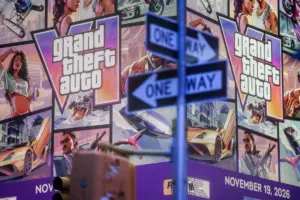
As the global entertainment industry holds its collective breath for the launch of Grand Theft Auto VI, we find ourselves at a historical inflection point. For those who witnessed the industry’s evolution from the periphery, the upcoming release is more than a commercial product; it is a "culturally destabilizing event." Much like the shift from 2D sprites to the fully realized 3D environments of the early 2000s, GTA VI represents the zenith of interactive media.
However, this seismic shift brings a cautionary tale for the corporate world. While brands are desperate to associate themselves with the "cool" factor of Rockstar Games’ magnum opus, many fail to realize that GTA VI is an ecosystem that does not require—nor desire—traditional advertising. For brands looking to capitalize on the resurgence of console gaming, the path forward requires a shift from "tourist" marketing to genuine, value-driven integration. As the gaming industry continues to dwarf the film and music sectors in total revenue, the window for brands to establish an authentic footprint is closing.
A Chronology of Change: From E3 2001 to the Modern Era
To understand the gravity of the current moment, one must look back to the turning point of the medium. I recall standing on the E3 floor in 2001, controller in hand, experiencing Grand Theft Auto III for the first time. Having played GTA 2 on PC, I expected an iterative upgrade; what I received was a paradigm shift.
It was a fully realized, breathing 3D open world—a city that felt populated, volatile, and teeming with possibility. Characters possessed distinct personalities, and the gameplay loop rewarded curiosity rather than linear progression. This was the moment Rockstar Games defined the "open world" blueprint that would dominate the next two decades.
My professional trajectory followed this same arc, moving from the Pokémon Trading Card Game at Wizards of the Coast to the Madden NFL franchise at EA SPORTS, where I served as Vice President of Brand Marketing. Throughout these roles, a fundamental truth became clear: the connection between a game and its fanbase is a sacred, high-fidelity link. Gamers represent an untapped "blue ocean"—an enormous, highly engaged, and discerning audience that can spot a disingenuous marketing campaign from a mile away.
Supporting Context & Metrics: The Resurgence of Console Gaming
The narrative that gaming is a "niche" hobby is dead; it is now the dominant global entertainment segment. Industry data partner Circana reports a 40% year-over-year increase in physical video game software unit sales, while digital marketplaces are shattering concurrent user records on a monthly basis.
The hardware landscape is equally robust. With over 150 million new-generation consoles currently in the wild, the install base has never been more primed for high-fidelity experiences. Grand Theft Auto VI is not merely another title in a series; it is the "tip of the spear" for a new era of console dominance.
Projections suggest GTA VI will transcend the traditional metrics of gaming success. It is widely expected to outperform the most significant entertainment launches in history, including Avengers: Endgame. Financial analysts anticipate the title will generate more revenue than the combined box office returns of Avengers: Doomsday and Dune: Part Three. This is a level of "cultural gravity" that forces all other forms of media—film, television, and music—to pivot and imitate, rather than compete.
The Pitfalls of "Brand Tourism"
In the wake of this anticipation, a wave of brands is attempting to dip their toes into the gaming market. Many are trying to replicate the aesthetic of the GTA universe to capture a fragment of its audience. This is a strategic error.
Grand Theft Auto is inherently satirical and counter-cultural. It is not a home for risk-averse, "safe" advertising campaigns. Furthermore, Rockstar Games does not need a brand marketing partner. When a product is guaranteed to sell millions of units on day one, there is no external brand partnership that can "move the needle."
Brands attempting to force their way into the GTA ecosystem are akin to tourists in a foreign land who expect the locals to speak their language. Instead, companies should seek out gaming properties that align with their specific cultural ethos—partnerships where both parties are seeking support and where the brand can offer genuine utility to the community.
Successful Blueprints: Authenticity as the New Currency
For brands that have moved beyond the "tourist" phase, the rewards have been significant. Success in gaming is not found in billboards or standard pre-roll ads; it is found in tangible value.
The OPI/Xbox Partnership: Addressing the Underserved
Women comprise 50% of the video game audience, yet they have historically been marginalized in gaming marketing. OPI, the beauty brand, recognized this gap. By partnering with Xbox to create a nail polish line themed around gaming, they weren’t just selling a product; they were acknowledging an identity. The campaign, which included experiential activations in Target stores and the Sunkissed Vibes OPI Special Edition Xbox Controller, resulted in immediate sellouts. It was a masterclass in proving that gaming is not a monolithic "boys’ club."
IKEA: Solving the Physical Environment
IKEA’s approach was rooted in problem-solving. By collaborating with top gaming designers, they addressed the physical realities of the gaming lifestyle: cord clutter, poor posture, and the need for adaptable living spaces. By improving the actual environment in which the consumer games, IKEA earned its place in the community through utility rather than superficial association.
Fanta: Global Scale through Exclusive Rewards
Fanta’s partnership with Xbox demonstrates how to leverage mass-market reach with gaming-specific rewards. By distributing promotional cans across sixty countries and featuring the exclusive "Fanta Crimson Sour Cherry" flavor, they bypassed the need for traditional media spend. The activation garnered over a billion online impressions before a single dollar was spent on paid media—proof that when you provide something gamers actually want (in-game rewards), the community becomes your marketing department.
Trolli: The "Always-On" Strategy
Trolli recognized early on that gaming was the primary hobby of their demographic. By moving away from one-off campaigns and into an "always-on" strategy—centered on the League Trolli esports program and consistent CPG collaborations—they built a reliable, long-term relationship. This consistency is what separates brands that "get it" from those that simply pay for placement.
Future Outlook: The Next Thirteen Years
Grand Theft Auto V launched in 2013 and has sold over 230 million copies to date. It has remained a cultural fixture for over a decade. As we look toward the launch of GTA VI, the question for brands is not "How do we get in on the GTA hype?" but rather "How do we build a long-term strategy for the biggest entertainment market in the world?"
The era of the "brand tourist" is over. Gaming is no longer a subculture; it is the culture. Companies that continue to treat gaming as an advertising billboard rather than a community will find themselves locked out of the most important demographic of the 21st century.
We have spent thirteen years watching the evolution of this space. Brands that fail to develop a strategy now will find themselves looking back in another thirteen years, wondering why they remained spectators while the rest of the industry captured the attention of the world. The lesson is clear: provide value, respect the community, and stop trying to buy your way into spaces that have already defined their own rules. The future of entertainment is here; it’s just a matter of whether your brand is ready to play by the rules of the game.