Executive Overview
The global iron and steel industry, a cornerstone of modern civilization, faces a profound existential challenge. Responsible for a staggering share of global carbon emissions, the sector has long been targeted by green-tech startups aiming to revolutionize metal production through hydrogen-based reduction or alternative smelting techniques. However, a San Francisco-based innovator, Helix Carbon, argues that the industry’s path to net-zero is being fundamentally misunderstood.
Rather than advocating for the wholesale replacement of legacy infrastructure, Helix Carbon proposes a surgical, high-efficiency intervention: cleaning up the blast furnace from within. By leveraging advanced electrolysis to convert waste carbon dioxide into reusable fuel, the startup aims to slash carbon emissions while simultaneously bolstering the razor-thin profit margins that define the iron industry. With a $2 trillion market at stake, Helix Carbon’s approach represents a paradigm shift—moving from the "replace-at-all-costs" mentality toward a pragmatic, retrofitted future that respects the longevity of industrial assets.
The Anatomy of the Iron Problem: A Centuries-Old Legacy
To understand why Helix Carbon’s mission is so critical, one must first examine the blast furnace, an industrial marvel that has remained largely unchanged in its fundamental chemistry for centuries.
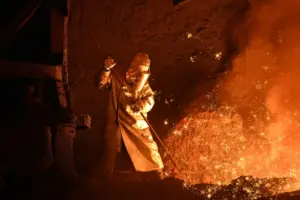
Blast furnaces operate as massive vertical reactors where iron ore, limestone, and coke—a dense, carbon-rich byproduct of coal—are fed into the top. As the coke burns, it provides both the immense thermal energy required to liquefy iron and the chemical reducing agent necessary to strip oxygen from iron ore. This process is essentially a massive carbon-stripping exercise, where oxygen atoms are pulled away from iron oxides to produce metallic iron.
The byproduct of this chemical marriage is massive: carbon dioxide (CO2). For generations, this gas has been treated as a worthless, unavoidable waste product, vented into the atmosphere. The sheer scale of this output is the primary reason the steel industry is often labeled one of the most difficult "hard-to-abate" sectors in the global economy.
The "Replace vs. Retrofit" Debate
Many startups have emerged with the singular goal of "disrupting" steel by bypassing the blast furnace entirely. Proposals for hydrogen-based direct reduction (DRI) have gained significant traction, promising a cleaner future. However, David Brown, co-founder and CEO of Helix Carbon, offers a sobering assessment: "Any attempt to decarbonize the steel industry without dealing with the blast furnace is not going to work."
Brown’s argument is rooted in economic and physical reality. Blast furnaces are not merely machines; they are colossal, multi-billion-dollar infrastructure investments designed to last for decades, sometimes over a century. Expecting the industry to scrap trillions of dollars in functional equipment is, in Brown’s view, a non-starter. By focusing on retrofitting rather than replacing, Helix Carbon positions itself as an ally to the steelmakers rather than an adversary.
The Helix Carbon Process: Circular Chemistry
The core innovation at Helix Carbon lies in its proprietary electrolyzer technology. While the concept of electrolysis—using electricity to drive a chemical reaction—is a staple of industrial chemistry, its application in the context of blast furnace exhaust has historically been thwarted by the impurity of the gas streams.
Handling the "Dirty" Exhaust
Traditional electrolyzers are notoriously delicate. They generally require high-purity CO2 to function, necessitating complex and costly pre-processing stages to strip away other gases present in industrial exhaust. This pre-processing adds layers of expense that often render carbon capture and utilization (CCU) projects economically unviable.
Helix Carbon has engineered a robust electrolyzer system designed to handle raw, unpurified exhaust directly from the blast furnace. This capability is a significant technical leap. By feeding the exhaust stream into the device, the system utilizes a catalyst to split the CO2 into carbon monoxide (CO) and oxygen. This regenerated carbon monoxide is then recycled back into the blast furnace, where it serves as a potent reducing agent.
The Economic Upside
By reintegrating carbon monoxide into the furnace, the plant can significantly reduce its reliance on coke. This creates a dual-benefit system:
- Environmental Impact: By recycling carbon, the facility lowers its net CO2 footprint.
- Economic Efficiency: Coke is a significant operating expense. By replacing a portion of this coal-based fuel with recycled gas, iron producers can optimize their costs.
Brown notes that estimates on coke reduction vary—some scientific literature suggests up to 90% displacement is possible, while conservative models sit in the 30% to 40% range. Helix Carbon is targeting a conservative, reliable 33% reduction as its initial benchmark, promising a savings of roughly $14 per ton of iron produced. In an industry where profit margins are notoriously thin, $14 per ton is not merely a rounding error; it is a transformative shift in the bottom line.
Supporting Context: Metrics and Market Realities
The steel industry is a gargantuan $2 trillion global market. Its slow pace of innovation is not necessarily a failure of imagination, but a consequence of the immense capital intensity of the sector. When a blast furnace is built, it is a commitment for the next 50 to 100 years.
To bridge the gap between initial development and widespread industrial adoption, Helix Carbon is deploying a dual-track strategy. While they continue to refine their core technology for steel producers, they are also pivoting toward the specialty chemicals sector.
Diversifying Revenue Streams
"We don’t need to capture the CO2 first," Brown explains. "We just utilize it, and that opens up the door of making chemicals on-site right out of waste streams." By deploying their electrolyzers in chemical manufacturing contexts, Helix can generate immediate revenue, validate their technology at scale, and demonstrate the reliability of their systems in industrial environments. This "commercial beachhead" strategy provides the necessary runway for the longer-term, higher-stakes integration into the global steel industry.
Official Statements and Industry Reception
The presentation of Helix Carbon at the Startup Battlefield during TechCrunch Disrupt 2024 brought the company into the spotlight, marking a critical milestone in their journey. The reception from industry experts and investors highlights a growing appetite for "pragmatic climate tech"—solutions that do not require a complete overhaul of global infrastructure but instead offer a smarter way to manage existing systems.
The focus on profitability is perhaps the most compelling aspect of their pitch. In the world of climate technology, the "green premium" (the extra cost of choosing a clean technology over a dirty one) is often the death knell for a startup. By framing decarbonization as an efficiency gain rather than an environmental tax, Helix Carbon aligns its interests with those of the heavy industrial operators who ultimately hold the keys to the furnaces.
Future Outlook: A Pragmatic Path to Net Zero
The path forward for Helix Carbon is clear but demanding. Scaling electrolyzer technology to the sheer volume of a blast furnace is a monumental engineering challenge. It requires not just technical prowess but the ability to integrate seamlessly into existing, high-pressure industrial workflows.
However, the potential impact is immense. If Helix Carbon can successfully demonstrate that blast furnaces can be decarbonized without being dismantled, they will have solved one of the most stubborn riddles of the energy transition.
As the world moves toward more stringent carbon regulations, the steel industry will find itself under increasing pressure to adapt. Companies that can provide a "drop-in" solution—one that lowers emissions while improving margins—will likely find themselves at the center of a massive industrial pivot. Helix Carbon is not attempting to rewrite the laws of thermodynamics or ignore the realities of global manufacturing; they are simply proposing that we use our existing resources with a much higher degree of intelligence.
In the coming years, the success of companies like Helix will be measured not just in tons of carbon avoided, but in their ability to endure the slow, steady, and inevitable transformation of the industrial heartland. For now, the eyes of the climate-tech world remain fixed on San Francisco, waiting to see if this startup can indeed turn the "dirty" blast furnace into a model of circular, modern efficiency.