Executive Overview: A Steady Hand in a Turbulent Market
In the volatile ecosystem of modern venture capital, where "move fast and break things" has evolved into "scale at all costs or perish," Benchmark remains a glaring outlier. For 31 years, the firm has cultivated a reputation for lean operations, profound founder loyalty, and a refusal to be swept up by the FOMO-driven investment cycles that characterize Silicon Valley.
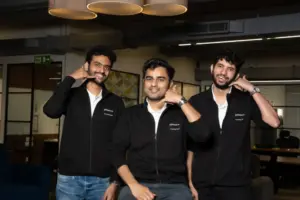
As the industry grapples with the fallout of the AI funding frenzy and shifting economic indicators, Benchmark’s five partners—Peter Fenton, Eric Vishria, Chethan Puttagunta, Ev Randall, and Jack Altman—appeared on stage at this year’s TechCrunch Disrupt to reaffirm their commitment to a model that prizes craft over volume. Despite the firm’s recent decision to raise a $2 billion combined fund—only the second time in three decades it has deviated from its historically smaller capital vehicles—the partners insist the DNA of the firm remains unchanged. In an era of infinite information and "X-fueled" market hysteria, Benchmark continues to operate without formal agendas, focusing on a deeply concentrated portfolio and an intimate, partner-driven approach to company building.
Detailed Chronology: Evolution and Continuity
Adapting to an Inflated Economy
Benchmark’s recent fundraising milestone—$2 billion across core and growth funds—raised eyebrows among market observers who have long associated the firm with modest, highly agile vehicles. Partner Peter Fenton addressed this evolution with characteristic candor. "The craft that hasn’t changed is the core fund: working closely with founders at the beginning," Fenton noted. "It’s usually a 10-to-15-year commitment, working shoulder to shoulder, and that doesn’t scale."
Fenton admitted that for two decades, the firm’s decision to hold its core fund at $500 million was likely a tactical error. As the global economy underwent significant inflationary shifts, the firm’s capital capacity failed to keep pace with the market, essentially creating a "fork in the eye" for opportunities that required greater follow-on support. By launching a $1.25 billion growth fund, Benchmark is not abandoning its early-stage identity; rather, it is acquiring the "permission" from the ecosystem to nurture its winners through their entire lifecycle, preventing the loss of 10x to 1,000x return opportunities that were previously restricted by the firm’s early-stage focus.
The Power of the Small Partnership
The recent additions of Ev Randall and Jack Altman have tested the cohesion of the storied firm, yet the transition appears seamless. Randall, who brings experience from firms like Founders Fund, Bond, and Kleiner Perkins, highlights the stark difference in the Benchmark experience. "Some [firms] are very hierarchical, with a 50- or 60-person investment team," Randall observed. "I was drawn to small partnerships because they allow a higher level of throughput and fidelity in your conversations… you’re going out on the field together, like a sports team."
For Jack Altman, who joined in February after successfully managing his own firm, the move was motivated by a desire for depth over breadth. "So much in this industry gets tied up in money and status," Altman remarked. "What I felt from the Benchmark team… is a group that really cares about founders."
Supporting Context & Metrics: The "No Agenda" Philosophy
The Efficiency of Unstructured Meetings
Perhaps the most distinctive feature of Benchmark’s internal culture is the Monday partner meeting, which famously carries no agenda. Eric Vishria describes this as an "ongoing conversation" rather than a bureaucratic process. "In a time of rapid change, you’re trying to figure out what’s becoming possible that wasn’t possible six months ago, and who’s bending light," Vishria explained.
This lack of formal structure is not mere informality; it is a strategic asset. By avoiding the rigid CRM-heavy, vote-based systems of larger VC houses, Benchmark preserves the ability to be reactive. When a founder faces a crisis—whether it be executive recruitment or a strategic pivot—the partners are fully unencumbered, ready to deploy their collective attention to the problem at hand.
Polarization and the "Shark Tank" Myth
Unlike the dramatic, television-ready portrayals of venture capital, Benchmark eschews the "winner/loser" binary. Fenton emphasized that the firm’s brand is built on a sense of "awe" at the potential of new ventures rather than a cocksure attitude. "If someone in the room doesn’t like you, we’re not a great partner," Fenton noted, highlighting that the firm views polarization as a signal to be scrutinized rather than a hurdle to be jumped.
Official Statements: Navigating the AI Frontier
The Cerebras Case Study
The firm’s investment in AI chipmaker Cerebras serves as the definitive case study for the Benchmark philosophy. When the firm invested in 2016, hardware was considered a "dead" category for venture capital. Vishria recalled that Peter Fenton initially felt the pitch went against everything he had learned in venture, only to flip his perspective after a deeper review.
Today, that bet has evolved into a public company, though one subject to the intense volatility of the current market. Regarding the recent stock price fluctuations, Vishria was philosophical: "Peak to trough, it’s insane how many of [the top companies] move 500% in a year, up and down. Being a public company takes a stomach of titanium."
Macro-Hysteria vs. Ecosystem Reality
Addressing fears of an AI bubble, Ev Randall argued that much of the "chill" in the current market is a product of social media-driven misinformation. "Character.AI was the leftover corpse of a company whose founder and team were acqui-hired into Google," Randall pointed out, refuting the narrative that such bankruptcies signal a broader ecosystem failure.
Benchmark’s partners maintain that the AI ecosystem remains fundamentally healthy. The constraint isn’t a lack of demand or poor fundamentals; rather, it is the scarcity of compute for companies with high gross margins. They argue that the market volatility is exacerbated by the lack of transparency in private AI giants like OpenAI and Anthropic, and that their transition to public markets would stabilize the industry by replacing rumors with verifiable financial reporting.
Future Outlook: The San Francisco Gravity
As the "center of gravity" for technology returns to San Francisco, the partners remain convinced that physical proximity to the epicenter of AI remains a significant advantage. While they recognize that successful companies can emerge anywhere, the "ecosystem effect"—where successful founders beget new generations of talent and ambition—is currently unmatched in the Bay Area.
"Iron sharpens iron," Randall concluded. "If you want to be around peers who are going to make you the best version of yourself, it’s hard to think of a city that does that better than San Francisco."
As Benchmark moves forward, it does so with a blend of institutional experience and a fresh injection of talent. Despite the noise of the public markets and the pressures of a massive new fund, the firm remains anchored to its core belief: that in an era of automated, hyper-accelerated business, the most valuable commodity remains the focused, high-fidelity human relationship between investor and founder. Whether this steady, low-volume approach can continue to dominate in an era of massive, compute-heavy AI infrastructure remains the industry’s most compelling question. For now, Benchmark is betting that the fundamentals of human partnership are the only thing that won’t go to zero.