Executive Overview: A Study in Controlled Velocity
In the hyper-accelerated world of modern venture capital, where the mantra is often "deploy or die," Benchmark remains a profound outlier. For over three decades, the firm has operated as a bastion of discipline, resisting the industry-wide trend toward bloated teams and frenetic investment cadences. As the firm marked a historic shift this summer—announcing $2 billion across two funds—the tech world braced for a pivot toward the aggressive, high-volume strategies favored by competitors.
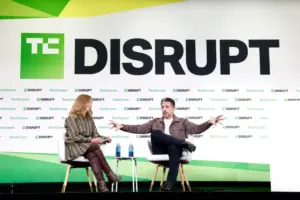
However, a candid session at TechCrunch Disrupt with Benchmark’s five general partners revealed a firm that has evolved its capital structure while doubling down on its idiosyncratic, low-volume roots. Despite the shifting tides of the AI gold rush, Benchmark’s core philosophy remains unchanged: maintain a lean, high-trust partnership, avoid the "management-by-spreadsheet" trap, and continue the decades-long, agenda-free conversation that defines their decision-making process.
Detailed Chronology: An Evolution in Mandate
Benchmark’s 31-year history is defined by a consistent, conservative structure. For two decades, the firm held its core fund at $500 million, a deliberate limitation that kept the partnership focused on early-stage, high-conviction bets. The recent decision to scale up—marking only the second time in the firm’s history that it has significantly altered its vehicle size—was not a pursuit of vanity, but a pragmatic response to economic inflation and an expansion of the firm’s investment mandate.
Peter Fenton, a veteran partner at the firm, characterizes the expansion of their growth fund as a necessary adjustment. "We held the core fund at $500 million for 20 years, and it has just inflated to be consistent with the existing economy, which we hadn’t done," Fenton explains. The introduction of the growth fund is, in his words, an effort to stop "a fork in our eye." Previously, the firm was forced to pass on massive follow-on opportunities because their mandate was strictly capped at the early stage. By creating a dedicated growth vehicle, they are capturing the value they previously left on the table.
The Human Element: Why Small Teams Outperform
The arrival of new partners like Ev Randall and Jack Altman has sparked questions about whether the firm’s culture can survive the injection of new blood. Randall, whose resume includes stints at Founders Fund and Kleiner Perkins, notes that the appeal of Benchmark is its rejection of the "Byzantine corporate structures" that plague larger firms.
"Every firm is ultimately a collection of the people within it," Randall notes. "I was drawn to small partnerships because they allow a higher level of throughput and fidelity in conversations." For Benchmark, that "fidelity" is maintained through a flat hierarchy where the five partners operate more like a sports team than a boardroom.
Jack Altman, who joined in February after running his own firm, echoes this sentiment. Despite the temptation to chase the status that defines much of the venture industry, Altman found a group that prioritizes founder relationships over deal count. "There’s no better place to learn," he says, emphasizing that the "no-onboarding" culture—a trial-by-fire approach—is designed to integrate new partners into the firm’s unique, intuition-based decision-making loop.
Supporting Context: The "No Agenda" Philosophy
Perhaps the most striking aspect of the Benchmark model is its rejection of systematic bureaucracy. During their Monday partner meetings, there is no agenda. There is no rigid CRM-driven voting process. Instead, there is an ongoing, fluid conversation about the landscape of innovation.
Eric Vishria describes this as a "decades-long conversation" that only works because the partners genuinely enjoy one another’s company. "You can try to systematize it," Vishria says, "but one of the beauties of five people is you don’t have to." By maintaining this space, the partners remain reactive. When a founder needs a strategic hire or a high-level introduction, the partnership is not tied up in internal politics; they are entirely at the founder’s disposal.
This lack of structure is a calculated risk that pays off in speed and authenticity. When asked if one partner can "kibosh" a deal, the answer is remarkably elusive. Because the firm does not operate on a volume-based model, they don’t need the "rigor" of 100-plus investments a year. They look for consensus, but more importantly, they look for conviction. As Fenton points out, "If someone in the room doesn’t like you, we’re not a great partner."
The AI Hysteria and Market Volatility
The firm remains largely unfazed by the "X-fueled hysteria" that currently characterizes the AI market. When confronted with the recent bankruptcy of Character AI, the partners treated it as an outlier—a "leftover corpse" of a company already sold—rather than a systemic indicator of a cooling AI market.
Ev Randall points out that the real, tangible demand for compute and high-gross-margin software remains robust. "There’s nothing inherently unhealthy about the AI ecosystem," he argues. "What’s unhealthy is the volatility from data points that are often untrue or exaggerated for clicks." The partners believe the market would stabilize significantly if major players like OpenAI and Anthropic were to go public, replacing the current "anonymous account" rumors with audited financial disclosures.
Regarding their own track record, the investment in Cerebras serves as the prime example of their contrarian instinct. When they first invested in 2016, it was a move that went against everything the partners thought they knew about hardware. Today, despite the stock’s volatility, the firm stands by its "heretic" founders. "If it’s consensus, why is there a startup?" Fenton asks.
Future Outlook: The San Francisco Gravity
Despite the rise of remote work and the dispersion of tech talent, the partners remain staunch believers in the San Francisco ecosystem. They acknowledge that while great companies can be built elsewhere—citing Shopify or Ramp—the "iron sharpens iron" effect of the Bay Area is currently unparalleled.
"I’m trying to think of a non-SF based company that I’ve met with in the last 18 months that wasn’t actively saying they were spending time in San Francisco," says Randall. Whether it’s opening a satellite office or a founder moving their entire operations, the gravitational pull of the city remains the strongest indicator of a company’s ambition.
As Benchmark moves forward with its larger, dual-fund strategy, the firm’s challenge will be to keep its "small-firm" DNA intact. Yet, if their performance at Disrupt is any indication, they have no intention of changing the pace that made them legendary. They will continue to bet on "heretics," meet without agendas, and, above all, wait for the right founders to call. In an industry drowning in noise, Benchmark is betting that their silence—and their focus—will remain their greatest competitive advantage.