Executive Overview: The Collision of Ambition and Reality
The global rush to dominate the artificial intelligence landscape has triggered an unprecedented surge in capital expenditure, primarily funneled into the construction of massive, energy-hungry data centers. From Northern Virginia to the high deserts of Texas, the promise of an AI-driven future has fueled a "gold rush" mentality among developers, investors, and hyperscalers. However, beneath the surface of these multi-billion-dollar announcements lies a burgeoning crisis of viability.
The reality of building AI infrastructure is increasingly colliding with the hard limits of physical reality. Developers are finding that the "data center boom" is not a simple matter of securing land and capital; it is a complex, high-stakes game of navigating local community opposition, tangled regulatory permitting processes, and, most critically, a global scramble for reliable electricity. As billions of dollars hang in the balance, industry experts and observers are beginning to ask a fundamental question: How many of these highly publicized projects will ever actually break ground?
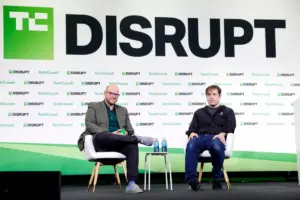
In the latest episode of TechCrunch’s Equity podcast, hosts Rebecca Bellan and Tim De Chant sit down with Brent Nelson, senior managing director of markets and strategy at Ascend Analytics, to dissect the signal from the noise. The conversation underscores a sobering truth: in the race to build the foundation for the next century of computing, many developers may be building nothing more than speculative mirages.
Detailed Chronology: From AI Euphoria to Gridlock
The current cycle of data center development began in earnest following the rapid adoption of generative AI models like GPT-4. As companies pivoted to integrate large language models (LLMs) into their product stacks, the demand for high-density computing power skyrocketed.
The Initial Phase: Unchecked Expansion
In the first wave, tech giants and specialized real estate investment trusts (REITs) announced massive data center campuses with little regard for regional constraints. These announcements were often met with cheers from local politicians eager for the promise of tax revenue and high-tech jobs. During this phase, the strategy was "land grab first, power later."
The Reality Check: 2025–2026
By early 2026, the cracks in this strategy became impossible to ignore. Several key developments signaled a shift:
- The Power Crunch: As reported by TechCrunch in May 2026, the largest U.S. power grid began showing signs of severe strain. The sudden, massive load requirements of AI servers began to threaten the stability of regional grids, leading to utility companies delaying or denying connection requests.
- The Regulatory Backlash: By August 2026, the situation in states like Texas reached a boiling point. The state government halted the approval of new data center projects, calling for rigorous audits of their impact on the power grid. This regulatory intervention served as a wake-up call for the entire industry.
- Community Resistance: Beyond the grid, data centers have faced fierce local opposition. Concerns over water usage, noise pollution, and the aesthetic impact of massive, windowless facilities have led to protracted legal battles and planning commission denials.
Supporting Context & Metrics: The Physics of AI
To understand why so many projects are facing potential cancellation, one must look at the math. A single AI data center can consume as much electricity as a small city. When dozens of these facilities are planned for a single region, the localized demand exceeds the available generation capacity by an order of magnitude.
The Grid Strain
The U.S. power grid, which was designed for a slow, predictable growth in demand, is fundamentally ill-equipped for the "lumpy" and massive spikes required by GPU clusters. Brent Nelson of Ascend Analytics notes that the industry is currently dealing with a "queuing crisis." There are far more projects in the interconnection queue than there is available power or transmission infrastructure.
The Financial Speculation
A significant portion of the current data center pipeline is speculative. Developers often announce massive projects to drive up the valuation of their land or to secure interest from private equity firms. However, without a signed Power Purchase Agreement (PPA) with a utility—which is becoming increasingly difficult to obtain—these projects remain effectively dormant.
"We are seeing a bifurcated market," Nelson explains. "On one side, you have the hyperscalers—the Amazons, the Googles, the Microsofts—who have the capital and the strategic importance to force utility cooperation. On the other side, you have independent developers who are essentially holding options on land with no viable path to power. The former will get built; the latter likely won’t."
Official Statements and Industry Insights
The Equity podcast discussion highlights that the distinction between a "real" project and a "speculative" one comes down to three factors: Permitting, Power, and PPA status.
According to Tim De Chant, a senior climate reporter at TechCrunch, the intersection of climate policy and data center growth is the next major battleground. "The irony is that to run the AI models that might help us solve climate change, we are currently forced to lean heavily on natural gas and aging coal plants because renewable energy sources aren’t being deployed fast enough to keep up with the data center load," De Chant notes.
Rebecca Bellan adds that the policy environment is shifting rapidly. "Governments are no longer giving a free pass to data centers. They are now demanding ‘net-positive’ contributions to the grid, meaning data center developers are being asked to fund new renewable energy generation or battery storage just to get a seat at the table."
Future Outlook: The Great Consolidation
As the industry matures, we are likely to see a period of significant consolidation and attrition.
1. The Rise of "Energy-First" Development
The projects that will succeed in the next five years will be those that integrate energy production directly into their business model. Expect to see data centers co-located with nuclear power plants, massive solar farms, and advanced geothermal projects. The era of building a data center near a fiber-optic node but far from a power plant is effectively over.
2. Regulatory Standardization
States and municipalities will likely adopt more stringent "AI Impact Fees" and environmental requirements. This will naturally filter out the speculative projects that lack the capital to meet these higher compliance costs.
3. The "Survival of the Most Efficient"
Investors will become more sophisticated. They will stop valuing projects based on "planned capacity" (MW) and start valuing them based on "energized capacity." The ability to secure a grid connection will become the most valuable commodity in the tech industry, arguably more valuable than the AI models themselves.
Conclusion: A Necessary Correction
The current obstacles facing the data center industry—the permitting delays, the power shortages, and the community pushback—are not signs of a failed sector. Rather, they represent a necessary correction. The reckless, speculative phase of the AI boom is giving way to a more disciplined, infrastructure-centric approach.
As Brent Nelson concludes on Equity, the developers who survive this bottleneck will be those who treat energy not as a utility bill to be paid, but as a strategic asset to be managed. For the rest, the billions of dollars in announced projects may ultimately be remembered as nothing more than a footnote in the history of the AI gold rush.
For more in-depth analysis on this topic, subscribe to the Equity podcast on YouTube, Apple Podcasts, Overcast, or Spotify. You can also follow the team on X and Threads at @EquityPod.