Executive Overview
In the static landscape of web development, CSS selectors have long served as rigid gatekeepers. Developers have traditionally been confined to hard-coded values when targeting elements via pseudo-classes like :nth-child(). If a design required a change to the mathematical pattern of an element selection—such as shifting from every 5th item to every 7th—it necessitated a manual rewrite of the CSS source code.
However, a paradigm shift is underway. With the emergence of advanced CSS features—specifically the if() conditional function and the sibling-index() property—we are moving toward a more fluid, reactive architecture. This article explores an experimental implementation that effectively "re-implements" the :nth-child() selector as a dynamic, variable-driven engine. While the utility of such a construct might seem counter-intuitive at first glance, it serves as a powerful testament to the evolving capability of modern CSS to handle logic that was once the exclusive domain of JavaScript.
Detailed Chronology: From Static to Dynamic
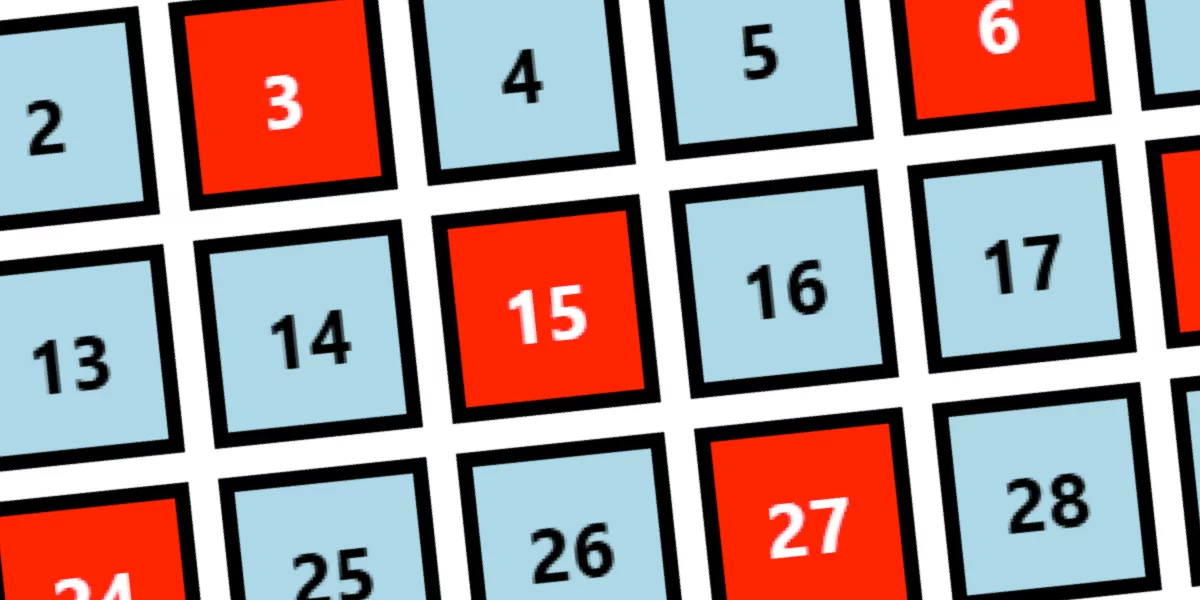
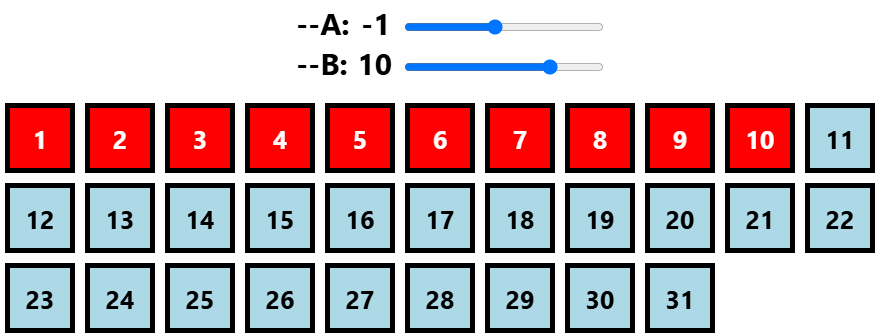
For years, the CSS specification has treated the An + B syntax of :nth-child() as a immutable constant. If a developer declared div:nth-child(5n + 8) background: red; , that rule was set in stone unless a developer manually intervened. Attempts to inject CSS variables into this pseudo-class, such as div:nth-child(var(--A)n + var(--B)), have historically failed due to how the browser parser processes selectors before variable resolution occurs.
The Breakdown of the Conventional Model
The inability to pass variables directly into the pseudo-class has forced developers to rely on complex, pre-processed CSS or runtime JavaScript class-toggling. The chronological evolution of this challenge can be viewed through three distinct phases:
- The Static Era: Developers manually defined specific index patterns. Scaling required massive duplication of code.
- The JavaScript Era: Developers offloaded the logic to scripts, adding overhead and increasing the "Time to Interactive" metrics of web pages.
- The Logic-in-CSS Era (The Present): By leveraging the
if()function and container style queries, we can now evaluate conditions directly within the style sheet, bypassing the need for selector-level variables.
Supporting Context & Metrics: The Mechanics of if()
The breakthrough here relies on two key modern features: if() and sibling-index(). These allow us to shift from "selecting" elements to "filtering" them.
Implementation: The :nth-child(B) Logic
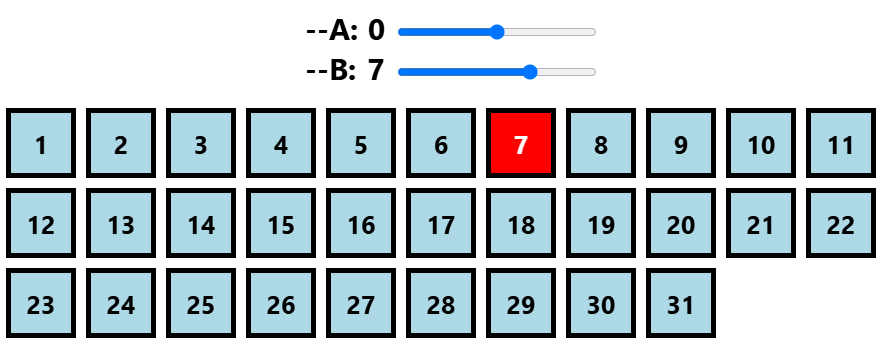
Consider the simplest case: selecting a specific index. Instead of writing div:nth-child(5), we define a container variable --B. The CSS becomes:
.container  --B: 5;
.container div
  background: if(style(sibling-index() = --B): red; else: lightblue);
This is not merely a syntactic trick; it is a fundamental shift in how the browser interprets rules. By utilizing style() queries, we are asking the browser to evaluate a property against a specific condition during the paint phase. The result is a performance-efficient, reactive selection that updates in real-time as the CSS variable --B is modified.
Scaling to An + B
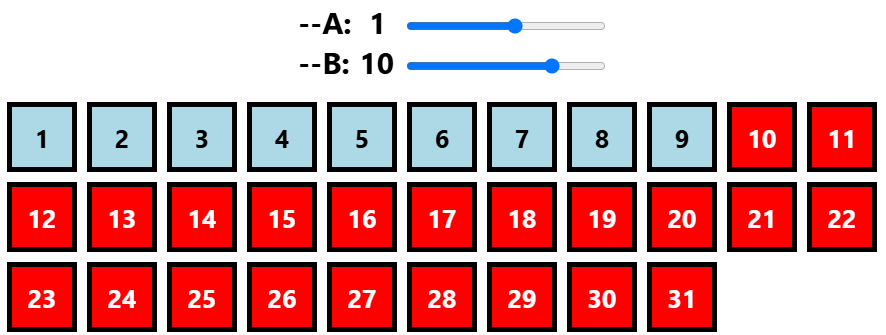
The complexity grows when we attempt to replicate the full power of An + B. By utilizing the mod() (modulo) function, we can determine divisibility, allowing us to select every Nth element with ease.
To achieve this, we define n mathematically within the CSS engine:
- The Formula:
n = (index - B) / A - The Constraint:
nmust be a positive integer, andmod(index - B, A)must equal zero.
This implementation allows for a level of granular control previously impossible. By wrapping these calculations in an if() conditional, we can handle edge cases—such as when A is negative or zero—ensuring the selector remains robust across varying inputs.
The Technical "Gotcha": Handling Edge Cases
As with any advanced implementation, there are inherent risks. One of the most significant hurdles is the division-by-zero error when A equals zero.
To maintain professional-grade stability, we must implement a defensive coding approach within our styles. By introducing a "selector state" variable (--g), we can create a fallback mechanism. The logic essentially functions as follows:
- Calculate the index offset.
- Evaluate the sign of the input.
- Use the
if()condition to toggle the target property.
This approach ensures that even when the user inputs an invalid or non-standard value for --A, the interface does not break. It is a robust, "bullet-proof" methodology that reflects the growing maturity of CSS as a programming language.
Official Perspective: The Future of Declarative Logic
The broader web development community, including the CSS Working Group, has long debated the extent to which logic should reside in the stylesheet. While some argue that keeping logic in JavaScript ensures better maintainability, the proponents of CSS-based logic point to the "Rendering Performance" metric.
When logic is moved from JavaScript to the browser’s native CSS engine, we reduce the "Layout Thrashing" caused by script-driven DOM manipulation. The ability to update the appearance of hundreds of elements by changing a single CSS variable is a significant performance optimization.
Strategic Advantages
- Performance: Native browser evaluation is significantly faster than DOM-tree iteration via JavaScript.
- Separation of Concerns: Styles remain in the CSS file, even when the underlying logic becomes dynamic.
- Declarative Power: Complex UI patterns can be described through simple variable updates, making themes and layouts easier to manage for large-scale enterprise applications.
Future Outlook: Looking Beyond nth-child
The journey does not end with :nth-child(). The logical next step for developers is the implementation of :nth-last-child(). By utilizing the sibling-count() property, we can mirror the logic used here to count backward from the end of a container.
As we look toward the future, we can anticipate a standard in which CSS is no longer just a "presentation layer" but a "logic layer." The tools discussed here—if(), mod(), and style() queries—are the building blocks of a new, highly reactive web.
Developers who invest time in mastering these concepts today will be at the forefront of the next generation of web design. While you may not need a dynamic nth-child in every project, the ability to control elements with such precision is a superpower that changes the way we think about the Document Object Model.
Final Verdict
The experiment of re-implementing nth-child() proves that the limitations of CSS are largely self-imposed. By pushing the boundaries of what is possible with variables and conditionals, we can unlock a new, more efficient way to build interfaces. The "useless" exercise of today is often the "standard practice" of tomorrow.
Recommendation: Developers should begin experimenting with if() in non-critical components to understand the nuances of the syntax. As browser support for these features stabilizes, those who have already integrated these patterns will have a distinct competitive advantage in the race to build the next generation of high-performance web applications.