Executive Overview: A Paradigm Shift in Automation
In an era dominated by Large Language Models (LLMs) that prioritize prose, poetry, and code generation, a quiet revolution has taken root. TypeSafe AI, the developer behind the breakout model "Jev," has officially announced a massive $870 million funding round, catapulting the startup to a $7.5 billion valuation. Led by industry heavyweight Andreessen Horowitz (a16z), with significant participation from Sequoia Capital and existing backer DCVC, the capital injection marks one of the most rapid surges in AI history.
Launched only weeks ago, on September 15, 2026, Jev has defied the conventional wisdom of the generative AI market. While its peers fight for dominance in creative writing and conversational chat, Jev has carved out a niche in the high-stakes world of enterprise automation. By pivoting away from text-based output in favor of "calibrated decisions," TypeSafe AI has captured the attention of the Fortune 500, with one-third of the index reportedly integrating the technology into their workflows in less than a month.
Detailed Chronology: From Stealth to Unicorn
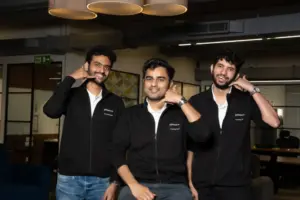
The trajectory of TypeSafe AI is a case study in market timing and technical differentiation. Founded in 2024, the company operated with surgical precision under the radar, building a team of heavy hitters. The co-founding trio—Diogo Almeida, formerly a researcher at OpenAI; Sasha Sheng, a veteran research engineer from Meta; and Erik Gafni, a seasoned entrepreneur—leveraged their combined expertise to address the "last mile" problem of AI: the gap between human-like conversation and machine-executable action.
The September Catalyst
The catalyst for this meteoric rise was the public release of Jev on September 15. Within 72 hours of its launch, the developer community—initially skeptical of yet another "new model"—began reporting performance metrics that dwarfed traditional LLMs in operational tasks. Unlike models designed to predict the next word in a sentence, Jev was designed to predict the next logical move in a complex, multi-variable process.
By October 9, 2026, the buzz had transitioned from developer forums to corporate boardrooms. The subsequent $870 million funding round reflects a massive vote of confidence from investors who believe TypeSafe has unlocked the key to industrial-grade AI utility.
Supporting Context & Metrics: Beyond the LLM Hype
To understand why TypeSafe AI has attracted such staggering capital, one must examine the fundamental architectural differences between Jev and the prevailing industry standards.
The Problem with Generative Text
For the past four years, the AI industry has been obsessed with human-centric outputs. LLMs are, at their core, sophisticated autocomplete engines. While they excel at summarization and creative tasks, they struggle with the precision required for enterprise backend operations. They are prone to "hallucinations" and require massive context windows that consume excessive compute, leading to high latency and exorbitant costs.
The "Jev" Architecture: Calibrated Decisions
Jev represents a departure from the transformer-based text paradigm. While it utilizes a transformer architecture, it is re-engineered to produce probabilities—"calibrated decisions"—rather than natural language.
The technical advantages are threefold:
- Efficiency: By stripping away the requirement for linguistic nuance, Jev operates with significantly fewer tokens. This reduction in token consumption translates into lower operational costs and drastically faster processing times.
- Precision: Because Jev is optimized for decision-making rather than storytelling, it minimizes the probabilistic drift that plagues current LLMs. In an enterprise environment where an incorrect variable can cost millions, this reliability is the gold standard.
- Integration: Computers do not "speak" English; they speak logic and data structures. TypeSafe’s approach allows the model to interface directly with enterprise software, APIs, and databases without the overhead of natural language translation.
As co-founder Diogo Almeida noted in his interview with TechCrunch shortly after the launch: "We have been super good at human language for four years, but it’s not useful for automation because computers speak a different language."

Official Statements and Institutional Impact
The decision by Andreessen Horowitz to lead this round at such a high valuation signals a broader shift in VC strategy. The "AI Gold Rush" of 2023 and 2024 was focused on research; the 2026 investment landscape is focused on utility.
"TypeSafe is not trying to write the next great novel," says an analyst familiar with the deal. "They are trying to be the invisible backbone of global logistics, finance, and manufacturing. The fact that a third of the Fortune 500 adopted this within weeks suggests that enterprise hunger for functional AI—not just chatty AI—is at a breaking point."
The founders have maintained a grounded, if ambitious, stance. While the $870 million provides the company with a massive runway, the team has signaled that their primary focus remains on scaling the model’s reliability. They are not chasing the "general intelligence" crown; they are chasing the "automated enterprise" crown.
Future Outlook: The Road Ahead
What does the future hold for TypeSafe AI? The company is currently mapping out a roadmap that includes:
1. Ecosystem Integration
TypeSafe is reportedly working on proprietary connectors for major ERP (Enterprise Resource Planning) systems, including SAP, Oracle, and Salesforce. By embedding Jev into these systems, the company aims to move from a "tool" to an "infrastructure."
2. The Talent War
With $870 million in the bank, TypeSafe is perfectly positioned to poach top-tier engineering talent from Meta, Google, and OpenAI. The company has already begun an aggressive recruitment drive, looking for engineers who specialize in systems architecture and formal verification—skills that are increasingly at odds with the "move fast and break things" ethos of earlier AI startups.
3. Ethical and Regulatory Navigation
As Jev begins to make autonomous decisions for large corporations, TypeSafe will inevitably face increased regulatory scrutiny. The company has stated that "calibrated decisioning" includes built-in audit trails, a feature that distinguishes it from the "black box" nature of typical LLMs. This transparency is likely to be a key selling point as AI governance becomes a central pillar of corporate compliance.
The Verdict
TypeSafe AI’s emergence represents a maturation point in the lifecycle of artificial intelligence. We have moved past the "wow" factor of chatbots and into the era of industrial application. By identifying that the real value of AI lies in its ability to manage complexity rather than its ability to imitate humanity, TypeSafe has positioned itself as the most significant player in the next phase of the digital revolution.
Whether Jev can maintain its performance as it scales remains to be seen, but the market’s response is clear: the era of the text-generating chatbot is yielding to the era of the decision-making engine. TypeSafe AI is not just participating in this change; it is leading it.