Executive Overview
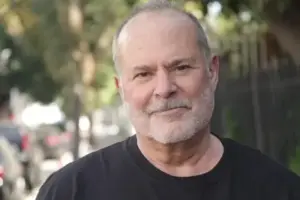
In the high-stakes world of venture capital and startup incubation, few founders possess a backstory as polarising or as poignant as Richard Bronson. Once a high-flying partner at the infamous Stratton Oakmont—the brokerage firm synonymous with the excesses of 1980s financial corruption—Bronson’s trajectory took a sharp, downward turn that ended in a federal prison cell. Today, however, he is attempting to leverage the lessons learned from both his ascent to Wall Street success and his subsequent incarceration to solve one of the most stubborn systemic issues in the American economy: the reintegration of the formerly incarcerated into the workforce.
His new venture, Commissary Club, is an AI-powered social media and employment platform designed to provide a lifeline to the millions of Americans who struggle to find housing, employment, and community after serving their time. By combining cutting-edge technology with the raw, lived experience of someone who has walked the path of social exile, Bronson is attempting to transform a neglected demographic into a vibrant, employable, and connected labor force. Selected for TechCrunch’s prestigious Startup Battlefield 200, Commissary Club represents a bold, for-profit experiment in social engineering that aims to prove that the most marginalized among us are not beyond redemption—or economic utility.
A Detailed Chronology: From Stratton Oakmont to Solitude
To understand the mission behind Commissary Club, one must first confront the reality of its founder’s past. In the 1980s, Richard Bronson was an insider at Stratton Oakmont, the firm run by Jordan Belfort, the infamous "Wolf of Wall Street." It was a world of aggressive, often illicit, financial maneuvering. While Bronson left the firm after a year to strike out on his own in South Florida, the culture of "growth at any cost" followed him.
The Rise and the Reckoning
Bronson’s subsequent venture in South Florida was, by all conventional metrics, a resounding success. He built a $100 million operation focused on taking small-cap companies public. Yet, as he openly admits today, the foundation of that success was built on a disregard for securities laws.
"I built a $100 million business taking these small cap companies public," Bronson told TechCrunch. "Some of the success, however, came through breaking the law—securities laws—and ultimately, as I knew inevitably would happen, I had to pay the price. I lost everything, and most significantly, my freedom. And I was sent to federal prison for a couple of years."
The "Radioactive" Period
The true catalyst for Commissary Club was not the time spent behind bars, but the period immediately following his release. Despite his professional acumen, his high-level education, and his track record of building massive enterprises, Bronson found himself effectively blacklisted by society.
"Nobody would hire me, despite all of my education and work experience and everything else," he recalled. "I was like completely radioactive."
This period of forced isolation served as the genesis for his current mission. It provided him with a unique vantage point: he was an insider in the elite financial world who was simultaneously suffering the same systemic disenfranchisement as the inmates he served time with—men who lacked his education, his resources, and his network.
Supporting Context: The Digital Safety Net
The name "Commissary Club" is a deliberate nod to the prison store where inmates purchase essentials, but the platform functions as an sophisticated digital infrastructure for the formerly incarcerated. In an era where AI is frequently criticized for replacing human labor, Bronson is flipping the narrative, using it to build a bridge between those society has discarded and the modern labor market.
The Role of Technology
The platform is built on a two-pillar strategy: utility and community.
- AI-Driven Navigation: The formerly incarcerated face a labyrinthine bureaucracy when trying to secure housing, healthcare, and employment. Commissary Club uses AI to automate and clarify these processes, acting as a concierge for reentry.
- Social Connection: Bronson identified that the "missing ingredient" in most reentry programs is community. Prison life is intensely social, but that support system vanishes upon release, leading to profound isolation. The platform mimics the social dynamics of platforms like Facebook, allowing users to build networks, find partners, and access referral-based opportunities.
The Technical Engine
Bronson is not working alone. He is joined by co-founder Roman Kissin, a seasoned technical architect who serves as the platform’s "brains." Kissin brings a pedigree of high-level engineering to the project, having worked for eBay and IBM, and most recently serving as the CTO of LexisNexis between 2022 and 2025. This marriage of institutional-grade technical expertise and "street-level" experience is intended to give the platform the scale necessary to tackle a problem of this magnitude.
Official Statements and the Business Model
Commissary Club operates as a for-profit entity, a choice that has sparked debate but which Bronson defends with characteristic candor. The model is "freemium": users get their first 10 job applications for free, after which they can purchase additional bundles or individual applications.
Addressing the Criticism
When asked why he chose a for-profit model rather than a non-profit, Bronson is unapologetic. He views the venture not just as charity, but as an untapped market opportunity.
"People immediately assume, ‘Oh, is this a nonprofit?’ And the answer is no," Bronson stated. "There’s a strong mission component, certainly, and I have devoted my life, when I came out of prison, to helping my brothers and sisters with records. Part of it is because I just felt so remorseful for the shit that I had done. I still wake up every day regretting choices I made."
He argues that the sheer size of the formerly incarcerated population represents a market that the tech industry has ignored for far too long. By treating this demographic as a legitimate labor pool rather than a "social problem" to be managed, he believes he can provide more sustainable value. "We’re going after a huge, huge market that nobody—I mean nobody—does anything about," he added.
Future Outlook: A New Paradigm for Reentry
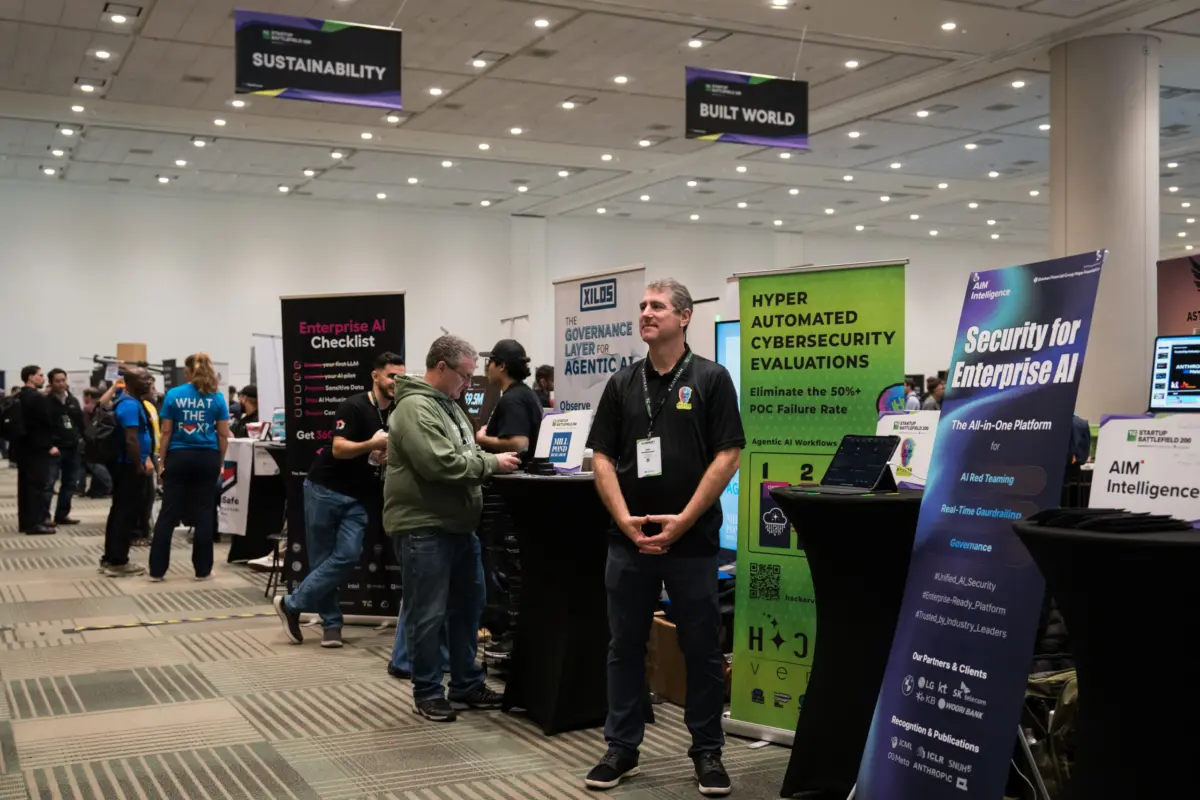
As Commissary Club moves through the TechCrunch Startup Battlefield 200, the broader implications of its mission are becoming clear. The company is not merely trying to help individuals find jobs; it is attempting to rewrite the social contract between the American justice system and the labor market.
Market Potential and Scalability
The stigma of a criminal record is a massive barrier to economic mobility in the United States, affecting millions of citizens. If Bronson and Kissin can demonstrate that their platform successfully lowers recidivism and increases long-term employment retention, they could potentially attract partnerships with government agencies, private corporations, and social impact investors.
The Moral Imperative
Bronson’s journey from the heights of Wall Street greed to the bottom of the penal system, and finally to the tech startup ecosystem, provides a compelling narrative of atonement. His ultimate goal is to prove that AI, when applied with empathy and a deep understanding of human struggle, can be a force for inclusion rather than just efficiency.
"People talk about AI taking away employment and people losing jobs," Bronson concluded. "I look at it differently. We’re building AI that creates employment for people that society left behind."
Whether Commissary Club can successfully navigate the complexities of its target market remains to be seen. However, in an industry often criticized for being detached from the realities of the average citizen, the story of an ex-con using the tools of the future to fix the failures of the past is one that warrants close observation. As the company prepares for its live presentation in San Francisco, the tech world will be watching to see if this "Wolf of Wall Street" alumnus can truly lead his "brothers and sisters" back into the fold of the American economy.