Executive Overview: The High Stakes of Early Growth
For the modern startup founder, the journey from "idea" to "market validation" is fraught with peril. Securing the first ten, one hundred, or thousand customers is arguably the most grueling challenge in the entrepreneurial lifecycle. While the digital age offers an unprecedented array of tools for outreach, a paradoxical reality persists: interest does not equate to retention.
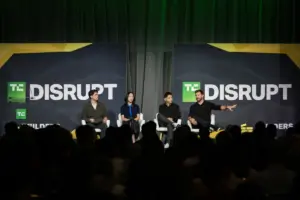
At the recent TechCrunch Disrupt summit, a panel of industry heavyweights—Elia Wallen, founder and CEO of travel management firm Engine; Grant Lee, founder and CEO of AI-powered presentation tool Gamma; and Crystal Huang, general partner at Google Ventures—converged to dissect the anatomy of sustainable growth. The consensus was clear: while social media and influencer marketing have become the contemporary "magic bullets" for visibility, they are insufficient as standalone strategies. Success requires a sophisticated, often hybrid approach that balances digital amplification with the enduring power of human, offline engagement.
Detailed Chronology: From Scrappy Roots to Unicorn Status
The modern startup landscape has seen a seismic shift in how companies approach their initial go-to-market strategies. Historically, companies relied on linear sales funnels. Today, the "founder-led" brand model—where the public persona of the CEO acts as the primary acquisition engine—has taken center stage, exemplified by AI startups like Cluely and Instinct.
The Rise of the "Gambassador" Model
Grant Lee’s tenure at Gamma provides a masterclass in modern scalability. Before influencer-based marketing became the standard playbook for B2B SaaS, Gamma launched its "Gambassador" program. By identifying niche influencers—creators who weren’t just mass-market celebrities but trusted voices within specific professional verticals—Gamma managed to scale exponentially. This strategy propelled the company toward a staggering $2.1 billion valuation and $100 million in Annual Recurring Revenue (ARR).
However, Lee cautions against the "set it and forget it" mentality that plagues many modern founders. Influencer marketing, he argues, is not a plug-and-play solution. It requires an intimate, hands-on relationship with creators to ensure they can articulate the product’s value proposition across various market segments—from consultants to marketing executives. If the creator cannot translate the product’s utility into a relatable narrative, the campaign will inevitably fall flat, regardless of the budget poured into the initiative.
The "Smile and Dial" Philosophy
In stark contrast to the influencer-first model, Elia Wallen’s Engine offers a compelling case for the efficacy of traditional, high-touch sales. Engine, a platform managing lodging and travel for midsize businesses, achieved $150 million in bookings without a single cent of outside venture capital during its early stages.
Wallen’s approach eschewed social media entirely. Instead, he relied on what he calls "smiling and dialing"—the relentless, old-school practice of cold calling and direct outreach. "A lot of people who didn’t grow up with that or don’t understand it think it’s outdated or doesn’t work," Wallen noted. "But it does."
Wallen’s story serves as a vital reminder that the digital noise of the modern era often blinds founders to the effectiveness of offline channels. He recounted using unorthodox, physical tactics to capture attention—such as hiring a magician to perform at industry events to draw foot traffic to the Engine booth. This commitment to tangible, face-to-face interaction proved that in a sea of automated emails and LinkedIn DMs, the human touch remains a potent differentiator.
Supporting Context & Metrics: The Science of Retention
Once a customer is acquired, the focus must immediately pivot to retention. Crystal Huang, representing the analytical rigor of Google Ventures, emphasized that data is the ultimate arbiter of a product’s viability.
Decoding Usage Patterns
Huang argues that the most valuable insights aren’t found in marketing vanity metrics, but in the granular behavioral data of early adopters. Founders must systematically analyze:
- Recurrence: Is the usage of the product becoming a habit?
- Expansion: Is the volume of activity increasing over time?
- Network Effects: Are users proactively referring the product to their peers and colleagues?
"You need to have ways to create evangelists who are really passionate about the product," Huang stated. These "super fans"—users who advocate for the brand or even express interest in employment—are the ultimate signal of product-market fit. By mining this data, startups can refine their product roadmap to double down on the features that actually drive long-term value, rather than chasing growth that lacks structural integrity.
Official Statements: Perspectives from the Frontlines
The discourse at TechCrunch Disrupt highlighted a fundamental divergence in philosophy between the "digital native" growth strategies and "foundational" business practices.
Grant Lee on Strategic Partnerships:
"If you have a product that can serve many different segments or use cases, then you want to basically have creators that can target each one of those. You’re better served by really spending a lot of time with these creators, because if they’re not able to understand how to articulate the value of your product, it doesn’t matter how much money you spend."
Elia Wallen on the Power of the Phone:
"We did events and we smiled and dialed. We still have a lot of people picking up the phone. There are a lot of companies that just refuse to do it or don’t know how to do it well. But they’re missing out on a very big offline client base. The phone still works."
Crystal Huang on the Metrics of Evangelism:
"Can you look into usage data and figure out if it’s recurring, if it’s increasing, if they are referring their friends? It can come across in early usage and retention information as well. And then also, do you see some super fans, right, who even want to work at the company, promote the company, be attached to the brand?"
Future Outlook: The Hybrid Growth Model
As we move deeper into an era dominated by generative AI and automated marketing, the path to sustainable growth will likely favor the "hybrid founder." The successful startup of 2026 and beyond will not be the one that exclusively uses TikTok to gain followers, nor the one that strictly relies on a phone book.
Instead, the next generation of unicorns will be characterized by:
- Contextual Influencer Marketing: Moving away from broad-spectrum celebrity endorsements toward hyper-targeted, subject-matter experts who understand the granular pain points of specific customer segments.
- Omnichannel Engagement: Maintaining a rigorous offline sales presence (events, cold calling, direct networking) while simultaneously nurturing a digital community that feeds on high-quality content and brand identity.
- Data-Driven Empathy: Using behavioral analytics not just to track churn, but to identify the "evangelist" cohort. By deeply engaging with these power users, founders can create a feedback loop that transforms early adopters into a decentralized sales force.
The "grueling challenge" of startup growth remains, but the toolkit for overcoming it has evolved. Whether through the viral reach of a well-briefed influencer or the quiet, persuasive power of a phone call, the fundamental goal remains unchanged: proving that your product is not just a novelty, but an essential component of the user’s daily life. Founders who master the synthesis of these two worlds—the high-tech and the high-touch—will be the ones who define the next decade of innovation.