Executive Overview: A Market Reborn from Regulatory Ashes
For much of 2025, industry analysts and skeptics alike were quick to draft the obituary for the American electric vehicle (EV) market. Following the dramatic repeal of the $7,500 federal EV tax credit—a policy pillar that had incentivized widespread adoption—the sector experienced a predictable, sharp contraction. Dealership lots, once emptied of inventory, began to swell with unsold battery-electric vehicles (BEVs). Headlines were dominated by narratives of "EV fatigue" and a structural lack of consumer appetite.
However, as of October 14, 2026, the data tells a profoundly different story. According to the latest comprehensive report from Cox Automotive, the U.S. EV market has not only stabilized but is currently experiencing its third consecutive quarter of growth. Capturing 6.1% of the total U.S. automotive market share, EVs have reached their highest penetration levels since Q3 2025. This resurgence suggests that the industry is shedding its dependence on government life support, transitioning instead toward a model driven by technological maturation, price competitiveness, and the undeniable economic reality of fluctuating fossil fuel costs.
Detailed Chronology: From Policy Shock to Organic Growth
The Regulatory Cliff (Late 2024 – Early 2025)
The removal of the federal tax credit in late 2024 served as a severe "market shock." In the immediate aftermath, manufacturers scrambled to adjust supply chains and pricing strategies. For many automakers, the subsidy had been the primary bridge between the high cost of lithium-ion battery production and the price points expected by middle-class consumers. Without that bridge, sales plummeted, forcing a sector-wide reckoning.
The Period of Adjustment (Mid-2025)
During the first half of 2025, the market entered a period of extreme volatility. Manufacturers, no longer able to rely on federal rebates to move inventory, were forced to slash MSRPs (Manufacturer’s Suggested Retail Prices) and optimize production. This period was characterized by a massive surplus of first-generation EV platforms, which struggled to compete against increasingly efficient internal combustion engines and hybrids.
The Turning Point (2026)
By the start of 2026, the "reset" began to yield results. Automakers that had doubled down on R&D during the downturn—specifically Toyota, Rivian, and Subaru—began to see their investments pay dividends. By mid-2026, the market entered a phase of organic growth. This was no longer fueled by government mandates or subsidies, but by consumers who were finding that the value proposition of owning an EV—lower maintenance costs and the long-term hedge against volatile gasoline prices—finally made fiscal sense.
Supporting Context & Metrics: The Mechanics of Recovery
The Competitive Landscape
The resurgence is not uniform across all brands. The latest Cox Automotive data reveals a significant shift in market power. While Tesla remains the undisputed titan of the American EV landscape, accounting for over 50% of all third-quarter sales, their dominance is waning. Tesla’s year-over-year sales dropped by 20%, a sign that the "first-mover advantage" is being eroded by more nimble competitors.
In contrast, the "challenger" brands have surged. Toyota’s strategic pivot—refreshing the bZ and Lexus RZ models—serves as a case study in successful iteration. By adopting the North American Charging Standard (NACS) Tesla-style ports, integrating high-density batteries, and drastically improving charging curves, these models effectively neutralized the primary complaints of early EV skeptics: range anxiety and infrastructure inconvenience.
Comparative Global Benchmarks
The U.S. recovery mirrors the trajectory observed in Germany, which serves as a cautionary yet hopeful precursor for the American market. When the German government abruptly terminated its own EV incentive program in November 2023, the industry feared a permanent collapse. Sales dropped by over 50% in the immediate aftermath. However, the German market demonstrated resilience, steadily climbing back to record-breaking levels by August 2026. This international parallel suggests that the "subsidy shock" is a transitory phase, followed by a maturation of the consumer base.

The Economics of Charging
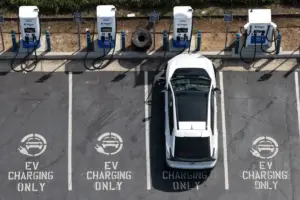
Beyond the vehicle itself, the cost of ownership has been fundamentally reshaped by the expansion of charging infrastructure. The integration of more powerful, faster-charging motors in newer models has reduced the "time penalty" associated with long-distance travel. As gas prices remain volatile, the "fuel" savings of EVs have become a tangible marketing metric for OEMs (Original Equipment Manufacturers), drawing in pragmatic buyers who were previously disinterested in the green transition.
Official Statements: The Industry Perspective
Stephanie Valdez Streaty, director of industry insights at Cox Automotive, framed the current state of the market as "finding its footing." In her analysis, she emphasized that the market is finally moving away from early-adopter hype toward a sustained, utility-based growth phase.
"The landscape has shifted from being policy-driven to product-driven," says an industry analyst familiar with the Q3 report. "When the tax credits vanished, the weak products died. What remains on the showroom floor today are vehicles that actually solve the consumer’s problem: they are cheaper to operate, faster to charge, and more reliable than the models of 2023."
Executives at companies like Rivian have noted that while the initial sting of the tax credit removal was painful, it forced a "ruthless efficiency" in their production lines. This efficiency has allowed them to lower prices without sacrificing margins, effectively capturing the market share that legacy automakers—who were slower to transition their supply chains—left behind.
Future Outlook: Sustainability Without Subsidies
As we look toward the remainder of 2026 and into 2027, the trajectory for the U.S. EV market appears cautiously optimistic. The reliance on federal intervention is officially a relic of the past; the industry is now governed by the laws of supply, demand, and technological innovation.
Critical Challenges Ahead
Despite the positive trends, the industry faces three primary hurdles:
- Infrastructure Scalability: While charging times have improved, the density of the national charging network remains the "final frontier" for mass-market adoption.
- Supply Chain Resiliency: With geopolitical tensions affecting the import of battery minerals, manufacturers must continue to localize their supply chains to prevent future price spikes.
- The Used EV Market: As the first generation of EVs hits the secondary market, price transparency and battery health certification will be crucial to maintaining consumer confidence.
The Long-Term Verdict
The "death of the EV" was, at best, a premature diagnosis. The 6.1% market share capture in Q3 2026 is significant because it represents a "clean" market—one not artificially inflated by tax incentives, but one earned through better hardware and more competitive pricing.
The successful rebound of companies like Toyota and the sustained, albeit cooling, performance of Tesla demonstrate that the American consumer is increasingly comfortable with the electric transition. If the current growth rate continues, the U.S. is poised to enter a period of electrification that is not only robust but inherently sustainable. The obituary for the electric vehicle was never written; it was simply a placeholder for the next chapter of automotive history. As the market moves forward, the focus will shift from if the world will go electric, to how quickly it can scale to meet the demand of an increasingly efficiency-minded public.