Executive Overview: The Changing Landscape of AI Partnerships
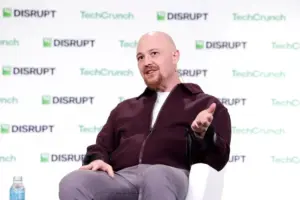
In the high-stakes world of generative AI, where alliances are formed and dissolved with the swiftness of a code commit, the cloud-based software development platform Replit has sent shockwaves through the developer ecosystem. During a high-profile appearance at TechCrunch Disrupt, Replit CEO and co-founder Amjad Masad dropped a bombshell: the company is moving away from its long-standing partnership with AI powerhouse Anthropic.
For months, the industry operated under the assumption that Replit’s sophisticated coding agent was built primarily on the back of Anthropic’s industry-leading Claude models. However, Masad’s declaration, coupled with a pivot toward OpenAI, suggests a fundamental shift in how Replit evaluates the "vibe-coding" capabilities of its platform. While Replit maintains that the decision is rooted in performance, cost, and strategic synergy, the situation is shrouded in ambiguity. Contradictory reports from insiders and recent documentation suggest that the divorce may not be as clean—or as finalized—as the CEO’s onstage remarks implied.
This transition highlights a growing trend among AI-native startups: the move toward "model agnosticism" and the relentless pursuit of the most efficient, high-performing LLM for specific, narrow use cases. As Replit pivots toward a future dominated by its internal benchmarks and a renewed focus on enterprise, the broader AI community is left to grapple with the instability of relying on third-party foundational models.
Detailed Chronology: From Claude to ChatGPT
To understand the significance of this split, one must look at the meteoric rise of Replit’s "Agent" features. By allowing users to describe applications in plain English and having an AI generate, test, and deploy them, Replit effectively democratized software engineering.
The Anthropic Era
For a significant period, Anthropic’s Claude models—particularly the 3.5 Sonnet lineage—were the engine room of Replit’s automation. Reports have suggested that this partnership was not merely a vendor-client relationship but a catalyst for massive growth. Under the hood of Replit Agent, Anthropic’s models were praised for their reasoning capabilities and their ability to handle complex, multi-step coding tasks. Indeed, as recently as September, Replit’s own technical documentation explicitly cited "Claude Fable 5" and "Claude Fable 5.1" as the primary models powering its production environment.
The August Pivot
The seeds of doubt were sown in August, when Replit announced a formal partnership with OpenAI. At the time, the announcement was framed as an expansion of capabilities—a "multi-model" approach. However, in hindsight, it served as the first public signal that Anthropic’s monopoly on Replit’s backend was coming to an end.
The Disrupt Revelation
The ambiguity vanished—or so it seemed—at TechCrunch Disrupt. When pressed on the status of the Anthropic relationship, Masad was blunt. "I think ChatGPT is better now," he noted, citing internal benchmarks that favor OpenAI’s models for "vibe-coded" applications. He further characterized the decision as a holistic one, encompassing the "better partner" dynamic for Replit’s current growth stage.
The Tug-of-War: Conflicting Narratives
The most intriguing aspect of this story is the dissonance between the CEO’s public statement and the reality on the ground. Shortly after Masad’s remarks, industry insiders familiar with the partnership reached out to provide a conflicting account, asserting that the partnership between Replit and Anthropic remains active.
This discrepancy raises several questions regarding the mechanics of AI integration:
- Production Lag: Is it possible that while Replit has signaled an intent to phase out Anthropic, the actual technical migration is still in its infancy?
- Internal vs. External Benchmarks: Masad emphasized that Replit utilizes an internal benchmark system—dubbed "Sol and Astra"—to measure performance. If these metrics diverge from public opinion, does the company risk alienating a user base that has grown accustomed to the "Claude" experience?
- The "Shadow" Partnership: Is Replit maintaining a "dual-track" strategy, where specific legacy products remain on Anthropic while new, high-growth features are built exclusively on OpenAI?
The fact that Replit’s own blog from September—only weeks before the Disrupt event—was still promoting Claude-based models suggests that the transition is either highly staggered or that the internal communication regarding the partnership’s status is currently fragmented.
Supporting Context: Metrics and Enterprise Growth
Beyond the headlines of model switching, Masad provided a rare glimpse into the financial health of Replit. The platform, which began as a tool for hobbyists and students, has undergone a radical metamorphosis into an enterprise-grade powerhouse.
The B2B Shift
The most striking figure shared by Masad was the composition of the company’s revenue.
- Last Year: Enterprise contracts accounted for a mere 2% of total revenue.
- Current Fiscal Year: That figure has ballooned to 15%.
- The Big Picture: More than 50% of the company’s total revenue is now derived from B2B sources.
This shift explains the necessity of the "model optimization" conversation. For a company serving enterprise clients, performance isn’t just about speed; it is about reliability, safety, and cost predictability. If Replit believes that OpenAI offers a more stable "habitat" for these enterprise agents, they are effectively betting their future on the ability to swap out foundational models without disrupting the end-user experience.
The "Agent Habitat": Safety and Orchestration
Masad’s most profound contribution to the conversation at Disrupt was his conceptualization of the "AI habitat." He drew a direct parallel between human productivity and agentic workflows, noting that for an AI to be useful, it requires more than just intelligence; it requires an infrastructure.
"Agents need a habitat for them to exist and do good work," Masad explained. "That habitat has good orchestration, good error recovery, good safety and security and sandboxing, good networking, good identity and authorization."
This perspective shifts the focus away from the "intelligence" of the model (the LLM itself) and toward the "scaffolding" (the platform). Replit’s long-term goal is clearly to be the premier platform where these habitats are built. Whether the "brain" of the agent is Claude, GPT-4, or a future Llama iteration becomes, in this view, a secondary concern to the robustness of the platform’s underlying architecture.
Future Outlook: Navigating the Model Wars
As Replit continues to scale, its ability to move between foundational model providers will be its greatest strategic asset—and its greatest operational challenge.
The Commoditization of Intelligence
The industry is rapidly approaching a point where foundational models are becoming commodities. When the delta in performance between top-tier models becomes marginal, platform providers like Replit will inevitably prioritize factors like API pricing, rate limits, and partnership support. By openly pivoting to OpenAI, Replit is signaling to other model labs that the "stickiness" of a platform is no longer guaranteed by long-term exclusivity.
The Road Ahead
For the developers using Replit, the immediate future will likely involve a period of experimentation. Users may find themselves utilizing different models for different tasks—using OpenAI for general coding logic while perhaps leaning on other models for specialized tasks.
Replit’s success in this transition will depend on its transparency. If the company continues to tout its own benchmarks while contradicting the reality of its vendor relationships, it risks losing the trust of the developer community. Conversely, if it succeeds in building a "model-agnostic" platform that treats LLMs like plug-and-play components, it will cement its position as the indispensable operating system for the AI-native generation.
As for the relationship with Anthropic? The silence from the latter is deafening. Whether this is a quiet withdrawal or a temporary misalignment, the episode serves as a cautionary tale for any company building a product solely on the back of a third-party AI provider. In the "vibe-coding" era, the only thing more volatile than the AI itself is the partnership that powers it.
Replit did not immediately respond to requests for further clarification following the TechCrunch Disrupt event. This remains a developing story.