
Executive Overview
As the back-to-school season descends upon families year after year, domestic operations invariably shift into a state of high-octane logistical turbulence. The modern household is no longer merely a living space; it operates more akin to a multifaceted enterprise. Between shifting work commitments, academic timetables, extracurricular sports practices, medical appointments, and household chores, the traditional paper calendar pinned to the refrigerator has long since outlived its utility.
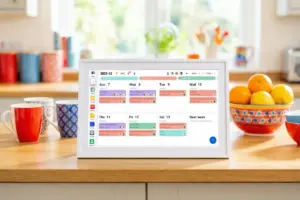
Enter the smart digital family calendar—a burgeoning consumer technology category designed to replace sticky notes, endless group chat threads, and fragmented phone applications with a centralized, interactive command center. Among the latest contenders making waves in this competitive hardware market is Linkdaze, an interactive touchscreen tablet built from the ground up to orchestrate the lives of multi-person households rather than isolated individuals.
Launched in December, Linkdaze arrives at a critical juncture in the smart-home ecosystem. It challenges established heavyweights like Skylight by undercutting them on initial hardware costs while aggressively eliminating a major consumer pain point: the dreaded recurring monthly subscription fee. Featuring robust calendar cross-platform synchronization, creative domestic management tools, and an intriguing AI-powered "Snap-to-Sync" meal-planning utility, Linkdaze is positioning itself as a serious disruptor.
This comprehensive report examines the technical capabilities, market positioning, pricing strategies, and broader implications of Linkdaze within the rapidly evolving smart-display landscape.
Detailed Chronology of the Smart Family Calendar Market
To understand the current impact of devices like Linkdaze, it is helpful to trace the evolution of household organization technology over the past decade.
Phase 1: The Fragmentation of Digital Life (Early 2010s–2020)
As smartphones and cloud computing permeated daily routines, family members increasingly relied on siloed digital applications. Parents often coordinated via Google Calendar or Microsoft Outlook, while teenagers and college students gravitated toward native Apple iCloud ecosystems or third-party niche apps like Cozi.
The result was massive digital fragmentation. No single application successfully bridged the gap for all family members because forcing everyone onto a unified software ecosystem proved virtually impossible. Parents found themselves frantically texting disparate calendars back and forth or relying on verbal reminders that inevitably fell through the cracks.
Phase 2: The Rise of Dedicated Smart Displays (2020–2023)
Recognizing a gap in the market, early hardware innovators introduced wall-mounted touchscreens designed specifically to aggregate schedules in a physical, communal space within the home. Brands like Skylight pioneered this market, proving that consumers were willing to pay upwards of $150 or more for a dedicated electronic wall calendar.
However, these early hardware iterations quickly adopted a Software-as-a-Service (SaaS) business model. While the base hardware allowed basic viewing, advanced synchronization features, chore trackers, and photo management features were frequently locked behind annual subscription paywalls—costing users roughly $79 per year.
Phase 3: The Linkdaze Disruption and Subscription Pushback (December 2023–Present)
Entering the market in December, Linkdaze sought to capitalize on growing consumer subscription fatigue. By offering a subscription-free core experience alongside aggressive retail pricing—including deep online promotions dropping the entry-level model well below its competitors—Linkdaze injected fresh competition into the category.
Furthermore, the integration of generative AI features, such as the "Snap-to-Sync" meal planning tool introduced in mid-2026, signaled a technological shift. Smart calendars were evolving from mere digital display boards into proactive, intelligent household assistants capable of translating physical documents (like school lunch menus or handwritten recipes) into actionable, digitized household workflows.
Technical Specifications, Features, and Ecosystem Integration
What sets Linkdaze apart in a crowded market is its deep focus on cross-platform compatibility and all-in-one domestic administration.
1. Universal Calendar Synchronization
One of the most friction-heavy aspects of household management is platform loyalty. Asking a teenager who lives inside their Apple ecosystem to abandon iCloud for a proprietary family app is a losing battle. Linkdaze solves this by building broad synchronization capabilities out of the box.
The device bridges:

- Google Calendar
- Apple iCloud
- Microsoft Outlook
- Yahoo Calendar
- Cozi (the popular dedicated family-organizing application)
By pooling these disparate schedules onto a single touchscreen interface, Linkdaze utilizes automated color-coding. Each family member is assigned a distinct hue, allowing anyone walking past the display to instantly decipher who needs to be where, and when, without squinting through a jumble of overlapping text entries.
2. Hardware Models and Form Factors
Understanding that wall space and kitchen layouts vary wildly from home to home, Linkdaze is manufactured in two distinct sizes:
- The 15.6-Inch Model: Ideal for large, high-traffic common areas such as the kitchen or mudroom, providing maximum legibility for complex, multi-person schedules.
- The 10.1-Inch Model: A more compact alternative (priced at an accessible $119.99 retail, and frequently discounted online down to $66) well-suited for tighter spaces, smaller apartments, or desktop placements.
Both models feature responsive interactive touchscreens that can be mounted easily on walls or propped up on surfaces, doubling as digital photo frames when idle. This aesthetic integration ensures the device transitions smoothly from a high-utility organizational tool to a warm home decor element displaying cherished family photographs.
3. Comprehensive Household Management Beyond Calendars
A calendar is only the tip of the iceberg. Linkdaze embeds tools designed to streamline broader domestic responsibilities:
- Chore Charts and Reward Systems: Parents can assign tasks to children, track completion status, and manage behavioral or chore-based reward structures directly from the interface.
- Meal Planning and Grocery Lists: Centralized digital menus ensure everyone knows what is for dinner, simultaneously feeding into real-time shopping lists accessible on the go.
- AI "Snap-to-Sync" Functionality: Perhaps its most innovative feature, this tool allows users to take a photo of a physical paper recipe or a school cafeteria lunch menu using a smartphone or the device itself. Linkdaze’s integrated AI processes the image, automatically converts the text into a structured digital meal plan, and compiles the necessary ingredients into an active grocery list.
Comparative Metrics: Linkdaze vs. Industry Competitors
To accurately gauge the value proposition of Linkdaze, industry analysts look closely at the financial and operational friction points between it and primary competitors like Skylight.
| Feature / Metric | Linkdaze | Skylight Calendar |
|---|---|---|
| Available Sizes | 10.1-inch, 15.6-inch | 10-inch, 15-inch (plus Max variants) |
| Base Hardware Price | ~$119.99 (10.1") / Often discounted (~$66) | Starting around $149.99 (before subscriptions) |
| Required Monthly/Annual Subscription | None (Core features included free) | Optional/Required for advanced features ($79/year) |
| Calendar Sync Options | Google, iCloud, Outlook, Yahoo, Cozi | Google, iCloud, Outlook, Cozi |
| AI Integration | "Snap-to-Sync" for menus and recipes | Standard app-based entry and manual management |
| Secondary Uses | Digital photo frame, chores, shopping lists | Digital photo frame, chore charts, meal plans |
The strategic divergence in business models is stark. While competitors bank on recurring software revenue to sustain long-term operational margins, Linkdaze relies on hardware sales driven by upfront affordability and the elimination of ongoing fees. For budget-conscious consumers weary of subscription creep across their digital lives, the absence of an annual fee represents a powerful psychological and financial incentive.
Target Demographics and Use Cases
While marketed primarily toward harried parents attempting to wrangle busy family units, the versatility of smart digital calendars extends far beyond the traditional suburban household.
1. The Busy Nuclear Family
For households where both parents work demanding jobs while children participate in soccer leagues, piano lessons, and tutoring, cognitive load is a massive stressor. A centralized, always-on display in the kitchen eliminates the "Who is picking up whom?" text message chaos. Because it updates in real time via cloud synchronization, a change made by a parent at the office instantly reflects on the kitchen wall display for the rest of the household to see.
2. College Apartments and Shared Living Spaces
University students and young professionals sharing rental apartments face their own unique brand of organizational friction. Managing utility bill payments, alternating kitchen cleaning chores, coordinating study group sessions, and planning shared grocery runs can easily strain roommate relationships. A compact 10.1-inch Linkdaze unit placed in a communal living room serves as a neutral, highly visible arbiter of shared domestic responsibilities.
3. Remote Professionals and Multitasking Freelancers
Individuals juggling complex freelance portfolios, client interviews, editorial deadlines, and remote meetings find immense value in visual time-blocking. Having a dedicated, distraction-free secondary display that mirrors professional calendars alongside personal commitments ensures that no vital deadline slips through the cracks amid the pinging notifications of a primary workstation.
Future Outlook: The Evolution of Smart Home Administration
The introduction of subscription-free hardware alternatives like Linkdaze hints at a broader shift within the smart home appliance market. As consumers grow increasingly resistant to paying monthly fees for basic physical device functionality, hardware manufacturers face mounting pressure to innovate their monetization strategies.
Looking ahead, we can expect to see several key trends shape the smart family calendar segment:
- Deeper Generative AI Integration: Manual data entry remains a primary friction point for home organization tools. Future iterations will likely rely heavier on ambient AI, voice commands, and advanced computer vision to automatically ingest schedules from emails, text messages, and physical mail.
- Smart Home Ecosystem Convergence: As IoT standards like Matter mature, smart calendars will likely expand their utility beyond calendars and chores to interface directly with smart home hardware—allowing users to lock doors, adjust thermostats, or trigger security routines directly from the family command center.
- Hardware Price Compression: With aggressive pricing models established by new market entrants, legacy brands may be forced to recalibrate their subscription models or lower hardware entry barriers to remain competitive.
Conclusion
The modern household is a complex ecosystem requiring modern solutions. While traditional paper calendars charm with their simplicity, they simply cannot keep pace with the hyper-connected, fast-paced realities of contemporary work, school, and social schedules.
By combining broad multi-platform calendar synchronization, innovative AI-driven tools like "Snap-to-Sync," and a refreshing subscription-free pricing structure, Linkdaze has carved out a compelling niche in the smart-display market. Whether positioned in a bustling family kitchen or a shared college apartment, devices of this caliber represent a significant leap forward in domestic efficiency—transforming household chaos into coordinated, harmonious routine.