Executive Overview: The Dawn of the Driverless Era?
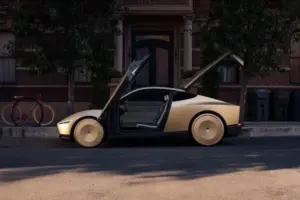
Tesla has officially signaled its intent to pivot from a hardware-centric automotive manufacturer to a dominant force in "Transport as a Service" (TaaS). During the company’s third-quarter earnings call, leadership confirmed that Tesla plans to begin selling its autonomous Cybercab to third-party customers by the end of 2026. This gold-hued, two-seater vehicle—devoid of a steering wheel, pedals, or traditional manual controls—represents the most radical departure in the company’s history.
However, this bold vision faces a formidable reality check. As Tesla prepares to scale production, it finds itself in the crosshairs of federal regulators. The National Highway Traffic Safety Administration (NHTSA) has launched a rigorous investigation into the Cybercab’s compliance with Federal Motor Vehicle Safety Standards (FMVSS). The core of the tension lies in a fundamental regulatory paradox: Tesla is moving toward a future that federal law is only just beginning to contemplate, creating a high-stakes standoff between technological innovation and public safety oversight.
Detailed Chronology: From Private Fleets to Public Markets
The journey toward the Cybercab has been a long-gestating project that has undergone significant strategic shifts. For years, Elon Musk’s narrative regarding autonomous transport centered on the "fleet conversion" model: the idea that millions of existing Tesla vehicles already on the road would, via a simple over-the-air (OTA) software update, transform into self-driving robotaxis.
The Shift in Strategy
As of late 2026, that vision remains largely theoretical. The anticipated full-autonomy update for consumer vehicles has faced repeated delays, leading to a pivot in Musk’s rhetoric. During the Q3 earnings call, Lars Moravy, Tesla’s vice president of engineering, clarified the company’s new roadmap. He noted that current Cybercab production is earmarked primarily for Tesla’s internal robotaxi fleet.
This, however, is a staging ground. Tesla intends to gradually transition to a model where third-party owners can purchase these vehicles to operate their own autonomous fleets. "We will start small," Moravy explained, emphasizing that the company intends to treat the rollout as a learning process, gathering critical data on ownership, fleet management, and real-world operational logistics before a wider commercial release.
The "Unsupervised" Bottleneck
Compounding the uncertainty is the status of Full Self-Driving (FSD). While Tesla continues to market "FSD (Supervised)" to current owners, Musk announced on the earnings call that a truly "unsupervised" version of the software is now slated for a second-quarter release in 2027. This delay creates a bizarre competitive landscape: if the timeline holds, third-party fleet operators may gain access to the dedicated Cybercab hardware before retail Tesla owners gain access to the autonomous software capabilities they were promised years ago.
Supporting Context & Metrics: Regulatory Headwinds
The primary hurdle for the Cybercab is not merely engineering, but the legal framework governing what constitutes a "vehicle."
The FMVSS Barrier
Federal regulations under the FMVSS have historically been predicated on the presence of a human driver. Rules mandate physical hardware—brake pedals, steering columns, and rearview mirrors—that the Cybercab explicitly lacks. While Tesla has engaged in "self-certification"—a standard industry practice where manufacturers declare their vehicles meet federal safety requirements—this process is being challenged by the current federal climate.
The NHTSA Investigation
The tension reached a breaking point last month. Hours after the first Cybercabs were spotted on public roads in Austin, the NHTSA announced a formal investigation. The agency is now scrutinizing the technical data and safety certifications upon which Tesla relied to put these vehicles on public infrastructure.
This investigation is critical. If the NHTSA determines that the Cybercab’s self-certification process was inadequate or that the vehicle fails to meet the spirit of existing safety protocols, it could effectively ground the entire fleet. While the Department of Transportation has recently proposed easing these rules for autonomous vehicles, the gap between "proposed rule" and "enacted law" remains a volatile space for Tesla’s business model.
Official Statements and Corporate Vision
Elon Musk’s rhetoric on the Q3 call underscored a clear distinction between the company’s existing product line and its future robotaxi aspirations.
"Cybercab is primarily going to be something that is offered as transport as a service," Musk stated. "Whereas our other cars—the 3, the Y, and the Roadster—are the cars you want to own."
This distinction is vital for investors. Musk is essentially telegraphing that Tesla’s future is bifurcated: a consumer-facing retail business selling traditional EVs, and an industrial-scale service business selling autonomous mobility. The "vast majority" of the Cybercab ecosystem, according to Musk, will remain Tesla-owned and operated. This model mimics the approach of major ride-hailing networks, but with the distinct advantage of controlling the hardware stack from the factory floor to the ride-hailing interface.
Future Outlook: A High-Risk, High-Reward Trajectory
The coming 18 months will define whether Tesla can successfully transition from a car manufacturer to a mobility utility.
The Operational Challenge
Scaling a robotaxi fleet is an order of magnitude more difficult than manufacturing vehicles. It requires robust insurance infrastructure, fleet maintenance, urban navigation licensing, and a high degree of public trust. The "start small" approach mentioned by Moravy suggests that Tesla is acutely aware of these risks. If they miscalculate the operational costs or the reliability of the Cybercab in extreme weather or complex urban environments, the financial impact on the company’s balance sheet could be significant.
The Investor Perspective
For investors, the Cybercab represents the ultimate "moonshot." The stock price has long been buoyed by the promise of autonomy. If Tesla successfully navigates the NHTSA investigation and hits its 2027 target for unsupervised FSD, the company could become the primary provider of urban mobility in the U.S. Conversely, if the regulatory climate hardens—or if the technology fails to meet the requisite safety threshold—Tesla could face a crisis of confidence.
The Bottom Line
The path forward for the Cybercab is narrow. It requires a delicate dance between pushing the boundaries of artificial intelligence and placating a regulatory environment that is rightfully cautious about removing the human from the driver’s seat.
As Tesla moves toward the end of the year, all eyes will be on the Austin testbed. Whether the Cybercab becomes the backbone of a new transportation paradigm or remains a prototype hindered by federal oversight depends entirely on the data gathered in the coming months. Tesla is betting its future on the idea that it can move faster than the regulators—but as the NHTSA investigation demonstrates, the law has a way of slowing even the fastest-moving tech companies to a crawl.
The promise of a driverless future is alluring, but as the industry has learned over the last decade, the road to autonomy is paved with more than just software updates—it is paved with the heavy, unyielding requirements of public safety and institutional oversight.