Executive Overview: A Paradigm Shift in Cupertino
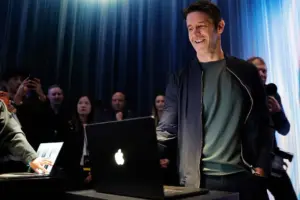
As of late 2026, the technology landscape is undergoing its most significant transformation in decades, and at the center of this storm is Apple. Following a highly anticipated product showcase in Los Angeles, the tech giant finds itself navigating a narrative of transition. Under the new leadership of CEO John Ternus—who assumed the helm in September 2026—Apple is moving to distance itself from the "AI-first" fervor that has gripped Silicon Valley.
In a recent, expansive interview with Wired’s Steven Levy, Ternus articulated a vision for Apple that prioritizes user utility over the performative deployment of artificial intelligence. While competitors race to integrate generative models into every facet of their software, often prioritizing speed over polish, Apple is doubling down on its long-standing philosophy: technology should be invisible, intuitive, and deeply personal. This piece explores the strategy behind Apple’s measured approach, the leadership transition under Ternus, and the broader implications for an ecosystem that remains the envy of the tech world.
Detailed Chronology: The Road to the "New Apple"
The path to this moment has been paved with both skepticism and expectation. For the better part of 2024 and 2025, Apple was frequently characterized by market analysts and tech pundits as being "behind" in the AI arms race. This perception was fueled largely by the slow, iterative rollout of its upgraded Siri and the company’s silence regarding massive, sprawling language models that defined the initial ChatGPT era.
The Summer of 2026: A Turning Point
The narrative began to shift in August 2026, when Apple finally released its overhauled version of Siri. While some critics initially labeled the update "anticlimactic"—likely because it lacked the chaotic, experimental nature of its rivals—it represented a fundamental architectural shift. The new Siri was faster, more contextually aware, and deeply integrated into the device’s local hardware, signaling Apple’s commitment to on-device privacy as a feature, not a compromise.
The September Transition
On September 1, 2026, the executive transition was finalized. John Ternus, long regarded as a steady hand within the company’s hardware engineering division, took over the role of CEO. His first memo to the staff was notably devoid of buzzwords, focusing instead on the "deeply human" aspect of product creation. His recent public remarks in Los Angeles have only served to cement this posture, signaling that the "Ternus Era" will be defined by refinement rather than reactionary pivots.
Supporting Context & Metrics: Why Apple’s Patience Matters
To understand why Apple is not succumbing to the pressure of the AI "hype cycle," one must examine the metrics of their ecosystem. Apple’s competitive advantage has never been about being first to market with a prototype; it has been about providing the most cohesive experience to its over 2.2 billion active devices.
The Privacy Premium
Data remains the fuel for AI, but it is also a liability. Apple’s decision to prioritize on-device processing—leveraging proprietary silicon (the M-series and A-series chips)—acts as a massive moat. While cloud-heavy AI companies face increasing scrutiny regarding data privacy, energy consumption, and model hallucinations, Apple’s strategy of local execution minimizes the attack surface.
Ecosystem Integration
The "Apple Way" involves a vertical integration that no other company can match. By controlling the hardware, the operating system, and the primary applications, Apple can ensure that AI features—when they appear—do not feel like "add-ons." They function as foundational software improvements. Analysts suggest that the market’s fixation on "AI-for-AI’s-sake" ignores the reality of consumer behavior: users do not want an "AI Assistant"; they want a phone that helps them finish their tasks faster without draining their battery or leaking their personal data.
Official Statements: The Philosophy of John Ternus
The Wired interview serves as the most comprehensive look at the new CEO’s mindset. When pressed by Steven Levy on whether Apple is falling behind the curve, Ternus was unflappable.

"Everyone has an opinion," Ternus remarked, acknowledging the external noise while maintaining a calm, authoritative stance. "I really like where we’re at."
The "Invisible" AI
Perhaps the most telling quote from the interview is his insistence that users should not be aware of the "AI" label when they interact with their devices. "We don’t want to ship AI for AI’s sake," Ternus explained. "When we’re doing it right, people won’t have to think about whether it was AI that made this happen or more traditional software. What matters is, did we build something that they really love?"
This philosophy directly counters the "AI Agent" narrative currently dominating the industry. Where some see a future where agents replace apps entirely, Ternus remains grounded. When asked about a world where AI agents might make current software interfaces obsolete, he offered a rebuttal that speaks to Apple’s core identity: "That could make life really easy, I suppose, but the creation of products is a deeply human and personal thing, something that we love to do."
Future Outlook: The Next Five Years
As we look toward the remainder of the decade, the industry is poised for a collision between two distinct philosophies: the "Agents-as-Interface" model favored by search-centric companies, and the "Human-Centric-Refinement" model championed by Apple.
The Hardware-Software Symbiosis
Apple’s future roadmap almost certainly involves more powerful, energy-efficient silicon capable of running larger models locally. We can expect future iterations of iOS and macOS to feature "intelligent layers" that feel entirely organic. These won’t be flashy chatbot windows, but rather invisible optimizations in photo editing, predictive text, health monitoring, and battery management.
The Challenge of Relevance
The challenge for Ternus will be proving that "human-centric" design can keep pace with the exponential growth of generative capabilities. If competitors successfully create agents that can execute complex, multi-step tasks across disparate web services, Apple will need to ensure its ecosystem remains the "gateway" for these activities.
However, if history is any guide, Apple’s strength lies in its ability to wait until a technology is mature, stable, and ready to be polished to a high sheen. The company is currently betting that the public will eventually tire of the "AI hype" and return to the brands that provide the most reliable, secure, and user-friendly experience.
A New Chapter for Cupertino
John Ternus is not looking to reinvent the wheel, but rather to ensure that the wheel rolls smoother than ever. By focusing on the "deeply human" aspect of technology, Apple is attempting to carve out a space that is resistant to the boom-and-bust cycles of the tech industry. Whether this approach proves to be a masterstroke or a misstep will be the defining story of his tenure. For now, Apple remains in a category of one: a company that is perfectly content to let the world run fast, provided that they are the ones who ultimately run it best.