
Executive Overview: The Dawn of Agentic Commerce
The ecommerce landscape is currently undergoing its most profound transformation since the inception of the digital storefront. As we navigate the closing months of 2026, the industry is pivoting away from passive, static toolsets toward a new paradigm: Agentic Commerce. This shift is characterized by autonomous, AI-driven entities capable of not just processing information, but executing complex, multi-step workflows that once required manual intervention from human teams.
This week’s roundup of merchant services highlights a convergence of artificial intelligence, B2B financial agility, and omnichannel integration. From Sprinklr’s foray into marketing AI agents to Shopify’s massive "Exponential" fall update, the common thread is clear: merchants are no longer just "using" software; they are orchestrating fleets of intelligent agents to manage everything from supply chain logistics and customer acquisition to automated dispute resolution and real-time financial reporting.

Detailed Chronology of Key Releases
The Rise of the AI Agent
The most significant trend this week is the operationalization of AI agents.
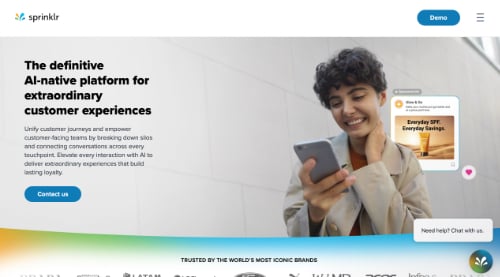
- Sprinklr Marketing AI Agents (Beta): Sprinklr has launched a suite of agents designed to transition enterprise marketers from mere insight gathering to active campaign management. These agents—covering Ideation, Creative, Campaign Execution, and Budget Optimization—are engineered to scale and localize content while reducing the tedious, repetitive tasks that stifle creative momentum.
- Shopify’s Exponential Update: Shopify’s fall 2026 release, Exponential, is a masterclass in platform integration. By introducing "Shopify Connectors," the platform now allows merchants to plug their existing AI agents directly into their store’s backend. This enables a unified flow of data across products, inventory, and order management, fundamentally changing how small-to-mid-sized businesses scale.
- Virid’s MCP Connector: Bridging the gap between legacy store management and modern AI, Virid has introduced a Model Context Protocol (MCP) connector. This allows retailers to use natural language to query customer data, manage catalogs, and handle promotions within preferred AI platforms like Claude or ChatGPT, effectively removing the need for custom-built, costly integrations.
Frictionless B2B and Financial Services
The barrier to entry for B2B transactions continues to drop, thanks to significant infrastructure upgrades from industry leaders:
- Stripe’s Free Instant B2B Payments: By launching "Stripe Pay," the fintech giant is streamlining the B2B landscape. Eligible U.S. and U.K. companies can now conduct instant transfers directly through their Stripe profile, provided they utilize a Treasury account. This move effectively bypasses the traditional, sluggish banking rails that have historically hindered B2B liquidity.
- Amazon Business Value Intelligence: Procurement leaders are often tasked with proving ROI beyond simple cost savings. Amazon’s new tool quantifies operational efficiency and purchase compliance, grounding these metrics in third-party benchmarks. It is a strategic move to position Amazon not just as a vendor, but as a procurement intelligence partner.
Marketing, Discovery, and Social Commerce
The funnel is becoming increasingly non-linear as social platforms and marketing tools merge.
- AnyMind Group & Meta: A new partnership promises to revolutionize live commerce by linking social discovery on Instagram and Facebook directly to checkout. By allowing brands to drive audiences from video ads into live streams with flexible, multi-channel checkout options, the companies are creating a seamless transition from "scrolling" to "shopping."
- Pinterest Programmatic Deals: Advertisers now have a more robust way to scale their reach on Pinterest. By enabling programmatic buying via partners like Google DV360 and Amazon Ads, Pinterest is moving deeper into the performance marketing stack, allowing brands to purchase inventory with the same precision they apply to traditional search or display ads.
- Fast Simon & NielsenIQ: Both companies are focusing on "commerce-native AI." Fast Simon’s new model adapts product rankings based on real-time shopper intent and business objectives, while NielsenIQ is utilizing its ContentOne Framework to ensure product content is optimized for AI-powered shopping engines.
Supporting Context & Metrics: Why Now?
The urgency behind these releases is driven by three macro-economic factors:

- The "Efficiency Mandate": With marketing budgets tightening, businesses are under pressure to prove that every dollar spent results in measurable, incremental impact. Tools like Adobe’s Marketing Campaign Analytics directly address this by isolating the "lift" of individual channels from external variables like seasonality or promotion-heavy market conditions.
- The Rise of the "Conversational Consumer": Customers now expect to book appointments, ask questions, and resolve issues via automated agents. Invoca’s Messaging Agents for Google Ads is a direct response to this, allowing brands to qualify leads and book appointments through conversational interfaces before a human even touches the ticket.
- The Complexity of Multichannel Distribution: As brands attempt to sell everywhere—from Faire marketplaces to Instagram shops—the back-end management becomes a nightmare. TopDawg’s expansion of its U.S. supplier distribution hub is emblematic of the need for "one-pane-of-glass" management for inventory and cataloging.
Official Statements and Industry Impact
Industry leaders are framing these updates as a necessity for survival in a volatile market.
Regarding the Shopify Exponential release, the focus has been on "risk mitigation." The introduction of Shopify Protect—a tool set that proactively fights chargebacks and prevents fraud—highlights a shift toward defensive AI. Merchants no longer just want growth; they want to protect their margins against the rising tide of sophisticated retail fraud.

In the realm of B2B, the feedback from early adopters of the Amazon Business Value Intelligence tool suggests a shift in how procurement departments are viewed internally. "We aren’t just buying items; we are buying data-driven efficiency," noted one procurement analyst. By providing transparent, adjustable inputs, Amazon is empowering managers to defend their strategies to the C-suite with tangible, benchmarked results.
Future Outlook: The Autonomous Retailer
Looking toward 2027, we can anticipate several key shifts:

- Hyper-Personalization at Scale: The integration of AI agents into product discovery (as seen with Fast Simon and NielsenIQ) means that the "storefront" will soon become a unique experience for every individual visitor. The static grid of products will be replaced by a curated, AI-generated sequence that aligns perfectly with a user’s historical behavior and current intent.
- The Death of the "Return" Economy: With Amazon’s expansion of "Returnless Resolutions" in Europe, the industry is signaling that the logistical cost of reverse logistics often outweighs the value of the returned item. We expect to see more mid-sized retailers adopt similar "keep it" policies for low-cost goods, fueled by AI-driven risk assessment that determines whether a return is truly worth the operational overhead.
- The Convergence of Messaging and Sales: The line between "Customer Support" and "Sales" is evaporating. With tools like Omnichat’s $10 million funding round and Shopify’s WhatsApp automations, brands are moving toward a 24/7 conversational commerce model. In the near future, an AI agent will likely handle the entire journey—from the first ad click to the post-purchase support inquiry—without human intervention.
Conclusion:
The message from this week’s innovations is clear: the era of manual, disconnected retail operations is over. The winners in the coming year will be those who can successfully integrate these agentic, automated, and data-intelligent services into a cohesive ecosystem. For the merchant, the goal is no longer just to sell; it is to build an autonomous business that learns, adapts, and scales at the speed of its customers.