Executive Overview
As artificial intelligence (AI) rapidly reshapes global industries, India is positioning itself not merely as a consumer of emerging technologies, but as a primary architect of the global AI workforce. At the heart of this ambition is the newly launched National AI Talent Mission, spearheaded by Prime Minister Narendra Modi. The initiative sets a formidable target: integrating and upskilling at least 10 million individuals into the nation’s formal artificial intelligence ecosystem.
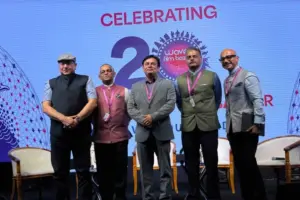
This sweeping national strategy came under intense, expert scrutiny during a marquee panel discussion titled “AI and the Future of Creative Skills: Transforming India’s Media & Entertainment Workforce.” Held at the WAVES Film Bazaar—the dynamic industry market running alongside the 57th International Film Festival of India (IFFI) in Goa—the session convened top government officials, policymakers, and industry titans.
The dialogue underscored a pivotal paradox defining the modern era: while generative AI democratizes production chains from conceptualization to final release, it simultaneously threatens to homogenize the rich cultural tapestries of developing nations. Panelists discussed how India intends to leverage groundbreaking vocational frameworks, such as the Ministry of Skill Development and Entrepreneurship’s SOAR (Skilling for AI Readiness) scheme, to ensure its workforce stays ahead of the technology curve.
However, the path forward requires careful calibration. Industry leaders cautioned against the erosion of regional storytelling, arguing that algorithmic tools risk flattening India’s unmatched linguistic and cultural diversity unless deliberate countermeasures are implemented. Ultimately, the consensus in Goa pointed toward a necessary paradigm shift: as AI assumes mechanical execution, human creative labor must pivot decisively toward imagination, emotional resonance, and technology orchestration.
Detailed Chronology: The Road to the WAVES Film Bazaar Dispatches
The discourse on AI integration within India’s creative corridors did not materialize in a vacuum; it is the culmination of a systematic, multi-year policy evolution aimed at insulating the nation’s economy against technological disruption.
Phase 1: Policy Foundation and the National AI Mission
The narrative began taking formal shape with Prime Minister Narendra Modi’s administration identifying artificial intelligence as a cornerstone of "Viksit Bharat" (Developed India) by 2047. Recognizing that digital disruption would inevitably disrupt traditional employment structures, the government conceptualized the National AI Talent Mission. The core objective was clear: bridge the digital divide by scaling training infrastructure to accommodate millions of workers, particularly in high-growth, high-value sectors.
Phase 2: Launching the SOAR Initiative
To operationalize this grand vision, administrative bodies—most notably the Ministry of Skill Development and Entrepreneurship—began rolling out targeted frameworks. Among these, the Skilling for AI Readiness (SOAR) scheme emerged as a vital instrument. Designed to prepare the workforce for human-AI collaboration, SOAR targets both fresh entrants to the labor market and seasoned veterans whose industries face obsolescence.
Phase 3: The Goa Conclave at IFFI and WAVES Film Bazaar
The policy ambitions collided with practical realities during the 57th International Film Festival of India in Goa. Against the backdrop of the WAVES Film Bazaar—a premier meeting ground for South Asian cinema, animation, and digital content creators—industry and state actors gathered for the specialized panel.
Moderated with sharp wit and industry insight by acclaimed voice-over artist and actor Vijay Vikram Singh, the panel featured a cross-sectoral brain trust:
- Lt. Col. Vikram Singh Bhati, Director at the National Council for Vocational Education and Training (NCVET).
- Amit Meena, Director at the Ministry of Skill Development and Entrepreneurship.
- K. Satish Nambudiripad, former Director General of public broadcaster Doordarshan and Chairperson of the Centre for Creative Economy and Public Policy at the National Institute of Technology (NIT) Calicut.
- Biren Ghose, Founder and CEO of Astra Studios.
It was within this high-stakes forum that Lt. Col. Bhati formally announced the state’s benchmark goal of inducting 10 million professionals into the AI workforce, setting off widespread discussions regarding implementation, democratization, and cultural preservation.
Supporting Context & Metrics: The Scale of India’s AI Ambition
To comprehend the magnitude of India’s target of 10 million AI professionals, one must examine the broader socioeconomic and technological landscape of the nation.
The Demographic Dividend Meets Technological Realignment
India possesses one of the world’s youngest populations, with a median age under 30. However, the traditional pillars of employment—IT services, business process outsourcing (BPO), and manufacturing—are undergoing structural compression due to automation. By pivoting toward artificial intelligence, the state aims to convert its demographic dividend into a high-skill talent export engine and domestic innovation hub.
| Strategic Metric / Initiative | Core Objective & Focus Area | Key Stakeholders |
|---|---|---|
| National AI Talent Mission | Upskilling and integrating at least 10 million workers into the formal AI economy. | Prime Minister’s Office, NCVET, Industry Partners |
| SOAR Scheme | Skilling for AI Readiness; preparing the workforce for collaborative human-AI environments. | Ministry of Skill Development & Entrepreneurship |
| Tier-2 & Tier-3 Focus | Decentralizing skill acquisition beyond metropolitan hubs to capture grassroots talent. | Technical Institutions, Film Schools, Regional Hubs |
Democratization vs. Homogenization in the Production Chain
During the WAVES Film Bazaar sessions, Amit Meena emphasized that AI fundamentally restructures the modern media pipeline. Historically, high-end visual effects (VFX), advanced CGI, and complex script breakdowns required immense capital investments and large production crews. Generative AI tools democratize this ecosystem, allowing independent creators in smaller towns to realize cinematic visions previously restricted to major Hollywood or Bollywood studios.
Yet, this democratization introduces a sinister side-effect: algorithmic uniformity. K. Satish Nambudiripad delivered a sobering assessment regarding cultural erosion. When prompted to generate concept notes, standard Large Language Models (LLMs) rely on global probability distributions that favor Western narrative structures.
"You ask five people to write a concept note… if you are going through AI, every one of them will write the same," Nambudiripad warned.
Without targeted datasets reflecting India’s thousands of regional dialects, unique folklore, and hyper-local subcultures, the nation’s creative output risks being flattened into a homogenized, westernized monoculture.
Official Statements and Industry Insights
The discussions in Goa yielded critical takeaways from the nation’s foremost bureaucratic and creative leaders, highlighting both the opportunities and anxieties surrounding generative technologies.
Lt. Col. Vikram Singh Bhati on Institutional Absorption
Representing the National Council for Vocational Education and Training (NCVET), Lt. Col. Bhati stressed that government policy alone cannot bridge the competency gap. He issued a direct call to action for the private sector:
"It started with the ministry launching a scheme called SOAR (Skilling for AI Readiness)… The industry should start absorbing people in the apprenticeship model to help existing workers and new entrants adapt."
Bhati’s emphasis on apprenticeships underscores a shift toward experiential learning, ensuring that trainees do not merely acquire theoretical certifications but gain direct, hands-on exposure to evolving machine learning workflows.
Amit Meena on Reskilling the Production Chain
Amit Meena of the Ministry of Skill Development and Entrepreneurship highlighted the systemic nature of AI transformation. Rather than touching isolated departments, AI permeates every phase of media production—from early ideation and storyboarding to post-production and final distribution.
"It is democratizing the whole process," Meena noted, while fiercely advocating for preemptive reskilling programs to safeguard media professionals from sudden technological displacement.
K. Satish Nambudiripad on Cultural Safeguards and Decentralization
Addressing the academic and public policy dimensions, Nambudiripad underscored the dangers of urban-centric tech deployment. He argued that skilling initiatives must actively penetrate India’s tier-two and tier-three cities, where much of the country’s authentic cultural heritage resides.
To prevent algorithmic homogenization, Nambudiripad called for a tripartite alliance uniting technical institutions, specialized film schools, and industry stakeholders to build localized, culturally aware AI models and training curricula.
Biren Ghose on Imagination Over Execution
Providing a private sector perspective, Biren Ghose, CEO of Astra Studios, reframed how creatives should view their relationship with software and hardware.
"Creative skills are shifting from execution to imagination, and from software proficiency to technology orchestration," Ghose asserted.
Reflecting on the rapid velocity of innovation, he added: "In the past we were wondering when the tools would catch up with us, and now we’re wondering when we would catch up with the tools."
Concluding with a philosophical reminder of human agency in an automated age, Ghose delivered the panel’s most resonant maxim:
"No technology has ever invented anything. Everything that got invented has been invented by the ideas of man."
Future Outlook: Navigating the Brave New World of Creative AI
As India moves forward with its target of training 10 million workers through the National AI Talent Mission and frameworks like the SOAR scheme, the nation stands at a historic crossroads. The intersection of artificial intelligence and India’s vibrant media and entertainment industry will dictate not only the economic viability of millions of creative workers, but also the preservation of the nation’s cultural identity on the global stage.
Key Imperatives for the Road Ahead:
- Localization of Datasets: To combat the homogenization warned by experts like Nambudiripad, institutional developers must curate indigenous datasets that capture India’s linguistic diversity, regional mythologies, and localized artistic expressions.
- Public-Private Synergies: As urged by Lt. Col. Bhati, corporate India must embrace structured apprenticeship models, transforming raw human potential into industry-ready talent.
- Decentralized Skilling: Expanding training infrastructure beyond tech capitals (such as Bengaluru, Mumbai, and Hyderabad) into tier-two and tier-three cities will ensure equitable economic growth.
- Redefining Education: Film schools and technical institutes must transition away from teaching legacy software execution toward cultivating high-level imagination, critical thinking, and technology orchestration—cementing the human mind as the ultimate author of innovation.
Ultimately, India’s ambitious bet on AI is more than a labor strategy; it is a test of civilizational resilience. By marrying governmental vision with grassroots inclusion and uncompromising creative integrity, India aims to prove that the future of artificial intelligence can be as diverse, imaginative, and deeply human as the culture that helps shape it.