Executive Overview
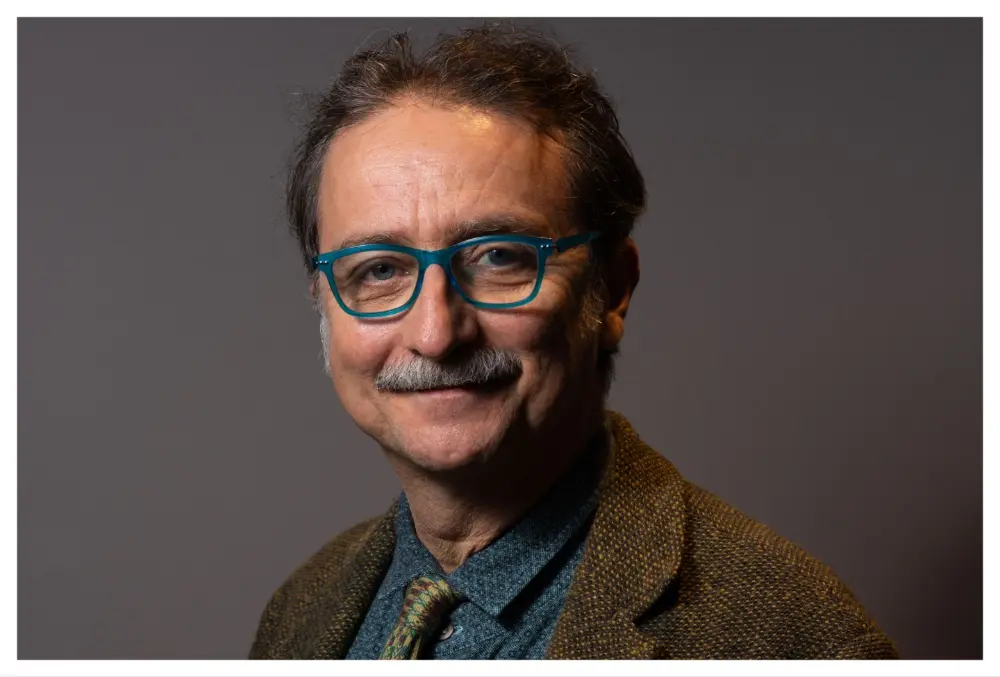
In a significant leadership shake-up for the upper echelons of European cinema, Gianluca Farinelli—a globally revered champion of film preservation and the visionary head of Italy’s venerable Il Cinema Ritrovato festival—has been officially appointed as the artistic director of the David di Donatello Awards. Widely regarded as Italy’s equivalent to the Academy Awards, the David di Donatello honors represent the pinnacle of achievement in Italian filmmaking, bridging a rich, historic cinematic legacy with contemporary artistic innovation.
Farinelli’s ascension to this prestigious post marks a pivotal moment for the Italian film industry. He steps into the role previously held by veteran film journalist and critic Piera Detassis, who made history in 2018 by becoming the first woman to lead the awards. Detassis stepped down following the formal expiration of her mandate. However, Farinelli’s appointment also signals a structural reorganization within the Fondazione Accademia del Cinema Italiano (Academy of Italian Cinema). Rather than maintaining the consolidated dual leadership model practiced by Detassis—who simultaneously served as both academy president and artistic director—the governing board has opted to split the responsibilities.
Under the new leadership framework, Farinelli will direct the artistic vision, curation, and presentation of the awards ceremony and associated programs, while Silvia Calandrelli, a high-ranking executive at Italy’s state broadcaster RAI, assumes the more ceremonial and institutional role of academy president, to which she was appointed just last week.
This dual-track leadership structure is expected to infuse the awards with both deep-rooted curatorial expertise from the festival circuit and robust institutional governance from public broadcasting. Farinelli, known globally for his meticulous work with the Bologna Film Archives (Cineteca di Bologna) and its world-renowned restoration laboratory, L’Immagine Ritrovata, brings unmatched international connections and an encyclopedic knowledge of cinematic history to his new post. As the Italian film landscape navigates complex post-pandemic box office realities, shifting international streaming models, and a renaissance in independent art-house production, Farinelli’s appointment is viewed by industry insiders as a masterstroke aimed at unifying Italy’s cinematic past and present under a single, highly respected creative vision.
Detailed Chronology: The Transition of Power
The reorganization of the David di Donatello Awards did not happen in a vacuum; it is the culmination of months of behind-the-scenes deliberations within the Fondazione Accademia del Cinema Italiano, prompted by the expiration of Piera Detassis’s landmark tenure.
The Detassis Era (2018–2024)
When Piera Detassis took the reins of the David di Donatello Awards in 2018, she inherited an institution that was eager for modernization. As a former artistic director of the Rome Film Festival and a formidable voice in Italian film criticism, Detassis brought a sharp journalistic eye and acute administrative rigor to the academy. During her tenure, she navigated the tumultuous waters of the COVID-19 pandemic, reimagining how the awards could be broadcast safely and maintaining industry morale during a period of unprecedented disruption. Furthermore, Detassis championed greater inclusivity and diversity within the voting body, expanding the academy’s membership to younger filmmakers, technicians, and critics.
By the time her mandate formally expired in 2024, Detassis had solidified the David di Donatello’s status as a modern, transparent, and globally relevant cultural property. Her decision to step down paved the way for the board of directors to re-evaluate the structural efficiency of running the academy. Recognizing the immense workload required to simultaneously manage the institutional presidency and the creative demands of the artistic directorship, the board voted to bifurcate the office.
The Rise of Silvia Calandrelli
The first phase of the transition materialized with the appointment of Silvia Calandrelli as the president of the Fondazione Accademia del Cinema Italiano. A prominent executive at RAI—Italy’s state-owned public broadcaster and a primary financial and cultural pillar of the domestic film industry—Calandrelli brings formidable institutional weight to the presidency. Her appointment ensures a tight, collaborative relationship between the academy and RAI, which has traditionally broadcast the David di Donatello ceremony. Calandrelli’s administrative acumen and deep understanding of media policy position her ideally to handle the governance, fundraising, and institutional partnerships necessary to keep the academy financially robust and culturally prominent.
Gianluca Farinelli Steps In
With the institutional house set in order by Calandrelli’s appointment, the board turned its attention to the creative heart of the operation: the artistic directorship. The selection of Gianluca Farinelli was announced shortly thereafter, completing the new leadership tandem. Farinelli, whose career has been defined by his tireless advocacy for cinematic heritage, brings an entirely different dimension to the post. Rather than a traditional commercial producer or industry executive, Farinelli is a historian, archivist, and curator of global renown. His formal induction into the leadership of the David di Donatello marks a historic alignment between Italy’s living film industry and its priceless historical archives.
Supporting Context & Metrics: The Architect of Restoration
To understand the weight of Gianluca Farinelli’s new appointment, one must examine his monumental contributions to film culture, both in Italy and on the international stage.
The Cineteca di Bologna and Il Cinema Ritrovato
Farinelli is best known internationally as the head and driving force behind Il Cinema Ritrovato, hosted annually in Bologna. Widely considered the premier festival for archival and restored cinema in the world, Il Cinema Ritrovato draws master filmmakers, cinephiles, critics, and scholars from every corner of the globe. Under Farinelli’s stewardship, the festival has grown from a modest local gathering into an international pilgrimage site for those who worship the silver screen.
Parallel to his work with the festival, Farinelli is the founder and chief of the Cineteca di Bologna Film Archives and its state-of-the-art restoration laboratory, L’Immagine Ritrovata. Under his leadership, the lab has rescued hundreds of cinematic masterpieces from physical decay, chemical decomposition, and oblivion. Notable restorations range from the silent masterpieces of early Italian cinema to landmark works by international legends such as Charlie Chaplin, Pier Paolo Pasolini, Federico Fellini, and Wong Kar-wai.
Global Industry Standing
Farinelli’s influence extends far beyond the editing room and the archive vault. He is exceptionally well-connected across the international film circuit, maintaining close collaborative relationships with major institutions such as the Cannes Film Festival, the Venice Film Festival, the Academy of Motion Picture Arts and Sciences, and the Cineteca Nazionale. His curatorial genius has earned him numerous accolades, including honors from the French government (Chevalier des Arts et des Lettres) and widespread recognition within the global federation of film archives (FIAF).
By placing a figure of Farinelli’s stature at the helm of the David di Donatello Awards, the Italian academy is signaling that its national prizes are not merely an exercise in corporate self-congratulation or seasonal marketing, but a solemn cultural celebration deeply rooted in the artistic soul of the nation. Farinelli’s ability to contextualize contemporary cinema within the broader tapestry of film history will undoubtedly influence how nominees and winners are perceived, adding a layer of scholarly gravity and aesthetic appreciation to the proceedings.
Official Statements and Industry Reactions
The announcement of Farinelli’s appointment has generated widespread acclaim across the European cinematic landscape. Filmmakers, producers, actors, and cultural officials have flooded the academy with messages of support, noting that the combination of Calandrelli’s institutional leadership and Farinelli’s artistic vision creates an ideal leadership team.
Upon officially accepting his new post, Gianluca Farinelli released a carefully articulated statement outlining his vision for the awards and expressing his gratitude to the academy’s leadership:
"I’d like to thank president Silvia Calandrelli and the entire board of directors of the Fondazione Accademia del Cinema Italiano," Farinelli stated.
"Their trust makes me particularly proud. I take on this role with a sense of responsibility but also with enthusiasm. Italian cinema has a unique history and, at the same time, a current output that deserves to be celebrated. We will do so by giving voice to all the different professions, sensibilities, and souls, striving to bring out the best of the entire industry."
Farinelli’s emphasis on "all the different professions, sensibilities, and souls" is viewed by industry observers as a direct nod to the collaborative nature of filmmaking. Unlike American awards ceremonies that frequently focus heavily on above-the-line talent (directors, actors, producers), Italian cinema has historically prided itself on its legendary below-the-line artisans—costume designers, cinematographers, screenwriters, set decorators, and editors who defined the Golden Age of Italian cinema and continue to innovate today. Farinelli’s background in film restoration makes him uniquely attuned to the vital contributions of technicians and craftspeople whose work preserves the physical and aesthetic integrity of motion pictures.
Silvia Calandrelli, speaking in her new capacity as president of the foundation, welcomed Farinelli to the team, emphasizing the complementary nature of their respective roles:
"Gianluca Farinelli represents the absolute best of what Italian cinema stands for globally: an unyielding dedication to quality, a deep reverence for our history, and a forward-looking passion for artistic expression. Together, we look forward to steering the David di Donatello Awards into an era that honors our great past while aggressively championing the voices of today and tomorrow."
Additional reactions poured in from prominent Italian directors and producers. Industry associations, including ANICA (the Italian Association of Film, Audiovisual and Digital Industries) and APA (Association of Audiovisual Producers), released joint statements praising the appointment as a unifying bridge between historical preservation and contemporary industrial growth.
Future Outlook: What Lies Ahead for the David di Donatello Awards
As Gianluca Farinelli assumes his duties as artistic director, the Italian film industry stands at a fascinating crossroads. The upcoming editions of the David di Donatello Awards will face several key challenges and opportunities under his stewardship:
1. Bridging History and Modernity
Farinelli’s core challenge—and his greatest opportunity—will be to weave a tighter narrative thread between the historic legacy of Italian cinema and its contemporary output. While Italy continues to produce internationally acclaimed auteurs and critically adored art-house films, domestic box office revenues have faced structural pressures similar to those seen across global markets. By leveraging his immense curatorial credibility, Farinelli can help position the David di Donatellos not just as a domestic television event, but as a prestigious global touchstone that commands the attention of international distributors, festival directors, and cinephiles worldwide.
2. Amplifying Below-the-Line Craftsmanship
True to his roots as an archivist and restorer, Farinelli is expected to champion the technical artistry of filmmaking. Expect future ceremonies to place an even greater emphasis on the restoration of classic works alongside the celebration of current releases, highlighting the unbroken lineage of craftsmanship that connects the masters of Italian neorealism and the Commedia all’Italiana to today’s digital innovators.
3. Enhancing Global Visibility
Through his extensive network across international film festivals and archives, Farinelli is uniquely positioned to boost the international profile of the David di Donatello Awards. Collaborations with foreign academies, retrospective screenings of nominated films at global festivals, and increased foreign press engagement are all anticipated under his artistic direction.
4. Collaborative Synergy with RAI
With Silvia Calandrelli leading the Fondazione Accademia del Cinema Italiano and Farinelli curating the artistic vision, the administrative stability of the awards is secure. Calandrelli’s clout within RAI ensures that the broadcast of the ceremony will continue to receive prime-time visibility, robust production budgets, and innovative multi-platform distribution strategies designed to engage younger, digital-native audiences.
Conclusion
Gianluca Farinelli’s appointment as artistic director of the David di Donatello Awards is far more than a routine administrative change; it is a profound philosophical statement by the Italian film academy. By entrusting the creative direction of its highest honors to a man who has dedicated his life to saving, studying, and celebrating the moving image, Italy has signaled that its cinematic future is inextricably bound to a profound respect for its past. As the academy prepares for its upcoming ceremonies under the dual leadership of Calandrelli and Farinelli, the global film community watches with eager anticipation, confident that the storied legacy of Italian cinema is in the safest and most visionary of hands.